Understanding Negative Credit Marks and Their Impact
Learn how derogatory items affect your credit score and financial future

When reviewing your credit report, you may encounter terminology that feels alarming or confusing. One such term is “derogatory,” which signals serious financial missteps that lenders view as significant warning signs. Understanding what these negative marks represent and how they influence your creditworthiness is essential for anyone seeking to maintain healthy financial standing or rebuild damaged credit.
Defining Negative Credit Marks: What Lenders Consider Red Flags
A negative credit mark, formally termed derogatory on your credit report, represents any entry indicating you failed to meet your financial obligations according to the original terms agreed upon with your lender. These marks function as financial warning signals that tell potential creditors you may pose a heightened risk of non-repayment.
Lenders interpret negative marks as evidence of problematic financial behavior. While individual lenders may apply slightly different standards when evaluating creditworthiness, most financial institutions recognize accounts showing serious delinquency—typically 30 days or more past due—as derogatory.
The presence of these marks on your credit file creates friction in your financial life. Rather than representing minor oversights, derogatory entries indicate significant credit risk that substantially influences whether lenders will approve new applications and under what terms.
Categories of Negative Credit Entries: Beyond Late Payments
Negative credit marks encompass a broader spectrum of financial difficulties than many people realize. While late payments represent the most commonly encountered derogatory mark, several other serious credit issues can appear on your report.
Payment-Related Negative Marks
Payment history carries the most weight in credit scoring calculations, making even single missed or late payments consequential. However, the severity of payment-related marks increases dramatically based on how long the account remains unpaid:
- Late payments: When an account falls 30 days or more behind schedule, lenders typically report this delinquency to credit bureaus. The longer the payment remains outstanding, the more significant the damage to your credit standing. Accounts 60 and 90 days past due represent progressively more serious delinquencies.
- Charge-offs: After determining you are unlikely to repay outstanding debt—typically following 180 days of non-payment—creditors may write off the account as a loss and close it to future charges. Despite this closure, you remain legally responsible for the unpaid balance, and the charge-off remains visible on your credit report as evidence of default.
- Collection accounts: When creditors lose confidence in collecting from you directly, they often transfer or sell your overdue debt to third-party collection agencies. This transfer signals that your account has deteriorated beyond regular delinquency into a serious default situation that requires external collection efforts.
Secured Loan Defaults
When you borrow money using collateral—such as a vehicle, home, or other property—the lender maintains legal rights to seize the asset if you fail to honor payment obligations. These secured loan defaults appear as distinct types of derogatory marks:
- Repossessions: If you default on an auto loan or other secured credit, the lender may repossess the collateral to recover losses. This action appears on your credit report as repossession or voluntary surrender, depending on whether the lender seized the property or you surrendered it.
- Foreclosures: Homeowners who fail to make mortgage payments may face foreclosure, wherein the lender takes legal action to reclaim the property and recover the outstanding debt. Foreclosures represent among the most damaging derogatory marks, signaling complete failure to meet mortgage obligations.
Bankruptcy and Government Claims
Bankruptcy filings and government tax claims represent the most severe negative marks on credit reports. Bankruptcy indicates court-supervised debt relief, while government claims may reflect unpaid tax obligations or other legal judgments.
The Mechanics: How Negative Marks Reach Your Credit Report
Derogatory marks typically appear on your credit report through two primary channels. Most commonly, your lender or creditor directly reports the negative information to the major credit bureaus—Equifax, Experian, and TransUnion. Once reported, the information becomes part of your permanent credit history visible to other lenders, employers, and service providers.
In other cases, negative marks enter your report through public records. Foreclosures, repossessions, bankruptcies, and government claims are often considered matters of public record, and credit bureaus obtain and incorporate this information into credit reports automatically.
Understanding the Credit Score Impact: Severity and Duration
The presence of derogatory marks on your credit report creates measurable consequences for your financial life. Your payment history comprises the single largest component of credit score calculations, meaning these marks directly depress your score.
Comparative Damage Assessment
Not all derogatory marks damage your credit equally. A single late payment causes harm, but a charge-off or collection account creates substantially more severe damage. The most destructive marks—bankruptcies and foreclosures—can reduce credit scores by 100 or more points.
Credit scoring systems recognize that seriously delinquent accounts or items showing charge-offs and collections represent greater credit risk than isolated missed payments. Consequently, these more severe marks inflict more substantial score reductions.
Duration of Negative Impact
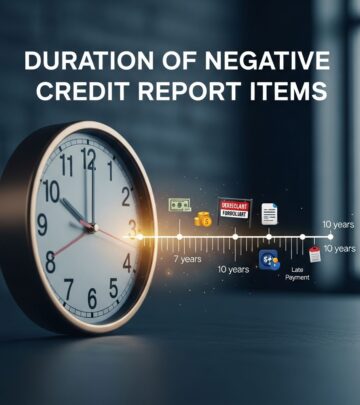
An important distinction in credit reporting involves how long negative marks remain visible and damaging. Most derogatory items—including late payments, charge-offs, collections, foreclosures, and repossessions—remain on your credit report for seven years from the original delinquency date. Chapter 13 bankruptcies also remain for seven years, while Chapter 7 bankruptcies stay on your report for ten years.
Critically, the damage inflicted by these marks diminishes over time. While a recent derogatory mark severely impacts your creditworthiness, the same mark becomes progressively less influential as it ages. After several years of clean payment history, older negative marks exert minimal effect on credit decisions.
Real-World Consequences: Beyond Credit Scores
The consequences of derogatory marks extend far beyond numerical credit score reductions. These marks influence concrete financial and practical decisions that affect your daily life:
Loan and Credit Access
Lenders view derogatory marks as indicators you represent heightened risk. While some lenders may still approve credit applications from individuals with negative marks, they typically impose unfavorable terms, including higher interest rates and additional fees. This effectively increases the cost of borrowing and restricts your access to competitively-priced credit products.
Housing and Services
Beyond credit products, derogatory marks can prevent you from qualifying for apartment rentals, as landlords often review credit reports during tenant screening. Additionally, utility companies, cellphone providers, and other service companies may require substantial security deposits before extending services to someone with derogatory marks on their credit history.
Employment Implications
Certain employers review credit reports during hiring processes, particularly for positions involving financial responsibilities. While derogatory marks alone rarely disqualify applicants, they may influence decisions when comparing candidates.
| Derogatory Mark Type | Time to Report | Duration on Report | Typical Score Impact |
|---|---|---|---|
| 30-Day Late Payment | At 30 days past due | 7 years | Moderate |
| Charge-Off | At ~180 days past due | 7 years | Severe |
| Collection Account | Upon transfer to collector | 7 years | Severe |
| Foreclosure | Upon legal action | 7 years | Very Severe |
| Chapter 7 Bankruptcy | Upon filing | 10 years | Devastating |
| Chapter 13 Bankruptcy | Upon filing | 7 years | Severe |
Pathways to Credit Recovery: Rebuilding After Negative Marks
Despite the significant impact of derogatory marks, individuals can rebuild their credit standing. Recovery involves both removing inaccurate marks and demonstrating improved financial behavior over time.
Challenging Inaccurate Information
If you believe a derogatory mark appearing on your credit report is inaccurate or results from unauthorized activity, you possess the right to dispute the entry with the credit bureau. If the bureau cannot verify the information’s accuracy after investigation, they must remove it from your report.
Establishing Positive Payment History
The most effective long-term recovery strategy involves consistently making on-time payments on all accounts. Over months and years of responsible financial behavior, positive payment history gradually offsets the damage caused by older negative marks. Maintaining a low credit utilization ratio and avoiding new derogatory marks accelerates this recovery process.
Strategic Debt Management
For collection accounts, negotiating settlement or payment agreements with collectors—and obtaining written agreements before payment—can prevent further damage. Some collectors may agree to remove accounts from credit reports in exchange for payment, though this requires careful negotiation and documentation.
Prevention: Avoiding Derogatory Marks Before They Occur
While recovery is possible, prevention remains vastly preferable to remediation. Protecting your credit report from derogatory marks involves consistent financial discipline and proactive debt management. Making all payments by their due dates, maintaining open communication with creditors if financial difficulties arise, and addressing payment problems immediately rather than ignoring them all prevent escalation to derogatory reporting.
Frequently Asked Questions
How quickly do derogatory marks appear on my credit report?
Most negative marks appear within 30 to 60 days of the triggering event. Late payments typically report at 30 days past due, while charge-offs generally occur around 180 days of non-payment.
Can I remove a derogatory mark before seven years?
You can dispute inaccurate marks and request removal if they cannot be verified. For accurate marks, removal before the standard timeline occurs rarely, though some collectors may remove accounts in exchange for payment.
Do all derogatory marks affect credit equally?
No. While all derogatory marks damage credit, their severity varies. Late payments cause less damage than charge-offs, which cause less damage than bankruptcies and foreclosures.
Can I get credit with derogatory marks on my report?
Yes, though typically at less favorable terms. Some lenders specialize in credit for individuals with negative marks but charge higher interest rates and fees to offset perceived risk.
How long until derogatory marks stop affecting my credit?
While marks remain for 7-10 years, their impact diminishes significantly after 2-3 years of positive payment history. After 5+ years of clean history, older marks exert minimal influence on most lending decisions.
References
- Derogatory Credit: What It Means and How to Fix It — Discover Financial Services. 2024. https://www.discover.com/credit-cards/card-smarts/derogatory-credit-meaning/
- What is a Derogatory Mark on Your Credit Report? — Bankrate, Inc. 2024. https://www.bankrate.com/personal-finance/credit/what-is-a-derogatory-mark-on-your-credit/
- What Does “Derogatory” Mean on a Credit Report? — Experian Information Solutions, Inc. 2024. https://www.experian.com/blogs/ask-experian/what-the-term-derogatory-means-in-a-credit-report/
- Understand Derogatory Marks on Credit Report — Capital One Financial Corporation. 2024. https://www.capitalone.com/learn-grow/money-management/derogatory-credit/
- What Is A Derogatory Mark On Your Credit Report? — Bankrate, Inc. 2024. https://www.bankrate.com/personal-finance/credit/what-is-a-derogatory-mark-on-your-credit/
- How Derogatory Marks Harm Your Credit Report — Best Egg. 2024. https://www.bestegg.com/blog/derogatory-marks/
- FICO Score Components and Ranges — Fair Isaac Corporation. 2024. https://www.myfico.com/credit-education/credit-scores
Similar Articles








Read full bio of Sneha Tete