Needs vs. Wants vs. Luxuries: Where’s the Line?
Master the distinction between needs, wants, and luxuries to take control of your spending.
Understanding Needs, Wants, and Luxuries
Personal budgeting advice often emphasizes cutting spending on luxuries like daily coffeehouse visits or premium cable subscriptions. Yet the line between what constitutes a necessity and what qualifies as a luxury is frequently blurred and subjective. Consider everyday examples: Is a daily newspaper a necessity because staying informed matters, or a luxury since news is freely available online? Is a cellphone plan essential for work communication, or redundant when you already have a landline at home? These questions highlight how determining whether something is a need, want, or luxury depends on far more than just the item itself.
Defining the Three Categories
What Are Necessities?
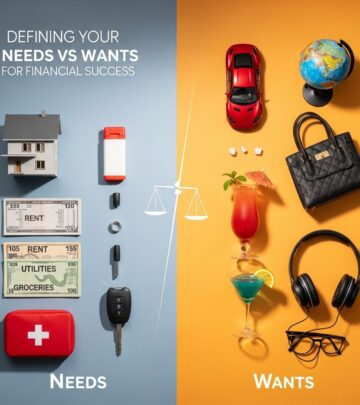
Necessities, or must-haves as financial experts define them, represent bills you must pay regardless of circumstances. These fundamental expenses form the foundation of your budget and typically include:
- Housing costs (rent or mortgage payments)
- Transportation expenses (car payments, gas, public transit)
- Insurance premiums (health, auto, home)
- Utilities (electricity, water, gas, internet for essential communication)
- Basic groceries and food
These are the bare-minimum expenses required to maintain a functional household and meet basic human needs for shelter, safety, and sustenance.
What Are Wants?
Wants represent the category of “all the treats and extras” that enhance quality of life but aren’t strictly necessary for survival. Wants typically include:
- Clothing beyond basic necessities
- Restaurant meals and dining out
- Entertainment subscriptions and activities
- Coffee shop purchases
- Hobby supplies and recreational activities
- Updated technology and gadgets
The key distinction is that wants improve your lifestyle and bring pleasure, but you could survive without them. Many people blur the line between needs and wants, convincing themselves that certain wants are actually needs.
What Are Luxuries?
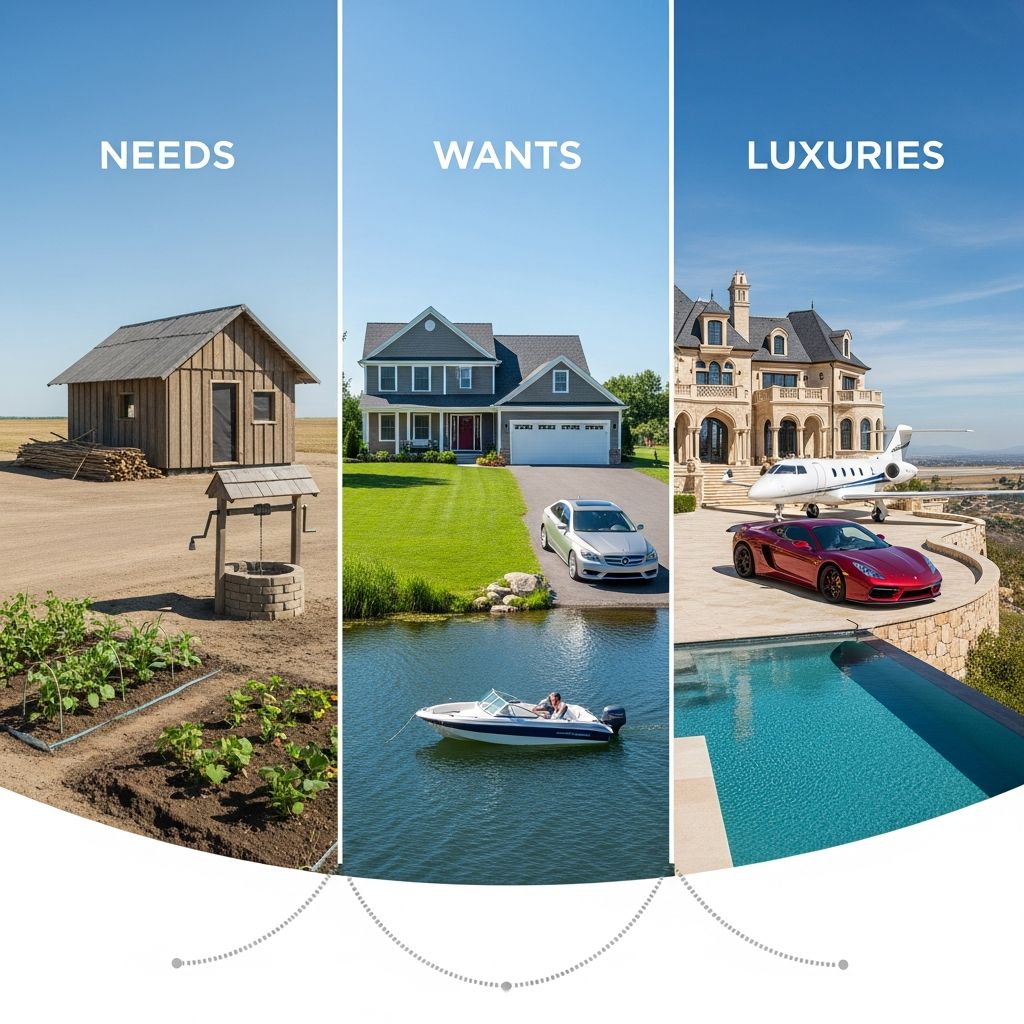
A luxury is defined as “an inessential, desirable item that is expensive or difficult to obtain.” This definition contains two crucial components. First, a luxury must be unnecessary—not required for basic functioning. Second, it must carry a significant price tag or be difficult to obtain, making it accessible primarily to those with substantial resources. Luxuries serve dual purposes: they provide enjoyment, and they function as status symbols that communicate wealth and social position.
The Role of Social Context and Norms
What people consider a necessity doesn’t depend solely on the item itself or its objective function—it depends heavily on what’s considered normal within their social circle. This principle aligns with findings from happiness economists, who discovered that people’s satisfaction often correlates less with their absolute income and more with their income relative to others.
For example, owning a small house feels perfectly adequate when all your friends live in apartments. However, if everyone in your peer group owns large homes, a spacious house shifts from luxury to perceived necessity. The same phone, car, or wardrobe that represents a luxury in one community might be standard in another. This relativity means that needs and luxuries aren’t fixed categories but fluid designations shaped by geographic location, cultural background, socioeconomic peer group, and era.
Understanding Income Elasticity of Demand
Economists explain the relationship between income levels and purchasing behavior through a concept called “income elasticity of demand.” This principle describes how your income directly affects your likelihood of purchasing certain product types. As income rises, demand for luxury goods typically surges dramatically, while demand for necessities remains relatively stable.
Consider electronics as a practical example. After receiving a raise or substantial tax refund, you’re significantly more likely to purchase a new television or laptop. In contrast, someone on a strict budget postpones such purchases indefinitely. This pattern helps identify which items qualify as luxury goods—products showing the strongest demand increases when incomes rise are definitionally luxury items.
Luxury Goods vs. Normal Goods
The distinction between luxury goods and normal goods matters for budgeting purposes. Normal goods see modest demand increases with income growth, while luxury goods experience dramatic demand spikes. Understanding this difference helps you recognize which expenditures you’ll naturally reduce first when finances tighten.
Veblen Goods and Positional Goods
Within the luxury category exists a special subset of items called Veblen goods, named after economist Thorstein Veblen. These products derive their appeal partly from their scarcity and high price. Examples include original artwork, designer fashion, and luxury automobiles. The paradox of Veblen goods is that higher prices actually increase demand—people want them precisely because few can afford them.
Related to Veblen goods are “positional goods,” which are inherently scarce, making competition for them intense. Elite university tuition exemplifies positional goods. Spending more on these items allows people to demonstrate their social position and maintain their standing. As luxury items become commonplace, they lose their status-signaling power and shift toward perceived normalcy. For instance, a luxury car like a Mercedes ceases to be truly luxurious once most people in your social circle own one—creating a perpetual upgrade cycle where the wealthy pursue the next status symbol.
The Psychology of Luxury Purchasing
Research reveals surprising truths about why people buy luxury brands. According to a 2014 study published in the Journal of Consumer Psychology, people don’t necessarily purchase luxury items for their snob appeal. Testing showed that individuals felt more interested in luxury brands after completing tasks that generated feelings of accomplishment rather than superiority.
However, this research also uncovered a paradox: once people own luxury products, these items trigger feelings of snobbish pride rather than accomplishment-based pride. Additionally, when observers see designer labels, they typically attribute snobbishness to the wearer rather than acknowledging any accomplishment. This disconnect suggests that even when people purchase luxuries to reward themselves, they risk being perceived as showing off regardless of their actual motivation.
The Value Beyond Status
While status signaling plays a role in luxury purchases, dismissing all luxury spending as superficial misses the complete picture. Luxuries aren’t inherently wasteful or foolish. Quality luxury products often look better, feel superior, and last longer than ordinary alternatives. A well-made luxury item might provide better functionality and longevity than cheaper alternatives, potentially justifying the premium price through extended usefulness.
The key consideration is whether you genuinely enjoy the luxury and can comfortably afford it without jeopardizing financial stability. Having some luxuries in your life serves as a reward for hard work and achievement, provided you recognize them as luxuries rather than necessities.
Making Conscious Spending Choices
Financial discipline requires distinguishing between needs, wants, and luxuries because this distinction directly impacts your ability to achieve financial goals. Conscious spending involves:
- Establishing a full emergency fund before discretionary spending
- Setting aside target amounts for retirement and taxes
- Making deliberate decisions about each purchase rather than impulse buying
- Avoiding debt-financed lifestyle inflation
- Resisting pressure to “keep up with the Joneses”
- Aligning spending with personal values and priorities rather than habit
The distinction between past and present spending habits illustrates this principle. Before implementing conscious spending strategies, individuals often purchase items without consideration, mimicking peers’ purchases and increasing spending whenever income rises. After adopting deliberate spending practices, purchases reflect authentic priorities and values rather than external pressure or automatic consumption patterns.
Creating Your Personal Categories
These broad categories—needs, wants, and luxuries—aren’t universal. Your classification depends on your circumstances, location, family situation, and values. A vehicle might be a necessity for someone in a rural area without public transportation, while it’s optional for an urban dweller with reliable transit. High-speed internet might be a want for entertainment purposes but a necessity for someone working from home.
The practical application is recognizing what falls into each category for your specific situation. This clarity becomes essential when you need to tighten your budget—knowing what’s truly necessary versus what’s discretionary helps you make strategic cuts that preserve quality of life while reducing expenses.
Strategic Luxury Allocation
Understanding your categories also enables strategic luxury allocation. By being frugal in areas that don’t matter to you—such as cutting restaurant spending or delaying car purchases—you free up resources to invest in luxuries that genuinely enhance your life. This targeted approach proves more sustainable than across-the-board frugality, which leads to burnout and unsustainable spending patterns.
Someone might skip expensive dining out but invest in quality bicycles because their family cycles regularly. Another might maintain a modest wardrobe but splurge on travel experiences. The difference between financial success and failure often comes down to making these conscious choices rather than mindlessly spending or universally depriving yourself.
Avoiding Bad Debt Through Careful Categorization
One critical principle: don’t finance luxuries with debt. Financing wants and luxuries on credit creates destructive financial patterns. If you cannot comfortably afford luxuries with available cash, postpone the purchase until you can. This distinction separates good financial management from problematic debt accumulation that undermines long-term stability.
Frequently Asked Questions (FAQs)
Q: How do I know if something is a need or a want?
A: Ask yourself if you could survive without it and whether it’s truly necessary for basic functioning. Necessities are non-negotiable bills like rent and utilities. Wants enhance life but aren’t required. If you hesitate, it’s probably a want or luxury.
Q: Can something shift from being a want to a necessity?
A: Yes. As social norms evolve and items become widespread, former luxuries can become perceived necessities. Cellphones, once luxuries, are now considered essential by most. Your personal circumstances also matter—a car is a necessity in rural areas but optional in cities.
Q: Is it wrong to buy luxuries?
A: Not at all. Having luxuries rewards hard work and improves quality of life. The key is recognizing them as luxuries, ensuring you can afford them without debt, and that you genuinely enjoy them rather than purchasing for status alone.
Q: Why do people perceive luxuries as necessities?
A: Social comparison drives this perception. When peers own something, it feels normal. Happiness economists found that satisfaction depends less on absolute wealth and more on relative wealth compared to others in your social circle.
Q: How should I budget if I can’t distinguish between needs and wants?
A: Track all spending for a month, then categorize each expense. Ask: “Could I survive without this?” and “Is this something everyone in my situation needs?” Once categorized, allocate funds accordingly, prioritizing needs, then wants, then luxuries.
References
- What’s the Difference Between Necessities and Luxuries? — Money Crashers. Accessed November 29, 2025. https://www.moneycrashers.com/difference-between-needs-wants-luxuries/
- Understanding Debt — FutureMakers. Accessed November 29, 2025. https://www.futuremakers.ac.nz/resources/understanding-debt/
- The Rewards of Frugality and Thrift — Get Rich Slowly. Accessed November 29, 2025. https://www.getrichslowly.org/why-we-scrimp-and-save-the-rewards-of-frugality-and-thrift/
Similar Articles








Read full bio of Sneha Tete