Building Financial Security Through Near-Term Savings
Strategic approaches to achieving your financial objectives within the next few years

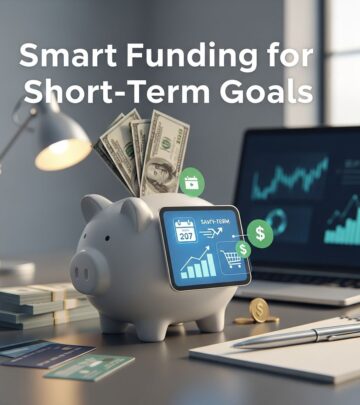
Financial planning doesn’t always require a decades-long perspective. Many of life’s important milestones—taking a vacation, purchasing a vehicle, establishing an emergency reserve, or eliminating credit card balances—fall within a timeframe of one to five years. These near-term objectives form the foundation of sound financial management, allowing you to address immediate needs while building momentum toward larger ambitions. Understanding how to identify, quantify, and pursue these goals with appropriate savings vehicles can significantly accelerate your progress and reduce financial stress.
Understanding Near-Term Financial Objectives
A near-term financial objective typically refers to something you want to accomplish within the next one to five years, though most experts consider the sweet spot to be one to three years. Unlike long-term retirement planning or educational funding that may span decades, near-term goals focus on immediate life events and financial needs that demand your attention in the relatively near future.
These objectives serve multiple purposes in your overall financial framework. They provide concrete targets that maintain motivation, offer opportunities to practice disciplined saving habits, and create the financial cushion necessary to handle life’s surprises without derailing your larger financial plans. Whether you’re thinking about a major purchase, preparing for unexpected expenses, or working to eliminate high-interest debt, near-term goals deserve intentional planning and strategic execution.
Identifying Your Savings Targets
Before you can develop an effective savings strategy, you need clarity about what you’re actually saving toward. The first step involves honest self-assessment of your financial priorities and circumstances.
Common Near-Term Savings Objectives
- Emergency Financial Reserves: Financial experts recommend maintaining three to six months of living expenses in an accessible account. For someone with $3,000 in monthly expenses, this translates to $9,000 to $18,000 set aside for unexpected job loss, medical emergencies, or major household repairs.
- Debt Reduction: Many people prioritize paying down credit card balances within 6-12 months to reduce interest payments and improve financial flexibility.
- Travel and Recreation: Vacations and leisure experiences often fit naturally into a 6-12 month savings timeline. A $3,000 vacation goal becomes $250 per month when divided across a year.
- Major Purchases: Whether it’s a vehicle, home down payment, or significant appliance replacement, many purchases require 12-36 months of deliberate accumulation.
- Personal Development: Education courses, certifications, or skill-building programs often represent achievable near-term financial commitments.
Calculating Your Specific Dollar Targets
Once you’ve identified your goals, the next step requires concrete math. Simply deciding you want to “save more” lacks the specificity needed for actual progress. Instead, research exactly what your target costs.
For an emergency fund, calculate your monthly essential expenses—housing, utilities, insurance, food, transportation, and debt payments. Multiply that number by three, four, five, or six depending on your job security and financial situation. Someone earning $3,500 monthly might calculate $10,500 (three months) as a baseline emergency fund target.
For other goals, conduct similar due diligence. Call venues for wedding venue pricing, research vehicle costs in your market, check airline and accommodation prices for your desired vacation destination, or investigate course fees for professional development. Specificity transforms vague aspirations into actionable targets.
Restructuring Your Budget to Fund Goals
Identifying where money will come from is just as important as identifying where it will go. Most people already allocate most of their income to necessities and routine expenses. Finding additional funds for savings requires deliberate examination of your spending patterns.
The 50/30/20 Budgeting Framework
A widely-adopted budgeting structure allocates your after-tax income as follows:
| Category | Percentage | Examples |
|---|---|---|
| Essential Needs | 50% | Housing, utilities, groceries, insurance, debt payments |
| Discretionary Wants | 30% | Entertainment, dining out, subscriptions, hobbies |
| Savings and Debt Reduction | 20% | Emergency funds, goal savings, additional debt payments |
If your current spending doesn’t align with this framework, the discretionary category typically offers the most flexibility. Review streaming subscriptions, restaurant meals, coffee shop visits, and entertainment spending—these categories often hold significant optimization potential.
Identifying Specific Spending Adjustments
Beyond high-level budgeting frameworks, examine your transaction history to identify concrete reduction opportunities. Common areas where people find savings include:
- Reducing or eliminating subscription services you rarely use
- Preparing meals at home instead of dining out frequently
- Limiting impulse purchases and non-essential shopping
- Negotiating bills such as insurance, phone service, or internet
- Finding free or low-cost entertainment alternatives
- Reducing energy costs through behavioral changes or efficiency upgrades
Automating Your Savings Process
One of the most effective techniques for achieving savings goals involves removing the decision-making component through automation. Rather than saving whatever money remains at the end of each month, set up automatic transfers from your checking account to a dedicated savings account on your payday.
This approach offers multiple advantages. First, money moves before you see it in your primary account, reducing the temptation to spend it. Second, consistency becomes effortless—the system functions without requiring willpower or remembrance each month. Third, you can observe steady progress toward your goal, which reinforces motivation and commitment.
If a $250 monthly savings goal feels overwhelming, start smaller and increase contributions gradually as you adjust to the new spending pattern. An initial $100 monthly commitment can always increase as budget adjustments take effect.
Selecting Appropriate Savings Vehicles
Where you store your near-term savings matters significantly. Different account types offer varying combinations of accessibility, interest earnings, and safety. Since you’ll need these funds within 1-5 years, your priority should emphasize liquidity and principal protection over maximum growth potential.
High-Yield Savings Accounts
High-yield savings accounts, particularly those offered by online banks, provide the optimal balance for most near-term goals. These accounts offer several advantages:
- Liquidity: Access your money immediately whenever needed, making these ideal for emergency funds
- Interest Earnings: Current rates significantly exceed traditional savings accounts, helping your balance grow faster
- Safety: FDIC insurance protects your balance up to $250,000 per account
- Flexibility: Make deposits whenever you have extra funds or set up automatic transfers
- No Penalties: Withdraw without fees or interest penalties, providing complete flexibility
High-yield savings accounts work particularly well for emergency funds where you need guaranteed access, or for goals where you might need to adjust your timeline.
Certificates of Deposit
Certificates of Deposit (CDs) offer fixed interest rates over set periods, typically ranging from three months to five years. When you open a CD, you agree to leave your money untouched until maturity in exchange for a guaranteed return.
CDs can benefit near-term savers in specific situations:
- Interest rates typically exceed high-yield savings account rates
- Funds are locked in, preventing impulsive withdrawal temptation
- Complete principal protection with FDIC insurance
- Predictable, guaranteed returns without market risk
However, CDs involve a trade-off: you cannot access funds without penalty before maturity. This makes them better suited for goals with fixed timelines where you’re confident you won’t need emergency access.
CD Laddering Strategy
CD laddering offers a sophisticated approach to balancing higher interest rates with maintained liquidity. This strategy involves dividing your savings across multiple CDs with different maturity dates.
For example, if you’re saving $12,000 over three years, you might purchase four $3,000 CDs maturing at 6, 12, 18, and 24 months. As each CD matures, you receive your principal plus interest, providing periodic access to funds while maintaining higher overall returns than a high-yield savings account.
Money Market Accounts
Money market accounts represent a hybrid between traditional savings and checking accounts. They typically offer:
- Interest rates between traditional savings and high-yield savings accounts
- Check-writing privileges or debit card access for limited withdrawals
- FDIC insurance protection
- Tiered interest rates that increase with higher balances
These accounts work well for goals where you want reasonable interest earnings and occasional access flexibility.
Strategies for Multiple Near-Term Goals
Most people juggle several competing near-term objectives simultaneously. An emergency fund takes priority over a vacation fund, and debt reduction often demands attention before new savings goals receive funding.
Prioritizing Multiple Objectives
Create a hierarchical list of your near-term goals with target timelines and required amounts. Generally, financial experts suggest this priority order:
- Building an initial emergency fund (one month of expenses minimum)
- Eliminating high-interest debt such as credit cards
- Expanding your emergency fund to the full three-to-six month target
- Pursuing other discretionary near-term goals such as travel or purchases
Allocating Savings Across Accounts
Once priorities are clear, you might allocate your monthly savings across multiple accounts. Someone saving $400 monthly might direct $250 to an emergency fund in a high-yield savings account while putting $150 toward a vacation fund in a separate account. This visual separation reinforces commitment to different goals while preventing mental blending of dedicated funds.
Many successful savers maintain both high-yield savings accounts and CDs simultaneously, using each for different purposes. The high-yield account handles emergency funds requiring immediate access, while CDs lock in savings toward specific timeline-bound goals.
Maintaining Momentum and Adjusting Course
Setting up automated savings and selecting appropriate accounts doesn’t complete the process. Ongoing attention and periodic review ensure you stay on track.
Monitoring Progress
Review your savings account balances monthly or quarterly to confirm that automatic transfers are occurring and that you’re making expected progress. This practice serves multiple purposes: it confirms the system is functioning correctly, provides psychological reinforcement through visible progress, and creates opportunities to celebrate milestones.
Adjusting for Life Changes
Circumstances shift. A job loss, income increase, unexpected expense, or change in priorities may require adjusting your savings targets or timelines. Rather than abandoning goals altogether, reassess and modify them realistically. If an emergency necessitates withdrawing from your goal savings, restart the process rather than viewing it as failure.
Leveraging Windfalls
Tax refunds, bonuses, or unexpected income provide opportunities to accelerate goal achievement. Rather than allowing windfalls to disappear into discretionary spending, direct them toward your designated savings accounts. A $1,000 tax refund can dramatically shorten your timeline toward goals.
Building the Foundation for Long-Term Success
Successfully executing near-term savings goals does more than accomplish immediate objectives. This practice builds financial discipline, demonstrates to yourself that savings is achievable, and creates the stability from which longer-term planning becomes possible.
Each completed near-term goal represents proof of concept for your financial capabilities. The habits developed—budgeting awareness, spending discipline, and automated savings—transfer directly to long-term planning whether for retirement, education funding, or major life purchases.
Common Questions About Near-Term Savings
How much should I save monthly for near-term goals?
The appropriate amount depends on your income, expenses, and goal timeline. The 50/30/20 budgeting rule suggests allocating 20% of after-tax income toward savings and debt reduction. However, even starting with 5-10% of income is meaningful if your budget initially cannot accommodate more.
Should I prioritize near-term goals or long-term retirement saving?
Both matter, but typically the priority sequence is: emergency fund, high-interest debt elimination, then balancing near-term and long-term goals. However, if your employer offers a 401(k) match, contribute enough to capture the full match before prioritizing other goals.
What if I experience an emergency before reaching my savings goal?
An actual emergency is precisely why savings exists. Using your emergency fund for its intended purpose is not failure; it’s the system functioning as designed. After the emergency passes, restart your savings process with realistic expectations.
Is it better to use a high-yield savings account or CD?
For goals where you need rapid access or might require funds before your target date, high-yield savings accounts offer superior flexibility. For goals with fixed timelines where you won’t need the money until maturity, CDs typically offer higher returns.
How do I prevent myself from spending money designated for savings?
Automation is the most effective tool. By moving money automatically from your primary checking account to a separate savings account, you eliminate decision-making. Additionally, using accounts at different banks or institutions creates psychological barriers to impulse withdrawal.
References
- Savings Strategies to Help You Reach Your Short-Term Goals — ForBright Bank. 2024. https://www.forbrightbank.com/stories/resources/two-savings-strategies-for-short-term-goals/
- 6 Short-Term Financial Goals to Set for Yourself — SoFi Learn. 2024. https://www.sofi.com/learn/content/smart-short-term-financial-goals/
- Short Term Financial Goals: Examples & Planning — WECU. 2024. https://www.wecu.com/planning-for-short-term-financial-goals/
- Smart steps when saving for short- and long-term financial goals — T. Rowe Price. 2024. https://www.troweprice.com/personal-investing/resources/insights/smart-steps-when-saving-for-short-and-long-term-financial-goals.html
- 3 Short-Term Savings Goals and How to Achieve Them — Coosa Valley Credit Union. 2024. https://www.mycvcu.org/news/3-short-term-savings-goals-and-how-to
- How to plan for short- and long-term savings goals — Citizens Bank. 2024. https://www.citizensbank.com/learning/planning-for-short-term-and-long-term-goals.aspx
Similar Articles








Read full bio of Sneha Tete