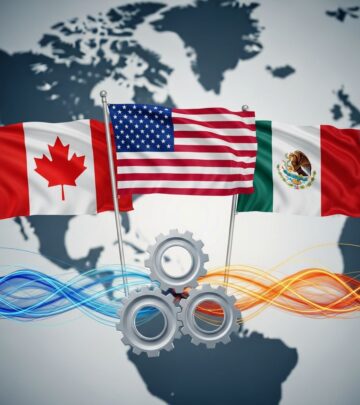
NAFTA Pros and Cons: Trade Agreement Impact
Explore the comprehensive advantages and disadvantages of NAFTA's impact on North American trade and economies.

Understanding NAFTA: Pros and Cons of North American Free Trade
The North American Free Trade Agreement (NAFTA) stands as one of the most significant and controversial international trade agreements in modern history. Signed in 1992 and entering into effect on January 1, 1994, this landmark pact created a trilateral trade bloc among the United States, Canada, and Mexico, fundamentally reshaping commerce across North America. For nearly three decades, NAFTA governed trade relationships between the three nations until it was replaced by the United States-Mexico-Canada Agreement (USMCA) in 2020. Understanding both the advantages and disadvantages of NAFTA is essential for comprehending its lasting impact on North American economies, employment, and trade patterns.
What Was NAFTA?
NAFTA was a comprehensive trade agreement designed to eliminate tariffs, customs duties, and other trade barriers between the United States, Canada, and Mexico. The agreement emerged from the vision of U.S. President Ronald Reagan, who championed the concept of a North American free trade zone beginning in 1979, and it built upon the existing Canada-United States Free Trade Agreement signed in 1988. The primary goal was to stimulate economic growth, increase investment flows, and create employment opportunities across all three member nations by enabling the freer movement of goods and services.
The negotiation process began in July 1991, with the preliminary agreement reached in August 1992 and the formal signing occurring on December 17, 1992, by U.S. President George H.W. Bush, Canadian Prime Minister Brian Mulroney, and Mexican President Carlos Salinas de Gortari. After ratification by all three countries’ legislatures in 1993, the agreement took effect on January 1, 1994. President Bill Clinton championed NAFTA’s implementation, stating that “NAFTA means jobs. American jobs, and good-paying American jobs.”
The Pros of NAFTA
Increased Trade and Economic Growth
One of the most significant advantages of NAFTA was the substantial increase in trilateral trade and economic activity. The agreement’s immediate elimination of tariffs on more than half of Mexico’s exports to the U.S. and more than one-third of U.S. exports to Mexico created unprecedented opportunities for trade expansion. By progressively eliminating tariffs and quantitative restrictions, with most duties removed by 2008, NAFTA enabled businesses to operate across borders with minimal friction. This tariff elimination created a more level playing field for North American manufacturers competing against producers from other regions.
The increased trade volume benefited all three economies, as goods and services could flow more freely across the borders. American exporters gained access to rapidly growing markets in Mexico, while Canadian and Mexican manufacturers gained unprecedented access to the enormous U.S. consumer market. This reciprocal market access stimulated investment in infrastructure, logistics, and production facilities throughout North America.
Job Creation and Employment Opportunities
NAFTA proponents argued that the agreement would create millions of well-paying jobs across all three participating nations. The elimination of trade barriers made North America a more attractive destination for manufacturing operations, as companies could integrate production across borders while taking advantage of each nation’s strengths. Lower-cost assembly operations in Mexico, combined with access to sophisticated North American supply chains and consumer markets, enabled U.S. and Canadian firms to maintain competitiveness against Asian manufacturers.
The agreement created opportunities for cross-border investment and production integration. U.S. companies could establish manufacturing operations in Mexico to access lower labor costs while maintaining access to North American markets and maintaining their global competitiveness. Parts and components could cross borders duty-free for further assembly, with only the value-added in Mexico subject to U.S. import tariffs. This integrated production model preserved American manufacturing jobs that might otherwise have been lost to overseas competition.
Agricultural and Manufacturing Sector Benefits
NAFTA provided significant benefits to the agricultural sector across North America. American farmers, ranchers, and agribusinesses gained improved access to Canadian and Mexican markets, while the modernization of food and agriculture trade rules supported expanded production and export opportunities. The agreement also created opportunities for fiber, textile, and clothing manufacturers to expand sales and increase production through full utilization of economies of scale.
Intellectual Property Protection
The agreement included strong provisions for protecting intellectual property rights, requiring participating countries to adhere to rules protecting intellectual property and adopt strict measures against industrial theft. This protection benefited innovative North American companies in technology, pharmaceuticals, entertainment, and other knowledge-intensive industries, ensuring that their innovations were legally protected across all three markets.
Investment and Dispute Resolution
NAFTA established formal rules for resolving disputes between investors and participating countries, which provided unprecedented protections for North American businesses operating across borders. This investor protections framework encouraged cross-border investment by reducing regulatory uncertainty and providing mechanisms for corporations and investors to seek compensation if signatory countries violated treaty rules.
The Cons of NAFTA
Job Displacement and Manufacturing Decline
Despite promises of job creation, NAFTA resulted in significant job displacement in certain American industries. While most economic analyses indicated that NAFTA was beneficial to the North American economies overall, the agreement harmed a small minority of workers in industries exposed to trade competition. Manufacturing sectors facing low-wage competition from Mexico, particularly in apparel, textiles, and automotive parts production, experienced job losses as companies relocated operations southward.
Workers in communities dependent on manufacturing faced significant hardship as factories closed or reduced operations. Although aggregate employment across the U.S. economy grew after NAFTA’s implementation, the concentration of job losses in specific regions created persistent economic challenges. Former industrial towns in the Midwest and Southeast struggled with unemployment, declining property values, and reduced tax bases, even as new opportunities emerged in other sectors and regions.
Trade Deficit Expansion
Another criticism of NAFTA centered on the expansion of the U.S. trade deficit. Critics argued that American consumers and businesses increasingly imported more goods from Canada and Mexico than North American exporters sold to these countries, contributing to a broader U.S. trade imbalance. The Trump administration identified reducing the U.S. trade deficit as its top priority in NAFTA renegotiations, reflecting concerns that the agreement had not created the balanced trade relationships its architects had envisioned.
Environmental Concerns
While NAFTA required participating countries to maintain environmental standards comparable to U.S. levels, critics argued the agreement’s enforcement mechanisms were inadequate. The expansion of industrial production in Mexico, particularly in maquiladoras (assembly factories) near the U.S. border, raised concerns about pollution, water contamination, and degradation of border ecosystems. Environmental advocates contended that NAFTA prioritized trade expansion over environmental protection.
Energy Dependency and Resource Constraints
NAFTA’s Article 605 energy proportionality rule created controversial provisions regarding energy trade with Canada. According to this clause, the United States effectively gained virtually unlimited first access to most of Canada’s oil and natural gas, and Canada could not reduce oil, natural gas, and electricity exports to the U.S. even if Canada was experiencing shortages. This energy provision limited Canada’s ability to prioritize domestic energy security and raised questions about national sovereignty over natural resources.
Wage and Working Condition Concerns
Critics argued that NAFTA’s provisions regarding labor standards were insufficient. While the agreement included labor provisions, enforcement remained weak, and companies relocated to Mexico in part to access lower-wage workers with fewer protections. This created a “race to the bottom” dynamic where competition from Mexican workers constrained wage growth for North American workers, particularly in manufacturing sectors.
Agricultural Market Disruption
Mexican corn farmers faced severe competition from subsidized American corn imports following NAFTA’s implementation, leading to significant agricultural displacement in Mexico. While the agreement benefited large-scale commercial agricultural operations, particularly in the United States, smaller farmers in Mexico and North America struggled with increased competition and price pressures.
NAFTA’s Replacement: The USMCA
Recognizing NAFTA’s limitations and evolving economic conditions, the three countries renegotiated the agreement beginning in 2017 under the Trump administration. The United States prioritized addressing the trade deficit, reducing provisions that allowed Canada and Mexico to appeal U.S. duties, and limiting the U.S. ability to impose import restrictions. The renegotiation produced the United States-Mexico-Canada Agreement (USMCA), which replaced NAFTA in 2020.
The USMCA modernized provisions for a 21st-century economy, including updated intellectual property protections, new rules for digital trade, and revised automotive content requirements. Mexico agreed to increase the rules of origin threshold, requiring that 75 percent of vehicle components be manufactured in North America, up from the previous 62.5 percent, to avoid tariffs. The USMCA introduced a 16-year expiration date with regular 6-year reviews, enabling countries to renegotiate provisions or withdraw if the agreement was no longer serving their interests.
Comparative Impact Assessment
| Aspect | Promised Benefits | Actual Outcomes | Disputed Results |
|---|---|---|---|
| Job Creation | Millions of new jobs across all three nations | Net positive employment growth in U.S. and Canada overall | Significant displacement in specific manufacturing sectors |
| Trade Volume | Substantial increase in trilateral trade | Trade between nations increased significantly | U.S. trade deficit with Mexico expanded |
| Economic Growth | Increased prosperity through expanded commerce | Positive overall economic growth in all three nations | Unequal distribution of benefits among regions and sectors |
| Consumer Benefits | Lower prices through increased competition | Increased product availability and competition | Potential price increases in some sectors (vehicles) |
| Manufacturing Base | Maintained and expanded North American production | Mixed results with some sectors strengthened | Significant losses in apparel, textiles, and some auto parts |
Frequently Asked Questions About NAFTA
Q: When did NAFTA take effect and when did it end?
A: NAFTA took effect on January 1, 1994, and remained in force until it was replaced by the United States-Mexico-Canada Agreement (USMCA) on July 1, 2020. For nearly 26 years, NAFTA governed trade relationships between the three nations.
Q: Who were the key figures in negotiating NAFTA?
A: NAFTA was negotiated by U.S. President George H.W. Bush, Canadian Prime Minister Brian Mulroney, and Mexican President Carlos Salinas de Gortari. President Bill Clinton later signed it into law on December 8, 1993.
Q: Did NAFTA achieve its goal of creating millions of jobs?
A: NAFTA’s employment impact was mixed. While aggregate employment in all three nations grew and most economic analyses indicated net benefits, the agreement resulted in significant job displacement in specific industries and regions, particularly in manufacturing sectors facing competition from lower-wage Mexican labor.
Q: How did NAFTA affect environmental protection?
A: While NAFTA required participating countries to maintain environmental standards similar to U.S. levels, critics argued that enforcement mechanisms were weak and that the expansion of industrial production in Mexico created environmental challenges, particularly in border regions.
Q: What were the key differences between NAFTA and the USMCA?
A: The USMCA modernized numerous provisions including stronger intellectual property protections, new digital trade rules, and increased automotive content requirements (75 percent North American content instead of 62.5 percent). The USMCA also included a 16-year expiration date with regular reviews, unlike NAFTA’s indefinite duration.
Q: How did NAFTA affect agricultural sectors?
A: NAFTA benefited large-scale commercial agricultural operations through improved market access, but small farmers, particularly in Mexico, faced severe competition from subsidized imports, leading to agricultural displacement.
Q: What was the energy proportionality rule in NAFTA?
A: NAFTA’s Article 605 energy proportionality rule gave the United States virtually unlimited first access to most of Canada’s oil and natural gas, and prevented Canada from reducing energy exports to the U.S. even during domestic shortages.
References
- North American Free Trade Agreement — Britannica. 2024. https://www.britannica.com/event/North-American-Free-Trade-Agreement
- North American Free Trade Agreement — Wikipedia. 2024. https://en.wikipedia.org/wiki/North_American_Free_Trade_Agreement
- United States-Mexico-Canada Agreement — U.S. International Trade Commission (USTR). 2024. https://ustr.gov/trade-agreements/free-trade-agreements/united-states-mexico-canada-agreement
- The North American Free Trade Agreement: The Ties that Bind — Federal Reserve Bank of Chicago. September 1992. https://www.chicagofed.org/publications/chicago-fed-letter/1992/september-61
- North American Free Trade Agreement — U.S. International Trade Commission (USTR). 2024. https://ustr.gov/about-us/policy-offices/press-office/ustr-archives/north-american-free-trade-agreement-nafta
- Summary of the North American Free Trade Agreement — U.S. Department of Commerce International Trade Administration. 2023. https://www.trade.gov/sites/default/files/2023-06/nafta.pdf
Similar Articles








Read full bio of Sneha Tete