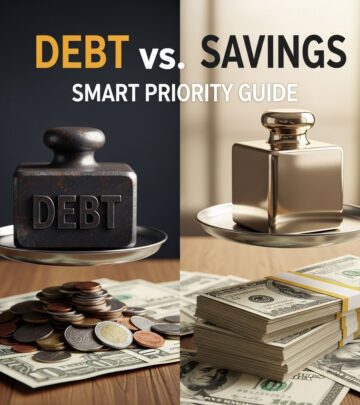
My 2016 Budget Challenge: Reduce Debt or Save for an Emergency?
Life's unexpected curveballs force a couple to rethink their aggressive debt payoff plan: pay down debt faster or build an emergency fund first?

In the world of personal finance, few decisions feel as pressing as choosing between tackling debt head-on or building a safety net for the unknown. This is the dilemma my husband (Mr. Budget Challenge) and I faced midway through our ambitious 2016 budget challenge. What started as a straightforward plan to slash our debt by $31,000 in one year hit unexpected roadblocks, forcing us to pause and reassess: should we double down on debt repayment, or divert funds to an emergency savings account? This article dives deep into our journey, the pros and cons of each path, and the strategies that helped us navigate this crossroads.
Setting the Stage: Our Original 2016 Budget Challenge
At the start of 2016, we launched an aggressive personal finance experiment documented across Wise Bread. Our goal? Eliminate $31,000 in consumer debt within 12 months. This wasn’t just any debt—it included credit cards, personal loans, and lingering balances from life transitions like job changes and home improvements. We calculated we’d need to find or save an extra $2,889 per month on top of our regular income to hit the target.
To achieve this, we employed a multi-pronged approach:
- Income Boosting: Side hustles, freelance gigs, and even job creation efforts to increase earnings.
- Expense Slashing: Ruthless cuts to discretionary spending, from dining out to subscriptions.
- Debt Snowball Method: Prioritizing smallest balances first for psychological wins, inspired by strategies like those from financial experts who emphasize momentum over math alone.
Early progress was promising. We paid off smaller debts quickly, building confidence. But life, as it often does, threw curveballs that tested our resolve.
The Curveballs: Why Our Plan Went Sideways
Just months into the challenge, reality intruded. First, Mr. Budget Challenge’s car needed $1,500 in urgent repairs—tires, brakes, and an alternator that chose the worst moment to fail. Then, I faced a medical issue requiring $800 in out-of-pocket costs, despite insurance. Add in a surprise property tax hike and rising utility bills from an unusually hot summer, and our monthly surplus evaporated.
Suddenly, we were dipping into credit cards again—not for luxuries, but necessities. Our debt balances crept back up, and stress mounted. We realized our all-in debt focus left us vulnerable. No emergency fund meant every hiccup derailed progress. This sparked the core question: reduce debt or save for an emergency?
| Category | Amount | Percentage |
|---|---|---|
| Essentials (Survive) | $2,500 | 50% |
| Fun/Revive | $1,250 | 25% |
| Debt/Savings (Strive) | $1,250 | 25% |
| Total | $5,000 | 100% |
This simple Survive-Revive-Strive framework kept us sane initially, allocating half to needs, a quarter to joys, and a quarter to goals. But without a buffer, it crumbled.
Option 1: Aggressively Reduce Debt
Proponents of debt-first strategies argue it’s mathematically superior. High-interest consumer debt (often 15-25% APR) compounds quickly, outpacing even modest investment returns. Paying it off frees up cash flow faster.
- Debt Snowball Pros: Quick wins build motivation. Paying smallest debts first creates momentum, as smallest balances fall fastest.
- Debt Avalanche Alternative: Targets highest interest rates for optimal savings, though slower emotional payoff.
- Real-World Impact: We eliminated three small cards early, saving $200/month in minimums.
However, risks abound without savings. One emergency reignites the cycle, as we experienced. Financial educators stress this trap keeps many in perpetual debt.
Option 2: Build an Emergency Fund First
Financial wisdom from sources like government-backed programs recommends 3-6 months of expenses in liquid savings before aggressive debt paydown. Why? Emergencies are statistically inevitable—60% of Americans can’t cover a $1,000 surprise.
- Target Size: For our $5,000 monthly expenses, aim for $15,000-$30,000.
- Building Strategies:
- 52-Week Challenge: Save $1 week 1 to $52 week 52, totaling $1,378 painlessly.
- Automate transfers to high-yield savings (then 1-2% APY).
- Pros: Peace of mind, avoids new debt, stabilizes budgeting.
Our pivot: Redirect $500/month from debt to savings until we hit $3,000 (starter fund). This hybrid felt balanced.
| Approach | Pros | Cons | Best For |
|---|---|---|---|
| Debt-First | Fast cash flow freedom; interest savings | Vulnerable to shocks; stress | Low-debt, stable income |
| Savings-First | Security; prevents new debt | Slower debt progress; opportunity cost | High emergency risk |
| Hybrid | Balanced; sustainable | Slower on both | Most households |
Involving the Spouse: Turning Mr. Budget Challenge into a Partner
Success hinged on teamwork. Initially, Mr. was skeptical—preferring debt focus. We compromised via weekly money dates: review spending, celebrate wins, adjust goals. Tools like shared apps (Mint, YNAB) fostered transparency.
- Tips for Spousal Buy-In:
- Start small: One shared goal.
- Frame positively: Fun challenges over restrictions.
- Equal input: Avoid dictator vibes.
Job Creation and Income Strategies
To fund both debt and savings, we ramped up earnings. Goal: $2,889 extra monthly. Tactics:
- Gigs: Ridesharing, tutoring ($500/month).
- Sales: Sell unused items ($300 one-time).
- Upskilling: Online courses for raises.
By mid-year, side income covered emergencies without derailing debt.
Long-Term Lessons: What We Learned
Our challenge evolved into a hybrid: $1,000 emergency fund first, then 50/50 split. Debt dropped $18,000 by year-end—not $31,000, but sustainable. Key takeaways:
- Prioritize a $1,000 starter fund immediately.
- Use debt snowball for motivation.
- Budget flexibly—life isn’t linear.
- Capability > Knowledge: Practice builds habits.
Financial planning isn’t for the wealthy; it’s essential for all to break debt cycles.
Frequently Asked Questions (FAQs)
Q: Should I pay off debt or save for an emergency first?
A: Build a $1,000 starter emergency fund first, then split efforts. This prevents new debt from surprises while maintaining momentum.
Q: What’s the debt snowball method?
A: Pay minimums on all debts, extra on smallest balance first for quick wins and motivation, regardless of interest rates.
Q: How do I involve my spouse in budgeting?
A: Hold regular money dates, use shared apps, focus on shared goals, and celebrate wins together.
Q: Can I hit big savings goals with a simple plan?
A: Yes, the 52-week challenge builds $1,378 gradually, perfect for starters.
Q: What’s a good budget split for debt payoff?
A: Try Survive (50% needs), Revive (25% fun), Strive (25% debt/savings).
References
- The 3-part budget plan to break down debt — YouTube (Joy’s financial advice segment). 2023. https://www.youtube.com/watch?v=weNcw6QD5LE
- My 2016 Budget Challenge: Why I Need to Find $31K This Year — Wise Bread. 2016. https://www.wisebread.com/my-2016-budget-challenge-why-i-need-to-find-31k-this-year
- Budget Challenge® – Financial Literacy and Capability — BudgetChallenge.com (official site). 2025 (last updated). https://www.budgetchallenge.com
- My 2016 Budget Challenge: Job Creation — Wise Bread. 2016. https://www.wisebread.com/my-2016-budget-challenge-job-creation
- 52-week money challenge — AOL Finance. 2024-10-01. https://www.aol.com/finance/budgeting/article/52-week-money-challenge-200156258.html
- 6 Reasons Why Financial Planning Isn’t Just for the Wealthy — Wise Bread. 2016. https://www.wisebread.com/6-reasons-why-financial-planning-isnt-just-for-the-wealthy
Similar Articles








Read full bio of Sneha Tete