Mutual Funds vs ETFs: Key Differences Explained
Discover how mutual funds and ETFs differ in trading, costs, management, and more to choose the best investment vehicle for your portfolio.
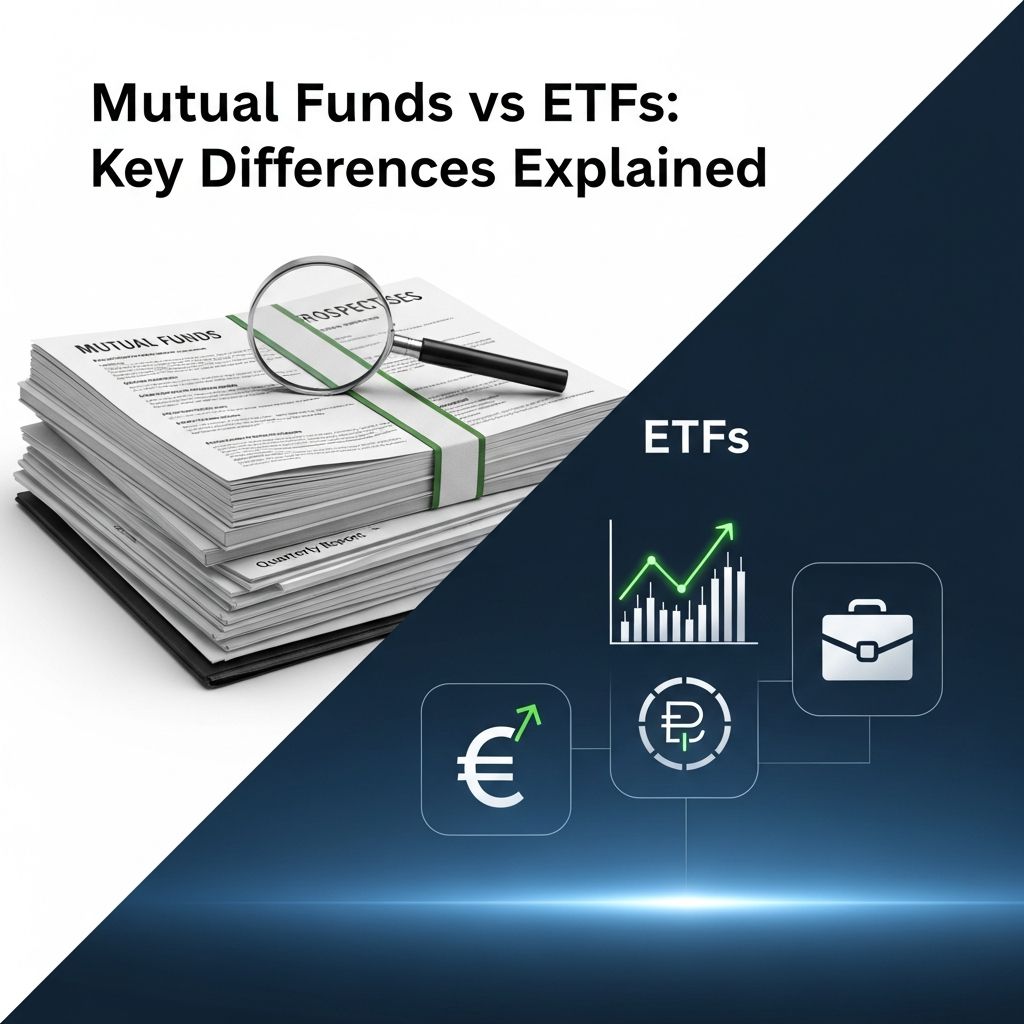
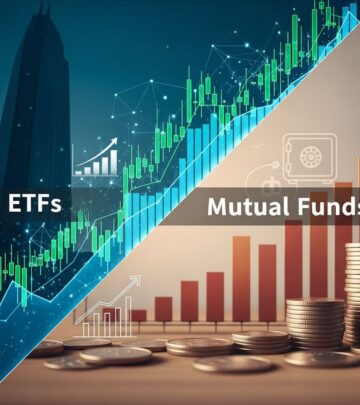
Mutual funds and exchange-traded funds (ETFs) represent two popular ways for investors to achieve diversification without picking individual stocks or bonds. Both pool money from multiple investors to create a diversified portfolio, but they operate differently in terms of trading, costs, management, and tax implications. Understanding these distinctions helps investors align their choices with personal goals, risk tolerance, and investment habits.
Understanding the Basics of Pooled Investments
Pooled investment vehicles like mutual funds and ETFs allow everyday investors to access professional management and broad market exposure. A mutual fund collects capital from shareholders and invests it across a range of assets, such as stocks, bonds, or a mix, aiming to meet specific objectives like growth or income. Similarly, an ETF assembles a basket of securities that often mirrors an index, sector, or theme, traded on public exchanges.
Both options democratize investing by reducing the need for extensive research. For instance, a single share can provide exposure to hundreds of companies, spreading risk. However, while they share this core purpose, their structures lead to unique advantages and trade-offs.
Trading Mechanisms: When and How You Buy or Sell
One of the most noticeable differences lies in how these funds are bought and sold. ETFs function like individual stocks, listed on exchanges such as the NYSE or Nasdaq. This means you can purchase or sell shares at any point during market hours (typically 9:30 a.m. to 4 p.m. ET), with prices updating in real-time based on supply and demand. This intraday trading offers flexibility for reacting to news or market shifts quickly.
In contrast, mutual funds are not exchange-listed. Orders placed anytime during the day are processed only once, at the end of the trading session, based on the fund’s net asset value (NAV). NAV calculates the total value of the fund’s holdings divided by outstanding shares, ensuring all investors that day get the same price regardless of order time.
This end-of-day pricing suits buy-and-hold strategies but limits responsiveness. ETFs’ market-driven pricing can sometimes trade at a premium or discount to NAV, though arbitrage mechanisms usually keep them aligned.
Management Approaches: Active vs Passive Strategies
Mutual funds often employ active management, where professional portfolio managers select securities to outperform benchmarks. This hands-on approach involves research, market timing, and adjustments, which can lead to higher returns but also elevated risks if predictions falter. However, index-tracking mutual funds exist as passive alternatives.
ETFs predominantly follow passive strategies, replicating indices like the S&P 500 without frequent changes. This ‘set-it-and-forget-it’ style minimizes human intervention, reducing costs and turnover. Active ETFs are available but less common. Passive management appeals to those believing markets are efficient, prioritizing low fees over potential outperformance.
Cost Structures and Expense Ratios
Fees significantly impact long-term returns. Mutual funds, especially actively managed ones, typically carry higher expense ratios—annual fees as a percentage of assets—covering manager salaries, research, and operations. These can range from 0.5% to over 2%, with additional sales loads (front-end or back-end commissions).
ETFs shine in cost efficiency, with average expense ratios under 0.5%, often below 0.1% for broad-market funds. Their passive nature cuts overhead, though brokerage commissions or bid-ask spreads may apply for trades. No-load mutual funds narrow the gap but rarely match ETF lows.
| Feature | Mutual Funds | ETFs |
|---|---|---|
| Average Expense Ratio | 0.5%-2%+ | 0.03%-0.5% |
| Trading Commissions | Often none | Broker-dependent |
| Sales Loads | Possible (A, B, C shares) | None |
| Minimum Investment | $1,000-$3,000 typical | Price of one share |
Tax Efficiency and Capital Gains Considerations
ETFs often prove more tax-efficient due to their ‘in-kind’ creation and redemption process. When shares are exchanged, the ETF swaps securities with authorized participants instead of selling them, avoiding taxable events. Lower portfolio turnover further reduces capital gains distributions.
Mutual funds, particularly active ones, may sell holdings to meet redemptions, triggering capital gains passed to all shareholders—even non-sellers. This can create unexpected tax bills in taxable accounts. Index mutual funds mitigate this somewhat, but ETFs generally edge out in tax deferral.
Investment Minimums and Accessibility
Mutual funds often impose minimum initial investments, sometimes $1,000 or more, though some waive for retirement accounts. This barrier suits larger investors but deters beginners.
ETFs require only the cost of one share—often under $100—making them accessible for fractional investing via some brokers. No minimums lower the entry point, ideal for dollar-cost averaging manually.
Automation and Recurring Investments
Mutual funds excel in automation; investors can schedule regular contributions or withdrawals directly with the fund company, fostering disciplined saving.
Traditional ETFs lack built-in automation, requiring manual trades. However, some brokers now offer recurring ETF purchases, narrowing this gap—check Vanguard’s updates effective 2025.
Transparency and Holdings Disclosure
ETFs disclose full holdings daily, enabling real-time risk assessment and comparison. This transparency builds trust and aids tactical decisions.
Mutual funds typically reveal portfolios quarterly, limiting intraday visibility. While sufficient for long-term holders, it frustrates active overseers.
Advanced Trading Features for ETFs
ETFs support sophisticated orders: limits, stops, shorts, and margin (after holding periods). This appeals to traders seeking precision. Mutual funds stick to simple market orders at NAV, without margin or limits.
Which Should You Choose? Factors to Weigh
Select based on your style:
- Long-term, hands-off: Mutual funds for automation and simplicity.
- Cost-conscious, flexible: ETFs for low fees and liquidity.
- Taxable accounts: Favor ETFs.
- Active trading: ETFs only.
Hybrid portfolios blending both leverage strengths—ETFs for core holdings, mutual funds for specialized strategies.
Real-World Performance Insights
Historically, low-cost index ETFs and mutual funds outperform most active funds net of fees. S&P’s SPIVA reports confirm this persistence, underscoring passive appeal. Yet, niche active mutual funds occasionally excel in volatile markets.
Frequently Asked Questions (FAQs)
Can ETFs be actively managed?
Yes, though rare; most track indices passively.
Are mutual funds safer than ETFs?
No, safety depends on underlying assets, not structure.
Do ETFs always trade at NAV?
Usually close, but premiums/discounts occur briefly.
Which has better returns?
Varies; low-cost options from both often beat active peers.
Can I hold both in one account?
Absolutely, many brokers support both seamlessly.
References
- Mutual Funds vs Exchange Traded Funds — University of Illinois. 2023. https://blogs.uofi.uillinois.edu/view/7550/1323172623
- ETFs vs. Mutual Funds: What’s the difference? — TD Bank. 2024. https://www.td.com/ca/en/investing/direct-investing/articles/etfs-vs-mutual-funds
- ETFs vs. Mutual Funds – What’s the Difference? — Charles Schwab. 2024. https://www.schwab.com/etfs/mutual-funds-vs-etfs
- ETFs vs. Mutual Funds: Which To Choose — Vanguard. 2024. https://investor.vanguard.com/investor-resources-education/etfs/etf-vs-mutual-fund
- Mutual funds vs. ETFs: Which is right for you? — Fidelity Investments. 2024. https://www.fidelity.com/viewpoints/investing-ideas/mutual-fund-or-etf
- ETF vs. Mutual Fund: What’s the Difference? — U.S. Bank. 2024. https://www.usbank.com/investing/financial-perspectives/investing-insights/etfs-vs-mutual-fund.html
Similar Articles








Read full bio of medha deb