Mutual Funds: Benefits and Drawbacks
Explore the key advantages and potential pitfalls of mutual funds to make informed investment choices for your financial future.

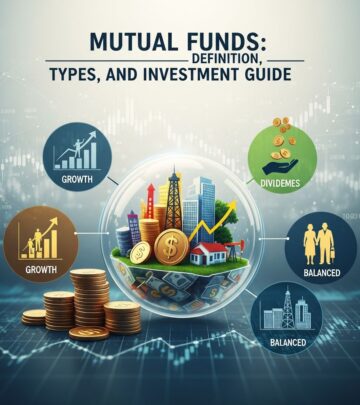
Mutual funds represent a popular investment vehicle where multiple investors combine their capital to purchase a diversified portfolio of securities such as stocks, bonds, and other assets. Managed by professionals, these funds aim to achieve specific financial objectives while spreading risk across various holdings.
Understanding the Fundamentals of Mutual Funds
At their core, mutual funds operate by pooling resources from numerous participants. This collective capital allows the fund to acquire a broad array of investments that would be challenging for individual investors to replicate on their own. The net asset value (NAV) of the fund, calculated daily based on the current market value of its holdings, determines the price per share. Investors buy shares directly from the fund or through intermediaries, gaining proportional ownership in the portfolio.
Regulatory oversight by bodies like the U.S. Securities and Exchange Commission (SEC) ensures transparency, with funds required to disclose performance data, fees, and holdings regularly. This structure makes mutual funds accessible to a wide audience, from beginners to seasoned investors seeking convenience.
Key Advantages That Make Mutual Funds Appealing
Mutual funds offer several compelling benefits that attract investors looking for efficiency and reduced complexity in their portfolios.
Broad Diversification Across Assets
One of the primary strengths is
diversification
, which mitigates risk by spreading investments across multiple securities and sectors. Instead of betting on a single stock, a fund might hold hundreds of stocks and bonds, cushioning the impact of any one underperformer. This approach typically lowers volatility compared to individual security purchases.Access to Expert Management
**Professional management** is another hallmark. Experienced fund managers conduct research, monitor markets, and make buy/sell decisions, leveraging expertise that most retail investors lack. This ongoing oversight aims to optimize returns aligned with the fund’s goals.
Low Entry Barriers and Flexibility
Many funds require only modest initial investments, enabling gradual wealth building through regular contributions. This
low barrier to entry
supports strategies like dollar-cost averaging, where consistent investing captures market opportunities over time.High Liquidity and Transparency
Shares can be redeemed daily at the NAV, providing
liquidity
not always available in other investments. Daily pricing ensures investors know their position’s value precisely.Variety to Match Investor Needs
With options spanning equity, bond, balanced, index, and sector-specific funds, investors can select vehicles tailored to their risk tolerance and goals. This
variety
enhances portfolio customization.Potential Downsides and Risks to Consider
Despite their attractions, mutual funds come with notable drawbacks that can impact net returns and suitability.
Fees and Expense Ratios Eating into Profits
**Costs** are a significant concern. Management fees, often expressed as an expense ratio (typically 0.5% to 2% annually), cover operations and erode returns over time. Sales loads—front-end or back-end charges—add further expenses. Low-cost index funds mitigate this, but actively managed ones can be pricier.
Market and Principal Loss Risks
All funds face
market risk
, with values fluctuating based on economic conditions. There’s no guarantee against losses, and principal can decline, especially in equity-heavy funds.Tax Inefficiencies from Distributions
**Tax implications** arise from dividends, interest, and capital gains distributions, which are taxable even if reinvested. Frequent trading within the fund can trigger unwanted tax events for shareholders.
Dependence on Manager Performance
**Manager risk** exists if the fund underperforms due to poor decisions. Actively managed funds don’t always beat benchmarks, leading some to favor passive index funds.
Comparing Mutual Funds to Other Investments
To evaluate fit, consider mutual funds alongside alternatives.
| Feature | Mutual Funds | Individual Stocks | ETFs |
|---|---|---|---|
| Diversification | High (built-in) | Low (requires effort) | High |
| Management | Professional | Self-managed | Passive or active |
| Trading | End-of-day NAV | Intraday | Intraday |
| Minimum Investment | Low | Varies | Low (one share) |
| Fees | Expense ratios + loads | Commissions | Lower expense ratios |
This table highlights mutual funds’ strengths in diversification and management but notes higher fees and less trading flexibility compared to ETFs.
Types of Mutual Funds for Different Goals
- Equity Funds: Focus on stocks for growth, higher risk/reward.
- Bond Funds: Invest in fixed-income for income and stability.
- Balanced Funds: Mix stocks and bonds for moderate risk.
- Index Funds: Track benchmarks like the S&P 500 at low cost.
- Money Market Funds: Short-term, low-risk for preservation.
Choosing the right type aligns with time horizons and risk appetites.
Strategies for Success with Mutual Funds
To maximize benefits, adopt these practices:
- Review expense ratios; opt for low-cost options like Vanguard’s, which average far below industry norms.
- Use tax-advantaged accounts (e.g., IRAs) to defer taxes.
- Diversify across fund types to balance risk.
- Monitor performance against benchmarks annually.
- Employ dollar-cost averaging for consistent investing.
Frequently Asked Questions (FAQs)
What is the average return on mutual funds?
Returns vary by type and market; stock funds average 7-10% annually long-term, but past performance doesn’t predict future results.
Are mutual funds safe?
No investment is risk-free; they offer diversification but can lose value.
How do I buy mutual funds?
Through brokers, fund companies, or retirement plans like 401(k)s.
What’s the difference between mutual funds and ETFs?
ETFs trade like stocks intraday; mutual funds settle at end-of-day NAV.
Can I lose money in mutual funds?
Yes, due to market fluctuations and no principal guarantees.
Is Investing in Mutual Funds Right for You?
Mutual funds suit those valuing convenience, diversification, and professional input without daily management. Assess your goals, risk tolerance, and costs before committing. Consulting a financial advisor can personalize this decision.
References
- What is a mutual fund? Basics, pros and cons — Ameriprise Financial. 2023. https://www.ameriprise.com/financial-goals-priorities/investing/what-are-mutual-funds
- Mutual fund — Wikipedia. 2023-10-01. https://en.wikipedia.org/wiki/Mutual_fund
- What is a mutual fund? — Vanguard. 2023. https://investor.vanguard.com/investor-resources-education/mutual-funds/what-is-a-mutual-fund
- What Are Mutual Funds and How Do They Work? — Experian. 2023. https://www.experian.com/blogs/ask-experian/what-are-mutual-funds/
- Understanding the Pros & Cons of Mutual Funds — Western & Southern Financial Group. 2023. https://www.westernsouthern.com/investments/pros-and-cons-of-mutual-funds
- Mutual Funds — Investor.gov (SEC). 2023. https://www.investor.gov/introduction-investing/investing-basics/investment-products/mutual-funds-and-exchange-traded-funds-etfs/mutual-funds
Similar Articles








Read full bio of medha deb