Municipal Bonds: Definition, Types, and Tax Benefits
Understand municipal bonds: debt instruments for funding local projects with tax-exempt income benefits.
What Are Municipal Bonds?
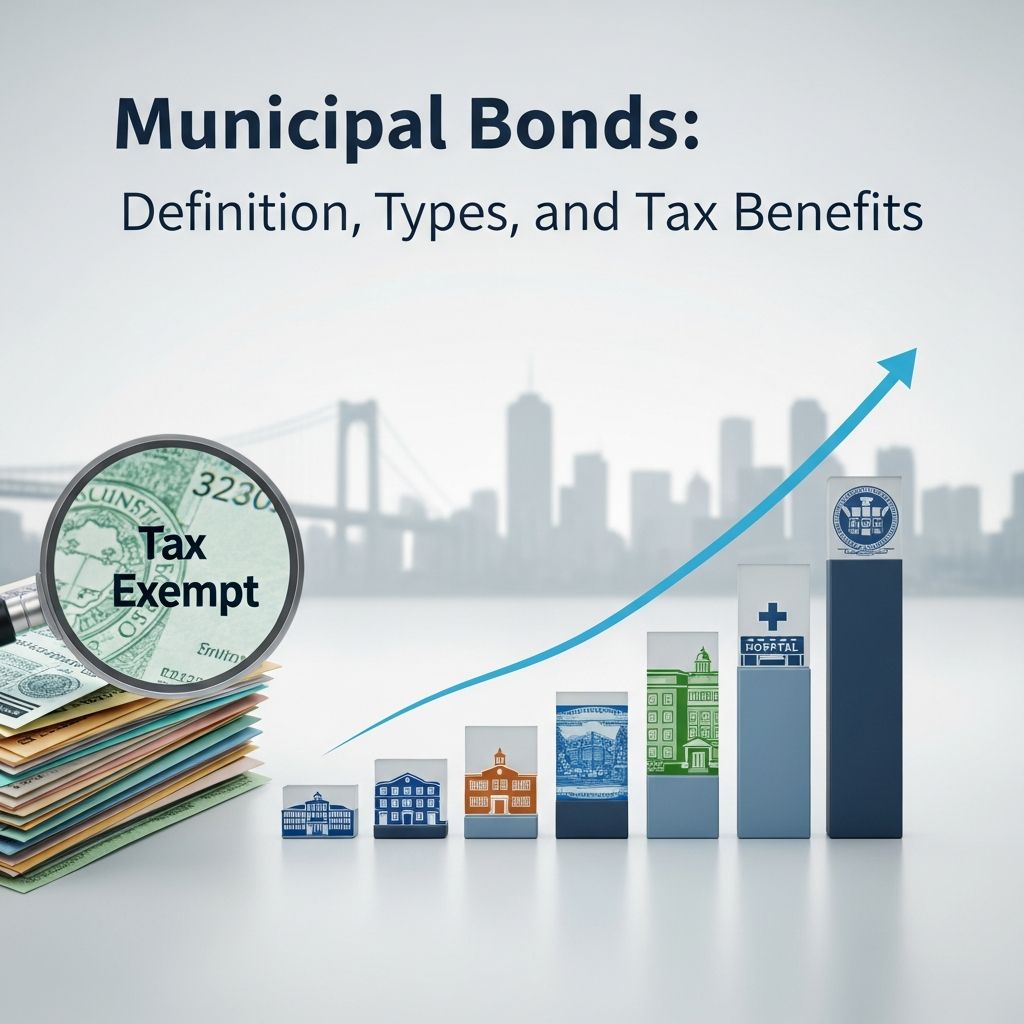
Municipal bonds, often referred to as munis, are debt securities issued by state and local governments, counties, and other municipal authorities to raise capital for public projects and infrastructure development. When you purchase a municipal bond, you are essentially lending money to the issuing government entity in exchange for regular interest payments and the return of your principal investment at maturity.
These bonds serve as a critical financing mechanism for municipalities seeking to fund essential projects without raising taxes or incurring debt through traditional bank loans. The municipal bond market represents one of the largest segments of the U.S. bond market, with hundreds of billions of dollars in outstanding municipal debt.
How Municipal Bonds Work
The mechanics of municipal bonds are straightforward. When a municipality issues a bond, it enters into a contractual agreement with investors. The issuer promises to pay the bondholder a specified rate of interest, known as the coupon rate, at regular intervals (typically semi-annually) until the bond reaches maturity. At maturity, the issuer repays the bond’s face value, also called par value or principal, to the investor.
For example, if you purchase a municipal bond with a $5,000 par value, a 4% coupon rate, and a 10-year maturity, you would receive $200 in annual interest payments (paid in two semi-annual installments of $100) for ten years. After ten years, you would receive your initial $5,000 investment back.
The Primary Uses of Municipal Bonds
Municipalities issue bonds to finance a wide variety of public infrastructure and development projects. Common uses include:
- Road and highway improvements
- School construction and renovation
- Water and sewage system upgrades
- Public transportation systems
- Airport and port facilities
- Hospital and healthcare facility construction
- Parks and recreational facilities
- Emergency services infrastructure
By issuing bonds rather than raising funds through taxation or other means, municipalities can spread the cost of these projects over time and distribute the financial burden across a broader investor base.
Tax Advantages of Municipal Bonds
One of the most significant benefits of investing in municipal bonds is the tax treatment of the interest income. The interest paid on most municipal bonds is exempt from federal income taxation. This tax exemption is codified in the U.S. Internal Revenue Code and represents a substantial benefit to investors in higher tax brackets.
Additionally, many municipal bonds offer state and local tax exemptions. If you purchase a bond issued by your home state or municipality, the interest income may be exempt from state income tax and, in some cases, local income tax. Bonds that are exempt from federal, state, and local taxes are often referred to as “triple tax-exempt” bonds.
This tax-exempt status makes municipal bonds particularly attractive to high-income earners who would otherwise face substantial federal and state tax liabilities on investment income. The effective yield on a municipal bond may be comparable to or even higher than taxable bonds when accounting for the tax savings.
Types of Municipal Bonds
General Obligation Bonds
General obligation (GO) bonds are backed by the full faith and credit of the issuing municipality. This means the government entity pledges its taxing power and general revenues to repay bondholders. GO bonds are typically considered the safest type of municipal bond because they have the strongest governmental backing. These bonds are often used to finance essential public services and infrastructure.
Revenue Bonds
Revenue bonds are repaid exclusively from the revenues generated by a specific project or enterprise funded by the bond proceeds. For example, bonds issued to finance a toll highway would be repaid from toll collections. Revenue bonds carry more risk than GO bonds because repayment depends on the success and profitability of the underlying project.
Conduit Bonds
Conduit bonds are issued by municipalities on behalf of private entities or non-profit organizations. While technically issued by a government entity, the repayment obligation rests with the private organization, not the municipality. These bonds typically carry higher yields to compensate investors for the additional risk.
Private Activity Bonds
These bonds finance projects that benefit private entities while still maintaining some public purpose. Many private activity bonds have interest income that is subject to federal taxation, limiting their appeal to some investors.
Credit Quality and Risk Assessment
Municipal bonds carry varying levels of credit risk depending on the financial health of the issuing municipality and the nature of the bond. Rating agencies such as Moody’s, Standard & Poor’s, and Fitch assign credit ratings to municipal bonds, similar to ratings for corporate bonds.
Investment-grade municipal bonds (rated BBB or higher) are considered relatively safe investments, while lower-rated speculative-grade bonds carry substantially higher risk of default. The financial condition of the municipality, including its revenue stability, debt levels, and economic trends in its region, all factor into the credit rating.
Investors should carefully evaluate the credit quality of municipal bonds before investing, particularly when considering lower-rated issues or bonds from municipalities facing economic challenges.
Callable Bonds and Reinvestment Risk
Many municipal bonds are callable, meaning the issuing municipality has the right to redeem the bond before its stated maturity date. Municipalities typically exercise this option when interest rates decline, allowing them to refinance their debt at lower rates. When a bond is called, the investor receives the par value plus any accrued interest, but must reinvest the proceeds in a lower-interest-rate environment, reducing overall returns.
This reinvestment risk is an important consideration when evaluating municipal bond investments, particularly when yields are elevated. Investors should pay attention to a bond’s call provisions and factor in the possibility of early redemption when assessing potential returns.
Yield and Duration Considerations
Municipal bond yields vary based on several factors, including credit quality, time to maturity, call features, and overall market conditions. Generally, longer-duration bonds offer higher yields to compensate investors for the increased interest rate risk. Similarly, lower-rated bonds offer higher yields to compensate for higher credit risk.
The relationship between municipal bond yields and taxable bond yields is influenced by the tax-exempt status. Investors should compare the tax-equivalent yield of a municipal bond (the yield a taxable bond would need to provide the same after-tax return) to available alternatives when making investment decisions.
Municipal Bond Market Structure
The municipal bond market is largely composed of individual retail investors, mutual funds, and institutional investors. Unlike the Treasury and corporate bond markets, the municipal bond market is decentralized, with most trading occurring over-the-counter through dealers and brokers.
The primary market for municipal bonds involves the issuance of new bonds through competitive or negotiated offerings. In the secondary market, existing bonds trade among investors. The secondary market for municipal bonds tends to be less liquid than the Treasury or corporate bond markets, which can result in wider bid-ask spreads.
Investment Considerations and Strategies
Investors considering municipal bond investments should evaluate their personal tax situation, time horizon, and risk tolerance. High-income earners benefit most from the tax-exempt status, while lower-income investors may find taxable bonds more advantageous.
A diversified municipal bond portfolio might include bonds from various issuers across different geographic regions and economic sectors. This diversification helps reduce the impact of problems specific to any single municipality or project. Additionally, investors might consider a ladder strategy, purchasing bonds with staggered maturity dates to provide regular access to capital and reduce reinvestment risk.
Risks Associated with Municipal Bonds
While municipal bonds are generally considered lower-risk investments, they are not without risks. Credit risk remains the primary concern, particularly for bonds issued by municipalities facing fiscal stress. Interest rate risk affects all bonds, as rising rates cause existing bond prices to decline. Liquidity risk can make it difficult to sell certain municipal bonds at favorable prices, particularly for lower-rated or less actively traded issues.
Additionally, some municipal bonds may be subject to special risks related to the specific project they finance. Environmental changes, regulatory shifts, or economic downturns affecting particular industries could impact the revenues available to repay bonds.
Tax Treatment and Holding Strategies
While the interest income on municipal bonds is tax-exempt, any capital gains realized when selling bonds are subject to federal and state taxation. Investors who purchase bonds at a discount to par value may face complex tax calculations regarding the portion of their gain attributable to original issue discount versus market appreciation.
Additionally, tax-advantaged accounts such as retirement plans and tax-deferred IRAs present a peculiar situation with municipal bonds. Since the account holder receives tax-free growth regardless, placing tax-exempt securities in these accounts wastes the tax-exemption benefit. Financial advisors typically recommend holding municipal bonds in taxable accounts where their tax exemption provides maximum value.
Frequently Asked Questions About Municipal Bonds
Q: Are municipal bonds safe investments?
A: Municipal bonds, particularly those issued by financially stable municipalities or backed by secure revenue sources, are generally considered safe investments. Investment-grade municipal bonds have low default rates. However, credit risk varies by issuer, and investors should evaluate the credit rating and financial condition of the issuing municipality.
Q: How do I purchase municipal bonds?
A: Municipal bonds can be purchased through brokers, financial advisors, or directly from some municipalities. You can also invest in municipal bonds through mutual funds or exchange-traded funds that specialize in municipal securities.
Q: What is the minimum investment for municipal bonds?
A: Individual municipal bonds typically have a par value of $5,000, though some issuers offer $1,000 par values. Municipal bond mutual funds often have lower minimum investments, sometimes as low as $1,000 or even less.
Q: How are municipal bonds taxed?
A: Interest income on most municipal bonds is exempt from federal income tax and, in many cases, state and local income taxes. However, capital gains from selling bonds at a profit are subject to taxation, and certain private activity bonds may have taxable interest income.
Q: What is the difference between general obligation and revenue bonds?
A: General obligation bonds are backed by the municipality’s taxing power and general revenues, making them lower-risk. Revenue bonds are repaid only from revenues generated by the specific project, making them higher-risk but potentially offering higher yields.
Q: Can I lose money investing in municipal bonds?
A: If you hold the bond to maturity, you receive the full par value, assuming the issuer doesn’t default. However, if you sell before maturity, you could receive less if interest rates have risen. Additionally, municipal bond defaults, though rare, can result in losses.
References
- Investopedia Video: What Is A Municipal Bond? — Investopedia. January 22, 2014. https://www.youtube.com/watch?v=owh2e_M6DNU
- Internal Revenue Code Section 103 – Interest on Certain Governmental Obligations — U.S. Internal Revenue Service. https://www.irs.gov/publications/p954
- Municipal Securities Rulemaking Board Overview — MSRB. https://www.msrb.org/
- Credit Ratings Explained — S&P Global Ratings. https://www.spglobal.com/ratings/en/ratings-solutions
- Bond Basics: How Bonds Work — U.S. Securities and Exchange Commission (SEC). https://www.sec.gov/investor
Similar Articles








Read full bio of Sneha Tete