Multiplier Effect: Definition and Economic Impact
Understanding how initial spending creates cascading economic gains throughout the economy.

Understanding the Multiplier Effect
The multiplier effect is a fundamental concept in economics that describes how an initial increase in spending leads to a greater increase in national income and gross domestic product (GDP). When money is spent in the economy, it doesn’t simply disappear—instead, it circulates through multiple transactions, creating additional income and economic activity that far exceeds the original expenditure. This phenomenon is crucial to understanding how economic stimulus works and why governments and central banks attempt to manage spending and investment cycles.
The multiplier effect is based on the principle that each dollar spent by one person becomes income for another, who in turn spends a portion of that income, creating a chain reaction of economic activity. This concept emerged prominently during the Great Depression and has remained a cornerstone of macroeconomic theory and policy.
How the Multiplier Effect Works
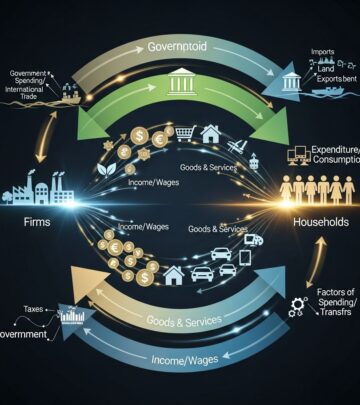
The multiplier effect operates through a series of sequential spending and income rounds. When an individual or entity spends money, that expenditure represents income for the recipient. The recipient then spends a portion of this new income (determined by their marginal propensity to consume), which becomes income for yet another party, and the process continues.
To understand this mechanism, consider the following process:
- Initial Spending: A government invests $1 million in infrastructure development.
- First Round: Construction companies receive the $1 million and pay workers and suppliers, who now have additional income.
- Second Round: Workers and suppliers spend a portion of their new income on goods and services, providing income to retail businesses and service providers.
- Third Round: Retailers and service providers spend their additional revenue, continuing the cycle.
- Continued Rounds: This process repeats with diminishing amounts until the initial spending eventually dissipates through savings and taxes.
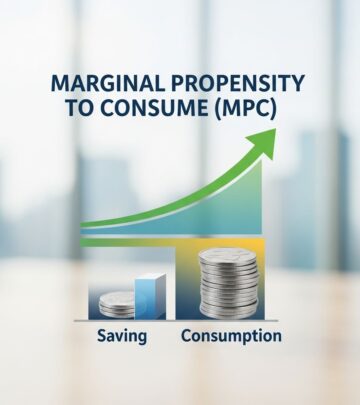
The size of the multiplier effect depends on the marginal propensity to consume (MPC), which represents the percentage of each additional dollar of income that consumers spend on goods and services rather than save. Higher MPC values result in larger multiplier effects, while lower MPC values produce smaller effects.
The Multiplier Formula and Calculation
Economists use a straightforward formula to calculate the multiplier effect. The basic multiplier formula is:
Multiplier = 1 / (1 – MPC)
Alternatively, the formula can be expressed as:
Multiplier = 1 / MPS
Where MPS is the marginal propensity to save (the complement of MPC). For example, if the MPC is 0.8 (meaning consumers spend 80% of additional income), the multiplier would be 1 / (1 – 0.8) = 1 / 0.2 = 5. This means that every dollar of initial spending would generate $5 in total economic activity.
The practical impact of this calculation is significant. If a government stimulus package of $100 million is enacted in an economy with a multiplier of 5, the total impact on GDP would be approximately $500 million. This is why policymakers consider the multiplier effect when designing fiscal stimulus programs.
Types of Multiplier Effects
Economists distinguish between several types of multiplier effects, each measuring different aspects of economic expansion:
Income Multiplier
The income multiplier measures how an initial increase in investment or spending translates into increases in total income throughout the economy. It captures the total income generated by the initial expenditure as it cycles through various economic sectors.
Employment Multiplier
The employment multiplier reflects how an initial increase in employment in one sector creates additional job opportunities in other sectors. For instance, new jobs in construction might lead to increased hiring in food service, retail, and transportation as workers spend their wages.
Spending Multiplier
The spending multiplier, also known as the fiscal multiplier, measures the total change in GDP resulting from an initial change in government spending or investment. It is particularly relevant to fiscal policy analysis and stimulus evaluation.
Tax Multiplier
The tax multiplier measures the impact of changes in taxation on the overall economy. A tax cut increases disposable income, leading to increased consumption and subsequent multiplier effects. However, the tax multiplier is typically smaller in magnitude than the spending multiplier because consumers don’t spend 100% of tax cuts.
Real-World Examples of the Multiplier Effect
Government Infrastructure Spending
When a government allocates funds for infrastructure projects such as highway construction or bridge repairs, the multiplier effect becomes evident. Construction workers receive wages, which they spend on groceries, rent, and entertainment. Businesses that provide these goods and services experience increased revenue, allowing them to hire additional employees and purchase inventory from suppliers, further spreading the economic stimulus.
Business Investment Expansion
When a corporation decides to build a new manufacturing facility, it creates immediate jobs for construction workers and engineers. These workers spend their salaries in local communities, supporting restaurants, retail stores, and service providers. The manufacturer then hires production workers, creating another wave of spending and economic activity.
Tax Cuts and Consumer Spending
Tax reductions that increase household disposable income prompt consumers to purchase more goods and services. This increased demand encourages retailers to expand operations, hire additional staff, and order more inventory from wholesalers and manufacturers, perpetuating the multiplier cycle.
Factors Affecting the Size of the Multiplier Effect
Several factors determine whether the multiplier effect will be large or small in a given economy:
- Marginal Propensity to Consume (MPC): Economies with higher MPC values experience larger multiplier effects because more income is spent rather than saved.
- Marginal Propensity to Import (MPM): In open economies, a portion of spending goes toward imported goods rather than domestically produced items, reducing the multiplier effect.
- Tax Rates: Higher tax rates reduce disposable income and dampen the multiplier effect, while lower tax rates can enhance it.
- Interest Rates: Rising interest rates discourage borrowing and spending, reducing the multiplier effect, while lower rates encourage both.
- Consumer Confidence: When consumers are optimistic about future income and economic conditions, they tend to spend more, amplifying the multiplier effect.
- Unemployment Levels: In economies with high unemployment, stimulus spending can generate larger multiplier effects as idle resources are brought into production.
Multiplier Effect vs. Diminishing Returns
While the multiplier effect demonstrates how initial spending generates additional economic activity, it eventually diminishes as money cycles through the economy. Each successive round of spending is smaller than the previous one because:
- A portion of income is saved rather than spent.
- Taxes are levied on income, reducing disposable earnings.
- Some spending is directed toward imports, leaking money out of the domestic economy.
Eventually, the initial spending is completely absorbed through these various channels, and the multiplier effect ceases to generate additional economic activity.
Multiplier Effect in Keynesian Economics
The multiplier effect is a central tenet of Keynesian economics, which emphasizes the role of aggregate demand in driving economic growth. John Maynard Keynes and his followers argued that during recessions and periods of high unemployment, government spending can effectively stimulate the economy by jumpstarting the multiplier effect. This theoretical foundation has justified numerous fiscal stimulus programs throughout history.
However, the effectiveness of Keynesian stimulus depends on whether the economy has spare capacity. When unemployment is high and resources are underutilized, government spending can generate significant multiplier effects. Conversely, in fully employed economies, stimulus spending may primarily result in inflation rather than increased real economic output.
Criticisms and Limitations of the Multiplier Effect
Despite its widespread acceptance in mainstream economics, the multiplier effect concept faces several criticisms:
- Crowding Out Effect: Government borrowing to finance spending may increase interest rates, discouraging private investment and offsetting the benefits of stimulus.
- Time Lag Issues: The multiplier effect takes time to work through the economy, and by the time stimulus impacts are fully realized, economic conditions may have changed.
- Measurement Challenges: Accurately quantifying the multiplier effect in real-world economies is difficult due to numerous confounding variables.
- Variable Effectiveness: The size of the multiplier effect varies significantly based on economic conditions, making universal prescriptions for stimulus difficult.
Frequently Asked Questions
Q: What is the multiplier effect?
A: The multiplier effect describes how an initial increase in spending generates greater increases in national income and GDP as money circulates through the economy in successive rounds of transactions and consumption.
Q: How do you calculate the multiplier effect?
A: The multiplier is calculated using the formula: Multiplier = 1 / (1 – MPC), where MPC is the marginal propensity to consume. Alternatively, it equals 1 / MPS, where MPS is the marginal propensity to save.
Q: What factors affect the size of the multiplier effect?
A: Key factors include the marginal propensity to consume, tax rates, interest rates, consumer confidence, import levels, and unemployment rates. Higher consumption rates and lower savings rates generally produce larger multiplier effects.
Q: Can the multiplier effect be negative?
A: Yes, if government spending crowds out private investment or consumer confidence falls, the multiplier effect could theoretically be negative or close to zero, offsetting the initial stimulus.
Q: Why is the multiplier effect important for policymakers?
A: Policymakers use the multiplier effect concept to estimate the potential impact of fiscal stimulus programs, helping them determine appropriate spending levels to achieve desired economic outcomes during recessions or periods of weak growth.
Q: Does the multiplier effect work during inflation?
A: During inflationary periods when the economy is at full capacity, the multiplier effect may primarily result in price increases rather than real economic growth, as there are limited idle resources to expand production.
References
- Keynesian Multipliers — International Monetary Fund (IMF). 2023-06-15. https://www.imf.org/
- Fiscal Stimulus and the Multiplier Effect — National Bureau of Economic Research (NBER). 2023-03-22. https://www.nber.org/
- Understanding the Multiplier Process — Federal Reserve System. 2024-01-10. https://www.federalreserve.gov/
- Macroeconomic Effects of Fiscal Policy — World Bank Economic Review. 2023-11-08. https://www.worldbank.org/
- Consumption and the Multiplier in Modern Economies — Journal of Economic Literature, American Economic Association. 2023-09-14. https://www.aeaweb.org/
Similar Articles








Read full bio of Sneha Tete