Multiple Credit Scores Explained
Discover why you see numerous credit scores and how they influence your financial opportunities in lending and beyond.
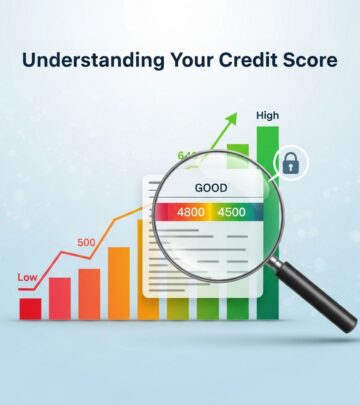
Credit scores serve as numerical summaries of your creditworthiness, typically ranging from 300 to 850, helping lenders predict your likelihood of repaying debts on time.
The Foundation of Credit Scoring Systems
Credit scores are calculated using algorithms that analyze data from your credit reports, which detail your borrowing history, payment patterns, and outstanding debts. The two dominant models are FICO and VantageScore, each employing distinct methodologies to generate these three-digit numbers.
FICO scores, developed by Fair Isaac Corporation, dominate the lending landscape, with versions like FICO Score 8 being the most prevalent for general use. VantageScore, created jointly by the three major credit bureaus—Experian, Equifax, and TransUnion—offers an alternative that aims for broader accessibility, especially for those with thinner credit files.
Why Credit Scores Vary Across Sources
Your credit profile isn’t uniform across all platforms because multiple factors contribute to score discrepancies. Primarily, the three credit bureaus maintain separate reports based on information reported by creditors, leading to potential differences in data.
- Differing report contents: Not all lenders report to every bureau, so one report might miss a recent payment or account.
- Timing of updates: Bureaus receive data at different intervals, causing snapshot variations.
- Scoring model algorithms: FICO and VantageScore weigh factors like payment history (35% in FICO) and credit utilization differently.
Even identical data can yield different scores due to model nuances; for instance, VantageScore may emphasize total debt more heavily in certain versions.
Exploring FICO Score Versions
FICO offers a family of scores tailored to various needs, evolving over time to reflect changing consumer behaviors and data availability.
Base FICO Scores, such as FICO 8 and FICO 9, predict general credit risk across products like credit cards and personal loans. FICO 9 adjusts for medical debt and rental payments, potentially benefiting those with such items on their reports.
Newer iterations like FICO 10 and FICO 10T incorporate trends like rising personal loan usage for consolidation and extend trend analysis periods for trended data, providing lenders with deeper risk insights.
| FICO Version | Primary Use | Range |
|---|---|---|
| FICO 8 | General lending | 300-850 |
| FICO 9 | General, with medical/rent adjustments | 300-850 |
| FICO 10 | Incorporates personal loans | 300-850 |
| FICO Auto Score | Auto loans | 250-900 |
| FICO Bankcard Score | Credit cards | 250-900 |
Industry-specific scores, like FICO Auto Scores (used by auto lenders) or FICO Bankcard Scores (for credit cards), refine predictions by focusing on sector-specific risks, such as loan-to-value ratios in mortgages or delinquency patterns in cards. These often use expanded ranges from 250 to 900, where higher scores still indicate lower risk.
For mortgages, older versions like FICO 2, 4, and 5 remain common, as they align with longstanding lending practices.
VantageScore: A Unified Alternative
VantageScore seeks consistency by pulling from all three bureaus, using versions 3.0, 4.0, and the latest 5.0. It excels for consumers new to credit, scoring files with as little as one month of history compared to FICO’s six-month minimum.
Its ranges slightly differ: Excellent (781-850), Good (661-780), Fair (601-660), Poor (500-600), and Very Poor (300-499).
Credit Score Ranges and Their Implications
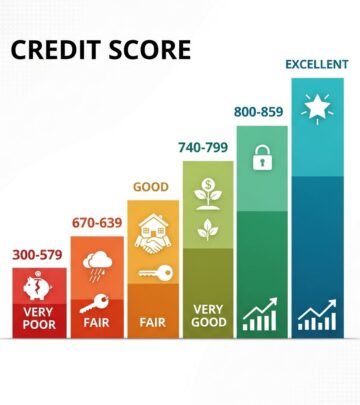
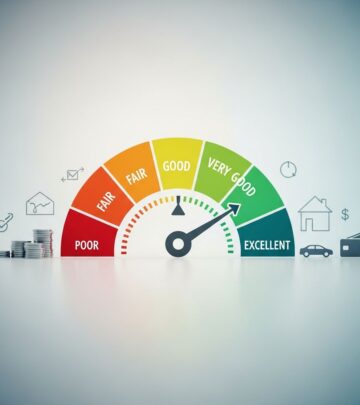
Understanding ranges helps gauge your standing. Most models use 300-850, but categories vary slightly by provider.
| Range | FICO/Experian Label | Equifax Label | VantageScore Label | Lender Perception |
|---|---|---|---|---|
| 800-850 | Exceptional | Excellent | Excellent | Low risk, best rates |
| 740-799 | Very Good | Very Good | Good | Strong approval odds |
| 670-739 | Good | Good | Good | Acceptable risk |
| 580-669 | Fair | Fair | Fair | Higher risk, limited options |
| 300-579 | Poor | Poor | Poor/Very Poor | High risk, denials likely |
Scores above 750 often secure prime rates, while below 580 may lead to subprime terms or denials.
Industry-Specific Scoring in Action
Lenders select scores matching their products. Auto financiers might use FICO Auto Score 2, 4, or 5 (range 250-900), emphasizing auto payment history over general debt.
Credit card issuers favor FICO Bankcard Scores, which scrutinize revolving credit utilization and recent inquiries more intensely.
Mortgage originators stick to FICO 2 (Equifax), 4 (TransUnion), or 5 (Experian) for their proven mortgage default predictions.
This specialization ensures precise risk assessment, potentially improving your approval chances if your profile aligns well with the chosen model.
Accessing and Monitoring Your Scores
Free scores are available weekly from AnnualCreditReport.com for reports, and sites like banks or credit unions offer VantageScore or FICO 8/9 for free.
Paid services provide full FICO suite access, including industry-specific ones via myFICO.
Monitor all three bureaus and models to spot discrepancies early, as errors on one report won’t affect all scores uniformly.
Improving Your Credit Scores Across Models
Core factors overlap: payment history (35%), amounts owed (30%), credit age (15%), new credit (10%), mix (10%) for FICO.
- Pay on time consistently across accounts.
- Keep utilization under 30%.
- Avoid multiple applications.
- Build history length by retaining old accounts.
- Diversify responsibly with installment and revolving credit.
Positive changes propagate to all bureaus over time, though score impacts vary by model.
Common Myths About Credit Scores
- Myth: One score rules all. Lenders pick per product.
- Myth: Higher range always better. Industry scores expand ranges but interpret similarly.
- Myth: Scores never change. They update monthly with new data.
Frequently Asked Questions
What causes the biggest differences in my credit scores?
Variations stem from bureau data mismatches and model algorithms; check reports for discrepancies.
Which score do lenders actually use?
It depends on the lender and product—often industry-specific FICO versions.
Can I get all my FICO scores for free?
Basic ones yes, via banks; full versions require subscription.
How often should I check my scores?
Monthly or after major events like new credit.
Does closing old accounts hurt all scores?
Potentially, by shortening history, but effects vary by model.
Navigating Scores for Financial Success
Embracing score multiplicity empowers better financial decisions. By understanding bureau reports, model differences, and lender preferences, you can target improvements strategically. Regularly review via free tools, dispute inaccuracies, and maintain healthy habits to elevate scores across the board, unlocking favorable loan terms and opportunities.
In today’s lending environment, where FICO 10T and VantageScore 4.0 adapt to digital trends like buy-now-pay-later, staying informed keeps you ahead.
References
- Understanding Credit Scores — Freddie Mac. 2023. https://myhome.freddiemac.com/blog/financial-education/understanding-credit-scores
- What are the Different Ranges of Credit Scores? — Equifax. 2024. https://www.equifax.com/personal/education/credit/score/articles/-/learn/credit-score-ranges/
- Why Are There Different Types of Credit Scores? — Bankrate. 2025-03-15. https://www.bankrate.com/personal-finance/credit/different-types-of-credit-scores/
- FICO Score Types: Why Multiple Versions Matter for You — myFICO. 2024. https://www.myfico.com/credit-education/credit-scores/fico-score-versions
- What Are the Different Credit Score Ranges? — Experian. 2023. https://www.experian.com/blogs/ask-experian/infographic-what-are-the-different-scoring-ranges/
- Different Types of Credit Scores — PSECU. 2024. https://www.psecu.com/learn/different-types-of-credit-scores
- Understanding Credit Scores — Wells Fargo. 2024. https://www.wellsfargo.com/goals-credit/smarter-credit/credit-101/why-so-many-credit-scores/
Similar Articles








Read full bio of Sneha Tete