Multi-Asset Balanced Funds: 4 Types, Benefits, And Risks
Discover how multi-asset balanced funds blend stocks, bonds, and more for steady growth, income, and risk control in one convenient package.

Multi-asset balanced funds provide investors with a streamlined way to access growth from equities alongside income stability from bonds and other assets, all managed professionally within a single portfolio. These funds typically allocate between 40% and 85% to stocks, with the remainder in fixed income, cash, or alternatives, adjusting dynamically to market conditions.
Core Principles of Diversified Portfolio Construction
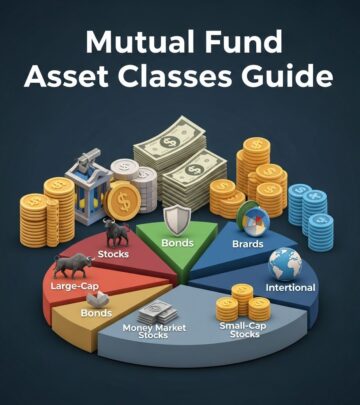
At their heart, these funds prioritize diversification across asset classes to mitigate volatility while pursuing long-term capital appreciation and income. Equities drive growth potential, bonds offer steady yields and act as buffers during stock market downturns, and cash or alternatives like real estate add further stability.
- Equity Exposure: Provides upside from company profits and market rallies, often 40-85% of the portfolio.
- Fixed Income: Generates regular interest payments and preserves capital in low-growth environments.
- Alternatives and Cash: Includes property, infrastructure, or commodities for uncorrelated returns, reducing overall portfolio swings.
This blend helps smooth performance over market cycles, appealing to those seeking moderate risk profiles without constant manual adjustments.
Key Benefits for Modern Investors
Investors turn to these funds for convenience and effectiveness. Professional managers handle asset allocation, security selection, and rebalancing, freeing individuals from daily oversight.
| Benefit | Description | Impact |
|---|---|---|
| Automatic Rebalancing | Managers adjust allocations to maintain target risk levels. | Prevents drift toward higher risk during bull markets. |
| Broad Diversification | Exposure to thousands of global securities across sectors. | Lowers single-asset failure impact. |
| Income and Growth Balance | Twice-yearly distributions possible alongside capital gains. | Suits retirees or income-focused savers. |
| Global Reach | Investments span regions, currencies, and economies. | Captures opportunities worldwide. |
Unlike single-asset investments, this approach targets risk-adjusted returns superior to pure stock or bond holdings over five-plus years.
Investment Strategies and Management Styles
Managers employ varied tactics. Active strategies involve stock-picking and tactical shifts based on economic outlooks, while passive index-tracking mirrors benchmarks for cost efficiency.
- Strategic Allocation: Fixed ratios, like 60/40 stocks/bonds, rebalanced periodically.
- Tactical Adjustments: Flexing equity weightings from 40-85% to exploit opportunities.
- Bottom-Up Selection: Focus on individual securities with strong fundamentals.
- Top-Down Macro: Asset class weighting driven by global trends like inflation or rates.
Many funds benchmark against mixed investment indices, aiming to outperform peers with similar risk profiles.
Types of Multi-Asset Balanced Funds
Options cater to specific needs, from retirement timelines to fixed-risk preferences.
- Target Date Funds: Glide toward conservatism as retirement nears, ideal for hands-off planning.
- Fixed Allocation Funds: Maintain steady mixes like conservative (40% equities) or growth-oriented (80% equities).
- Dynamic Multi-Asset: Include alternatives for enhanced diversification and inflation protection.
- Income-Focused: Prioritize yield from bonds and dividends, suitable for current income needs.
Choosing depends on time horizon, risk tolerance, and goals—shorter timelines favor conservative tilts.
Navigating Risks and Drawbacks
No investment is risk-free. Key concerns include:
- Market Volatility: Equities can cause short-term losses despite diversification.
- Interest Rate Sensitivity: Bond values fall when rates rise, impacting fixed-income portions.
- Currency Fluctuations: Global holdings expose portfolios to exchange rate shifts.
- Manager Risk: Active decisions may underperform benchmarks.
- Inflation Erosion: Low yields in bonds may lag rising prices over time.
These funds suit horizons of five years or more, where compounding offsets interim dips.
Performance Factors and Benchmarks
Success hinges on disciplined allocation and timely adjustments. Historically, balanced approaches deliver smoother returns than equities alone, though they lag in strong bull markets. Compare against sectors like UK IA Mixed Investment 40-85% Shares for relevant context.
Factors influencing outcomes:
- Economic cycles: Equities shine in expansions; bonds in contractions.
- Fees: Lower costs enhance net returns.
- Manager expertise: Proven track records across cycles matter.
Selecting the Right Fund for Your Goals
Assess personal factors: age, objectives, and comfort with fluctuations. Retirement savers might opt for target-date variants; others for fixed-allocation.
- Review asset mix and historical volatility.
- Check fees and minimums.
- Examine manager tenure and strategy consistency.
- Align with benchmarks and peer performance.
- Consider tax implications for income distributions.
Core index funds pair well with active satellites for customized exposure.
Role in Broader Portfolio Strategies
These funds serve as portfolio anchors, comprising 50-100% of holdings for simplicity. Complement with specialized assets like emerging markets or sectors for tilt. In retirement, they provide reliable income streams via reinvestment or payouts.
Future Outlook Amid Evolving Markets
With rising rates, geopolitical tensions, and tech disruptions, flexible multi-asset strategies gain appeal. Emphasis on alternatives hedges inflation, while global diversification counters regional slumps. Expect continued innovation in sustainable and income-enhanced variants.
Frequently Asked Questions
What is the ideal investment horizon for these funds?
At least five years to weather volatility and capture growth.
Do they guarantee returns?
No; past performance does not predict future results, and capital is at risk.
How do fees compare to individual stocks/bonds?
Typically lower due to scale, but active funds charge more than passives.
Are they suitable for beginners?
Yes, offering instant diversification without expertise needed.
Can I withdraw funds anytime?
Most are liquid, but check for any lock-up periods or penalties.
References
- BNY Mellon Multi-Asset Balanced Fund Suitability — BNY Mellon. 2025-11-25. https://www.bny.com/content/dam/ukadviser/pdf/BNY-Mellon-Multi-Asset-Balanced-Fund-Suitability-25-november.pdf
- What are multi-asset or balanced funds? — Vanguard Investor Resources. Recent access 2026. https://investor.vanguard.com/investor-resources-education/mutual-funds/what-are-multi-asset-balanced-funds
- Multi Asset — MFS. Recent access 2026. https://www.mfs.com/en-us/individual-investor/insights/multi-asset.html
- Balanced & Multi Asset — Baillie Gifford. Recent access 2026. https://www.bailliegifford.com/en/uk/institutional-investor/investment-strategies/balanced-and-multi-asset/
- Multi-Asset Funds Explained — BlackRock. Recent access 2026. https://www.blackrock.com/ae/intermediaries/education/investment-education/what-is-a-multi-asset-fund
- 5 Benefits of Multi-Asset Investing — Russell Investments. Recent access 2026. https://russellinvestments.com/-/media/files/ca/en/campaigns/5-benefitstrue-multi-asset.pdf
Similar Articles








Read full bio of Sneha Tete