Mortgage Underwriter Explained: What They Do And How To Prepare
Discover the vital role of mortgage underwriters in approving home loans through risk assessment and compliance checks.

Mortgage underwriters serve as the gatekeepers in the home financing process, meticulously reviewing applications to determine if borrowers qualify for loans based on financial stability and risk factors.
The Essential Function of Mortgage Underwriters in Home Buying
These professionals analyze every aspect of a borrower’s profile to protect lenders from potential losses while ensuring fair lending practices. By scrutinizing income documents, credit reports, and property details, underwriters decide whether to greenlight a mortgage, impose conditions, or reject the application outright.
Their work directly influences whether aspiring homeowners can secure funding to purchase properties. Without thorough underwriting, lenders face heightened exposure to defaults, making this step indispensable in the mortgage lifecycle.
Core Responsibilities in Daily Underwriting Tasks
Mortgage underwriters handle a range of duties centered on verification and evaluation. They begin by gathering and examining loan applications alongside supporting paperwork such as pay stubs, tax returns, and bank statements.
- Verify the accuracy and completeness of all submitted documents to prevent errors or fraud.
- Conduct risk analyses by calculating debt-to-income ratios and assessing credit histories.
- Review property appraisals to confirm the home’s value supports the requested loan amount.
- Ensure adherence to federal regulations, investor guidelines, and internal lender policies.
- Communicate findings to loan officers, often requesting additional information if gaps exist.
These tasks demand precision, as even minor discrepancies can lead to application suspensions or denials.
Deciphering the Three Pillars of Underwriting Evaluation
Underwriters focus on the foundational “three C’s”: credit, capacity, and collateral, which form the bedrock of loan decisions.
| Pillar | What It Involves | Key Checks |
|---|---|---|
| Credit | Borrower’s repayment history | Credit scores, payment records, outstanding debts |
| Capacity | Ability to afford payments | Income verification, debt-to-income ratio, employment stability |
| Collateral | Property as loan security | Appraisal value, title review, insurance proof |
This structured approach allows underwriters to quantify risks objectively, balancing borrower qualifications against lender safeguards.
Navigating the Step-by-Step Mortgage Underwriting Journey
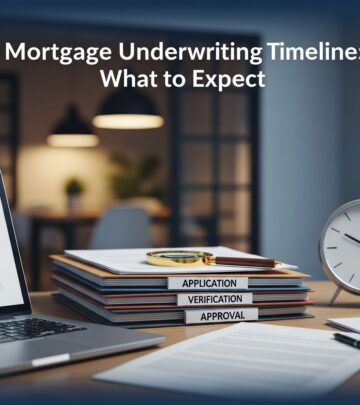
The underwriting phase typically follows loan application submission and document collection by processors. Here’s how it unfolds:
- Initial File Review: Underwriter scans for completeness and flags missing items.
- Financial Deep Dive: Income, assets, and liabilities undergo validation against two years of records where applicable.
- Credit and Risk Assessment: Automated systems may assist, but manual oversight confirms findings.
- Property Validation: Appraisals and title searches ensure the collateral meets standards.
- Compliance Scan: Checks for fair lending laws and investor overlays.
- Decision Issuance: Approval, conditional approval, suspension, or denial with rationale.
Timelines vary but often span 3-7 business days, influenced by file complexity and responsiveness to requests.
Qualifications and Skills Demanded of Top Underwriters
Success in this field requires a blend of education, experience, and technical prowess. Most positions demand a bachelor’s degree in finance, business, or economics, coupled with prior underwriting experience.
- Strong analytical abilities for dissecting financial data.
- Proficiency in tools like Microsoft Office and automated underwriting software.
- Knowledge of regulations from bodies like Fannie Mae, Freddie Mac, and FHA.
- Exceptional organizational skills to manage high-volume caseloads.
- Clear communication for liaising with officers and applicants.
Certifications such as Certified Mortgage Underwriter (CMU) enhance employability and demonstrate expertise.
Potential Outcomes and What They Mean for Borrowers
Underwriting conclusions shape next steps:
- Clear to Close: Full approval; proceed to closing without hurdles.
- Conditional Approval: Loan viable pending specific fixes, like updated docs or higher reserves.
- Suspension: Temporary hold for more info; quick resolution possible.
- Denial: Rejection due to insufficient credit, high debt ratios, or property issues; appeal or reapply options exist.
Understanding these empowers borrowers to prepare proactively and address weaknesses early.
Strategies to Strengthen Your Application Before Underwriting
Borrowers can boost approval odds by anticipating scrutiny:
- Maintain credit scores above 620-680 thresholds for conventional loans.
- Lower debt-to-income ratios below 43-50% via payoff or income boosts.
- Save for 3-6 months of reserves beyond down payment.
- Secure a professional appraisal-aligned property purchase price.
- Gather two years’ tax returns, W-2s, and bank statements in advance.
Avoid new credit inquiries or large purchases during processing to prevent red flags.
Automated vs. Manual Underwriting: Pros and Cons
Many lenders employ Desktop Underwriter (DU) or Loan Product Advisor (LPA) systems for initial findings, with manual review for overrides.
| Method | Advantages | Drawbacks |
|---|---|---|
| Automated | Faster processing, standardized risk models | Limited nuance for unique situations |
| Manual | Customized assessments, higher approval flexibility | Longer timelines, subjective variances |
Hybrid approaches prevail, combining tech efficiency with human judgment.
Regulatory Framework Guiding Underwriter Decisions
Underwriters must navigate a web of rules including the Equal Credit Opportunity Act (ECOA), Fair Housing Act, and Ability-to-Repay (ATR) standards from the Consumer Financial Protection Bureau (CFPB). These mandate non-discriminatory practices and verifiable repayment capacity.
Investor-specific overlays from government-sponsored enterprises add layers, ensuring loans qualify for resale on secondary markets.
Career Path and Opportunities in Mortgage Underwriting
Entry often starts in loan processing or origination, progressing to senior underwriter or management roles. Demand remains steady amid housing market fluctuations, with salaries averaging $70,000-$100,000 annually depending on location and volume.
Remote work options and freelance DE (Direct Endorsement) underwriting appeal to seasoned pros.
Frequently Asked Questions
What triggers an underwriting suspension?
Common causes include incomplete docs, appraisal discrepancies, or unverifiable income; resolve promptly to resume.
How long does underwriting last?
Typically 3-10 days, extendable with complexities or high volumes.
Can I switch lenders mid-underwriting?
Not advisable; it resets the process and may incur fees. Lock rates carefully.
What if my appraisal comes in low?
Negotiate seller concessions, challenge via reconsideration, or increase down payment.
Do self-employed borrowers face extra hurdles?
Yes; two years’ tax returns and profit/loss statements prove stability.
References
- Mortgage Underwriter Job Description — Betterteam. 2023. https://www.betterteam.com/mortgage-underwriter-job-description
- Mortgage Underwriter: Understanding Their Role and Responsibilities — USLegalForms. 2024. https://legal-resources.uslegalforms.com/m/mortgage-underwriter
- Underwriter Job Description Sample — Monster.com. 2024. https://hiring.monster.com/resources/job-descriptions/finance/underwriter/
- Mortgage Underwriter Job Posting — One Community Bank. 2020-10-15. https://onecommunity.bank/wp-content/uploads/2020/10/Mortgage-Underwriter-Job-Posting-10.15.20.pdf
- What is an Underwriter? Complete Career Guide & Outlook — American College of Education. 2024. https://ace.edu/student-success/career-guides/underwriter/
- Mortgage Underwriting Process — U.S. Bank. 2025. https://www.usbank.com/home-loans/mortgage/first-time-home-buyers/mortgage-underwriting-process.html
- How to Become an Underwriter — Western Governors University. 2024. https://www.wgu.edu/career-guide/business/underwriter-career.html
Similar Articles








Read full bio of Sneha Tete