Mortgage Refinancing Strategies: Choosing Your Best Option
Explore diverse refinancing approaches to optimize your home loan terms

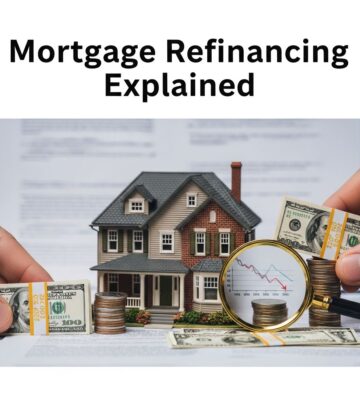
Refinancing your mortgage represents a significant financial decision that can reshape your long-term housing costs and overall financial picture. When you refinance, you essentially replace your existing mortgage with a new loan, potentially offering improved terms, different payment structures, or access to accumulated home equity. Understanding the landscape of available refinancing strategies enables homeowners to make informed decisions aligned with their specific circumstances and objectives.
Understanding the Fundamentals of Mortgage Refinancing
At its core, mortgage refinancing involves paying off your current home loan with a new mortgage, which may carry different conditions. The primary motivation driving refinancing decisions typically centers on reducing monthly payments, shortening the repayment timeline, or accessing funds for other purposes. However, the process encompasses multiple distinct approaches, each designed to address different financial situations and goals.
The decision to refinance should consider several variables, including current market interest rates relative to your existing rate, the remaining balance on your mortgage, your home’s current market value, your credit profile, and your long-term homeownership plans. Each of these factors influences which refinancing strategy makes the most financial sense for your particular scenario.
Rate and Interest Adjustment Refinancing
The most straightforward refinancing approach involves adjusting your interest rate and loan term without changing the underlying loan amount. This strategy appeals primarily to homeowners seeking to capitalize on favorable market conditions or modify their repayment timeline.
When prevailing market rates drop below your current mortgage rate, refinancing to capture this savings becomes particularly attractive. The monthly payment reduction can be substantial over the life of the loan, accumulating to significant savings. Alternatively, homeowners might maintain similar monthly payments while substantially reducing the total interest paid by shortening their loan term from thirty years to fifteen or even ten years.
This refinancing type requires that you maintain an acceptable credit score, demonstrate stable income, and maintain a reasonable debt-to-income ratio. The underwriting process typically involves a home appraisal and standard documentation review, similar to your original mortgage application. For homeowners in solid financial positions with stable employment and consistent payment histories, this option represents a relatively straightforward path to improved loan conditions.
Accessing Home Equity Through Cash-Out Refinancing
As homeowners build equity through mortgage payments and property appreciation, that accumulated equity represents a valuable financial resource. Cash-out refinancing provides a mechanism to convert a portion of this equity into accessible funds for various purposes.
With this approach, you obtain a new mortgage for an amount exceeding your current loan balance. The difference between your existing mortgage and the new, larger loan is disbursed to you in cash at closing. This capital can address major expenses such as comprehensive home renovations, medical costs, educational expenses, debt consolidation, or investment opportunities.
The appeal of cash-out refinancing lies in typically lower interest rates compared to credit cards or personal loans, making it an economical borrowing method. However, this strategy increases your overall mortgage balance and extends the payoff timeline unless you make additional payments. It’s essential to carefully evaluate whether the interest rate savings justify converting short-term debt into long-term mortgage debt.
| Consideration | Details |
|---|---|
| Equity Required | Typically need 15-20% equity in your home |
| Interest Rates | Generally lower than credit cards or personal loans |
| Loan Amount | New mortgage exceeds current balance |
| Best Uses | Major expenses, debt consolidation, investments |
Reducing Loan Balance Through Cash-In Refinancing
In contrast to cash-out refinancing, the cash-in approach involves making a substantial lump-sum payment toward your mortgage principal at the time of refinancing. This strategy reduces your new loan amount below your current mortgage balance.
Homeowners pursue this approach for several interconnected reasons. By reducing the outstanding principal, you improve your loan-to-value ratio, which measures your debt relative to your home’s current market value. A lower LTV ratio positions you more favorably for interest rate negotiations, potentially qualifying you for better terms than your current mortgage offers.
Additionally, reducing your loan balance through a cash-in refinance can help you eliminate private mortgage insurance if your new LTV ratio reaches the 80% threshold. PMI represents an additional monthly expense that many borrowers seek to eliminate once they’ve built sufficient equity. For homeowners with available capital and a goal of reducing long-term interest payments, this refinancing strategy offers tangible benefits despite requiring substantial upfront capital.
Streamlined Refinancing for Government-Backed Loans
Borrowers with government-backed mortgages—specifically FHA, VA, or USDA loans—enjoy access to streamlined refinancing programs designed to simplify the process and reduce administrative burdens.
FHA streamline refinancing programs come in two variants. Credit-qualifying streamlines require verification of your income and a credit check, though the overall process remains abbreviated compared to standard refinancing. Non-credit-qualifying streamlines move even faster but typically offer more limited borrowing flexibility.
VA streamline refinancing serves veterans, active-duty service members, and surviving spouses, allowing them to refinance existing VA loans with minimal documentation and no required appraisal. Similarly, USDA streamline programs benefit borrowers holding USDA-backed rural mortgages.
The primary advantage of streamline programs lies in their efficiency—less paperwork, no appraisal requirement, and expedited processing timelines. For eligible borrowers, these programs represent an attractive pathway to adjusted loan terms without the extensive documentation typical of standard refinancing.
Refinancing Without Immediate Closing Cost Payments
Closing costs associated with refinancing can reach thousands of dollars, creating a barrier for some homeowners despite favorable refinancing opportunities. No-closing-cost refinancing addresses this obstacle by incorporating these fees into your new loan amount rather than requiring payment at closing.
Under this arrangement, you’ll pay higher monthly payments throughout your loan’s life to compensate for the deferred closing costs. The strategy makes sense when you plan to remain in your home for an extended period, allowing the monthly savings from a lower interest rate to eventually offset the added cost of financing your closing expenses.
This option proves particularly valuable for homeowners facing temporary cash constraints or those uncertain about long-term residency. However, careful calculation comparing the total interest paid over the loan’s life is essential to determine whether this approach yields net savings compared to paying closing costs upfront.
Addressing Underwater Mortgages Through Short Refinancing
Homeowners facing underwater mortgages—where the amount owed exceeds the property’s current market value—face limited refinancing options. Short refinancing provides a potential solution in specific circumstances where lenders agree to refinance the loan to match the home’s current value rather than the original amount owed.
This approach differs substantially from standard refinancing as it requires lender cooperation and concessions. While availability of short refinancing has diminished significantly since the housing market recovery, it remains relevant for homeowners in specific situations. Underwater borrowers should consult with their lenders to determine whether this option applies to their circumstances.
Reverse Mortgage Refinancing for Senior Homeowners
Homeowners aged 62 and older with substantial home equity may benefit from reverse mortgage refinancing. A reverse mortgage converts home equity into accessible cash without requiring monthly mortgage payments during your residency.
With a reverse mortgage refinance, you can access additional funds, reduce interest rates, or adjust loan terms while maintaining the deferred payment structure. Funds received through reverse mortgages can supplement retirement income, cover healthcare expenses, or address other financial needs.
However, reverse mortgages involve greater complexity and costs than conventional refinancing. Interest accrues throughout your tenure in the home, and the accumulated debt becomes due when you sell, move out, or pass away. Senior homeowners should thoroughly evaluate reverse mortgage refinancing with qualified counselors before proceeding.
Mortgage Recasting: An Alternative to Traditional Refinancing
Mortgage recasting offers a distinct alternative to traditional refinancing. This process involves making a substantial lump-sum payment toward your principal, which prompts your lender to recalculate your remaining monthly payments based on the reduced balance over the original loan term.
Recasting differs from refinancing in that you maintain your original loan terms and typically avoid the extensive underwriting and documentation requirements of formal refinancing. However, recasting requires a significant principal payment to generate meaningful monthly savings, and not all lenders offer this service.
This strategy appeals particularly to homeowners receiving large sums—such as bonuses, inheritance, or investment proceeds—who want to reduce their monthly obligations without undertaking full refinancing.
Key Considerations When Selecting Your Refinancing Approach
- Break-even analysis: Calculate how long required before closing cost savings justify refinancing expenses
- Credit profile: Higher credit scores typically qualify for more favorable rates and terms
- Home equity position: Sufficient equity expands available refinancing options
- Interest rate environment: Declining rates favor refinancing; rising rates may make waiting preferable
- Residency timeline: Long-term homeowners benefit more from refinancing savings
- Financial goals: Align refinancing choice with broader financial objectives
Frequently Asked Questions About Mortgage Refinancing
What credit score do I need to refinance my mortgage?
Most lenders prefer credit scores of 620 or higher for conventional refinancing, though 740 and above typically qualify for the most competitive rates. Government-backed streamline programs often feature more flexible credit requirements.
How much equity do I need to refinance?
For most refinancing options, lenders prefer borrowers maintain at least 15-20% equity in their homes, translating to an 80% loan-to-value ratio. Cash-out refinancing may require higher equity levels, while streamline programs sometimes offer exceptions.
How long does the refinancing process take?
Standard refinancing typically requires 30-45 days from application to closing. Streamline refinancing programs for government-backed loans can complete in as little as 10-15 days due to reduced documentation requirements.
Can I refinance if I’m behind on payments?
Most lenders require current payment status before considering refinancing applications. However, some government programs may offer options for borrowers experiencing temporary payment difficulties.
What happens to my interest rate during refinancing?
Your new interest rate depends on current market conditions, your credit profile, loan term selected, and the specific lender. Rates may be higher or lower than your current mortgage rate depending on market movements.
Making Your Refinancing Decision
Selecting the appropriate refinancing strategy requires careful analysis of your personal financial situation, long-term goals, and current market conditions. The abundance of available options—from straightforward rate adjustments to complex equity access strategies—ensures that most homeowners can find an approach aligned with their specific circumstances.
Beginning with a clear assessment of your objectives, whether reducing monthly payments, accessing funds, shortening your repayment timeline, or some combination thereof, provides the framework for evaluating which refinancing type best serves your interests. Comparing quotes from multiple lenders and thoroughly understanding the terms, costs, and implications of each option empowers you to make decisions supporting your broader financial wellbeing.
References
- Types of Mortgage Refinance Options — Bankrate. 2024. https://www.bankrate.com/mortgages/choose-the-right-kind-of-refinance/
- A Consumer’s Guide to Mortgage Refinancings — Federal Reserve. https://www.federalreserve.gov/pubs/refinancings/
- 7 Types of Mortgage Refinance Options — Chase Bank. 2024. https://www.chase.com/personal/mortgage/education/owning-a-home/discover-types-of-refinances
- Understanding Your Options for Refinancing — Freddie Mac. https://myhome.freddiemac.com/refinancing/options-for-refinancing
- Home Refinancing Options — Rocket Mortgage. 2024. https://www.rocketmortgage.com/learn/types-of-refinance
Similar Articles








Read full bio of Sneha Tete