Mortgage Refinancing Revival: 2026 Outlook
Discover how declining rates in 2026 are sparking a refinancing surge and what homeowners need to know to capitalize on these opportunities.
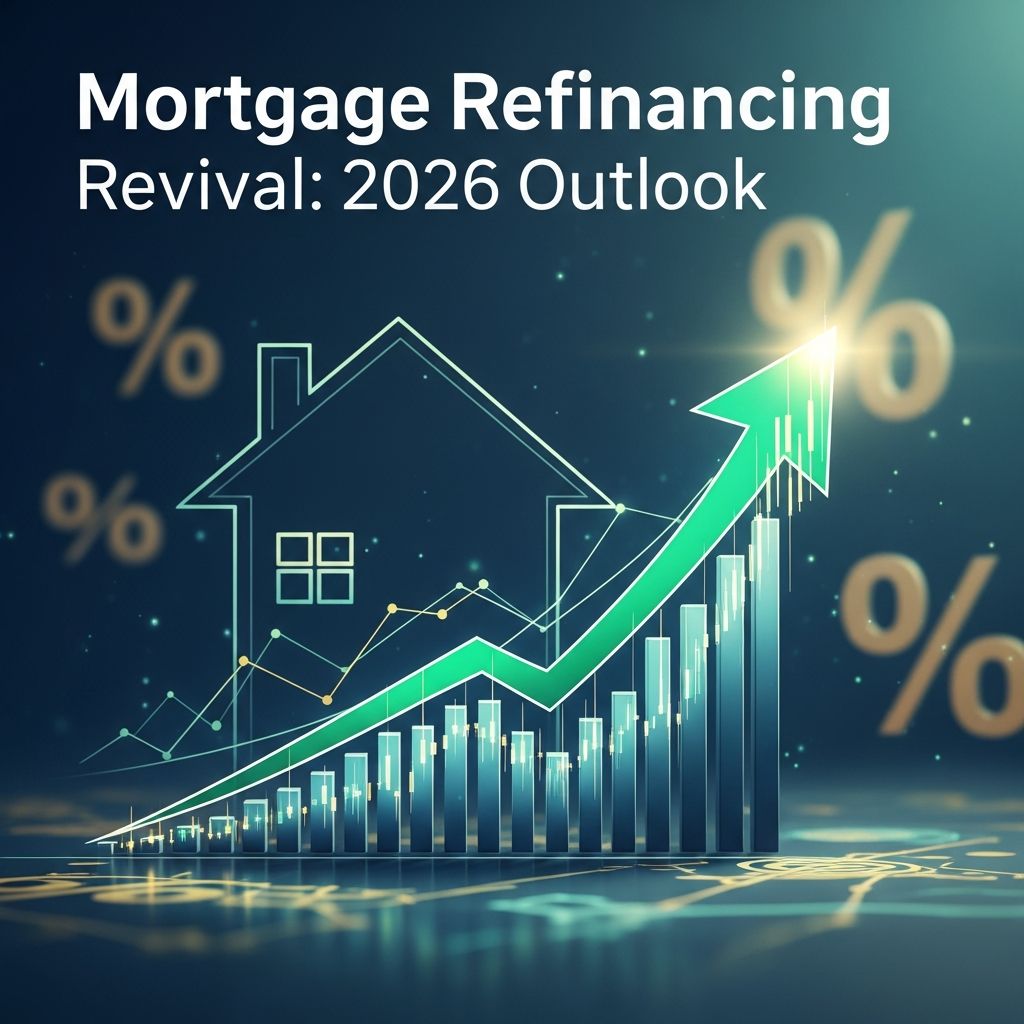
Declining mortgage rates in 2026 are igniting renewed interest in refinancing, with industry forecasts predicting a substantial uptick in activity as rates hover around or below 6%. Homeowners who locked in higher rates during recent years now face compelling opportunities to reduce payments or access equity.
Current Rate Environment and Recent Trends
Mortgage rates have eased significantly from their 2023 peaks, with the average 30-year fixed refinance rate reaching 5.98% in late February 2026, marking the lowest since September 2022. This dip below 6% has triggered a sharp rise in refinancing applications, evidenced by a 150% increase in the Mortgage Bankers Association’s refinance index year-over-year.
The Federal Housing Finance Agency (FHFA) reports a 12.5% month-over-month surge in refinancing activity by August 2025, a trend continuing into 2026 amid further rate stabilization. Influences like Federal Reserve rate cuts are pivotal, as the federal funds rate directly impacts borrowing costs; projections suggest additional reductions in 2026 to counter economic slowdowns.
Despite volatility, rates like 6.21% for 30-year fixed refinances as of early March 2026 offer tangible relief for many. These movements create ‘boomlets’—short bursts of high activity when rates briefly submerge key thresholds.
Forecasts Pointing to a Refinance Surge
Analysts anticipate refinances comprising 37% of all mortgage originations by year-end 2026, up from 21% in 2024, according to Fannie Mae. Redfin echoes this with a projected 30% annual volume increase, reaching $670 billion.
Morgan Stanley forecasts rates dropping to around 5.75% in 2026, supporting modest home price growth but highlighting persistent affordability challenges. At 6%, approximately 5.5 million borrowers gain a refinance incentive—defined as a 0.75% rate reduction—rising to 9.5 million if rates hit 5.5%.
| Average Rate | Incentivized Borrowers (Millions) |
|---|---|
| 6.00% | 5.5 |
| 5.88% | 6.5 |
| 5.75% | 7.6 |
| 5.50% | 9.5 |
Data from Intercontinental Exchange shows most incentivized loans originated between 2022-2025, particularly those at 6.875%-6.99%.
Who Stands to Benefit Most?
Homeowners with rates above 6.5%-7% from recent years are prime candidates, potentially slashing monthly payments significantly. For instance, even a modest drop to 5.98% unlocks savings for over 500,000 2025 originators.
- Recent High-Rate Holders: Those at 7%+ see the biggest gains from sub-6% offers.
- Equity-Rich Owners: Rising home values improve loan-to-value ratios, easing approvals.
- Payment-Stressed Borrowers: Refinancing extends terms or restructures for lower outflows.
Conversely, pandemic-era loans at 3% require rates below 4% for meaningful incentives, as closing costs could offset minor drops.
Types of Refinancing Gaining Traction
Rate-and-Term Refinances
These focus on securing lower rates or shorter terms without altering principal, ideal for pure savings. With rates at 6.60% in March 2026, many qualify if their spread exceeds 0.75%.
Cash-Out Options on the Rise
FHFA data indicates cash-out refinances surged in early 2025 as rates fell, a pattern expected to persist. Homeowners tap equity for renovations or debt consolidation, though this increases total debt—necessitating careful balance sheet review.
Critical Calculations Before Refinancing
Assess the break-even point: divide closing costs (typically 2-5% of loan) by monthly savings to determine recovery months. If selling soon, skip it; long-term stays favor proceeding.
- Current rate vs. new offer
- Remaining loan balance and term
- Closing costs and fees
- Equity position and credit score
Tools from lenders or calculators help simulate scenarios. For a $300,000 loan dropping from 7% to 6%, savings could exceed $200 monthly, recouping $6,000 costs in under 2.5 years.
Economic Factors Shaping the Market
Federal Reserve policy remains central: cuts stimulate borrowing, while inflation or unemployment spikes could reverse gains. Spring 2026 housing upticks may boost values, enhancing refinance viability via better LTV ratios.
Regional variations matter—affordability strains in high-price areas limit benefits despite rate drops.
Strategic Timing and Tips
Monitor weekly Freddie Mac reports for dips; lock rates during ‘boomlets’. Shop multiple lenders, as margins vary. Improve credit pre-application for optimal terms.
- Compare at least 3-5 quotes
- Factor no-closing-cost options
- Consider hybrid ARM if fixed rates lag
- Align with life plans (e.g., no refi if moving soon)
Potential Risks and Pitfalls
Extended terms reduce interest paid long-term? No—opt for shorter if possible. Cash-out adds debt, risking negative equity if values dip. Prepayment penalties on some loans warrant checks.
FAQs
Is 2026 a good time to refinance?
Yes, for those with rates 0.75%+ above current offers like 6%, per industry data.
How low do rates need to go for pandemic loans?
Below 4% typically, to justify costs over slim savings.
What’s the refinance break-even formula?
Closing costs ÷ monthly savings = months to break even.
Will Fed cuts continue boosting refis?
Likely, if aimed at economic stimulus amid cooling inflation.
Can I refinance soon after origination?
Yes, no universal wait; seasoning rules vary by lender.
Conclusion: Seize the Moment Wisely
2026’s rate trajectory favors proactive homeowners. Run numbers, consult experts, and act when incentives align—potentially saving thousands annually.
References
- Are Lower Mortgage Rates in 2026 Set to Trigger a Refinance Boom? — Norada Real Estate. 2026-02. https://www.noradarealestate.com/blog/are-lower-mortgage-rates-in-2026-set-to-trigger-a-refinance-boom/
- 4 Mortgage Refinancing Trends: What to Expect in 2026 — Own Up. 2026. https://www.ownup.com/learn/refinancing/mortgage-refinancing-trends/
- Refinancing Trends 2026: When Break-Even Really Matters — Sistar Mortgage. 2026. https://sistarmortgage.com/blog/refinancing-trends-2026-break-even-timing
- 6% Mortgage Rates Could Put 5.5 Million Borrowers ‘In the Money’ — The Mortgage Reports. 2026. https://themortgagereports.com/127613/mortgage-refinance-incentive
- Current refi mortgage rates report for March 12, 2026 — Fortune. 2026-03-12. https://fortune.com/article/current-refi-mortgage-rates-03-12-2026/
Similar Articles








Read full bio of Sneha Tete