Mortgage Rates for Tuesday, October 21, 2025
Stay updated with today's mortgage rates and understand market trends affecting your home loan options.

The mortgage market continues to evolve as we move deeper into the final quarter of 2025. For homebuyers and refinancers checking rates on Tuesday, October 21, 2025, the landscape presents both challenges and opportunities. Understanding where mortgage rates stand today requires examining the various loan products available, recent market trends, and the factors influencing these critical financial instruments.
Current Mortgage Rates Overview
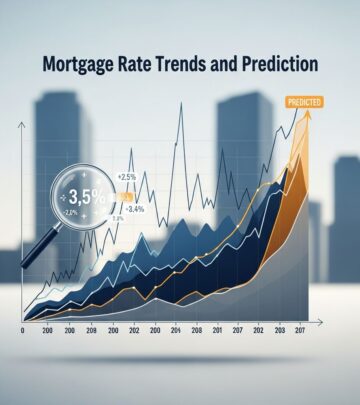
Mortgage rates on Tuesday, October 21, 2025, reflect the ongoing dynamics between Federal Reserve policy decisions and broader economic conditions. The 30-year fixed-rate mortgage, the most popular home loan product in America, represents the baseline for understanding the current lending environment. As borrowers evaluate their options this week, rates continue their downward trajectory from earlier in the year when they peaked near 7.19 percent in mid-January.
The mortgage market has experienced significant volatility throughout 2025, with rates spending most of the year hovering around the 6.3 to 6.4 percent range. This represents a substantial decrease from the heights seen in January but remains well above the historic lows of 2.65 percent recorded in January 2021. For homebuyers evaluating their purchasing power and homeowners considering refinancing, these rates have important implications for monthly payments and long-term affordability.
Breaking Down Current Mortgage Products
30-Year Conventional Mortgages
The 30-year conventional fixed-rate mortgage remains the most common home loan product in the United States. On Tuesday, October 21, 2025, these loans continue to hover in the low-to-mid 6 percent range, down from earlier peaks but still representing elevated rates compared to pandemic-era lows. These mortgages appeal to borrowers seeking predictable monthly payments over a long amortization period, providing stability and certainty in their housing costs.
Conventional loans typically require a down payment of at least 3 to 5 percent for qualified borrowers, though putting down 20 percent eliminates the need for private mortgage insurance. The rate environment for conventional loans reflects broader market conditions and investor sentiment about future economic performance.
15-Year Conventional Mortgages
Borrowers seeking to build home equity faster often turn to 15-year fixed-rate mortgages. These loans feature higher monthly payments but substantially lower interest rates compared to their 30-year counterparts. On October 21, 2025, the 15-year conventional mortgage rate sits approximately 75 to 100 basis points lower than 30-year rates, making them attractive for borrowers with higher incomes and stronger monthly cash flow capabilities.
The 15-year mortgage appeals particularly to refinancers who have built equity and seek to eliminate their mortgage before retirement. While the monthly payment obligation increases significantly, the total interest paid over the loan’s life decreases dramatically, resulting in substantial long-term savings.
30-Year Jumbo Mortgages
For homebuyers in high-cost real estate markets purchasing properties above conforming loan limits, jumbo mortgages provide necessary financing. These loans, which exceed the standard conforming loan limit, typically carry slightly higher interest rates due to increased lender risk. On Tuesday, October 21, 2025, jumbo mortgage rates remain elevated compared to conforming 30-year products, reflecting the additional risk profile associated with larger loan amounts.
Jumbo loans represent a critical market segment in expensive metropolitan areas where median home prices far exceed national averages. Borrowers pursuing jumbo financing typically must demonstrate stronger credit profiles, larger down payments, and more substantial financial reserves than conventional borrowers.
Government-Backed Mortgage Programs
Beyond conventional mortgages, several government-backed programs serve specific borrower populations. These programs feature different qualification criteria, down payment requirements, and interest rate structures compared to conventional products.
FHA Mortgages: Federal Housing Administration-insured loans enable borrowers with lower credit scores and smaller down payments to access home financing. On October 21, 2025, FHA rates typically run slightly lower than conventional rates, offering savings for eligible borrowers. The FHA’s mortgage insurance requirement protects lenders and allows for more flexible underwriting standards.
VA Mortgages: Veterans Administration-backed loans serve military service members, veterans, and eligible family members. These loans consistently feature the lowest available interest rates among all mortgage products, reflecting the government’s commitment to supporting those who served. VA loans also offer unique advantages including zero down payment requirements and no private mortgage insurance, making them exceptionally valuable for eligible borrowers.
USDA Mortgages: Department of Agriculture loans support homebuying in rural areas, offering competitive rates and down payment assistance to qualified borrowers. These programs expand homeownership opportunities in communities often underserved by traditional mortgage markets.
Understanding Discount and Origination Points
When evaluating mortgage rate quotes on October 21, 2025, borrowers encounter terms such as discount points and origination points that significantly impact the true cost of borrowing. The average discount and origination points for 30-year conventional mortgages on this date total approximately 0.30 to 0.35 points, though individual offers vary substantially.
Discount points represent a prepaid interest expense allowing borrowers to buy down their interest rate, with each point typically reducing the rate by 0.25 percent. One point equals one percent of the loan amount, so purchasing a point on a $300,000 mortgage costs $3,000 upfront. Borrowers must calculate the payback period to determine whether purchasing points makes financial sense for their situation.
Origination points constitute fees charged by lenders to create, review, and process loan documentation. These non-negotiable costs represent compensation for the lender’s underwriting labor and administrative expenses. Understanding the distinction between discount and origination points helps borrowers comparison shop effectively among multiple lenders.
Market Dynamics and Economic Context
Federal Reserve Influence
While the Federal Reserve directly controls the federal funds rate, mortgage rates do not move in lockstep with Fed decisions. Instead, mortgage rates follow the 10-year Treasury yield, which responds to broader market expectations regarding inflation, economic growth, government spending, and investor demand for safe-haven assets. This disconnect between Fed policy and mortgage rate movements often surprises borrowers expecting immediate rate reductions following Fed rate cuts.
Throughout 2025, the Federal Reserve has implemented rate cuts, beginning in September. However, mortgage rates did not experience proportional decreases, as market participants grappled with inflation concerns, potential tariff impacts, and questions about economic growth sustainability. The absence of expected mortgage rate declines despite Fed easing reflects complex market dynamics beyond the central bank’s direct control.
Market Volatility and Recent Trends
The mortgage market has experienced notable volatility in fall 2025 as investors weigh conflicting economic signals. Concerns about a slowing job market contrast with inflation fears stemming from potential tariff implementation and rising federal debt levels. This uncertainty drives Treasury yield fluctuations and, consequently, mortgage rate movements that can occur daily or even intraday.
Despite ongoing volatility, mortgage rates have trended downward from the January 2025 peak of 7.19 percent, bringing relief to homebuyers and refinancers priced out during earlier months. The drop in rates from 7 percent levels to the mid-6 percent range translates to approximately $300 in monthly savings on a $500,000 loan, according to recent calculations.
Monthly Payment Impact and Affordability
For borrowers evaluating mortgage affordability on October 21, 2025, monthly payment calculations provide crucial perspective. Using the national median family income of $104,200 and median existing home price of approximately $415,000 to $422,000, a typical purchase scenario provides instructive insight into affordability mathematics.
With a 20 percent down payment and a mortgage rate in the 6.25 to 6.35 percent range, the monthly mortgage payment totals approximately $2,045 to $2,104. This payment represents approximately 24 percent of the typical family’s monthly income, remaining comfortably within the standard 36 percent debt-to-income threshold most lenders prefer.
However, this calculation excludes property taxes, homeowners insurance, and homeowners association fees, which together can substantially increase total monthly housing costs. Additionally, borrowers without 20 percent down payments must account for private mortgage insurance premiums, further raising monthly obligations.
Debt-to-Income Ratio Considerations
Lenders typically prefer borrowers maintain debt-to-income ratios of 36 percent or below, though approval remains possible with ratios as high as 43 percent. This metric includes all monthly debt obligations—mortgage, car loans, credit cards, student loans—divided by gross monthly income. For example, a borrower with $3,000 monthly income and $750 in existing monthly debt obligations already utilizes a 25 percent DTI ratio, leaving limited room for additional mortgage debt.
2025 Mortgage Market Outlook
As the year progresses beyond October 21, 2025, mortgage rate trajectories remain uncertain but hinge on several key factors. Federal Reserve decisions at remaining scheduled meetings will signal policy direction, though mortgage market response depends more on Treasury market dynamics than Fed action directly. Additional rate cuts remain possible, but the magnitude and timing depend on inflation data, employment trends, and broader economic indicators.
Mortgage rates in 2025 have already demonstrated substantial improvement from January highs, providing meaningful relief for borrowers. The lowest rates achieved in mid-October represent the best environment for homebuying and refinancing since early 2024. However, rates remain elevated relative to pandemic-era benchmarks, reflecting the persistent inflation challenges central banks have worked to combat throughout the past two years.
Strategies for Mortgage Borrowers
Rate Shopping and Lender Comparison
On October 21, 2025, as on any day, borrowers should engage in active rate shopping across multiple lenders. Interest rate quotes vary substantially among institutions based on their risk assessments, cost structures, and market positioning. Obtaining quotes from at least three to five lenders ensures borrowers identify competitive offers and understand the full range of available options.
Lock-In Timing Decisions
Borrowers must balance the desire for better rates against the risk of rates moving higher before loan closing. Rate locks typically extend 30 to 60 days, protecting borrowers during the underwriting and appraisal process. Given recent market volatility, many borrowers benefit from locking rates early in the application process to ensure certainty in their monthly payment obligations.
Discount Point Evaluation
When presented with discount point options, borrowers should calculate the break-even point—the month at which cumulative savings exceed the upfront point cost. Borrowers planning to remain in their homes for extended periods benefit more from purchasing points than those anticipating future moves or refinancing.
Frequently Asked Questions About October 21, 2025 Mortgage Rates
Q: How do current mortgage rates compare to rates from a year ago?
A: Current rates in October 2025 are moderately higher than early October 2024, when 30-year rates averaged 6.20 percent. Rates peaked in January 2025 at 7.19 percent, making current levels substantially improved from mid-year highs but still elevated relative to pre-pandemic benchmarks.
Q: Will mortgage rates continue declining through year-end 2025?
A: While additional Federal Reserve rate cuts are possible, mortgage rates depend primarily on 10-year Treasury yields. These yields respond to inflation expectations, economic growth forecasts, and investor sentiment. Further rate declines are possible but not guaranteed, and rates could potentially rise if economic data surprises to the upside.
Q: What mortgage product offers the lowest rates?
A: VA mortgages for eligible veterans consistently feature the lowest available rates, often 25 to 75 basis points below conventional products. FHA and USDA programs also offer competitive rates for qualifying borrowers. Among conventional options, 15-year mortgages offer substantially lower rates than 30-year products.
Q: How much should I budget for discount and origination points?
A: In October 2025, typical total points average 0.30 to 0.35 for 30-year conventional mortgages. This translates to approximately $900 to $1,050 on a $300,000 loan, though variation exists across lenders and loan products.
Q: Is refinancing worthwhile at current rates?
A: Refinancing makes sense when current rates are at least 0.5 to 0.75 percent lower than your existing mortgage rate and you plan to remain in your home long enough to recoup closing costs. Current rates in October 2025 may benefit borrowers with rates above 7 percent.
Q: What factors should I consider beyond interest rate when comparing mortgages?
A: Beyond interest rate, evaluate closing costs, discount points, lender reputation, processing timelines, and customer service quality. The lowest rate doesn’t guarantee the best overall deal if other costs and services add unnecessary expense or delay.
Conclusion
Mortgage rates on Tuesday, October 21, 2025, reflect an evolving market environment shaped by Federal Reserve policy, Treasury market dynamics, and broader economic uncertainties. The 30-year conventional mortgage rate in the mid-6 percent range represents substantial improvement from January’s 7.19 percent peak, providing meaningful relief for homebuyers and refinancers. However, rates remain elevated relative to pandemic-era lows, reflecting persistent inflation pressures and economic adjustments.
Borrowers evaluating mortgage options on this date should actively shop multiple lenders, carefully evaluate discount and origination points, and consider their personal circumstances in selecting loan products and terms. VA borrowers should prioritize available benefits, while conventional borrowers should weigh 30-year versus 15-year options based on income and goals. Understanding current market conditions, recent trends, and individual financial situations empowers borrowers to make informed decisions in an increasingly complex mortgage landscape.
References
- Current Mortgage Rates on October 31, 2025 — Fortune. 2025-10-31. https://fortune.com/article/current-mortgage-rates-10-31-2025/
- Mortgage Rates Dip Slightly In Anticipation Of Fed Cut — Bankrate. 2025-10-15. https://www.bankrate.com/mortgages/analysis/mortgage-rates-october-15-2025/
- Mortgage Rates Drop To Lowest Level In A Year — Bankrate. 2025-10-22. https://www.bankrate.com/mortgages/analysis/mortgage-rates-october-22-2025/
- Mortgage Rates Dip Again To Lowest Level In A Year — Bankrate. 2025-10-29. https://www.bankrate.com/mortgages/analysis/mortgage-rates-october-29-2025/
- The Fed Makes A Second Interest Rate Cut — Bankrate. 2025-10-29. https://www.bankrate.com/banking/federal-reserve/fed-rate-cut-october-2025/
- HUD Median Family Income and NAR Housing Data — U.S. Department of Housing and Urban Development / National Association of Realtors. 2025. https://www.hud.gov/
Similar Articles








Read full bio of medha deb