Understanding Mortgage Rates: Trends and What Borrowers Should Know
Explore current mortgage rate trends and historical context for informed borrowing decisions
The Current Mortgage Rate Landscape
Mortgage rates remain a critical factor for anyone considering homeownership or refinancing their existing loan. As of late March 2026, the residential lending market continues to experience moderate rate increases following a period of relative stability earlier in the year. The 30-year fixed-rate mortgage averaged 6.38%, reflecting economic uncertainty and inflationary pressures that have shaped the broader lending environment. Understanding these rates and how they compare to historical levels provides valuable context for making informed borrowing decisions.
The movement of mortgage rates is not arbitrary; it responds to macroeconomic conditions, Federal Reserve policy, inflation expectations, and broader financial market dynamics. For potential homebuyers and existing homeowners considering refinancing, comprehending both current rates and recent trends is essential for evaluating whether now is an opportune time to lock in financing.
Comparing Different Mortgage Products and Rates
The mortgage market offers multiple loan structures, each with distinct interest rates and terms. These variations allow borrowers to select products that align with their financial situations and long-term plans. Here’s a breakdown of how different mortgage types currently perform:
| Loan Type | Current Rate | Key Characteristics |
|---|---|---|
| 30-Year Fixed Conventional | 6.38%-6.40% | Most popular option with predictable payments throughout the loan term |
| 15-Year Fixed Conventional | 5.72%-5.75% | Shorter amortization builds equity faster; lower rates than 30-year options |
| 30-Year Jumbo Mortgage | 6.42%-6.60% | Loans exceeding conforming limits; higher rates reflect increased risk |
| FHA Mortgages | 6.12%-6.40% | Government-backed loans; accessible to borrowers with lower credit scores |
| VA Mortgages | 5.93%-6.50% | Military-exclusive benefits; often feature competitive rates |
| Adjustable-Rate Mortgages (ARM) | 6.63%-8.19% | Initial rates may be lower but adjust periodically; carries rate increase risk |
The 15-year mortgage consistently offers lower rates compared to 30-year products, typically running about 60-70 basis points lower. While shorter-term mortgages result in higher monthly payments, they substantially reduce total interest paid over the loan’s life and allow homeowners to build equity more rapidly.
What Constitutes a Favorable Rate in Today’s Market
Determining whether a mortgage rate represents a good opportunity depends on understanding current market conditions. As of March 2026, benchmark 30-year conventional rates have stabilized in the 6.30%-6.40% range. Based on recent market activity, a rate just above 6.00% qualifies as competitive, while anything below 6.00% would be considered exceptionally favorable.
This assessment reflects the market’s trajectory over recent months. Earlier in 2026, rates averaged approximately 6.18% for January and February, indicating that current levels represent a slight increase from the year’s opening months. Year-over-year comparisons are particularly telling: rates in March 2025 averaged approximately 6.65%-6.89%, making current rates meaningfully lower than the previous year.
Individual circumstances significantly influence what constitutes an attractive rate. Borrowers with excellent credit scores typically qualify for rates below the published averages, while those with less-than-perfect credit may face rates 0.5%-1.5% higher. The specific loan amount, down payment percentage, and lender selection also create variations in offered rates.
The Cost of Borrowing: Real Numbers
Understanding how current rates translate into actual dollars owed helps borrowers grasp the financial implications of their mortgage decisions. Using a concrete example provides clarity: on a $300,000 loan at the current 30-year rate of 6.356%, borrowers would pay approximately $372,440 in interest alone over the full 30-year amortization period. This means the total amount repaid reaches approximately $672,440.
By contrast, a 15-year mortgage at 5.707% on the same $300,000 loan results in approximately $147,179 in interest payments. While the monthly payment would be substantially higher, total interest costs are cut by more than half. This comparison illustrates why borrowers with the financial capacity to support higher monthly payments often benefit significantly from shorter-term mortgages.
The rate environment also affects refinancing economics. Current refinance rates for 30-year fixed loans average around 6.60%-6.69%, while 15-year refinancing rates sit near 5.99%-6.07%. Homeowners holding mortgages at materially higher rates should evaluate whether refinancing makes economic sense based on their remaining loan term and expected time in the home.
Rate Trends and Market Dynamics
The mortgage rate environment in early 2026 reflects competing economic forces. Rates have drifted downward since the latter part of 2025, creating more favorable conditions than the elevated levels seen throughout 2024. However, economic uncertainty and inflationary concerns continue to exert upward pressure on rates, preventing the kind of significant declines that would dramatically improve affordability.
Recent weekly data illustrates this volatility. The 30-year rate increased from 6.22% one week to 6.38% in the following week, a 16-basis-point jump reflecting market uncertainty. The 15-year rate similarly moved from 5.54% to 5.75%, a 21-basis-point increase. These movements underscore how rates can shift meaningfully week to week based on economic data releases, inflation indicators, and monetary policy expectations.
Purchase and refinance applications have improved compared to year-ago levels, suggesting that modest rate improvements combined with stronger economic conditions have stimulated borrowing activity. The housing market continues showing gradual improvements despite the challenging affordability environment created by elevated rates and home prices.
What Experts Anticipate for Rate Movement
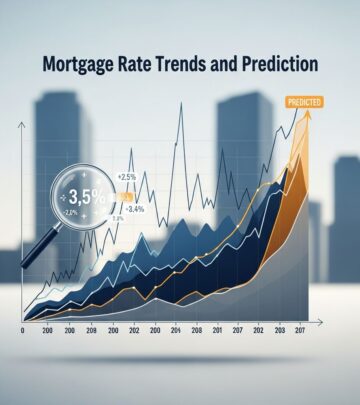
Professional forecasters offer insights into probable rate paths for the remainder of 2026. Morgan Stanley strategists project rates could decline to approximately 5.50%-5.75% if the 10-year Treasury yield falls to around 3.75% by mid-year. However, this scenario assumes favorable economic conditions and moderation in inflationary pressures.
Other forecasts suggest a more modest outlook. Bankrate projects average rates for 2026 will settle around 6.1%, with potential trading ranges between 5.7% on the low end and 6.5% on the high end. These forecasts underscore the inherent uncertainty in rate predictions, as numerous economic variables influence outcomes.
Most analysts agree that rates may experience modest declines through the first half of 2026, though market volatility remains possible as economic data and Fed policy evolve. The consensus view suggests rates are unlikely to fall dramatically but could experience periodic downward movement, creating windows of opportunity for those considering borrowing or refinancing.
Factors Influencing Mortgage Rate Changes
Mortgage rates don’t operate in isolation; they respond to multiple interconnected economic and financial factors:
- Treasury Yields: Mortgage rates follow broader bond market trends, particularly the 10-year Treasury yield, which serves as a primary benchmark for long-term borrowing costs
- Federal Reserve Policy: Fed decisions regarding benchmark interest rates and quantitative policy initiatives indirectly influence mortgage pricing
- Inflation Data: Actual and expected inflation affects both Fed policy and investor demand for fixed-income securities
- Employment Reports: Job market strength influences economic growth expectations and inflation trajectories
- Economic Growth Indicators: GDP growth, consumer spending, and business investment activity affect interest rate expectations
- Geopolitical Events: International tensions or trade concerns can shift investor risk preferences and capital flows
Navigating the Current Borrowing Environment
For potential homebuyers and refinancers, several strategic considerations apply in the current rate environment. Borrowers with access to rates at or below 6.00% should strongly consider locking in such rates, given that current averages exceed this threshold. Those shopping among multiple lenders can find meaningful variation in quoted rates, making comparison shopping essential.
The choice between 15-year and 30-year mortgages merits careful evaluation based on monthly cash flow capacity and long-term financial goals. While 30-year mortgages offer lower monthly obligations, 15-year mortgages provide substantial interest savings for those financially capable of supporting higher payments. ARMs present additional complexity, as initial low rates eventually reset to higher levels, creating payment shock risk.
Refinancing decisions should account for remaining loan term, current mortgage rate, refinance costs, and expected time remaining in the home. Significant rate drops justify refinancing despite closing costs, but smaller improvements may not provide adequate benefit given upfront expenses.
Historical Context and Long-Term Perspective
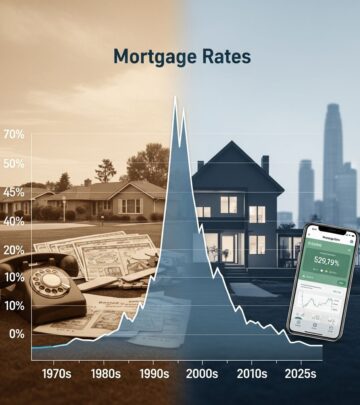
Current mortgage rates, while elevated compared to the historic lows seen in 2020-2021, represent reasonable levels when viewed against longer historical context. Rates in the 6.0%-6.5% range were commonplace throughout much of the 2000s and early 2010s. The decade following the 2008 financial crisis featured historically abnormal rates below 4.0%, which created distorted expectations about “normal” borrowing costs.
Understanding this historical context helps borrowers develop realistic expectations. Rates at current levels, while not attractive by recent standards, remain reasonable compared to pre-pandemic norms. This perspective encourages rational decision-making rather than waiting indefinitely for rates that may never materialize.
Frequently Asked Questions
Are current mortgage rates expected to fall significantly?
Most forecasts suggest modest declines are possible through mid-2026, with potential rates reaching 5.5%-5.75% under favorable conditions, but dramatic improvements are unlikely. Rates could also rise if inflation concerns resurface, making the outlook uncertain.
Should I lock in a rate today or wait for potential decreases?
This depends on your personal circumstances and risk tolerance. If you have a favorable rate available, locking it in eliminates uncertainty. If rates drop further, you could refinance later, though refinancing carries costs. Waiting for lower rates involves the risk that rates could increase instead.
Why are 15-year mortgages cheaper than 30-year mortgages?
Lenders offer lower rates on shorter-term loans because the lending period is compressed, reducing overall risk exposure. Additionally, the borrower builds equity faster, providing superior collateral security for the lender.
What credit score qualifies for the best mortgage rates?
Borrowers with credit scores of 740 or higher typically qualify for near-published average rates or better. Those with scores between 680-739 may face rates 0.25%-0.50% higher, while scores below 680 can result in significantly higher premiums.
Is now a good time to refinance?
Refinancing makes sense if current mortgage rates are at least 0.5%-1.0% lower than your existing rate and you plan to remain in the home long enough to recover closing costs through monthly savings.
References
- Mortgage rates, March 24, 2026 — Fortune. 2026-03-24. https://fortune.com/article/current-mortgage-rates-03-24-2026/
- Compare Today’s Mortgage Rates | Tuesday, March 31, 2026 — NerdWallet. 2026-03-31. https://www.nerdwallet.com/mortgages/mortgage-rates
- Current Mortgage Rates: March 30 to April 3, 2026 — Money. 2026-03-30. https://money.com/current-mortgage-rates/
- Mortgage Rates – Freddie Mac Primary Mortgage Market Survey — Freddie Mac. 2026-03-26. https://www.freddiemac.com/pmms
- 30-year mortgage rates increase – When will they fall? — Bankrate. 2026-03-20. https://www.bankrate.com/mortgages/todays-rates/mortgage-rates-for-friday-march-20-2026/
- Will Mortgage Rates Go Down in 2026? – Morgan Stanley — Morgan Stanley. https://www.morganstanley.com/insights/articles/mortgage-rates-forecast-2025-2026-will-mortgage-rates-go-down
- 2026 Mortgage Rate Forecast — Acrisure. 2026. https://www.acrisure.com/blog/2026-mortgage-rate-forecast
Similar Articles








Read full bio of Sneha Tete