Mortgage Rates Explained
Discover the key economic and personal factors that shape mortgage interest rates and how to secure the best deal for your home loan.
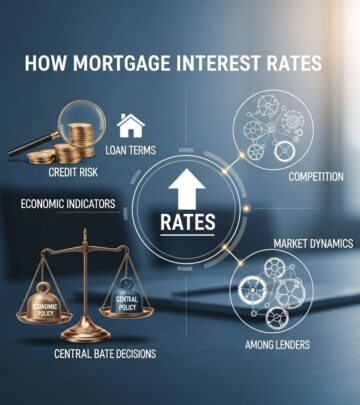
Mortgage rates are influenced by a complex interplay of national economic conditions, investor behaviors, and individual borrower qualifications. Understanding these elements empowers homebuyers to navigate the lending market effectively and potentially secure more favorable terms.
The Role of Bond Markets and Treasuries
At the core of mortgage pricing lies the secondary mortgage market, where loans are bundled into mortgage-backed securities (MBS) traded by investors. These securities compete with U.S. Treasury bonds, particularly the 10-year Treasury note, which serves as a primary benchmark. When Treasury yields rise due to investor demand for higher returns amid economic shifts, mortgage rates typically follow to maintain attractive spreads for lenders.
The spread between the 10-year Treasury yield and the average 30-year fixed mortgage rate hovers around 2 percentage points historically, reflecting risks like prepayment and default unique to mortgages. Investors’ expectations for future short-term rates, shaped by growth projections and inflation forecasts, directly drive these yields.
Economic Indicators Driving Rate Fluctuations
Broad economic health profoundly impacts rates. Strong employment and GDP growth signal potential inflation, prompting lenders to elevate rates to preserve purchasing power. Conversely, recessions or slowdowns often lead to rate cuts to stimulate borrowing.
Inflation erodes money’s value, so central banks and markets respond by hiking rates. High inflation expectations push investors toward higher yields on Treasuries and MBS, cascading to consumer mortgages.
- GDP Growth: Robust expansion increases rates as borrowing demand surges.
- Unemployment: Low joblessness correlates with higher rates due to economic overheating risks.
- Consumer Spending: Elevated activity fuels inflation pressures, nudging rates upward.
Federal Reserve Policies and Their Ripple Effects
The Federal Reserve influences rates indirectly through monetary policy, primarily by setting the federal funds rate—the overnight lending rate between banks. While not directly controlling long-term mortgage rates, Fed actions affect short-term rates, which influence Treasury yields and MBS pricing.
When the Fed raises rates to combat inflation, bond yields climb, pulling mortgage rates higher. Rate cuts, often during downturns, lower yields and ease borrowing costs. Quantitative easing, where the Fed buys Treasuries or MBS, compresses spreads and depresses rates.
| Fed Action | Impact on Treasuries | Effect on Mortgages |
|---|---|---|
| Rate Hike | Yields Rise | Rates Increase |
| Rate Cut | Yields Fall | Rates Decrease |
| Asset Purchases | Spreads Narrow | Rates Stabilize Lower |
Government Interventions and Fiscal Measures
Federal policies, including tax incentives and housing programs, subtly shape rates. Changes in conforming loan limits set by Fannie Mae and Freddie Mac affect pricing for standard loans. Geopolitical tensions or fiscal deficits can drive investors to safe-haven Treasuries, lowering yields temporarily.
Borrower-Specific Factors: Your Path to Better Rates
While market forces set the baseline, personal finances determine your personalized rate. Lenders assess risk through several metrics.
Credit Score: The Primary Gatekeeper
A strong credit score signals repayment reliability, unlocking the lowest rates. Scores above 740 qualify for prime conventional loans, while sub-620 scores demand higher rates or alternative products. FICO scores, derived from payment history, utilization, and length of credit, are medianed across Equifax, Experian, and TransUnion.
- 740+: Best rates available.
- 620-739: Standard rates with possible fees.
- Below 620: Higher rates or specialized loans.
Down Payment and Loan-to-Value Ratio
Larger down payments reduce lender risk by lowering the loan-to-value (LTV) ratio—the borrowed amount divided by home value. A 20%+ down payment avoids private mortgage insurance (PMI), which adds to costs and can elevate effective rates. For example, a 3% down yields 97% LTV, often incurring PMI and higher pricing.
Debt-to-Income Ratio: Affordability Check
DTI compares monthly debts (including proposed mortgage) to gross income. Ideal ratios under 36% signal manageability, yielding better rates. Higher DTIs increase perceived default risk, pushing rates up.
Formula: DTI = (Total Monthly Debt / Monthly Income) × 100
Property Details and Loan Characteristics
Primary residences command lower rates than investment properties due to lower risk. Non-single-family homes like condos or multi-units carry premiums. Loan term matters: shorter 15-year mortgages offer lower rates than 30-year options, reflecting reduced exposure time.
Fixed vs. adjustable-rate mortgages (ARMs) differ; ARMs start lower but tie to indexes like SOFR, introducing variability.
Market Competition and Lender Operations
Local lender density fosters competition, compressing margins and rates. Efficient operations—low origination costs, strong investor ties—allow aggressive pricing. High-volume lenders often offer better terms.
Strategies to Secure Lower Mortgage Rates
Proactive steps can shave points off your rate:
- Boost Credit: Pay down debts, correct errors; monitor via annualcreditreport.com.
- Save Aggressively: Aim for 20% down to skip PMI.
- Shop Lenders: Compare at least three quotes; rates vary by 0.25-0.5%.
- Buy Points: Pay upfront to reduce rate (1 point ≈ 0.25% drop).
- Lock Timing: Secure rate when markets dip.
Current Rate Environment Insights
As of recent data, 30-year fixed rates track 10-year Treasuries closely, influenced by ongoing inflation battles and Fed signals. Borrowers with strong profiles (760+ FICO, 20% down, <36% DTI) access sub-6% rates in stable conditions, per market averages.
Frequently Asked Questions
How does the Federal Reserve directly set mortgage rates?
The Fed does not set them directly but influences via federal funds rate and asset purchases, affecting bond markets.
Can I get a mortgage with bad credit?
Yes, but expect higher rates; FHA loans accept scores as low as 580 with 3.5% down.
What’s the impact of a 1% rate difference over 30 years?
On a $300,000 loan, it adds ~$100,000 in interest; always calculate total costs.
Do jumbo loans have higher rates?
Typically yes, due to larger amounts exceeding conforming limits, increasing risk.
How often do rates change?
Daily, based on market trading; lock for 30-60 days during application.
Navigating Rate Volatility
Rates fluctuate with news cycles—Fed announcements, jobs reports, geopolitical events. Tools like rate trackers from Bankrate or Freddie Mac provide real-time data. Long-term, focus on affordability over chasing lows.
References
- What Factors Determine And Move Mortgage Rates? — Bankrate. 2024-01-15. https://www.bankrate.com/mortgages/how-interest-rates-are-set/
- Seven factors that determine your mortgage interest rate — Consumer Financial Protection Bureau. 2023-05-10. https://www.consumerfinance.gov/about-us/blog/7-factors-determine-your-mortgage-interest-rate/
- What Affects Mortgage Rates: Key Factors and Determinants — Chase. 2024-02-20. https://www.chase.com/personal/mortgage/education/buying-a-home/what-affects-mortgage-rates
- What Determines the Rate on a 30-Year Mortgage? — Fannie Mae. 2023-11-08. https://www.fanniemae.com/research-and-insights/publications/housing-insights/rate-30-year-mortgage
- How are mortgage rates determined? — Rocket Mortgage. 2024-03-05. https://www.rocketmortgage.com/learn/how-are-mortgage-rates-determined
Similar Articles








Read full bio of Sneha Tete