Mortgage Rates by Credit Score Guide
Unlock lower mortgage rates by understanding how your credit score determines interest rates, payments, and long-term savings opportunities.

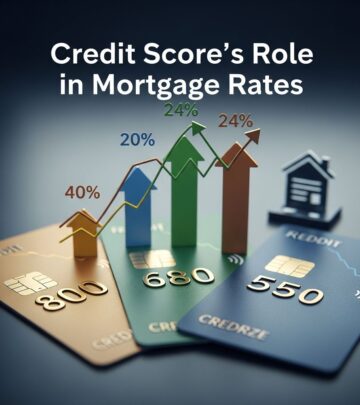
Your credit score serves as a key determinant in securing favorable mortgage terms. Lenders assess risk based on FICO scores, offering the lowest rates to those with scores of 740 or higher, while lower scores result in higher annual percentage rates (APRs) and increased borrowing costs over time.
Understanding Credit Score Tiers and Lender Perspectives
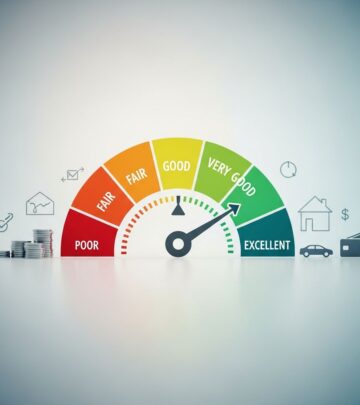
Credit scores are categorized into tiers that directly influence mortgage pricing. Scores above 760 place borrowers in an elite category, qualifying for prime rates and maximum loan flexibility. Those in the 700-759 range receive near-best pricing, while scores between 620 and 639 face the highest premiums due to perceived risk.
| Credit Score Range | Lender Perception | Typical Rate Impact |
|---|---|---|
| 760+ | Elite | Lowest APRs, full program access |
| 700-759 | Excellent | Competitive rates, high approval |
| 680-699 | Good | Moderate rate increases |
| 660-679 | Fair | Noticeable premiums, stricter terms |
| 620-639 | Near Minimum | Highest rates, limited options |
This tiered system means even a 20-40 point improvement can shift you into a better category, potentially saving thousands annually.
Current Mortgage APRs Across Credit Score Ranges
As of March 2026, average 30-year fixed mortgage APRs vary significantly by score. Borrowers with 760+ scores enjoy rates around 6.57%, while those at 620-639 pay up to 7.34%. These figures are based on a standard $300,000 loan and reflect national averages from reliable aggregators.
| FICO Score | APR (%) | Monthly Payment | Total Interest (30 Years) |
|---|---|---|---|
| 760+ | 6.566 | $1,909 | $387,326 |
| 700-759 | 6.846 | $1,965 | $407,393 |
| 680-699 | 6.98 | $1,992 | $417,077 |
| 660-679 | 7.039 | $2,004 | $421,357 |
| 640-659 | 7.169 | $2,030 | $430,825 |
| 620-639 | 7.341 | $2,065 | $443,429 |
| Source: myFICO.com via ConsumerAffairs, $300k loan | |||
For larger loans like $400,000, the gap widens: excellent credit saves over $50,000 in interest compared to fair scores. Freddie Mac reports the baseline 30-year fixed rate at 6.38% for top-tier borrowers as of late March 2026.
Loan Types and Their Rate Structures by Credit
Different mortgages respond uniquely to credit profiles. Conventional loans favor high scores with rates around 6.56% APR for 740+, while FHA options extend accessibility to scores as low as 580 with slightly lower entry rates like 6.29%. VA loans often provide the most competitive terms for eligible veterans regardless of score nuances.
- Conventional Loans: Best for 620+ scores; rates start at 6.557% but rise sharply below 680.
- FHA Loans: Ideal for first-timers; minimum 580 score with 3.5% down, APRs ~6.34%.
- 15-Year Fixed: Lower rates (e.g., 5.71% at 700 score) but higher monthly payments for faster payoff.
- ARMs (5/6): Initial rates like 6.11% at 680, but variable later.
Shorter terms or government-backed loans mitigate some rate penalties for moderate credit.
Purchase vs. Refinance Rates: Key Differences
Purchase mortgages generally offer the most attractive rates, especially for scores above 740. Refinances add a risk premium, with cash-out versions highest due to increased loan balances and equity extraction.
| FICO Score | Purchase APR | Refinance APR | Cash-Out APR |
|---|---|---|---|
| 760-850 | 7.242 | 6.726 | 7.226 |
| 700-759 | 7.449 | 6.948 | 7.448 |
| 680-699 | 7.555 | 7.125 | 7.625 |
| 660-679 | 7.609 | 7.339 | 7.839 |
| 640-659 | 7.711 | 7.769 | 8.269 |
| 620-639 | 7.838 | 8.315 | 8.815 |
| Averages for 2026; varies by lender | |||
Low-score borrowers see amplified spreads: a 620-score cash-out might exceed 8.8%, versus 7.2% for purchases at top scores. CFPB data underscores how a 700 score minimizes early interest accrual.
Financial Impact: Payments and Lifetime Savings
A modest score boost from 680 to 760 shaves ~$83 monthly and $29,000+ in total interest on a $300k loan. Over 30 years, this compounds: excellent credit holders pay under $390k interest, fair scorers over $440k. Bankrate notes rates trending upward from 2026 lows, amplifying score importance.
Debt-to-income (DTI) under 43% and loan-to-value (LTV) below 80% further optimize rates alongside credit.
Steps to Improve Your Credit Score for Better Rates
Enhancing your FICO score unlocks tier jumps. Focus on these proven actions:
- Pay bills on time (35% of score impact).
- Reduce credit utilization below 30%.
- Limit new inquiries and accounts.
- Dispute errors on reports from Experian, Equifax, TransUnion.
- Build positive history over 6-12 months for 20-50 point gains.
Monitors like Experian provide free tracking; consistent habits yield results before applying.
Factors Beyond Credit Influencing Rates
While credit dominates, macroeconomic trends, down payments, and DTI ratios interplay. Freddie Mac’s PMMS shows weekly fluctuations tied to Treasury yields. Larger down payments lower LTV, offsetting moderate scores.
FAQs
What credit score is needed for a mortgage?
Minimum 620 for conventional; FHA accepts 500-580 with 10%+ down.
Does a higher score always mean a lower rate?
Yes, tiers dictate pricing; 740+ secures optimal terms.
How much can improving my score save?
From 680 to 760: ~$83/month, $29k+ total on $300k loan.
Are refinance rates higher than purchase?
Often yes, especially cash-out; gaps widen below 680.
What are current average rates?
30-year fixed ~6.38% for top scores (March 2026).
References
- Mortgage Rates by Credit Score (2026) — ConsumerAffairs. 2026. https://www.consumeraffairs.com/finance/mortgage-rates-by-credit-score.html
- Current Mortgage Rates by Credit Score | 2026 — The Mortgage Reports. 2026. https://themortgagereports.com/87625/mortgage-rates-by-credit-score
- Average Mortgage Rates by Credit Score — Experian. 2026-03. https://www.experian.com/blogs/ask-experian/average-mortgage-rates-by-credit-score/
- Mortgage Rates — Freddie Mac. 2026-03-26. https://www.freddiemac.com/pmms
- Compare current mortgage rates for today — Bankrate. 2026. https://www.bankrate.com/mortgages/mortgage-rates/
- Explore interest rates — Consumer Financial Protection Bureau. Accessed 2026. https://www.consumerfinance.gov/owning-a-home/explore-rates/
Similar Articles








Read full bio of medha deb