Mortgage Rates After Fed Cuts: What to Expect
Discover why Federal Reserve rate reductions may not lower mortgage costs as expected, and explore key economic factors at play.
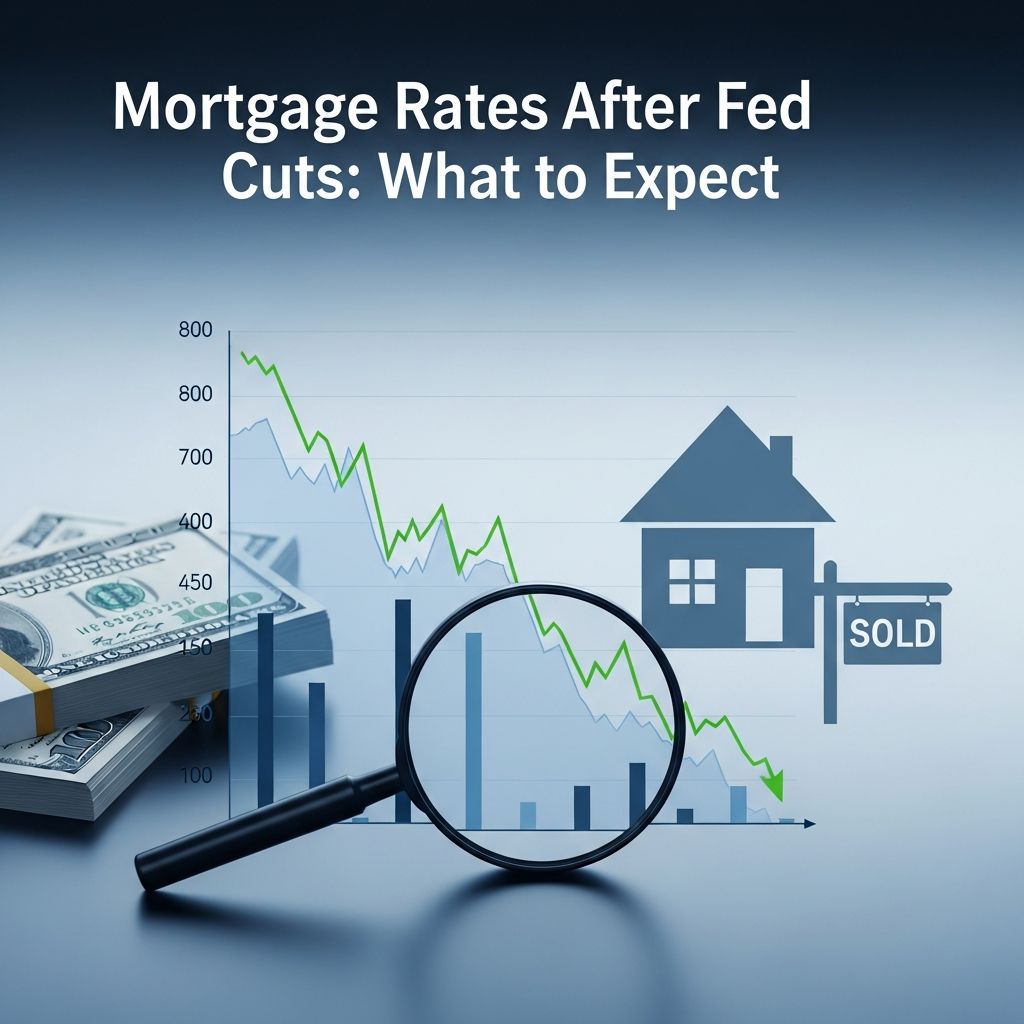
The Federal Reserve’s recent interest rate adjustments have sparked widespread interest among homebuyers and refinancers hoping for relief on borrowing costs. However, the connection between the Fed’s federal funds rate and mortgage rates is not as straightforward as many assume. In early 2026, despite prior cuts, 30-year fixed mortgage rates have hovered around 6%, showing limited responsiveness to the central bank’s moves.
The Fed’s Role in Shaping Borrowing Costs
The Federal Reserve sets the federal funds rate, which influences short-term borrowing between banks. This benchmark rate indirectly affects consumer loans, including mortgages, by signaling the cost of money in the economy. When the Fed cuts rates, as it did multiple times in late 2025, it aims to stimulate growth by making credit cheaper.
Yet, mortgage rates are long-term products tied more closely to the 10-year Treasury yield than the federal funds rate. Treasury yields reflect investor expectations for inflation, economic growth, and global events. Even as the Fed lowered its target range to 3.50%-3.75% by December 2025, mortgage averages only dipped to about 6.15% before stabilizing.
- Federal funds rate: Short-term bank lending rate, currently 3.5%-3.75%.
- 10-year Treasury yield: Primary benchmark for 30-year mortgages, often more volatile.
- Mortgage APR: Includes fees; tracks yields but with lender spreads.
Why Recent Rate Cuts Haven’t Slashed Mortgage Costs
Post-cut periods in 2025 revealed mixed mortgage responses. After October’s 25-basis-point reduction, rates fell just 2 basis points. December’s cut saw a 3-basis-point rise, and January’s hold added 1 basis point. This disconnect arises because bond markets, not the Fed, dictate yields. Investors demand higher returns if inflation lingers or risks mount.
Inflation, at 2.4% in January 2026, exceeds the Fed’s 2% target, prompting caution. Persistent price pressures from supply chain issues and geopolitical tensions keep yields elevated, buffering mortgage rates against Fed easing.
| Fed Meeting | Action | Mortgage Rate Change | Key Factor |
|---|---|---|---|
| October 2025 | -0.25% | -0.02% | Market anticipation |
| December 2025 | -0.25% | +0.03% | Inflation data |
| January 2026 | Hold | +0.01% | Treasury yields up |
| March 2026 | Hold expected | Stable ~6% | Unemployment tick-up |
Upcoming Fed Decisions and Market Forecasts
Heading into the March 17-18, 2026, FOMC meeting, markets assign only a 2.7% chance of a cut, per CME FedWatch. A hold is nearly certain amid February’s unemployment rise and pending inflation data. Experts like Rebekah Scott from Atlas Real Estate predict rates in the low 6% range through mid-2026, with possible 1-2 cuts later if inflation cools.
FOMC minutes from January highlight reduced upward pressures on money market rates but stress data-dependent policy. Projections show a median fed funds rate of 3.4% for 2026, ranging 3.1%-3.6%.
Economic Headwinds Keeping Rates Elevated
Several forces counteract Fed easing:
- Inflation persistence: At 2.4%, above target, delaying aggressive cuts.
- Labor market: February unemployment uptick signals potential weakness but not yet recessionary.
- Geopolitical risks: Conflicts, like those involving Iran, boost uncertainty and yields.
- Policy shifts: Tariff volatility and Fed Chair Powell’s term ending in May add unpredictability.
- Treasury dynamics: Yields rose post-2025 cuts due to growth expectations.
Jeffrey Ruben of WSFS Home Lending notes the market’s dominance: “The Fed impacts short-term rates, but broad market forces drive mortgages.”
Implications for Homebuyers and Refinancers
Buyers face a wait-and-see market. Steady 6% rates keep affordability challenged, with median home prices still high. Lower fed funds encourage spending but not necessarily home sales if mortgage costs don’t budge.
Refinancers from 7%+ peaks in 2023-2024 might act at 6%, but many lock in expecting further drops. Increased listings from refinances could ease inventory shortages, moderating prices.
Erica Adelberg of Bloomberg Intelligence warns of inflation risks from global events delaying cuts.
Long-Term Outlook for 2026 and Beyond
Analysts foresee gradual descent if inflation hits 2%. One or two cuts by year-end could nudge mortgages toward high 5s, but volatility persists. Global tensions and U.S. policy under new leadership loom large.
Mortgage bonds react to multifaceted inputs: Fed signals (20-30% influence), yields (50-60%), and economic data (rest). A June meeting has 59% hold odds, per CME.
Strategies for Navigating Current Conditions
- Lock rates early: If qualifying now, secure before potential rises.
- Improve credit: Boosts access to best rates.
- Shop lenders: Differences of 0.25% save thousands.
- Consider ARMs: Lower initial rates for short-term plans.
- Monitor data: Inflation reports and Fed speeches guide timing.
Frequently Asked Questions
Do Fed rate cuts always lower mortgage rates?
No. Mortgages track Treasury yields, which depend on inflation and growth outlooks more than Fed funds.
What are current 30-year fixed rates?
Around 6% as of early March 2026, per Freddie Mac averages.
Will rates drop in 2026?
Possible 1-2 Fed cuts later, but low 6% likely through mid-year.
How does inflation affect my mortgage?
Higher inflation raises yields, pushing mortgage rates up to combat price rises.
Should I wait for lower rates to buy?
Weigh renting costs vs. home price growth; rates may not drop soon.
References
- Federal Reserve Rate Cut Outlook & Mortgage Impact Spring 2026 — The Mortgage Reports. 2026-03. https://themortgagereports.com/128048/federal-reserve-rate-cut-outlook-mortgage-rates-2026
- How the Federal Reserve Affects Mortgage Rates — Kiplinger. 2025-12. https://www.kiplinger.com/real-estate/mortgages/how-the-federal-reserve-affects-mortgage-rates
- Will mortgage rates fall after March 2026 Fed meeting? — CBS News. 2026-03. https://www.cbsnews.com/news/will-mortgage-rates-fall-after-march-2026-fed-meeting/
- How the Federal Reserve Affects Mortgage Rates — NerdWallet. 2026-03. https://www.nerdwallet.com/mortgages/learn/fed-mortgage-rates
- Federal Reserve statement – March 2026 — Rocket Mortgage. 2026-03. https://www.rocketmortgage.com/learn/federal-reserve-statement
- Minutes of the Federal Open Market Committee — Federal Reserve. 2026-01-28. https://www.federalreserve.gov/monetarypolicy/fomcminutes20260128.htm
Similar Articles








Read full bio of Sneha Tete