Mortgage Rates In 2025: Expert Predictions And What To Do
Expert analysis of current mortgage rate trends and predictions for the coming weeks.
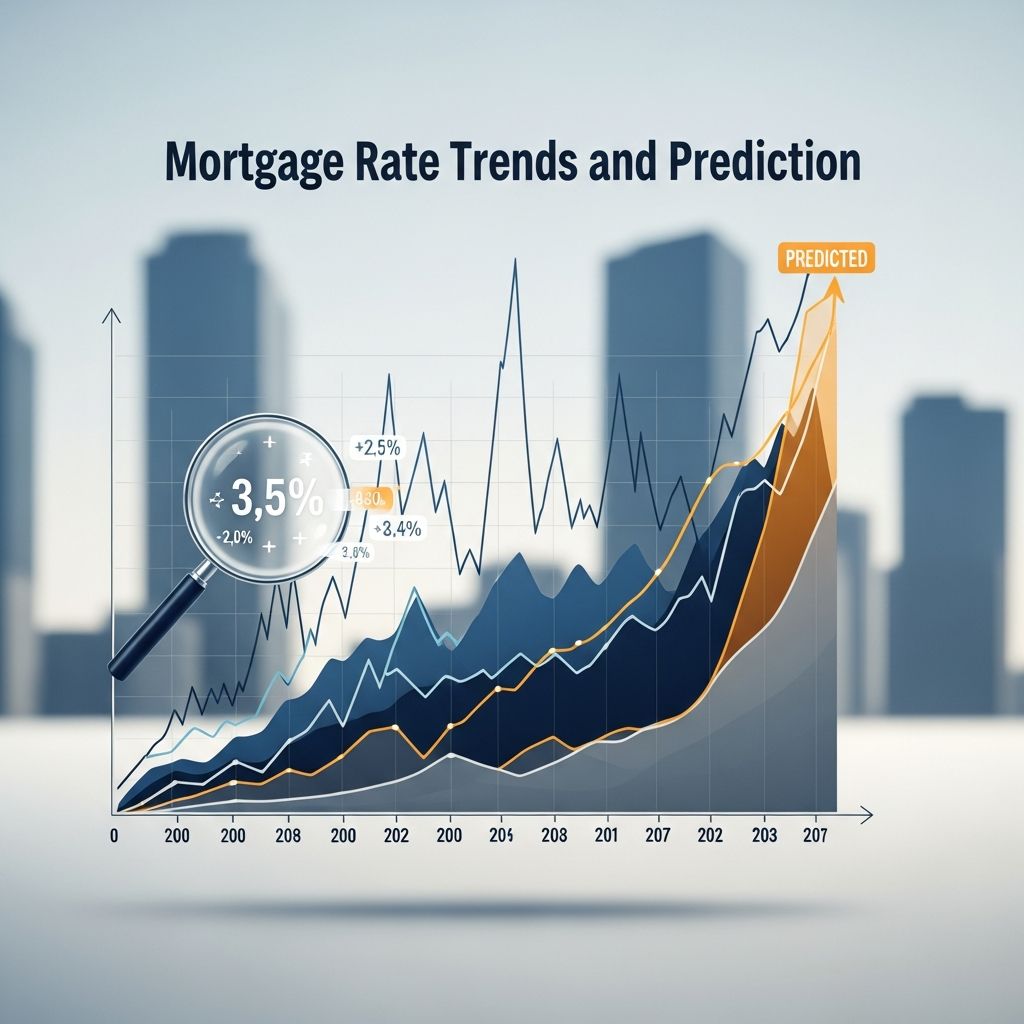
Understanding Mortgage Rate Trends and Predictions
Mortgage rates are a critical factor for anyone looking to purchase a home or refinance an existing mortgage. Understanding current trends and expert predictions can help borrowers make informed decisions about when to lock in rates and how to plan their finances. This comprehensive guide examines recent mortgage rate movements, expert forecasts, and what these trends mean for homebuyers and existing borrowers.
Current Mortgage Rate Environment
As of November 29, 2025, the national average 30-year fixed mortgage APR stands at 6.31% according to the latest survey of major lenders. The 15-year fixed mortgage rate averages 5.69% during the same period. These rates represent a slight retreat from earlier in the month, with the 30-year rate declining from 6.37% in the previous week.
The current refinance market shows slightly different rates, with the average 30-year refinance rate at 6.67% and the 15-year refinance rate at 6.03%. This spread between purchase and refinance rates reflects the broader lending environment and the risk assessment lenders apply to refinance transactions compared to new purchases.
Expert Rate Trend Predictions
When examining the week of November 26 through December 3, 2025, expert consensus shows a measured outlook on mortgage rates. The majority of rate watchers surveyed by Bankrate expect rates to remain relatively stable during this period.
Breaking down expert predictions, the rate trend index reveals the following distribution:
| Rate Direction | Percentage of Experts |
|---|---|
| Rates Will Stay the Same | 50% |
| Rates Will Go Down | 30% |
| Rates Will Go Up | 20% |
Half of the respondents expect rates to remain unchanged, while 30% predict a downward movement and 20% anticipate an increase. This split forecast reflects the uncertainty inherent in economic predictions, particularly around the Thanksgiving holiday period when many markets close or operate with shortened sessions.
Recent Rate Movements and Market Factors
Mortgage rates have demonstrated volatility throughout November 2025, with rates moving downward across the broader economy in recent days. According to market analysis, current rate levels are approaching year-to-date minimums, suggesting that rates have cooled considerably from their peaks earlier in the year.
The decline in mortgage rates correlates with broader economic indicators. The yield on the 10-year Treasury, which serves as a benchmark for 30-year mortgage rates, fell to 4% during the survey period, down from 4.16% in recent days. This Treasury yield movement directly influences mortgage rate pricing, as lenders base their mortgage rates partly on Treasury yields plus their profit margin and risk premium.
One significant factor affecting rate movements is labor market conditions. The latest data indicates a weaker job market, which has contributed to the retreat in mortgage rates observed in late November. When employment data shows weakness, it typically leads to expectations of more dovish monetary policy, which in turn puts downward pressure on interest rates across the economy.
Mortgage Rate Volatility Index Analysis
Understanding rate stability is as important as understanding rate direction. Bankrate’s Mortgage Rate Variability Index provides insight into how much mortgage rates are fluctuating. As of November 24, 2025, the index read 5 out of 10, which represents a 2-point increase from the previous week.
The index ranks variability on a scale from 1 (low volatility) to 10 (high volatility). A reading of 5 indicates moderate variability in loan offers across different lenders. This moderate level of variability suggests that while rates have moved somewhat in recent days, they haven’t exhibited extreme swings. Borrowers comparing offers from multiple lenders may see some variation in quotes, but the differences are not dramatically divergent.
Year-to-Date Rate Performance
The mortgage rate environment in late November 2025 represents a significant improvement from earlier periods in the year. The average 30-year mortgage rate has stayed below 6.5% since August, and housing economists expect rates to maintain this range through the end of 2025.
In early October 2024, 30-year mortgage rates stood at 6.20%, before climbing sharply in late 2024 and early 2025. The recent stabilization and slight decline in rates provides some relief to borrowers, particularly those whose fixed-rate mortgage terms are expiring and facing the prospect of refinancing at higher rates.
Comparing Current Rates to Historical Levels
The current mortgage rate environment reflects significant changes from the historically low rates experienced during the pandemic era. While rates in November 2025 at 6.31% may seem high to those accustomed to rates below 3%, they represent a meaningful decrease from peaks experienced in 2024.
For context, the Federal Reserve cut rates last month for the second time this year, trimming its benchmark rate. These Fed rate cuts filter through the economy with a lag and influence mortgage rates indirectly through Treasury yields and lending conditions. The current 6.31% rate on 30-year mortgages reflects the normalization of rates from their pandemic lows while remaining elevated compared to the long-term historical average of around 6% observed before 2022.
What Affects Mortgage Rate Movements
Several key economic indicators and Fed decisions influence mortgage rate trends:
Inflation Data: Persistent inflation concerns can keep rates elevated, while evidence of inflation cooling can lead to downward rate pressure.
Employment Reports: Weak job market data suggests potential Fed rate cuts, while strong employment data may support higher rates.
Treasury Yields: The 10-year Treasury yield serves as the primary benchmark for mortgage rates. When Treasury yields fall, mortgage rates typically follow.
Federal Reserve Policy: Explicit Fed rate decisions and forward guidance about future policy directly influence market expectations and borrowing costs.
Market Volatility: Economic uncertainty, geopolitical events, and financial market movements can create sharp swings in mortgage rates.
Market Conditions and Holiday Impact
The analysis of rate trends for the week following Thanksgiving reveals the impact of holiday market closures on rate stability. With some U.S. markets closed for the Thanksgiving holiday and shortened sessions on Black Friday, significant rate movements are unlikely until markets return to full operation. However, retail sales data from the Black Friday and Cyber Monday sessions could provide important feedback for rate direction in the following week.
Historically, market liquidity decreases during holiday weeks, which can result in wider bid-ask spreads and potentially less favorable pricing for borrowers shopping for rates. However, it also means that major news or economic data releases during these periods may have less immediate impact on rate pricing.
Implications for Borrowers
Understanding mortgage rate trends has practical implications for borrowers in different situations. Those actively shopping for a mortgage should recognize that with rates approaching year-to-date minimums and expert opinion suggesting relative stability, the current environment may represent reasonable timing for locking in rates. However, the 20% of experts predicting rate increases suggest there’s still uncertainty about short-term direction.
Borrowers with existing mortgages approaching renewal dates should monitor rate trends closely. While rates have improved from 2024 peaks, they remain significantly higher than rates available even two years ago, which could result in meaningfully higher payments when refinancing.
Long-Term Rate Outlook
Beyond the immediate week or month, longer-term rate forecasts suggest potential for continued moderation in rates. As inflation pressures ease and central banks move closer to accommodation, mortgage rates may trend lower over time, though significant declines are not universally expected.
The consensus among housing economists is for rates to remain in the current 6% to 6.5% range through the end of 2025, with potential for slight improvement heading into 2026 if economic conditions warrant additional Fed rate cuts. However, this outlook assumes no major economic shocks or inflationary surprises that could derail the easing cycle.
Frequently Asked Questions
Q: What is the current average 30-year mortgage rate as of November 29, 2025?
A: The national average 30-year fixed mortgage APR is 6.31% as of November 29, 2025, according to Bankrate’s survey of major lenders.
Q: Do experts predict rates will increase or decrease in the coming weeks?
A: Expert opinion is divided, with 50% predicting rates will stay unchanged, 30% expecting rates to decrease, and 20% anticipating an increase for the week of November 26 through December 3, 2025.
Q: How does the mortgage rate variability index affect my rate shopping?
A: A moderate variability index reading of 5 out of 10 suggests you should shop with multiple lenders, as different companies may offer varying rates, but the spread between quotes should not be extreme.
Q: What is the current 15-year mortgage rate?
A: The average 15-year fixed mortgage APR is 5.69% as of November 29, 2025.
Q: How have mortgage rates changed since August 2025?
A: The average 30-year mortgage rate has remained below 6.5% since August 2025, indicating relative stability compared to earlier volatility in the year.
Q: What economic factors influence mortgage rates most?
A: Key factors include 10-year Treasury yields, inflation data, employment reports, Federal Reserve policy decisions, and broader market volatility.
Q: Should I lock in my mortgage rate now?
A: With rates near year-to-date lows and 50% of experts predicting stability, the current environment may offer reasonable timing, but individual circumstances vary. Consider your timeline and risk tolerance when making this decision.
Q: How much higher are current rates compared to earlier in 2024?
A: Rates were at 6.20% in early October 2024 before rising through late 2024 and early 2025. The current 6.31% rate represents an improvement from 2024 peaks but remains significantly higher than pandemic-era rates.
References
- Mortgage Rate Predictions 2025 — Housing Outlook Agency (HOA). 2025. https://hoa.org.uk/advice/guides-for-homeowners/for-owners/mortgage-rate-forecast/
- Expert Poll: Mortgage Rate Trend Predictions for Nov. 26 – Dec. 3, 2025 — Bankrate. 2025-11-26. https://www.bankrate.com/mortgages/rate-trends/
- Compare Current Mortgage Rates for Today — Bankrate. 2025-11-29. https://www.bankrate.com/mortgages/mortgage-rates/
- Mortgage Rates Retreat Slightly This Week — Bankrate. 2025-11-25. https://www.bankrate.com/mortgages/analysis/mortgage-rates-november-25-2025/
- Interest Rates and Bank Rate: Our Latest Decision — Bank of England. 2025-11. https://www.bankofengland.co.uk/monetary-policy/the-interest-rate-bank-rate
Similar Articles








Read full bio of Sneha Tete