Mortgage Rate: Definition, Types, and Impact on Borrowers
Understanding mortgage rates: How they work, types available, and factors affecting your home loan.
What Is a Mortgage Rate?
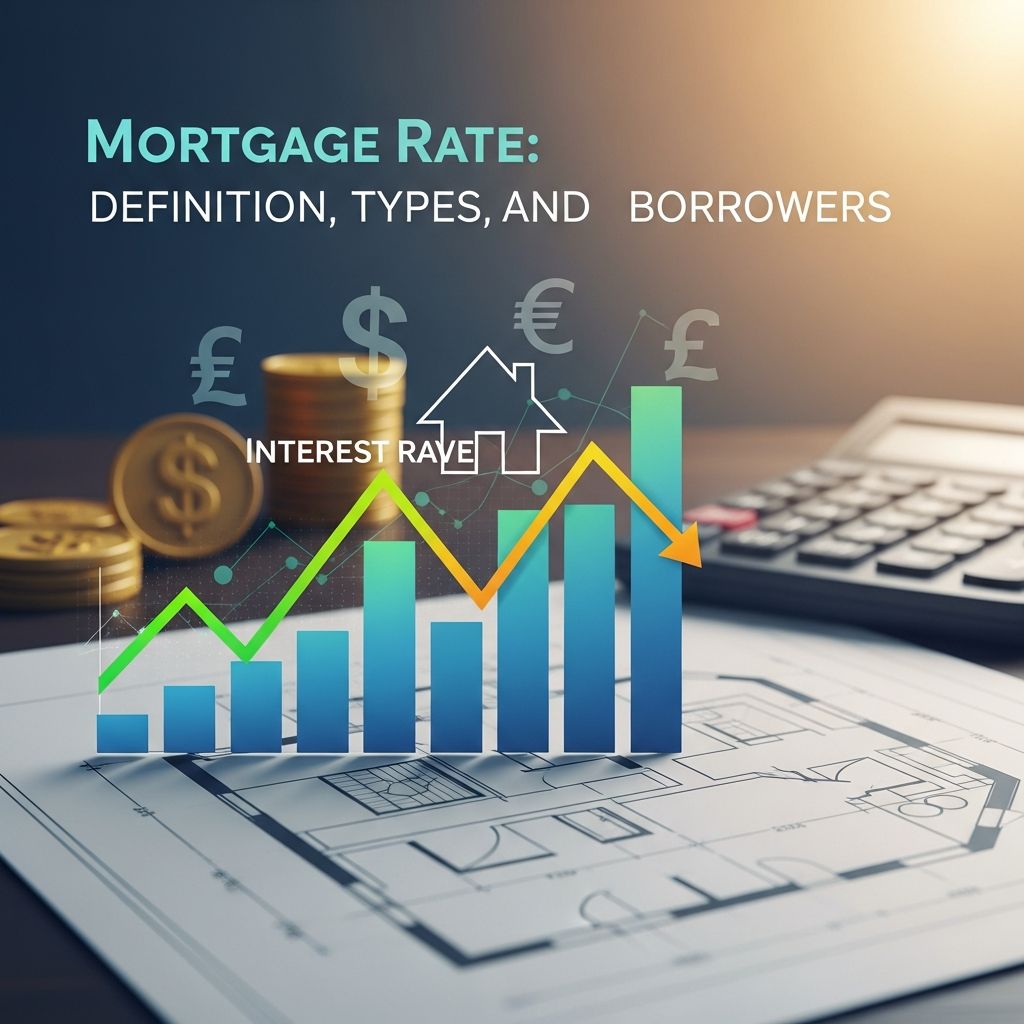
A mortgage rate is the interest rate charged by a lender on a mortgage loan used to purchase a home. The rate represents the percentage of the principal loan amount that borrowers must pay as interest over the life of the loan. Mortgage rates fluctuate based on various economic factors, market conditions, and individual borrower characteristics. Understanding mortgage rates is crucial for homebuyers, as even small differences in rates can significantly impact the total cost of borrowing and monthly payment amounts.
The mortgage rate is expressed as an annual percentage rate (APR) and directly affects how much interest a borrower will pay throughout the loan term. For example, a borrower with a $300,000 mortgage at 3% interest will pay substantially less interest than someone with the same loan amount at 6% interest over a 30-year period. This fundamental concept makes shopping for competitive rates an essential part of the home-buying process.
How Mortgage Rates Work
Mortgage rates operate on a fundamental principle: lenders charge interest to compensate for the risk of lending money and to generate profit. The rate charged reflects several components including the lender’s cost of funds, profit margin, and the perceived risk associated with the borrower. When you obtain a mortgage, you’re essentially borrowing money from a lender, and the mortgage rate determines how much you’ll pay for that privilege.
The relationship between the borrower and lender is formalized through a mortgage contract. This contract specifies the loan amount (principal), the interest rate, the loan term (typically 15, 20, or 30 years), and the payment schedule. Monthly payments are calculated using an amortization formula that ensures the loan is fully repaid by the end of the term. The mortgage rate directly determines how much of each payment goes toward principal versus interest.
Key Components Affecting Rate Calculation:
- Credit Score: Borrowers with higher credit scores typically receive lower rates because they’re perceived as lower-risk
- Loan-to-Value Ratio (LTV): The relationship between loan amount and property value influences the rate offered
- Down Payment: Larger down payments often result in better interest rates
- Loan Term: Shorter loan terms typically have lower rates than longer terms
- Property Type: Single-family homes often have lower rates than investment properties
- Market Conditions: Broader economic factors and Federal Reserve policy influence available rates
Types of Mortgage Rates
Mortgage rates come in several varieties, each with distinct characteristics, advantages, and disadvantages. The primary distinction is between fixed-rate mortgages and adjustable-rate mortgages, though various hybrid products also exist.
Fixed-Rate Mortgages
A fixed-rate mortgage maintains the same interest rate throughout the entire loan term, typically 15, 20, or 30 years. This consistency provides predictability and stability for borrowers, as the monthly principal and interest payment remains constant regardless of market fluctuations. Fixed-rate mortgages are particularly appealing when interest rates are historically low or expected to rise, as borrowers can lock in favorable rates.
The primary advantage of fixed-rate mortgages is payment predictability and protection from rate increases. Borrowers know exactly what their housing costs will be for the next 15 to 30 years, facilitating long-term financial planning. However, fixed-rate mortgages typically carry higher initial interest rates compared to adjustable-rate alternatives because lenders assume greater risk by committing to a specific rate for an extended period.
Adjustable-Rate Mortgages (ARMs)
Adjustable-rate mortgages feature interest rates that fluctuate over time, typically starting with a lower introductory rate (called a “teaser rate”) for an initial period, after which the rate adjusts periodically based on a specified index plus a lender margin. Common ARM structures include 3/1, 5/1, 7/1, and 10/1 ARMs, where the first number represents years at the initial rate and the second number represents the adjustment frequency thereafter.
ARMs can provide initial savings for borrowers who don’t plan to keep their homes long-term or expect their income to increase. However, they carry significant risk if interest rates rise substantially after the initial period, potentially resulting in dramatically higher monthly payments. ARM borrowers must carefully review rate caps, which limit how much the rate can increase per adjustment period and over the loan lifetime.
Hybrid Mortgages
Hybrid mortgages combine fixed and adjustable-rate features, offering a middle ground between the stability of fixed rates and the initial savings of ARMs. For example, a 5/1 ARM might offer a fixed rate for the first five years, then adjust annually thereafter. These products appeal to borrowers seeking initial payment stability with the possibility of rate adjustments later.
Factors That Influence Mortgage Rates
Mortgage rates don’t exist in isolation; they’re influenced by numerous macroeconomic factors, market conditions, and individual borrower characteristics. Understanding these influences helps borrowers anticipate rate movements and make informed financing decisions.
Economic Factors:
- Federal Reserve Policy: The Fed’s interest rate decisions directly impact mortgage rate availability and pricing
- Inflation: Higher inflation typically leads to higher mortgage rates as lenders seek compensation for decreased purchasing power
- Economic Growth: Strong economic conditions often correlate with rising mortgage rates
- Treasury Bond Yields: Mortgage rates closely follow 10-year Treasury bond yields
- Employment Data: Strong job reports often push rates higher, while weak employment data can lower rates
- Housing Market Conditions: Supply and demand dynamics affect lending practices and rate offerings
Individual Borrower Factors:
- Credit Score and History: Higher scores typically result in lower rates; late payments or defaults increase rates
- Debt-to-Income Ratio: Lower ratios improve rate offers, as lenders view borrowers as less risky
- Down Payment Amount: Larger down payments reduce lender risk and often result in better rates
- Loan Amount: Jumbo loans (above conforming loan limits) often carry higher rates
- Occupancy Status: Primary residences typically receive better rates than investment properties or second homes
- Loan Program: Conventional loans, FHA loans, VA loans, and USDA loans often have different rate structures
Mortgage Rate Impact on Monthly Payments
The relationship between mortgage rates and monthly payments is direct and substantial. Even seemingly small rate differences can result in thousands of dollars in additional interest over a loan’s lifetime. Consider these practical examples:
| Loan Amount | Interest Rate | Loan Term | Monthly Payment | Total Interest Paid |
|---|---|---|---|---|
| $300,000 | 3.0% | 30 years | $1,265 | $155,332 |
| $300,000 | 4.0% | 30 years | $1,432 | $215,609 |
| $300,000 | 5.0% | 30 years | $1,610 | $279,674 |
| $300,000 | 6.0% | 30 years | $1,799 | $347,515 |
As the table demonstrates, a 3% rate difference on a $300,000 mortgage increases monthly payments by $534 and total interest costs by approximately $192,183 over 30 years. This substantial impact underscores the importance of shopping for competitive rates and understanding how different rate options affect long-term housing costs.
How to Compare Mortgage Rates
Obtaining the best mortgage rate requires strategic shopping and understanding what to compare. Here are key steps for effective rate comparison:
Shop Multiple Lenders
Different lenders offer varying rates based on their business models, funding costs, and risk assessments. Shopping with at least three to five different lenders provides meaningful comparison data. Banks, credit unions, and mortgage companies often offer different rate structures and terms.
Understand All Terms
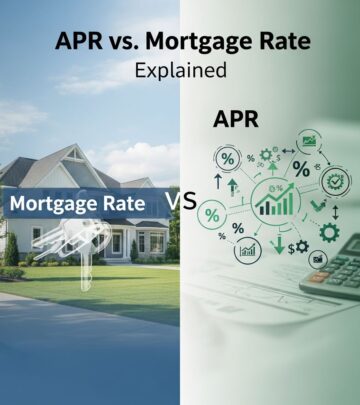
When comparing rates, look beyond the advertised interest rate. Consider the Annual Percentage Rate (APR), which includes interest plus lender fees and closing costs. The APR provides a more accurate comparison than the interest rate alone. Additionally, review loan terms, prepayment penalties, and any special conditions.
Get Loan Estimates
Federal regulations require lenders to provide standardized Loan Estimates within three business days of application. These documents detail the interest rate, estimated monthly payment, closing costs, and other loan terms, facilitating accurate comparisons between lenders.
Consider Lock-In Options
Mortgage rate locks allow borrowers to secure a rate for a specified period (typically 30 to 60 days) while the loan is being processed. Understanding lock-in options helps borrowers protect against rate increases while shopping and processing their applications.
Strategies for Obtaining Better Mortgage Rates
Borrowers have several strategies available to improve their mortgage rate offers:
- Improve Credit Score: Paying down debt and correcting credit report errors can meaningfully improve your score and rate eligibility
- Increase Down Payment: Larger down payments reduce lender risk and typically qualify for better rates
- Lower Debt-to-Income Ratio: Paying off existing debts before applying for a mortgage improves your financial profile
- Consider Points: Buying points (paying upfront fees to reduce the interest rate) can lower long-term costs if you plan to keep the home long-term
- Apply During Favorable Market Conditions: Monitoring rate trends and applying when rates are favorable can yield better offers
- Improve Employment Stability: Demonstrating consistent employment history can positively influence rate offers
Frequently Asked Questions About Mortgage Rates
Q: What’s the difference between interest rate and APR?
A: The interest rate is the percentage charged on the loan principal. The APR includes the interest rate plus other costs and fees associated with the mortgage, providing a more complete picture of the true cost of borrowing.
Q: Why do mortgage rates change daily?
A: Mortgage rates fluctuate based on changes in Treasury bond yields, inflation expectations, Federal Reserve announcements, employment data, and other economic indicators. Lenders adjust their rates in response to these market movements.
Q: Is it better to get a fixed-rate or adjustable-rate mortgage?
A: This depends on individual circumstances. Fixed-rate mortgages offer payment predictability and protection from rate increases, making them ideal for long-term homeowners. ARMs offer lower initial rates, making them suitable for borrowers planning to sell or refinance within a few years.
Q: Can I refinance my mortgage if rates drop?
A: Yes, refinancing is possible when rates drop significantly. If the new rate is at least 0.5-1% lower than your current rate and you plan to stay in the home long enough to recoup closing costs, refinancing can reduce your monthly payments and total interest paid.
Q: How long does a mortgage rate lock last?
A: Mortgage rate locks typically last between 30 and 60 days, though some lenders offer longer lock periods for an additional fee. The lock protects your rate during loan processing, but if your lock expires before closing, your rate could change.
Q: What credit score do I need to get a good mortgage rate?
A: While borrowers with scores above 740 typically receive the best conventional loan rates, loans are available for those with lower scores. However, scores below 620 may result in higher rates or require alternative loan programs like FHA mortgages.
Q: Do I need to make a large down payment to get a better rate?
A: While larger down payments (typically 20% or more) result in better rates, smaller down payments are possible. Even down payments of 5-10% can qualify for competitive rates if other factors like credit score and income are strong.
References
- Mortgage Rate Basics — Consumer Financial Protection Bureau. 2024. https://www.consumerfinance.gov/
- Understanding Interest Rates and Mortgage Pricing — Federal Reserve Board. 2024. https://www.federalreserve.gov/
- What Is a Mortgage? — U.S. Department of Housing and Urban Development. 2024. https://www.hud.gov/
- Mortgage Rates and Economic Indicators — National Association of Realtors. 2024. https://www.nar.realtor/
- Fixed vs. Adjustable-Rate Mortgages — Federal Trade Commission. 2024. https://www.ftc.gov/
Similar Articles








Read full bio of medha deb