Mortgage Rates 2025: Current Rates, Trends, Expert Analysis
Stay informed on mortgage rates, trends, and expert predictions for today's housing market.

Mortgage News & Rate Analysis
Staying informed about mortgage rates and market trends is essential for anyone considering a home purchase or refinance. Whether you’re a first-time homebuyer or an experienced investor, understanding current market conditions and expert predictions can help you make strategic decisions about when and how to borrow. Bankrate provides comprehensive mortgage news coverage, current rate data, and expert analysis to help you navigate today’s complex housing market.
Current Mortgage Rates
Mortgage rates fluctuate regularly based on economic conditions, Federal Reserve decisions, and market dynamics. As of late November 2025, the mortgage lending landscape continues to show variability. Understanding where rates stand today helps you evaluate whether it’s the right time to lock in a rate or continue monitoring the market.
The following table shows the most recent national average mortgage rates:
| Loan Type | Interest Rate |
|---|---|
| 30-Year Fixed Rate | 6.33% |
| 15-Year Fixed Rate | 5.66% |
| 10-Year Fixed Rate | 5.58% |
| 5/1 ARM | 5.60% |
These rates represent national averages from Bankrate’s survey of large lenders and may vary based on your location, credit profile, and specific loan terms.
Weekly National Mortgage Rate Trends
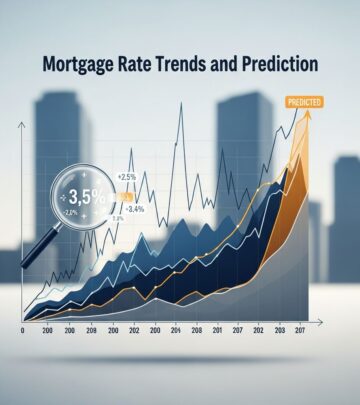
Mortgage rates don’t remain static; they respond to various economic indicators and market forces. Tracking weekly trends provides valuable insight into whether rates are moving upward or downward, helping you time your mortgage application strategically.
Recent weeks have shown interesting movement. The average 30-year fixed rate was 6.32% as of November 25, down from 6.37% the previous week. This downward movement reflects broader economic developments, including reactions to Federal Reserve policy decisions and labor market indicators.
Rate Movement Analysis
Understanding the direction rates are moving helps you decide whether to lock in immediately or wait for potentially better terms. According to expert analysis, rates have moved down across the economy over the last several days, with current levels approaching year-to-date minimums. The Rate Trend Index shows that 50% of experts predict rates will stay the same, 30% predict they will go down, and 20% predict they will go up in the near term.
Market volatility continues to influence rate decisions. For instance, thirty-day mortgage rates dipped to 6.32% amid a weaker job market, representing a decline from earlier levels in November. Meanwhile, three weeks after the Federal Reserve’s most recent rate cut, rates had risen to 6.37%, demonstrating how Fed decisions create initial downward pressure that may reverse as markets digest the implications.
How the Federal Reserve Influences Mortgage Rates
The Federal Reserve plays a crucial role in shaping mortgage rate environments, though the relationship is indirect rather than direct. Understanding this connection helps explain why mortgage rates don’t always move exactly as Fed decisions might suggest.
The Federal Funds Rate and Mortgage Rates
The Federal Reserve sets the federal funds rate, which determines how much banks pay each other to borrow funds overnight. While this rate isn’t the same as your mortgage rate, they are closely related. When the Fed cuts the federal funds rate, it generally encourages lenders to lower interest rates across the board. Similarly, when the Fed raises rates, lenders are more likely to do the same.
At its October 28-29 meeting, the Federal Open Market Committee voted to reduce the benchmark interest rate by 0.25 percentage points, the second cut of the year. This decision was driven by a slowing job market and concerns about economic growth. The Fed’s next meeting is scheduled for December 9-10, when officials will release their latest economic projections and potentially make additional rate decisions.
The 10-Year Treasury Yield Connection
Fixed-rate mortgages, the most popular type of home loan, don’t track the federal funds rate directly. Instead, they follow the 10-year Treasury yield. This is a critical distinction. Mortgage rates are typically 1.5 to 2 percentage points higher than the 10-year Treasury yield, reflecting the additional risk lenders take by lending for 30 years.
However, this spread isn’t fixed. For much of 2023 and 2024, the gap between the 10-year Treasury yield and the 30-year fixed mortgage rate grew to 3 percentage points, making mortgages considerably more expensive. The primary reason was added risk in the marketplace due to rapidly rising rates. Understanding this spread helps explain why mortgage rates sometimes seem to ignore Fed actions.
Adjustable-Rate Mortgages and the Fed
While fixed-rate mortgages dominate residential financing, some borrowers opt for adjustable-rate mortgages (ARMs), which experience more direct Fed influence. ARM rates are often tied to the Secured Overnight Financing Rate (SOFR), which is based on the Fed’s rate decisions. When the Fed raises or lowers the federal funds rate, SOFR movements push ARM rates up or down when they reset annually or semi-annually.
Factors Influencing Mortgage Rates
Mortgage rates respond to multiple economic and market forces beyond Federal Reserve decisions. Understanding these factors helps you anticipate rate movements and make informed borrowing decisions.
Factors Beyond Your Control
Inflation: Generally, when inflation picks up, so do fixed interest rates. Higher inflation expectations prompt lenders to demand higher rates to maintain their purchasing power over the loan term.
Supply and Demand: When mortgage lenders have too much business, they raise rates to decrease demand. Conversely, when business is light, they tend to cut rates to attract more customers.
The Secondary Mortgage Market: Most lenders bundle the mortgages they underwrite and sell them in the secondary marketplace to investors. When investor demand for mortgage-backed securities is high, mortgage rates trend lower. When investors aren’t buying, rates might rise to attract them.
Local Housing Market Conditions: Your local market impacts rates significantly because lenders respond quickly to local competition. In hot housing markets where demand is strong and houses are selling quickly, lenders may offer more competitive rates to win homebuyers. In slower markets, interest rates may remain higher to allow lenders to price in additional risk.
Factors You Can Control
Your Credit Score: Lenders reserve their best rates for homebuyers who pose the least risk. Individuals with high credit scores are considered more likely to pay off loans promptly, making them low-risk borrowers. Those with low credit scores may face higher rates due to greater default risk. Improving your credit score before applying for a mortgage can lead to substantially lower overall costs.
Your Financial Profile: Your overall financial picture significantly impacts the rates available to you. Lenders examine your debt-to-income ratio (DTI), income stability, and ability to cover existing debts comfortably. A lower DTI makes you more attractive to lenders and more likely to qualify for favorable rates.
Your Down Payment: A larger down payment reduces the lender’s risk and demonstrates your commitment to the property. This can qualify you for more favorable interest rates. Additionally, a larger down payment means you’ll need to borrow less, leading to a smaller overall loan amount and potentially lower monthly payments.
Special Mortgage Programs and Rate Buydowns
Homebuilders have become increasingly creative in attracting buyers amid soft demand for new construction. One notable trend is the use of rate buydowns and special financing programs. The average mortgage rate for new construction buyers was 5.27% during the third quarter of 2025, compared to 6.26% for buyers of existing homes. These markedly lower rates reflect both reduced demand for new homes and builders’ ability to influence mortgage options offered to their customers through affiliated mortgage companies.
These builder-sponsored programs may include temporary rate reductions or seller concessions to help offset higher purchase prices. However, borrowers should carefully understand the terms, including whether rates are fixed or will adjust after an initial period, and what the true cost is when considering both the lower rate and potentially higher home prices.
Recent Market Trends and Economic Context
The mortgage market in 2025 reflects ongoing economic transitions. The Federal Reserve made two rate cuts in September and October, totaling 50 basis points. Between the first week of September and the last week of October, 30-year mortgage rates fell from 6.55 percent to 6.25 percent. However, rates have fluctuated around the 6.3% range heading into the final weeks of the year.
Economic volatility, particularly in the job market, continues to influence rate decisions. The weakening labor market cited by the Fed as justification for recent rate cuts has supported mortgage rate decreases, as lower economic growth typically leads to lower rates.
Expert Rate Predictions
Expert predictions suggest cautious optimism about near-term rate stability. With some U.S. markets closed for holidays and shortened trading sessions, significant rate movements may be limited in the near term. Market experts expect to see more clarity following retail data releases from the Black Friday and Cyber Monday shopping periods.
Most analysts anticipate rate volatility will continue as markets digest economic data and await the Federal Reserve’s December meeting. Borrowers considering a mortgage application should stay informed about economic releases and Fed announcements, as these typically trigger rate adjustments within hours or days.
How to Compare Mortgage Rates
When shopping for a mortgage, comparing rates from multiple lenders is essential. Top offers on Bankrate are typically lower than national averages. For the week of November 23rd, top offers were significantly lower than the national average rate, translating to substantial savings over a 30-year loan term.
When comparing rates, consider both the interest rate and the Annual Percentage Rate (APR), which includes closing costs and fees. A loan with a slightly higher interest rate but lower fees might offer better value than one with a lower rate but expensive closing costs.
Frequently Asked Questions
Q: What’s the difference between the Federal Reserve’s rate and my mortgage rate?
The Federal Reserve sets the federal funds rate, which influences short-term borrowing costs between banks. However, mortgage rates follow the 10-year Treasury yield, making the relationship indirect. Your mortgage rate will be higher than both of these rates, typically by 1.5 to 3 percentage points, depending on market conditions and your loan risk profile.
Q: Why do mortgage rates sometimes go up when the Federal Reserve cuts rates?
Mortgage rates track the 10-year Treasury yield, not the federal funds rate. When the Fed cuts rates, the Treasury yield may initially fall, but it can rise again as markets adjust expectations about inflation and economic growth. For example, after the Fed’s September rate cut, 30-year rates rose from 6.3 percent to 6.39 percent, where they remained for three weeks before declining.
Q: How can I qualify for the best mortgage rates?
To qualify for competitive rates, focus on improving your credit score, lowering your debt-to-income ratio, saving for a larger down payment, and maintaining stable income. Lenders offer their best rates to borrowers with strong financial profiles and low default risk.
Q: Are adjustable-rate mortgages affected differently by Federal Reserve decisions?
Yes, ARMs are affected more directly by Fed decisions because their rates are tied to the Secured Overnight Financing Rate (SOFR), which is based on the Fed’s federal funds rate. When the Fed changes rates, SOFR adjusts accordingly, and ARM rates reset periodically based on SOFR changes.
Q: Should I lock in my mortgage rate now?
The decision to lock in depends on your personal circumstances, timeline, and risk tolerance. If rates are near historical lows for your situation and you’re ready to close, locking in can protect you from future increases. If rates appear volatile or you don’t need to close immediately, monitoring trends before locking might be prudent.
References
- How does the Federal Reserve affect mortgages? — Bankrate. 2025-10-29. https://www.bankrate.com/mortgages/federal-reserve-and-mortgage-rates/
- Compare 30-Year Mortgage Rates Today — Bankrate. 2025-11-25. https://www.bankrate.com/mortgages/30-year-mortgage-rates/
- Mortgage Rate Trends And Predictions For Nov. 26 – Dec. 3, 2025 — Bankrate. 2025-11-25. https://www.bankrate.com/mortgages/rate-trends/
- Mortgage Rates Fall Amid Economic Volatility — Bankrate. 2025-11-25. https://www.bankrate.com/mortgages/analysis/mortgage-rates-november-25-2025/
- Builders Are Dangling Super-Low Mortgage Rates — But There’s A Catch — Bankrate. 2025. https://www.bankrate.com/mortgages/builders-are-dangling-super-low-mortgage-rates-but-theres-a-catch/
- Mortgage Rates Rise Amid Post-Fed Volatility — Bankrate. 2025-11-19. https://www.bankrate.com/mortgages/analysis/mortgage-rates-november-19-2025/
- U.S. Bureau of Labor Statistics – Consumer Price Index — U.S. Department of Labor. 2025. https://www.bls.gov/cpi/
Similar Articles








Read full bio of medha deb