Mortgage Loan Types: Expert Guide To Choosing The Right Loan
Discover the best mortgage options for your home purchase with this comprehensive guide to loan types, features, and eligibility.
Selecting the appropriate mortgage loan is a pivotal decision in the home-buying process. Various loan types cater to different financial situations, credit profiles, and property needs. This guide examines primary categories such as fixed-rate and adjustable-rate mortgages, government-supported options, and specialized loans for unique circumstances. Understanding these distinctions empowers buyers to align financing with long-term goals.
Core Mortgage Categories
Mortgages generally fall into conventional and government-backed groups. Conventional loans follow standards set by entities like Fannie Mae and Freddie Mac, while government-backed ones offer support for specific demographics or areas.
Conventional Mortgages: Flexibility for Qualified Buyers
These loans suit borrowers with solid credit scores and sufficient down payments. They can be fixed-rate or adjustable and finance primary residences, vacation homes, or investments. A minimum 3% down payment is common, but less than 20% often requires private mortgage insurance (PMI).
- Strong credit advantage: Easier qualification with scores above 620.
- Versatile use: Applicable to diverse property types.
- PMI requirement: Adds cost until 20% equity is reached.
Government-Backed Mortgages: Accessibility for Broader Audiences
Federal agencies insure these loans, reducing lender risk and enabling lenient terms. They target first-time buyers, veterans, and rural residents with lower down payments and credit thresholds.
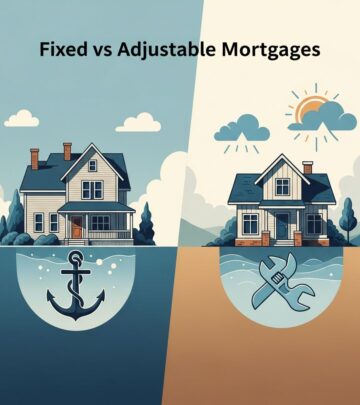
Fixed-Rate Mortgages: Predictability First
The hallmark of stability, fixed-rate mortgages maintain a constant interest rate throughout the term, ensuring unchanging principal and interest payments. Terms range from 15 to 30 years, with the longer option offering lower monthly amounts at higher total interest.
Ideal for long-term homeowners, these loans shield against rate hikes. For instance, a 30-year fixed-rate mortgage spreads payments over decades, aiding budgeting despite elevated lifetime costs.
| Term Length | Typical Monthly Payment Advantage | Total Interest Paid |
|---|---|---|
| 15 Years | Higher payments | Lower overall |
| 30 Years | Lower payments | Higher overall |
Adjustable-Rate Mortgages: Initial Savings with Risks
ARMs begin with a lower fixed rate for an introductory period (e.g., 5, 7, or 10 years), then adjust periodically based on market indexes. Hybrid versions like 5/1 ARMs fix for five years before annual changes.
Suitable for short-term owners or those anticipating income growth, ARMs carry adjustment caps to limit increases. Payments may rise significantly post-initial phase, demanding financial preparedness.
- Introductory benefit: Reduced early payments.
- Adjustment mechanism: Tied to indexes like SOFR.
- Risk factor: Potential for higher future costs.
Government-Supported Loan Programs
FHA Loans: Entry-Level Accessibility
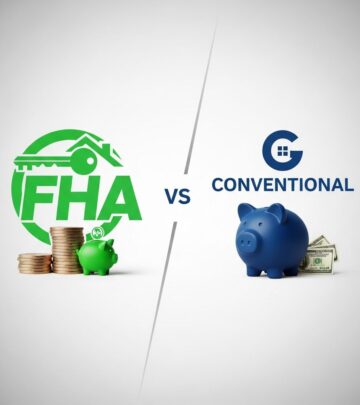
Insured by the Federal Housing Administration, FHA loans require just 3.5% down for credit scores of 580+, with options as low as 10% for lower scores. Mandatory mortgage insurance applies, but flexible debt-to-income ratios aid approval.
Perfect for first-time buyers or those with imperfect credit, these loans support various property types.
VA Loans: Benefits for Military Families
Offered through the Department of Veterans Affairs, VA loans eliminate down payment and PMI requirements for eligible veterans, active-duty members, and spouses. Competitive rates and no prepayment penalties enhance appeal.
- Eligibility: Requires Certificate of Eligibility.
- Funding fee: One-time cost, waivable for some.
- Property limits: No strict caps, but appraisal needed.
USDA Loans: Rural Homeownership
The U.S. Department of Agriculture backs these zero-down-payment loans for low- to moderate-income buyers in designated rural zones. Competitive rates and no PMI make them cost-effective, though location restricts use.
Specialized and Jumbo Financing Options
Jumbo Mortgages: High-Value Properties
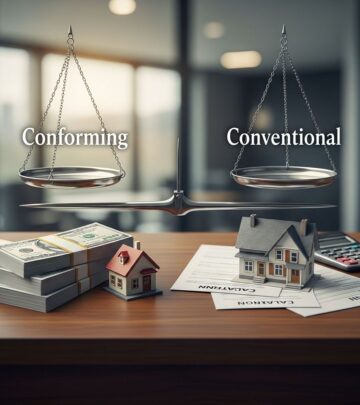
Exceeding conforming limits (e.g., $766,550 in most areas for 2024, higher in costly regions), jumbo loans fund luxury homes. They demand 20%+ down payments, superior credit (700+), and reserves due to non-sale to Fannie/Freddie.
High-balance conforming loans bridge the gap near limits with slightly easier terms.
Home Equity Options: Leveraging Ownership
Post-purchase, homeowners tap equity via loans or lines of credit (HELOCs). Home equity loans provide lump sums at fixed rates over 5-15 years; HELOCs offer revolving variable-rate access during a draw period.
| Option | Rate Type | Term | Best For |
|---|---|---|---|
| Home Equity Loan | Fixed | 5-15 years | Predictable borrowing |
| HELOC | Variable | 10-20 years | Flexible needs |
Construction and Reverse Mortgages
Construction loans finance building projects with short terms (often 1 year) and higher rates, converting to permanent mortgages. Reverse mortgages, like FHA-insured HECMs, let seniors 62+ convert equity to income without monthly payments, repaid upon sale or death (2025 limit: $1,209,750).
Comparing Key Loan Features
Choosing involves weighing down payments, rates, and eligibility. Fixed-rate offers certainty; ARMs save initially. Government loans broaden access.
| Loan Type | Down Payment | Credit Min | PMI? |
|---|---|---|---|
| Conventional Fixed | 3-20% | 620+ | Yes if <20% |
| FHA | 3.5% | 580+ | Yes |
| VA | 0% | No min | No |
| USDA | 0% | 640+ | No |
| Jumbo | 20%+ | 700+ | Often |
Factors Influencing Loan Selection
Assess credit score, income stability, location, and plans. First-timers may favor FHA/VA; long-term buyers, fixed-rate. Rural prospects eye USDA; high-end, jumbo.
Current rates (as of 2026) hover around 6-7% for fixed 30-year, lower for ARMs initially. Shop multiple lenders for best terms.
Frequently Asked Questions
What is the most popular mortgage type?
The 30-year fixed-rate mortgage dominates due to affordable payments and stability.
Can I get a mortgage with bad credit?
FHA loans accommodate scores as low as 500 with 10% down, offering pathways for credit-challenged buyers.
Do all mortgages require down payments?
No; VA and USDA provide zero-down options for qualified applicants.
How do ARMs adjust?
Rates shift periodically after the fixed intro based on market indexes plus a margin, with caps limiting changes.
What are conforming loan limits?
Set annually by FHFA; $766,550 for most 2024 areas, up to $1,149,825 in high-cost zones.
Steps to Secure Your Mortgage
- Check credit and calculate affordability.
- Pre-qualify with lenders.
- Compare rates and terms.
- Apply and lock in rate.
- Close with documentation.
Consult professionals for personalized advice. Rates and rules evolve; verify current details.
References
- 6 Types of home loans every buyer should know — Webster First. 2023. https://www.websterfirst.com/blog/6-types-of-home-loans/
- Understanding Common Types of Mortgage Loans — Freddie Mac. 2024. https://myhome.freddiemac.com/blog/homebuying/understanding-common-types-of-mortgage-loans
- Understanding the Different Types of Mortgage Loans — Alpine Bank. 2024. https://blog.alpinebank.com/understanding-the-different-types-of-mortgage-loans-which-one-is-right-for-you/
- 10 Types of Mortgage Loans to Know About — LendingTree. 2025. https://www.lendingtree.com/home/mortgage/types-of-mortgage-loans/
- Mortgage Loan Types Explained — Today’s Bank. 2024. https://www.todaysbank.com/personal/mortgage-loan-types-explained
- Understand the different kinds of loans available — Consumer Financial Protection Bureau. 2025-02-01. https://www.consumerfinance.gov/owning-a-home/explore/understand-the-different-kinds-of-loans-available/
Similar Articles








Read full bio of Sneha Tete