Mortgage Insurance: Types, Costs, and Requirements
Understanding mortgage insurance: A comprehensive guide to PMI, FHA, and VA insurance options.

What Is Mortgage Insurance?
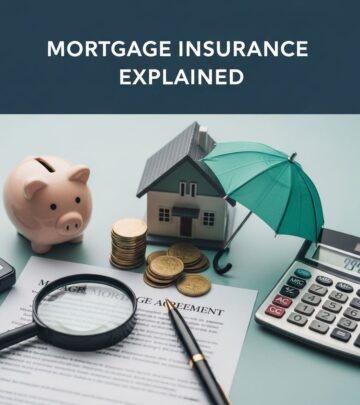
Mortgage insurance is a form of financial protection that protects lenders when borrowers default on their home loans. This insurance policy ensures that if a homeowner fails to make their mortgage payments, the lender will be compensated for potential losses. Mortgage insurance is primarily designed to mitigate the lender’s risk when a borrower makes a down payment of less than 20% on a property purchase. While the insurance protects the lender’s interests, it allows borrowers with smaller down payments to qualify for mortgage financing that would otherwise be unavailable to them.
The concept of mortgage insurance has become increasingly important in the housing market, enabling more people to achieve homeownership despite not having accumulated the traditional 20% down payment. However, it’s crucial for borrowers to understand the different types of mortgage insurance available and how they impact the overall cost of homeownership.
Types of Mortgage Insurance
There are several distinct types of mortgage insurance, each with unique characteristics, costs, and eligibility requirements. Understanding these options is essential for prospective homebuyers planning their financing strategy.
Private Mortgage Insurance (PMI)
Private Mortgage Insurance, commonly referred to as PMI, is one of the most prevalent forms of mortgage insurance for conventional loans. PMI is required when borrowers obtain a conventional mortgage with a down payment of less than 20%. This type of insurance is provided by private insurance companies rather than government agencies.
- PMI protects the lender’s investment in case of default
- Typically costs between 0.3% to 1.5% of the loan amount annually
- Can be paid monthly as part of the mortgage payment or as a lump sum upfront
- Can often be removed once the borrower reaches 20% equity in the property
- Premiums vary based on credit score, down payment percentage, and loan-to-value ratio
FHA Mortgage Insurance
Federal Housing Administration (FHA) loans are popular among first-time homebuyers because they allow for lower down payments, typically as little as 3.5%. However, FHA loans come with mandatory mortgage insurance premiums.
- FHA insurance includes both an upfront mortgage insurance premium (UFMIP) and annual mortgage insurance premiums
- The upfront premium is typically 1.75% of the loan amount and can be rolled into the loan
- Annual premiums range from 0.55% to 0.8% of the loan amount, depending on loan-to-value ratio and loan term
- FHA insurance cannot be removed until the loan is refinanced or paid off
- Available to borrowers with credit scores as low as 500 with a 10% down payment
VA Mortgage Insurance
Veterans Affairs (VA) loans offer unique benefits to eligible military members, veterans, and their spouses. Unlike conventional loans and FHA loans, VA loans do not require mortgage insurance. Instead, VA loans feature a funding fee that serves a similar purpose.
- No mortgage insurance is required for VA loans
- A one-time funding fee is charged, typically ranging from 1.4% to 3.6% of the loan amount
- The funding fee can be waived for disabled veterans
- VA loans allow for zero down payment purchases
- Generally offer competitive interest rates compared to conventional loans
USDA Mortgage Insurance
The United States Department of Agriculture (USDA) offers rural housing loans with guaranteed assistance for eligible borrowers in designated rural areas.
- Includes a guarantee fee, typically 2% of the loan amount
- Annual insurance premium of approximately 0.35% of the loan amount
- Allows zero down payment purchases
- Limited to rural properties meeting USDA eligibility criteria
Understanding PMI Costs and Removal
For borrowers obtaining conventional mortgages with less than 20% down, PMI represents an additional monthly expense. Understanding how PMI works and how to eventually eliminate this cost is crucial for long-term financial planning.
How PMI Costs Are Calculated
PMI premiums are determined by several factors including the borrower’s credit score, the loan-to-value (LTV) ratio, the loan amount, and whether the insurance is paid monthly or upfront. Borrowers with excellent credit scores and higher down payments typically qualify for lower PMI rates. The monthly PMI payment is typically added to the borrower’s mortgage payment and can significantly increase the overall monthly housing cost.
Removing PMI from Your Mortgage
One of the primary advantages of PMI is that it can be removed once certain conditions are met. Borrowers can request PMI removal in several ways:
- Automatic Termination: PMI is automatically removed when the loan balance reaches 78% of the original home purchase price
- Requested Removal: Borrowers can request PMI removal when they reach 20% equity (80% LTV) through principal paydown or home appreciation
- Refinancing: Refinancing to a new conventional loan or switching to another loan type can eliminate PMI
- Home Improvement: Substantial home improvements that increase property value may allow earlier PMI removal
When Is Mortgage Insurance Required?
Mortgage insurance requirements vary depending on the type of loan and the borrower’s financial situation. Understanding when insurance is mandatory helps borrowers plan their financing strategy effectively.
Conventional Loans
For conventional mortgages, PMI is required when the down payment is less than 20%. Most lenders also require PMI for loans with LTV ratios exceeding 80%. The requirement applies regardless of the borrower’s credit score or financial situation once these thresholds are met.
FHA Loans
Mortgage insurance is mandatory for all FHA loans. Borrowers cannot avoid FHA insurance premiums, even with substantial down payments. However, borrowers can refinance to a conventional loan and potentially eliminate the insurance once they’ve built sufficient equity.
VA and USDA Loans
VA loans do not require mortgage insurance, though a funding fee applies. USDA loans include a guarantee fee but not traditional mortgage insurance. These options provide significant cost savings compared to conventional and FHA loans.
Mortgage Insurance vs. Homeowners Insurance
It’s important not to confuse mortgage insurance with homeowners insurance. While both protect against financial loss related to the home, they serve different purposes and have distinct coverage areas.
- Mortgage Insurance: Protects the lender if the borrower defaults on the loan
- Homeowners Insurance: Protects the homeowner’s property against damage, theft, and liability
- Mortgage Insurance: Not tax-deductible in most cases
- Homeowners Insurance: May be tax-deductible in limited circumstances
- Mortgage Insurance: Can be removed once equity reaches 20%
- Homeowners Insurance: Required for the duration of the mortgage and must be maintained
Strategies to Avoid Mortgage Insurance
While mortgage insurance is sometimes necessary, there are several strategies borrowers can employ to minimize or avoid this additional expense:
Save for a Larger Down Payment
The most direct approach to avoiding PMI is to accumulate a 20% down payment before purchasing. This requires disciplined saving but eliminates the need for mortgage insurance entirely on conventional loans.
Consider Piggyback Mortgages
A piggyback mortgage, also known as an 80-10-10 loan, involves taking out two mortgages simultaneously. The first mortgage covers 80% of the purchase price, the second covers 10%, and the buyer makes a 10% down payment. This strategy eliminates PMI while reducing the required down payment below 20%.
Explore Loan Programs
Various loan programs may offer alternatives to PMI. Some lenders offer products with slightly higher interest rates but no mortgage insurance requirement. Comparing options can help borrowers determine the most cost-effective approach.
Build Equity Quickly
Making extra principal payments on the mortgage accelerates equity accumulation, allowing borrowers to reach the 20% equity threshold more rapidly and request PMI removal sooner.
Mortgage Insurance Impact on Your Budget
Understanding how mortgage insurance affects your overall housing budget is essential for financial planning. For a $300,000 home with a 10% down payment ($30,000), the remaining $270,000 would require PMI on a conventional loan. At an average PMI rate of 0.8% annually, this would add approximately $180 per month to the mortgage payment. Over the course of several years before PMI removal, this represents a substantial additional cost.
Frequently Asked Questions
Q: Can I remove PMI from my mortgage?
A: Yes, PMI can be removed once you reach 20% equity in your home through a combination of down payment and principal paydown. You can request removal manually, or it will automatically terminate at 78% LTV.
Q: Is mortgage insurance tax-deductible?
A: PMI is generally not tax-deductible. However, FHA mortgage insurance premiums may be deductible in certain circumstances if your Modified Adjusted Gross Income (MAGI) falls below specified thresholds. Consult a tax professional for specific advice.
Q: What’s the difference between mortgage insurance and homeowners insurance?
A: Mortgage insurance protects the lender from borrower default, while homeowners insurance protects your property from damage and liability. Homeowners insurance is required by lenders; mortgage insurance is required only for certain loan types and down payment amounts.
Q: Do VA loans have mortgage insurance?
A: No, VA loans do not require mortgage insurance. Instead, eligible veterans pay a one-time funding fee, which can be waived for service-connected disabled veterans.
Q: How much does mortgage insurance cost?
A: PMI costs typically range from 0.3% to 1.5% of the loan amount annually. FHA insurance includes a 1.75% upfront premium plus 0.55% to 0.8% annually. The exact cost depends on credit score, down payment amount, and loan type.
Q: Can I pay PMI upfront instead of monthly?
A: Yes, many lenders offer the option to pay PMI as a lump sum upfront, though this requires significant cash at closing. Some borrowers also pay a combination of upfront and monthly premiums.
Q: What is the minimum down payment required to avoid mortgage insurance?
A: For conventional loans, you need a minimum 20% down payment to avoid PMI. FHA loans require mortgage insurance even with larger down payments. VA and USDA loans allow zero down payment without mortgage insurance.
References
- Private Mortgage Insurance (PMI) – Federal Reserve Board — Board of Governors of the Federal Reserve System. 2024. https://www.federalreserve.gov/
- FHA Loan Limits and Insurance Premiums — U.S. Department of Housing and Urban Development. 2024. https://www.hud.gov/program_offices/housing/sfh/fha/
- VA Home Loans and Funding Fees — U.S. Department of Veterans Affairs. 2024. https://www.va.gov/housing-assistance/home-loans/
- USDA Rural Housing Loans — U.S. Department of Agriculture. 2024. https://www.rd.usda.gov/programs-services/home-loans
- Mortgage Insurance Premium Deduction — Internal Revenue Service. 2024. https://www.irs.gov/publications/p936
Similar Articles








Read full bio of Sneha Tete