Mortgage Insurance: 4 Key Types And Costs Explained
Unlock the essentials of mortgage insurance: types, costs, and strategies to minimize or eliminate it for smarter home buying.
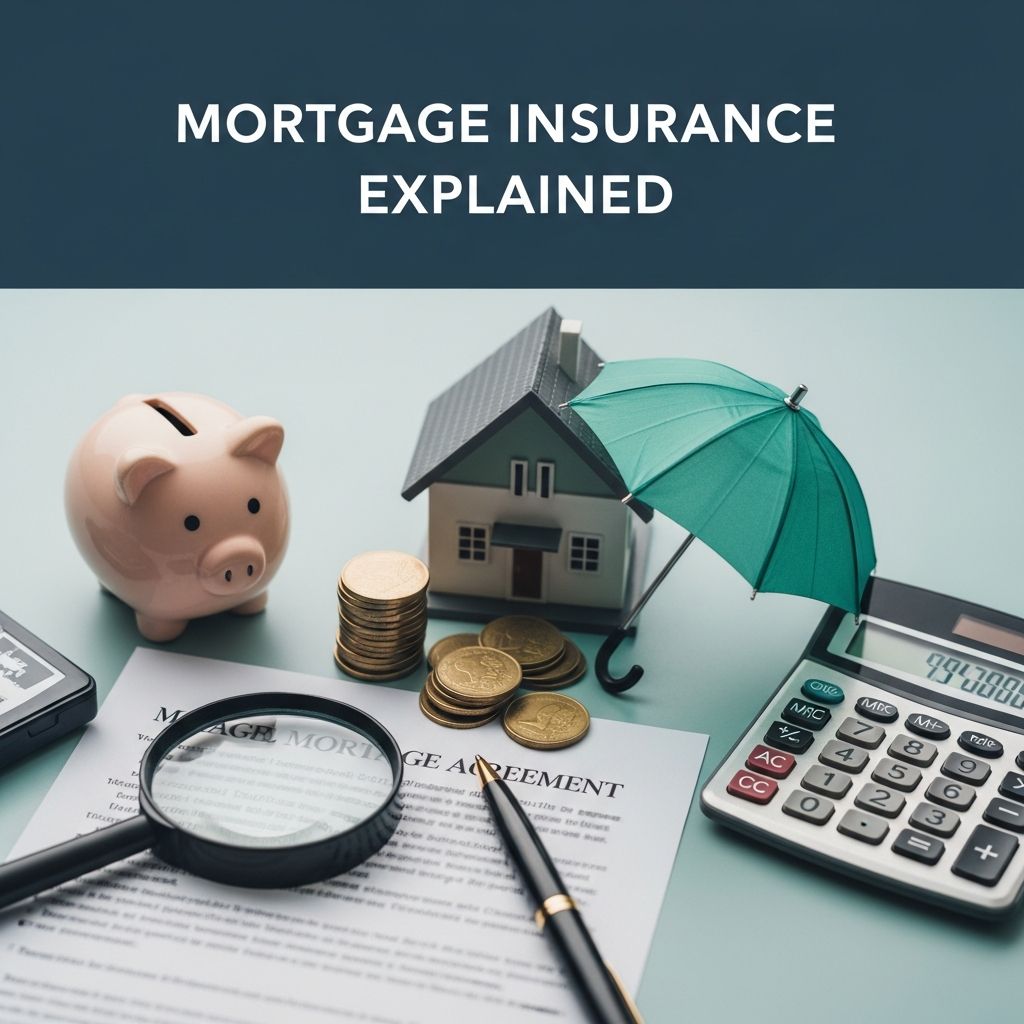
Mortgage insurance is a policy designed to safeguard lenders against financial losses if a borrower fails to repay their home loan, commonly required for down payments under 20% on conventional loans or certain government-backed mortgages.
Why Lenders Require Mortgage Insurance
When homebuyers contribute less than 20% toward a property’s purchase price, lenders face elevated risk because the borrower’s equity stake is minimal. In a default scenario, the home’s sale might not cover the full outstanding loan balance after foreclosure costs. Mortgage insurance bridges this gap by reimbursing the lender for shortfalls, enabling approvals for buyers with limited upfront funds.
This requirement stems from investor guidelines in the secondary mortgage market, where loans must meet specific loan-to-value (LTV) ratios—typically 80% or lower—unless insured. By mitigating risk, insurance allows lenders to offer financing to a broader pool of qualified applicants, fostering greater access to homeownership.
Primary Types of Mortgage Insurance
Several variants exist, tailored to loan programs. Understanding these distinctions helps borrowers anticipate costs and obligations.
- Private Mortgage Insurance (PMI): Applies to conventional loans with down payments below 20%. Issued by private insurers, its premiums depend on factors like credit score, LTV ratio, and loan size.
- FHA Mortgage Insurance Premium (MIP): Mandatory for all Federal Housing Administration (FHA) loans, regardless of down payment. Includes an upfront fee and ongoing annual premiums divided into monthly payments.
- USDA Guarantee Fees: Similar to MIP but for U.S. Department of Agriculture (USDA) rural development loans, featuring upfront and annual components to protect lenders.
- VA Funding Fee: For Veterans Affairs (VA) loans, this one-time or financed fee serves a comparable purpose without traditional monthly insurance.
PMI vs. MIP: Key Differences
| Feature | PMI (Conventional Loans) | MIP (FHA Loans) |
|---|---|---|
| Trigger | Down payment < 20% | All FHA loans |
| Cost Structure | Monthly premium only | 1.75% upfront + annual premium |
| Cancellation | Possible at 20-22% equity | Often lifelong unless refinanced |
| Pricing Basis | Credit score, LTV, etc. | FHA-set rates |
This table highlights how PMI offers more flexibility for cancellation compared to MIP, which can persist for the loan’s duration on loans with down payments under 10%.
How Mortgage Insurance Premiums Are Calculated
Premiums vary by type and borrower profile. For PMI, rates typically range from 0.5% to 1.5% of the loan amount annually, influenced by credit scores above 700 yielding lower rates. An upfront MIP of 1.75% is financed into the FHA loan, with annual premiums of 0.45-1.05% based on loan term, amount, and down payment.
These costs integrate into monthly escrow payments alongside principal, interest, taxes, and homeowners insurance (PITI). For a $300,000 loan with 5% down, PMI might add $100-200 monthly, while FHA MIP could contribute $150+.
Distinguishing Mortgage Insurance from Other Policies
Confusion often arises with similar-sounding protections. Homeowners insurance covers property damage, theft, and liability—not lender defaults. Title insurance shields against ownership disputes, paid once at closing. Mortgage protection insurance, an optional credit life policy, pays off the loan if the borrower dies but doesn’t aid in defaults.
When Is Mortgage Insurance Not Needed?
- Down payments of 20% or more on conventional loans eliminate PMI.
- VA loans for eligible veterans waive traditional insurance.
- Some lender-paid PMI options shift costs but may increase interest rates.
Strategies to Avoid or Eliminate Mortgage Insurance
Borrowers have options to sidestep or end payments sooner.
Boost Your Down Payment
Saving for 20% upfront avoids PMI entirely, though it delays purchase. First-time buyers might explore down payment assistance programs.
Leverage Home Value Appreciation
Once equity hits 20%, request PMI cancellation via lender appraisal. Automatic termination occurs at 22% equity for most loans originated after 1999.
Refinance to a Conventional Loan
FHA borrowers with sufficient equity can refinance into a conventional loan, dropping lifelong MIP for cancellable PMI.
Make Principal Prepayments
Extra payments reduce LTV faster, qualifying for earlier cancellation without refinancing costs.
Real-World Cost Impact
Consider a $400,000 home with 10% down ($40,000). The $360,000 loan at 6% interest yields $2,160 monthly PITI without insurance. Adding 0.8% PMI increases it by $240 monthly, totaling over $34,000 over 10 years—funds better directed elsewhere once cancellable.
For FHA: Upfront MIP of $6,300 (financed) plus $140 monthly adds similar long-term expense, underscoring refinance value.
Frequently Asked Questions (FAQs)
Does mortgage insurance protect me as the borrower?
No, it solely protects the lender from default losses. Borrowers risk credit damage and foreclosure without personal coverage.
Can I deduct mortgage insurance premiums on taxes?
The PMI deduction expired in 2022 and has not been renewed as of 2026; consult a tax professional for current rules.
How long do I pay FHA MIP?
For loans after 2013 with <10% down, it’s lifelong unless refinanced. Higher down payments or shorter terms allow earlier termination.
What’s the difference between lender-paid and borrower-paid PMI?
Borrower-paid is standard monthly; lender-paid folds into a higher rate, avoiding separate premiums but increasing total interest.
Is mortgage insurance required on investment properties?
Typically yes for low down payments, though terms differ from primary residences.
Navigating Mortgage Insurance in Today’s Market
As of 2026, rising home prices amplify the value of low-down-payment options, but insurance costs remain a hurdle. Shop multiple lenders for competitive PMI rates and monitor equity to cancel promptly. Tools like online PMI calculators aid planning.
For FHA, recent guidelines stabilize MIP rates, benefiting credit-challenged buyers. Always weigh total ownership costs, including insurance, against renting or delaying purchase.
References
- What is Mortgage Insurance? — Freedom Mortgage. 2023. https://www.freedommortgage.com/learning-center/articles/what-is-mortgage-insurance
- What is mortgage insurance and how does it work? — Consumer Financial Protection Bureau (CFPB). 2024-01-15. https://www.consumerfinance.gov/ask-cfpb/what-is-mortgage-insurance-and-how-does-it-work-en-1953/
- What is Mortgage Insurance? Everything you need to know — Citizens Bank. 2025. https://www.citizensbank.com/learning/what-is-mortgage-insurance.aspx
- Breaking Down Private Mortgage Insurance (PMI) — Freddie Mac. 2024. https://myhome.freddiemac.com/buying/breaking-down-pmi
- How mortgage insurance works — MGIC. 2023. https://www.mgic.com/-/media/mi/mgic-mi/71-42917-brochure-pdf-how-mortgage-insurance-works.pdf
- Understanding Mortgage Insurance — United States Mortgage Insurers (USMI). 2025. https://www.usmi.org/private-mi/what-is-mi/
Similar Articles








Read full bio of Sneha Tete