Mortgage Gift Letters: Complete Homebuyer’s Guide
Everything you need to know about gift letters for mortgage down payments

Purchasing a home represents one of the most significant financial decisions most people will make. For many buyers, the down payment presents the biggest hurdle to homeownership. Family members and close friends often step in to help bridge this gap by providing financial gifts. However, when you use gifted funds for your down payment, your mortgage lender will typically require specific documentation. This guide explores everything you need to understand about mortgage gift letters, including their purpose, requirements, and role in the lending process.
The Fundamentals of Mortgage Gift Letters
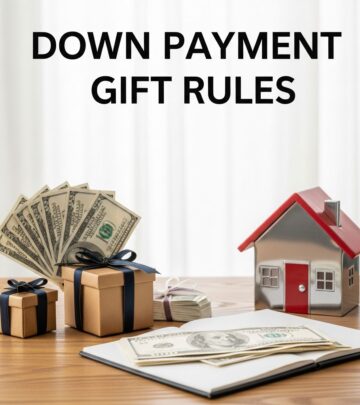
A mortgage gift letter serves as a formal document that communicates essential information to your lender about financial assistance you’ve received for your home purchase. This letter confirms that funds you received from a family member or friend are indeed a genuine gift rather than an additional loan that you must repay. The distinction between a gift and a loan is critical because it directly affects how lenders evaluate your financial capacity to repay your mortgage.
The primary objective of this document is to provide transparency in the lending process. Lenders need confidence that all funds involved in a real estate transaction come from legitimate sources and that borrowers aren’t concealing additional debts. When you receive gifted money without proper documentation, lenders might miscategorize these funds as loans, which would negatively impact your debt-to-income ratio and potentially affect your loan approval.
Why Lenders Require Gift Letters
Understanding the lender’s perspective helps clarify why gift letters have become standard practice in mortgage transactions. When mortgage professionals underwrite a loan application, they conduct a thorough assessment of your financial health and repayment capacity. Your debt-to-income ratio plays a crucial role in this evaluation.
If your lender believes you’re using borrowed money for your down payment, they’ll factor this obligation into your total debt calculations. This can significantly reduce the maximum mortgage amount you qualify for and may even disqualify you from certain loan programs. By providing a gift letter, you establish that the funds don’t represent an additional debt obligation, keeping your debt-to-income ratio favorable.
Additionally, lending regulations require that all funds used in a mortgage transaction originate from legitimate sources. Lenders must verify the money’s origin to ensure compliance with anti-money laundering regulations and to protect themselves from fraud. A properly executed gift letter, supported by bank statements and other documentation, demonstrates that the funds are legitimate and traceable.
Essential Components of a Mortgage Gift Letter
When preparing a gift letter for your mortgage application, certain information must be included to satisfy your lender’s requirements. While specific lenders may have slightly different preferences, most require the following elements:
- The complete name and contact information of the person providing the gift
- A clear statement of your relationship to the donor (parent, sibling, grandparent, friend, etc.)
- The exact dollar amount of the gift being provided
- The specific date when the gift funds were transferred to you
- The property address where you’re purchasing or planning to purchase
- A clear statement that no repayment is expected or required
- Language confirming the gift-giver has no ownership claim to the property
- The donor’s bank account information showing where the funds originated
- Signatures from both you and the donor
Some lenders may request additional documentation to verify the gift’s legitimacy. This commonly includes bank statements from both the donor and the recipient, copies of cancelled checks showing the transfer, and deposit slips confirming receipt of the funds.
Loan-Specific Gift Letter Requirements
Different mortgage loan programs have varying regulations regarding gifts and their documentation. Understanding your loan type helps you prepare the appropriate gift letter format.
Conventional Loans and Conforming Standards
Conventional mortgages backed by government-sponsored enterprises like Fannie Mae or Freddie Mac follow standardized guidelines. These conforming loans permit you to receive up to 100 percent of your down payment from gifts. Your gift letter must document the donor’s details, specify the gift amount, and include a statement that the funds aren’t a loan. Lenders backing conventional mortgages are particularly rigorous about verifying that gifts represent true transfers without repayment expectations.
FHA Mortgage Considerations
Federal Housing Administration loans have specific gift requirements designed to protect both borrowers and lenders. FHA mortgages require a minimum 3.5 percent down payment, and borrowers can gift the entire down payment amount. The gift letter must include the gifted amount, the donor’s contact information, the relationship between donor and borrower, and an explicit statement that no repayment is anticipated. FHA loans often require additional supporting documentation, such as cancelled checks from the donor and deposit receipts from the borrower.
Primary Residence Distinctions
When purchasing a single-family primary residence, your entire down payment can originate from gifted funds, provided your gift letter contains the necessary information: gift amount, donor contact details, and property address. This more flexible approach encourages first-time homebuyers and those with limited savings to pursue homeownership.
Secondary Properties and Investment Real Estate
Secondary homes have more restrictive gift policies. If you’re making at least a 20 percent down payment on a second home, the entire down payment can come from gifts. However, investment properties and income-producing real estate have much stricter rules. Lenders typically do not accept gift funds for investment property down payments, as they view these purchases as business transactions rather than personal housing needs.
The Underwriting Process and Gift Letter Review
Once you submit your gift letter to your lender, it enters the underwriting phase where loan officers evaluate it carefully. Underwriters examine the letter to confirm that the funds genuinely represent a gift without repayment obligations. They’re looking for any language or circumstances that might suggest the arrangement is actually a loan disguised as a gift.
Underwriters will cross-reference your gift letter with supporting documentation. Bank statements from both the donor and yourself prove the transfer occurred. Cancelled checks and deposit confirmations create an audit trail showing the money’s movement. If inconsistencies appear between the gift letter and supporting documents, underwriters will request clarification or additional proof.
The review process protects all parties involved. For you, it ensures the gift won’t be miscategorized, which could jeopardize your loan approval. For the lender, it confirms they understand your true financial obligations and can accurately assess your ability to make mortgage payments.
Who Can Provide Mortgage Gifts
Most mortgage programs allow gifts from immediate family members, including parents, siblings, grandparents, and spouses. Many programs also accept gifts from close friends and other relatives. Some loan programs permit gifts from employers, charitable organizations, and other qualified sources. However, gifts from parties with a financial stake in the property—such as real estate agents, home builders, or property sellers—are typically prohibited because they create conflicts of interest.
Common Gift Letter Mistakes and How to Avoid Them
Several errors commonly occur when borrowers prepare gift letters, potentially delaying the lending process or requiring corrections:
- Forgetting to include signatures from both parties, making the letter incomplete and unusable
- Providing vague relationship descriptions instead of clearly stating how you know the donor
- Omitting the property address, which lenders need to process the letter correctly
- Failing to include explicit language about no repayment expectations
- Providing gift amounts that don’t match supporting bank statements or deposit records
- Using outdated or informal language instead of the professional tone lenders expect
- Submitting the letter without supporting documentation like bank statements or transaction records
Circumstances When Gift Letters Might Not Be Required
Depending on how long gifted funds have been in your account, you might not need to provide a formal gift letter. Some lenders have 60-day or similar seasoning periods. If the funds have remained in your account for this duration, they’re considered part of your accumulated savings rather than recent gifts requiring documentation.
Additionally, if you’re using your own savings, inheritance funds, or money from investment accounts that you’ve owned for extended periods, you won’t need a gift letter. The documentation requirement specifically applies to recent financial transfers from other people that your lender cannot otherwise verify as legitimate sources.
Protecting Both Parties Through Proper Documentation
A well-executed gift letter creates a clear record that protects everyone involved in the transaction. For the borrower, it ensures that gifted funds won’t be miscategorized as debt, potentially derailing loan approval or reducing the maximum mortgage amount you qualify for. The letter provides transparency that lenders appreciate and helps expedite the underwriting process.
For the gift-giver, the letter establishes that they’re providing funds without expecting ownership stakes in the property or future repayment. This protects them from potential misunderstandings or legal complications that could arise years later.
Practical Steps for Preparing Your Gift Letter
Begin by contacting your lender to request their preferred gift letter format or template. Many lenders provide standardized forms that simplify compliance with their specific requirements. If your lender doesn’t provide a template, you can create one using the essential components outlined previously.
Work directly with the person providing the gift to gather necessary information: their full legal name, contact information, the exact gift amount, and the date of transfer. Both you and the donor should review the completed letter carefully before signing. Consider having it notarized if your lender requests this additional verification step.
Compile supporting documentation simultaneously. Obtain copies of bank statements showing the funds in the donor’s account before transfer and in your account after receipt. If the transfer occurred via check, keep the cancelled check and deposit slip. Organize these documents in the order your lender specifies, making their review process smoother and potentially accelerating approval.
Frequently Asked Questions About Mortgage Gift Letters
Can I receive multiple gifts from different people?
Yes, you can receive gifts from multiple donors. Each donor will need to provide a separate gift letter, and you’ll need supporting documentation for each transfer. This arrangement is common when multiple family members contribute toward your down payment.
What if the gift amount changes before closing?
You should notify your lender immediately if gift amounts change. The lender may require an updated gift letter reflecting the new amount. This prevents complications during the final underwriting stages and ensures accurate loan documentation.
Can employers or organizations provide gifts?
Some loan programs permit gifts from employers or charitable organizations designed to help employees or community members purchase homes. However, gifts from real estate professionals or builders involved in your transaction are typically prohibited due to conflict-of-interest concerns.
Is a gift letter required if I’m not using all the gift for my down payment?
If you’re using a gift specifically for your down payment or closing costs, a gift letter is typically required. However, if you’re using gift funds for other purposes, you might not need one. Clarify with your lender how they categorize the funds you’re using.
Moving Forward With Your Home Purchase
Mortgage gift letters represent an important but often misunderstood component of the home financing process. By understanding their purpose, preparing them correctly, and organizing supporting documentation, you can streamline your mortgage application and avoid unnecessary delays. Whether you’re a first-time homebuyer relying on parental support or someone fortunate enough to receive help from family or friends, proper gift letter preparation demonstrates professionalism and transparency that lenders appreciate.
Discuss gift letter requirements with your lender early in the mortgage application process. This proactive approach allows you to gather necessary documentation efficiently and address any questions before they become obstacles. With proper preparation and clear communication, gift letters facilitate smooth transactions that enable families and friends to help each other achieve the goal of homeownership.
References
- What Is a Mortgage Gift Letter and Why Do You Need One? — Freedom Mortgage. https://www.freedommortgage.com/learning-center/articles/mortgage-gift-letter
- What Is a Gift Letter for a Mortgage? — Experian. https://www.experian.com/blogs/ask-experian/what-is-gift-letter-for-mortgage/
- What Is A Gift Letter For A Mortgage? — Bankrate. https://www.bankrate.com/mortgages/gift-letter-for-mortgage/
- Gift Letters for Mortgages: How Do They Work? — American Express. https://www.americanexpress.com/en-us/credit-cards/credit-intel/mortgage-gift-letter/
- Using a gift letter with your mortgage — Rocket Mortgage. https://www.rocketmortgage.com/learn/gift-letter-for-mortgage
- Personal Gifts — Fannie Mae Selling Guide. https://selling-guide.fanniemae.com/sel/b3-4.3-04/personal-gifts
Similar Articles








Read full bio of Sneha Tete