Mortgage Forbearance: 4 Repayment Options And Key Steps
Discover how mortgage forbearance provides temporary relief from payments during financial hardship, with key eligibility rules and repayment strategies.
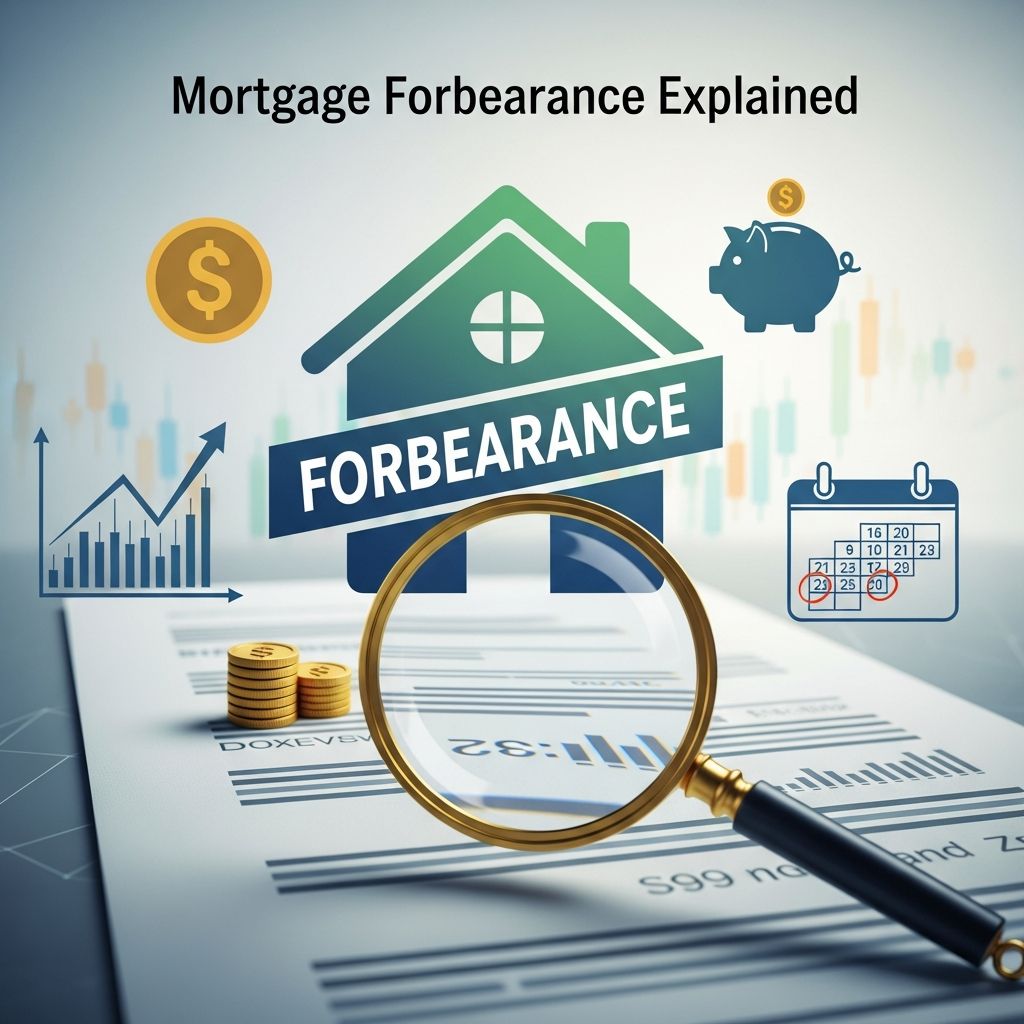
Mortgage forbearance provides homeowners with a temporary suspension or reduction of mortgage payments when facing financial difficulties. This option allows individuals to maintain their homes without immediate foreclosure risks while they work toward financial recovery.
Defining Mortgage Forbearance
Mortgage forbearance represents a formal arrangement between a borrower and lender, granting a pause or decrease in required monthly payments for a defined duration. Unlike debt forgiveness, it postpones obligations, meaning the deferred amounts, including principal and interest, must eventually be addressed.
This relief typically arises from unexpected events such as unemployment, medical emergencies, or widespread crises like natural disasters. Lenders agree to this to prevent defaults and foreclosures, fostering borrower stability. Interest may continue to accrue during this period, but no extra penalties apply for federally backed loans under specific regulations.
Eligibility Criteria for Forbearance
Qualification hinges on demonstrating genuine financial hardship. Borrowers must contact their loan servicer promptly, ideally before missing payments, and supply documentation like income statements, expense lists, and hardship explanations.
For federally backed mortgages—including those from Fannie Mae, Freddie Mac, FHA, VA, or USDA—eligibility is straightforward under laws like the CARES Act. These programs mandate servicers to grant up to 180 days of initial forbearance upon request, extendable by another 180 days if requested timely.
- Fannie Mae/Freddie Mac loans: Automatic rights to forbearance for covered periods.
- FHA/VA/USDA loans: Similar 180+180 day provisions.
- Non-federally backed loans: Servicer-specific policies apply; contact directly.
Private lenders may offer comparable relief, but terms vary. Always verify loan type via monthly statements.
Duration and Extensions
Standard initial periods last 3 to 6 months, with extensions possible. For government-supported loans, borrowers secure 180 days initially, plus another 180 if requested before the first ends.
Some programs allow multiple extensions based on ongoing hardship, but servicers must explore alternatives like modifications post-forbearance. Track deadlines meticulously to avoid lapses.
Post-Forbearance Repayment Strategies
Forbearance ends with repayment requirements. Lenders cannot demand full lump-sum repayment upfront for most cases; instead, flexible plans emerge.
| Option | Description | Best For |
|---|---|---|
| Repayment Plan | Add missed amounts to future monthly payments over time. | Borrowers regaining steady income. |
| Payment Deferral | Deferred payments shift to loan end, repaid upon sale/refinance/payoff. | Those affording regular payments immediately. |
| Loan Modification | Adjust terms: lower rates, extend duration, capitalize arrears. | Long-term affordability issues. |
| Reinstatement | Pay all arrears in lump sum (not always required). | Quick recovery with savings. |
Modifications often involve reducing interest rates, fixing variable rates, or forbearance on principal portions. Trial periods confirm affordability before permanent changes.
Steps to Request Forbearance
- Contact Servicer Immediately: Use the phone number on your statement; explain hardship verbally first.
- Submit Documentation: Provide pay stubs, expense breakdowns, unemployment proofs, and hardship timelines.
- Review Agreement: Understand terms, duration, and post-forbearance options in writing.
- Monitor Progress: Update servicer on financial changes; request extensions as needed.
- Plan Repayment: Prepare for end-of-period discussions on chosen strategy.
Pros and Cons of Choosing Forbearance
Forbearance buys time without credit destruction from delinquency, preserving homeownership. However, accruing balances lead to higher future payments, and credit reports note forbearance, potentially complicating refinances.
- Advantages: Avoids foreclosure, immediate cash flow relief, no extra fees on federal loans.
- Disadvantages: Interest accrual, post-period payment hikes, refinancing delays (e.g., 3-12 months seasoning).
Impact on Credit and Future Borrowing
Forbearance itself does not count as a late payment if entered proactively, but unresolved arrears harm scores. Future lenders scrutinize it, often requiring seasoning periods—Fannie/Freddie demand three on-time payments post-forbearance. Expect higher rates or denials if not managed well.
Alternatives to Forbearance
If unsuitable, consider:
- Loan Deferment: Pauses payments and interest (rarer for mortgages).
- Refinancing: Secures lower rates if credit allows.
- Sell or Rent: Liquidate equity or generate income.
- Government Programs: Check HUD counseling or state aids.
Frequently Asked Questions (FAQs)
Is mortgage forbearance free money?
No, it’s temporary relief; you repay deferred amounts later.
How long can forbearance last?
Up to 360 days for federal loans (180 initial + 180 extension).
Does forbearance hurt my credit score?
Not if proactive; resolved plans minimize damage.
Can I get forbearance multiple times?
Extensions yes, but repeat requests depend on servicer and hardship.
What if I can’t repay after forbearance?
Discuss modifications or other relief; foreclosure is last resort.
Key Considerations Before Applying
Assess if forbearance fits your recovery timeline. Exhaust savings wisely, seek counseling from HUD-approved agencies, and document everything. Proactive communication prevents escalation.
For homeowners, forbearance bridges gaps effectively when paired with budgeting and job searches. It underscores lender flexibility in crises, prioritizing retention over repossession.
References
- What Is A Mortgage Forbearance Agreement And How Does It Work? — Summit Funding. 2023. https://summitfunding.net/blog/what-is-a-mortgage-forbearance-agreement-and-how-does-it-work
- What You Need to Know About Mortgage Forbearance — NFM Lending. 2023. https://nfmlending.com/financing-your-home/education/blog/mortgage-forbearance/
- Consumer Relief Guide – Your Rights to Mortgage Payment — Conference of State Bank Supervisors (CSBS). 2023. https://www.csbs.org/mortgage-relief-coronavirus-update
- Understanding Forbearance and Knowing Your Options — Freddie Mac. 2023. https://myhome.freddiemac.com/blog/homeownership/understanding-forbearance-and-knowing-your-options
- CARES Act Forbearance Fact Sheet for Borrowers with FHA, VA, or USDA Loans — USDA Rural Development. 2020. https://www.rd.usda.gov/sites/default/files/Interagency_COVID19_Housing_Forbearance_FS_Borrowers.pdf
- Is mortgage forbearance a good idea? — Rocket Mortgage. 2023. https://www.rocketmortgage.com/learn/is-mortgage-forbearance-a-good-idea
- Is Mortgage Forbearance Right for You? 7 Critical Factors — Amerisave. 2023. https://www.amerisave.com/learn/is-mortgage-forbearance-right-for-you-critical-factors-to-consider-in
Similar Articles








Read full bio of Sneha Tete