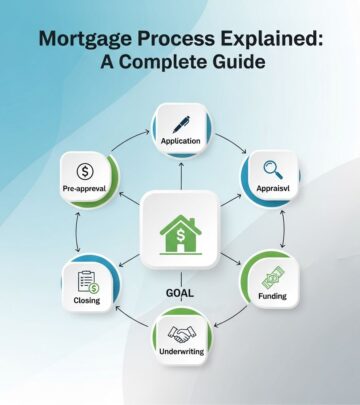
Mortgage Essentials Guide: Step-By-Step Mortgage Process
Unlock the complete roadmap to securing your home loan, from preparation to final closing with expert insights.

Navigating the world of home financing requires understanding the structured steps involved in obtaining a mortgage. This guide breaks down the entire process, highlighting critical components like loan types, financial evaluations, property assessments, and final settlements to empower buyers with knowledge.
Preparing Financially for Homeownership
Before diving into applications, assess your readiness by reviewing credit history, budgeting for expenses, and estimating affordability. Lenders evaluate factors such as credit scores, income stability, and debt levels to determine eligibility.
- Credit Score Review: Aim for a score above 620 for conventional loans; higher scores unlock better rates.
- Budget Calculation: Factor in down payments (typically 3-20%), monthly payments, and ongoing costs like taxes and insurance.
- Debt-to-Income Ratio (DTI): Keep DTI under 43% for most programs, comparing monthly debts to gross income.
Tools like online calculators help simulate scenarios, ensuring you target homes within reach. Early preparation strengthens your position in competitive markets.
Securing Preapproval: Your First Milestone
Preapproval involves a lender’s preliminary review of your finances, providing a conditional commitment letter. This step signals seriousness to sellers and clarifies your borrowing power.
| Preapproval vs. Prequalification | Description | Benefits |
|---|---|---|
| Preapproval | Underwritten review with documents | Stronger seller confidence, accurate limits |
| Prequalification | Basic estimate, no verification | Quick initial gauge |
Gather essentials like pay stubs, tax returns, and bank statements upfront. Preapproval typically lasts 60-90 days, urging timely house hunting.
Types of Mortgage Loans Available
Choose from options tailored to your situation: fixed-rate for stability, adjustable-rate for initial savings, FHA for low down payments, VA for veterans, or USDA for rural areas.
- Fixed-Rate: Consistent payments over 15-30 years.
- Adjustable-Rate (ARM): Lower starter rates that fluctuate.
- Government-Backed: Flexible credit requirements with insurance premiums.
Compare
Annual Percentage Rate (APR)
, which includes fees, against nominal rates for true cost comparison.Filling Out the Formal Application
Once a property is selected, submit the Uniform Residential Loan Application (Form 1003). Expect to provide detailed financials, employment history, and asset proofs.
Lenders issue a Loan Estimate within three days, outlining rates, fees, and terms. Review this closely for accuracy and shop competitors if needed.
Required Documents
- Two years of tax returns and W-2s
- Recent pay stubs (30-60 days)
- Bank and investment statements (two months)
- Employment verification
- Proof of assets or gift funds
- Debt statements (loans, credit cards)
Completeness speeds processing; delays often stem from missing items.
Processing: Verification and Compliance
Loan processors collect and validate documents, ordering credit pulls, employment confirmations, and initial appraisals. This phase clears conditions from preapproval.
Respond promptly to requests for updates like new pay stubs. Processors also handle title searches and insurance setups.
Underwriting: The Core Evaluation
Underwriters scrutinize the ‘three C’s’: credit history, capacity (DTI and income), and collateral (property value). Automated systems may flag manual reviews.
Underwriting confirms eligibility by verifying financials and property details, often requiring additional proofs.
Expect 1-3 weeks; clear conditions swiftly to avoid expiration. Denials cite issues like high DTI or poor credit, prompting alternatives like co-signers.
Property Appraisal and Inspection
An independent appraiser assesses market value using comparables, protecting the lender. Results influence final terms; low appraisals may require renegotiation.
Buyers often order separate home inspections for structural issues, not lender-mandated but wise investments (costing $300-500).
Locking Your Interest Rate
Secure a rate lock (30-60 days) once approved, shielding against rises. Weigh
discount points
(prepaid interest to lower rates, 1 point = 1% of loan).Float-down options recapture savings if rates drop. Timing locks post-appraisal minimizes extension fees.
Final Approval and Closing Preparation
Post-underwriting, receive final approval. Prepare for closing by securing homeowners insurance, title policy, and funds for down payment plus costs (2-5% of loan).
Review the Closing Disclosure three days prior, comparing to Loan Estimate for changes.
The Closing Day Experience
At settlement, sign documents: promissory note (repayment promise), mortgage/deed of trust (lien on property). Funds wire to seller; keys transfer upon recording.
- Bring ID, cashier’s check/wire info
- Review every page
- Ask questions freely
Post-closing, escrow handles taxes/insurance; first payment follows a month later.
Common Costs and Fees Breakdown
| Fee Type | Typical Range | Purpose |
|---|---|---|
| Origination | 0.5-1% loan | Lender processing |
| Appraisal | $400-600 | Value assessment |
| Title Insurance | $1,000-2,000 | Ownership protection |
| PMI | 0.5-1% annually | For <20% down |
Negotiate credits; shop services for savings.
Frequently Asked Questions
How long does the full mortgage process take?
Typically 30-45 days from application to closing, varying by market and completeness.
Can I change homes after approval?
Possible but triggers re-underwriting; inform lender early.
What if my appraisal comes in low?
Options: renegotiate price, additional down payment, or challenge with data.
Is mortgage insurance tax-deductible?
PMI may qualify under income limits; consult a tax advisor.
How do rate locks work?
Fixed period protection; extensions cost extra if rates rise.
Pro Tips for a Seamless Journey
- Organize documents digitally
- Communicate weekly with your officer
- Avoid new credit during processing
- Monitor rate trends
- Understand escrow for payments
Knowledge demystifies financing, turning dreams into deeds.
References
- Mortgage Loan Process — Regions Bank. 2025. https://www.regions.com/personal-banking/home-loans/mortgage-101/loan-process
- The Mortgage Loan Process Explained — 1st Advantage. 2024-10-15. https://www.1stadvantage.org/blog/the-mortgage-loan-process-explained/
- Understanding the Mortgage Process: A Step-by-Step Guide — Liberty Bank. 2025. https://www.libertybank.com/understanding-the-mortgage-process-a-step-by-step-guide/
- Mortgage Underwriting Process — U.S. Bank. 2025-01-20. https://www.usbank.com/home-loans/mortgage/first-time-home-buyers/mortgage-underwriting-process.html
- The Mortgage Loan Process in 10 Steps — Navy Federal Credit Union. 2025. https://www.navyfederal.org/loans-cards/mortgage/mortgage-basics/mortgage-process.html
Similar Articles








Read full bio of medha deb