Understanding Mortgage Default and Foreclosure Timeline
Learn when lenders can begin foreclosure and what happens at each stage of the process.

When homeowners fall behind on mortgage payments, many wonder how quickly a lender can initiate foreclosure proceedings. The answer involves understanding a structured timeline that varies by state and includes multiple opportunities for borrowers to resolve their delinquency. This comprehensive guide explains the stages of mortgage default and foreclosure, the timeframes involved, and the options available to homeowners facing financial hardship.
The Initial Stages of Mortgage Delinquency
The foreclosure process does not begin immediately after a single missed payment. Instead, there is a gradual progression through several stages before legal action commences. Understanding these early phases is crucial for homeowners to recognize warning signs and take corrective action.
First Late Payment and Fee Assessment
When a mortgage payment is not received by the due date, the loan enters delinquency status. Most mortgage servicers assess a late fee within 15 days of the missed payment. At this point, homeowners typically have a grace period to catch up on payments without serious consequences. However, the clock begins ticking toward more serious actions if the delinquency continues.
Pre-Foreclosure Notice Requirements
Federal regulations require lenders to provide homeowners with notice before formally initiating foreclosure proceedings. In many jurisdictions, this pre-foreclosure notice must be sent within 30 to 45 days after the first missed payment. The notice serves as a critical warning that foreclosure action is being considered and typically includes information about assistance programs and loss mitigation options available to the borrower.
The pre-foreclosure notice period is substantial—typically lasting 90 days. During this time, homeowners have an opportunity to work with their lender to resolve the delinquency through loan modifications, repayment plans, or other alternatives. This extended period reflects regulatory intent to encourage resolution before legal proceedings commence.
The 120-Day Threshold: When Foreclosure Proceedings Begin
A critical milestone in the foreclosure timeline is the 120-day mark. According to federal guidelines, lenders generally cannot legally begin formal foreclosure proceedings until a borrower is at least 120 days behind on mortgage payments. This means a borrower typically has four months from the first missed payment before the lender can file foreclosure in court.
Why 120 Days Matters
The 120-day threshold represents the minimum delinquency period established to protect borrowers and ensure they have adequate time to explore loss mitigation options. After this point, if the delinquency remains unresolved and no agreement has been reached, the lender may file a formal foreclosure action in court.
Demand Letter and Breach Notification
Before reaching the 120-day mark, lenders typically send a formal demand letter, often around day 45 of delinquency or later. This letter explicitly states that the borrower is in breach of the mortgage contract and provides a specific timeframe—typically 30 days—to pay the full amount owed, including accumulated late fees and interest. This communication represents an escalation from initial late notices and signals the lender’s serious intent to pursue collection.
The Legal Foreclosure Process
Once a lender has waited the required time period and the borrower has not resolved the delinquency, foreclosure proceedings enter the formal legal phase. This stage varies significantly depending on state law, with some states following judicial foreclosure processes and others using non-judicial methods.
Filing and Serving Foreclosure Documents
In judicial foreclosure states like New York, the lender’s attorney files a foreclosure complaint in court. The homeowner must be formally served with these documents, typically including a summons and complaint that detail the amount owed and the basis for foreclosure. Once served, homeowners generally have 20 to 30 days to respond to the foreclosure complaint, depending on local court rules.
This response period is critical—failing to respond can result in a default judgment against the homeowner, accelerating the foreclosure process and limiting future options. Homeowners should respond to these documents, whether by filing a defense, negotiating with the lender, or seeking legal counsel.
Discovery and Settlement Negotiations
After the initial filing and service of documents, the foreclosure case progresses through discovery and potential settlement conferences. In some jurisdictions, courts mandate settlement conferences early in the process to encourage resolution. These conferences provide formal opportunities for homeowners and lenders to negotiate loan modifications, repayment agreements, or short sales before proceeding to judgment.
Path to Foreclosure Judgment and Sale
If negotiations do not result in an agreement, the case proceeds toward judgment. The timeline to reach a foreclosure judgment can range from several months to over a year, depending on case complexity and court availability.
Obtaining the Judgment
The lender must obtain a judgment of foreclosure and sale from the court. This judgment authorizes the lender to schedule a public auction of the property. The court typically appoints a referee who calculates the total amount owed, including principal, interest, late charges, and foreclosure costs.
Public Notice and Auction Scheduling
Once a foreclosure judgment is granted, the referee must publish notice of the sale. Sales are typically conducted between 28 and 35 days after the first publication notice. In some jurisdictions, additional notice must be posted on the property or in local newspapers. The notice period ensures that both the homeowner and potential buyers have adequate time to prepare for the auction.
Variations by State and Special Circumstances
The foreclosure timeline is not uniform across the United States. While federal guidelines establish minimum timeframes, states have significant discretion in setting their foreclosure procedures.
State-Specific Processes
Some states, like New York, require judicial foreclosure, meaning courts oversee the process. Other states permit non-judicial or power-of-sale foreclosures, where lenders can foreclose without court involvement, generally resulting in faster timelines. The choice between judicial and non-judicial foreclosure significantly impacts how long the overall process takes.
Mediation and Loss Mitigation Requirements
Many states have implemented mandatory mediation or loss mitigation requirements designed to prevent foreclosure when possible. In Maryland, for example, homeowners can request mediation, which must be scheduled within 60 days of the request. While these processes extend the overall timeline, they provide meaningful opportunities for resolution.
Legal Protections and Options for Homeowners
Homeowners facing delinquency and foreclosure have several options to explore, each with different implications for timing and outcomes.
Loan Modifications and Repayment Plans
One of the most effective ways to stop foreclosure is through a loan modification, which restructures the loan terms to make payments more manageable. Lenders may extend the loan maturity date, add past-due payments to the end of the mortgage, or adjust interest rates. Negotiating these modifications requires communication with the lender and often legal assistance, but they can eliminate the foreclosure threat entirely.
Short Sales
A short sale allows homeowners to sell the property for less than the outstanding mortgage balance, with lender approval. This option requires time to market the property and negotiate with the lender, but it allows homeowners to avoid foreclosure and potentially preserve credit more effectively than a foreclosure sale.
Bankruptcy Protection
Filing for bankruptcy triggers an automatic stay that temporarily halts foreclosure proceedings. While bankruptcy is not a permanent foreclosure solution, it provides time to evaluate options and potentially negotiate with the lender. Bankruptcy should be considered carefully, as it has significant long-term credit implications.
Reinstatement Rights and Cure Opportunities
Throughout most of the foreclosure process, homeowners retain the right to cure the default—that is, to bring the mortgage current by paying all past-due payments, penalties, and fees. In many jurisdictions, this right exists up until one business day before the foreclosure sale occurs. Understanding and exercising this right can stop foreclosure even in its final stages.
Key Timeline Comparison Table
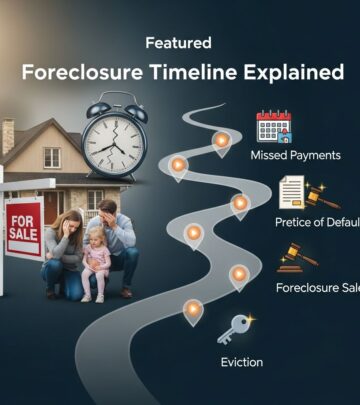
| Stage | Approximate Timeframe | Key Actions |
|---|---|---|
| Payment Due | Day 0 | Mortgage payment due |
| Late Fee Assessment | Day 15 | Late fee added to account |
| Pre-Foreclosure Notice | Day 30–45 | Lender sends notice of delinquency and assistance information |
| Pre-Foreclosure Period | Day 30–120 | 90-day window to explore loss mitigation options |
| Demand Letter | Day 45+ | Notice of breach and 30-day cure demand |
| Foreclosure Filing | Day 120+ | Lender files formal foreclosure complaint in court |
| Service of Documents | Day 120+ | Homeowner served with summons and complaint |
| Response Period | 20–30 days after service | Homeowner responds to foreclosure complaint |
| Judgment to Sale | Several months to 1+ year | Court issues foreclosure judgment; sale scheduled |
| Auction | 28–35 days after notice publication | Public sale conducted |
Common Questions About Foreclosure Timeline
Can a lender foreclose after just one missed payment?
No. Federal regulations generally require lenders to wait at least 120 days from the first missed payment before beginning formal foreclosure proceedings. Most lenders wait longer and provide the full pre-foreclosure notice period to encourage resolution.
What happens if I ignore the pre-foreclosure notice?
Ignoring pre-foreclosure notices is a critical mistake. These notices provide essential information about assistance programs and loss mitigation options. Failure to act during the pre-foreclosure period typically results in the lender proceeding with formal court filings, which accelerates the foreclosure process.
Can I stop foreclosure after judgment is issued?
Yes, in many cases. Homeowners typically retain the right to cure the default by paying all past-due amounts, fees, and interest up until one business day before the foreclosure sale. Additionally, some jurisdictions permit post-judgment negotiations or loan modifications.
How long does the entire foreclosure process take?
The timeline varies significantly by state and circumstances. In judicial foreclosure states, the process typically takes 6 to 12 months or longer from initial filing to sale. Non-judicial foreclosures may be faster. Factors such as court congestion, mandatory mediation, and active loss mitigation negotiations can extend the timeline considerably.
What should I do if I receive a foreclosure notice?
Act immediately. Contact your mortgage servicer to discuss options, seek legal counsel, and explore loss mitigation alternatives. Do not ignore any notices or legal documents—timely responses are essential to protecting your rights and potentially stopping the foreclosure process.
Taking Action During Delinquency
The most important step homeowners can take when facing delinquency is to act quickly and communicate with their lender. The extended timeline from first missed payment to foreclosure sale provides multiple opportunities to resolve the situation through negotiation, modification, or alternative solutions. Understanding the stages of this process empowers homeowners to make informed decisions and explore all available options before losing their homes to foreclosure.
References
- Foreclosure Timeline in New York — James Quail Law. Accessed 2026. https://www.quaillaw.com/foreclosure-law/foreclosure-timeline/
- Foreclosure Steps and Timeline — The Maryland People’s Law Library. Accessed 2026. https://www.peoples-law.org/foreclosure-steps-and-timeline
- How Long Does Foreclosure Take In New York? A Complete Timeline — FB Lawyers NY. Accessed 2026. https://fblawyersny.com/how-long-does-foreclosure-take-in-new-york-a-complete-timeline/
- An Overview of New York State’s Mortgage Foreclosure Process — Barclay Damon LLP. Accessed 2026. https://www.barclaydamon.com/alerts/an-overview-of-new-york-states-mortgage-foreclosure-process
- How long will it take before I’ll face foreclosure if I can’t make my mortgage payments? — Consumer Financial Protection Bureau (CFPB). Accessed 2026. https://www.consumerfinance.gov/ask-cfpb/how-long-will-it-take-before-ill-face-foreclosure-if-i-cant-make-my-mortgage-payments-what-is-the-foreclosure-timeline-en-1849/
- The Foreclosure Process in New York State — New York Courts. 2018. https://www.nycourts.gov/courthelp/pdfs/Foreclosureflowchart.pdf
- An Overview of the Home Foreclosure Process — Federal Home Finance Agency Office of Inspector General. Accessed 2026. https://www.fhfaoig.gov/Content/Files/SAR%20Home%20Foreclosure%20Process.pdf
- Understanding New York State’s Mortgage Foreclosure Process — New York Department of Housing and Community Renewal. 2018. https://hcr.ny.gov/system/files/documents/2018/10/factsheetnysforeclosure.pdf
Similar Articles








Read full bio of medha deb