Mortgage Buydown Explained: When To Use Temporary Or Permanent
Discover how mortgage buydowns can lower your interest rates and monthly payments, with strategies for buyers and sellers in today's market.
A mortgage buydown is a financing technique where upfront funds are used to decrease the interest rate on a home loan, resulting in lower monthly payments for a specific duration or the entire loan term. This approach helps buyers afford homes during periods of elevated rates by effectively prepaying some interest costs.
Core Mechanics of Rate Buydowns
At its foundation, a buydown involves paying the lender extra money at closing to secure a reduced interest rate. These funds, often from the buyer, seller, or builder, purchase discount points—each point typically equaling 1% of the loan amount and lowering the rate by about 0.25%. For temporary versions, the money goes into an escrow account, subsidizing payments monthly until depleted.
The process starts with qualifying for the underlying loan at the full note rate. The buydown then provides payment relief without altering the loan’s core terms. Lenders calculate the required funds based on the desired rate reduction and period length, ensuring the subsidy covers the interest difference.
Temporary Buydown Structures
Temporary buydowns offer short-term relief, commonly lasting 1 to 3 years, ideal when buyers anticipate income growth or rate drops. Popular configurations include:
- 1-0 Buydown: Reduces the rate by 1% in year one, then reverts to the original.
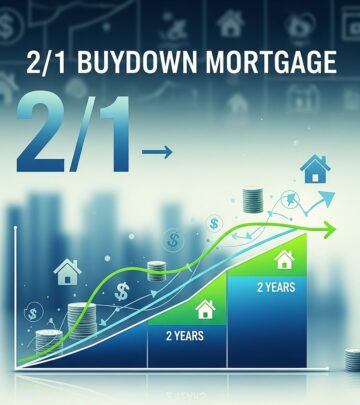
- 2-1 Buydown: 2% off in year one, 1% in year two, full rate thereafter.
- 3-2-1 Buydown: 3% reduction year one, 2% year two, 1% year three, normalizing in year four.
Consider a $300,000 loan at 6% interest over 30 years. A standard payment might be around $1,800 principal and interest. With a 2-1 buydown:
| Period | Effective Rate | Monthly P&I | Savings vs. Full Rate |
|---|---|---|---|
| Years 1 | 4% | ~$1,432 | $368 |
| Years 2 | 5% | ~$1,610 | $190 |
| Year 3+ | 6% | $1,800 | $0 |
This table illustrates potential savings exceeding $6,700 over two years, assuming precise calculations.
Permanent Buydown Options
Unlike temporary setups, permanent buydowns lock in a lower rate for the loan’s life by buying points outright. For every point paid (1% of loan), expect roughly 0.25% rate drop, though this varies by lender and market. On a $400,000 loan at 7%, two points might reduce it to 6.5%, saving over $40 monthly indefinitely.
Permanent buydowns suit long-term homeowners confident in staying put, as the upfront cost amortizes over decades. They’re financed into the loan or paid cash, impacting debt-to-income ratios less if seller-funded.
Funding Sources and Negotiations
Buydowns aren’t solely buyer-funded. Sellers often cover costs to sweeten deals in competitive markets, preferring this over price cuts to preserve property value. Builders use them in new constructions to attract buyers amid high rates. Buyers might negotiate seller contributions as concessions.
Tax implications arise: buydown payments treated as prepaid interest may be deductible, consult a tax advisor for specifics. VA loans permit temporary buydowns with escrow subsidies, capping annual payment hikes at 1%.
Financial Advantages for Buyers
Primary benefits include boosted affordability. Lower initial payments expand purchasing power, allowing costlier homes. In rising rate environments, they bridge budgets until salaries rise or refinancing opportunities emerge.
- Immediate cash flow relief for settling in or renovations.
- Potential qualification for larger loans via reduced debt ratios.
- Hedge against rate volatility if planning short-term ownership.
Quantitative edges shine in examples: A 3-2-1 on an 8% $150,000 loan drops year-one payments from ~$1,100 to ~$800, yielding substantial early savings.
Seller and Builder Perspectives
For sellers, buydowns differentiate listings without slashing asking prices, maintaining comps for appraisals. They widen buyer pools by aiding qualification in high-rate eras. Builders deploy them to move inventory faster, especially with excess supply.
Costs are front-loaded but can close deals quicker, minimizing carrying expenses like taxes and maintenance. In buyer-favorable markets, they’re potent incentives.
Potential Drawbacks and Risks
Upfront expenses deter some: A 3-2-1 buydown on $300,000 might cost $9,000-$12,000, recouped only if staying long enough. If relocating or refinancing early, unused subsidies waste money.
Payments jump post-period, risking shock if finances don’t improve. Permanent versions tie up capital that could fund other investments. Lender fees and eligibility rules add complexity—not all loans qualify, rare for refinances.
Strategic Scenarios for Implementation
Buydowns excel when:
- Seller or builder foots the bill.
- Income growth expected within years.
- High rates anticipated to fall for later refinance.
- Ample closing cash without straining liquidity.
- Preserving home value over price reductions.
Avoid if short-term plans dominate or rates seem poised to plummet immediately. Run amortization scenarios to project break-even.
Comparing Buydowns to Alternatives
| Option | Upfront Cost | Duration | Flexibility | Best For |
|---|---|---|---|---|
| Temporary Buydown | Moderate | 1-3 years | Medium | Early relief |
| Permanent Buydown | High | Loan life | Low | Long-term stay |
| Discount Points (No Buydown) | Variable | Permanent | High | Rate shopping |
| ARM | Low | Initial fixed | High risk | Rate optimists |
This comparison highlights buydowns’ unique temporary-permanent spectrum versus adjustable-rate mortgages’ uncertainty.
Steps to Pursue a Buydown
- Shop lenders for buydown quotes and costs.
- Assess qualification at full note rate.
- Negotiate seller contributions.
- Model payments with tools or advisors.
- Review escrow and tax details at closing.
Pre-approval clarifies options early.
Frequently Asked Questions
Who pays for a mortgage buydown?
Typically the buyer, but sellers or builders often contribute to facilitate sales.
Are buydowns available on all loans?
Common on conventional and VA loans for purchases; less so for refinances or jumbo.
How much does a buydown cost?
Varies: ~2-4% of loan for temporary, 1% per point permanent.
Can I deduct buydown costs?
Possibly as prepaid interest; verify with a tax professional.
Is a buydown worth it if I might move soon?
Often not, due to sunk costs on unused periods.
References
- Should you Consider a Buydown? — Ameris Bank. 2023. https://www.amerisbank.com/Personal/Learn/Financial-Articles-Advice/Buying-A-Home/Should-you-Consider-a-Buydown
- What is a Mortgage Loan Buydown and How Might it Save … — Motto Mortgage. 2023. https://mottomortgage.com/blog/what-is-a-mortgage-loan-buydown/
- What Are Mortgage Buy-downs? — Freedom Mortgage. 2023. https://www.freedommortgage.com/learning-center/articles/mortgage-buydowns
- Temporary Buydowns – VA Home Loans — U.S. Department of Veterans Affairs (benefits.va.gov). Accessed 2026. https://www.benefits.va.gov/homeloans/temporary-buydown.asp
- Mortgage buydown: What it is and how it works — Empower. 2023. https://www.empower.com/the-currency/life/mortgage-buydown-what-it-and-how-it-works
Similar Articles








Read full bio of Sneha Tete