Understanding Mortgage APR and Interest Rates
Learn how APR differs from interest rates and impacts your monthly payments

When shopping for a mortgage, you’ll encounter two critical numbers: the interest rate and the annual percentage rate (APR). While these terms are often used interchangeably by borrowers, they represent fundamentally different aspects of your loan’s cost. Understanding the distinction between them is essential for making informed financial decisions and selecting the most affordable mortgage option available to you.
What is Annual Percentage Rate (APR)?
The annual percentage rate (APR) represents the true yearly cost of borrowing money for your home. Unlike a simple interest rate, the APR provides a more comprehensive picture of your loan’s expense because it encompasses not only the interest you’ll pay but also various fees associated with the mortgage. This makes APR a far more accurate measure for comparing different loan offers from multiple lenders.
When you receive mortgage quotes from different institutions, the APR gives you a standardized way to evaluate which loan will actually cost you the least money over time, rather than being misled by a lower advertised interest rate that comes with higher associated fees.
How APR Differs from Interest Rate
The interest rate is simply the percentage of your loan principal that the lender charges you for borrowing the money. This rate determines your basic monthly payment calculation. However, the APR goes considerably further by factoring in multiple additional costs.
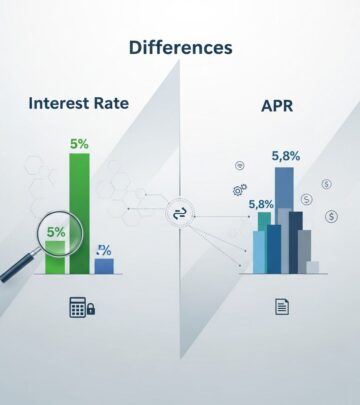
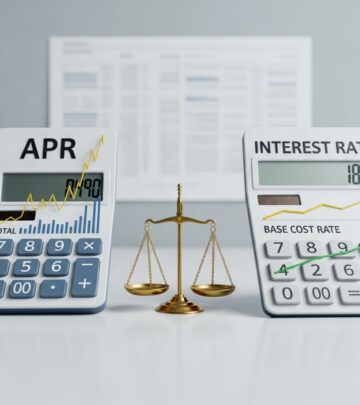
Consider this practical example: a lender might offer you a mortgage with a 5% interest rate but an APR of 7.45%. Another lender presents a mortgage with a 6% interest rate and an APR of 7.37%. At first glance, the first option appears cheaper because of the lower interest rate. However, the second loan actually costs less when you examine the APR, which accounts for all fees.
Components Included in APR Calculations
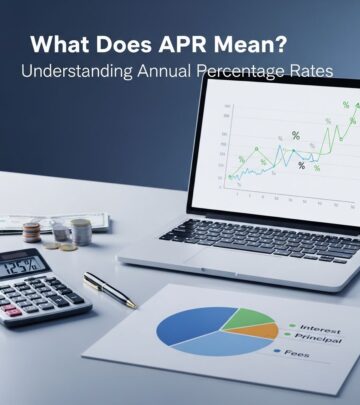
Your APR includes your base interest rate plus several categories of fees that lenders charge:
- Origination fees: Charges for processing and underwriting your mortgage application
- Discount points: Fees you can pay upfront to reduce your interest rate
- Mortgage insurance premiums: Required insurance costs, such as private mortgage insurance (PMI) or FHA mortgage insurance
- Prepaid interest: Interest that accrues before your first official payment
- Underwriting fees: Costs associated with reviewing your financial information and determining loan eligibility
Why APR Matters in Mortgage Comparisons
The significance of APR becomes clear when you realize that closing costs on mortgages typically range from 2% to 6% of your total loan amount. This means two mortgages with identical interest rates could have vastly different APRs depending on their fee structures. By comparing APRs rather than interest rates alone, you avoid potential financial pitfalls and identify the genuinely most affordable option.
The APR was established under the Truth in Lending Act (Regulation Z) specifically to provide consumers with a standardized method for comparing loan offers across different lenders. This regulatory requirement ensures transparency and protects borrowers from misleading marketing practices.
How to Calculate APR
While most mortgage lenders calculate APR for you as part of the loan estimate process, understanding the calculation method provides valuable insight into what the number represents.
The basic APR formula is:
APR = [({Fees + Total Interest} ÷ Loan Principal) ÷ Total Days in Loan Term] × 365 × 100
Here’s a step-by-step breakdown of how this works in practice:
- Add together all fees and total interest charges on the loan
- Divide this sum by the loan principal (the original amount borrowed)
- Divide that result by the number of days in the loan term
- Multiply the answer by 365 (days in a year)
- Multiply the final result by 100 to convert to a percentage
Let’s work through a concrete example. Suppose you’re taking out a $2,000 personal loan with a 180-day term. Your lender charges $120 in interest and $50 in fees.
First, add the fees and interest: $120 + $50 = $170
Next, divide by the principal: $170 ÷ $2,000 = 0.085
Then divide by the loan term in years: 0.085 ÷ 0.493 = 0.00047222
Multiply by 365: 0.00047222 × 365 = 0.1723611
Finally, multiply by 100 to get the percentage: 0.1723611 × 100 = 17.24% APR
Factors That Influence Your APR
Your APR is not determined arbitrarily; lenders use specific criteria to establish the rate they offer you. Understanding these factors can help you improve your loan terms.
Credit Score Impact
Your credit score significantly influences the APR you receive. A score of 760 or above might result in an APR between 3.5% and 4.0%, while a score between 620 and 639 could result in APRs ranging from 5.0% to 6.0%. This substantial difference underscores the importance of improving your credit profile before applying for a mortgage.
Down Payment Size
The percentage of the home’s purchase price that you pay upfront affects your APR. A larger down payment reduces the lender’s risk and often results in a more favorable APR.
Loan Amount and Term
Both the size of your loan and the length of your repayment period influence your APR. Generally, longer loan terms come with higher APRs because the lender faces greater risk over an extended period.
Market Conditions
Broader economic factors affect the APR environment. When the Federal Reserve raises interest rates, APRs across the mortgage industry typically increase as well.
Loan Type
The category of mortgage you choose—conventional, FHA, VA, or jumbo—affects your APR because each type carries different requirements and risk assessments.
Fixed versus Variable APR
Mortgages come in two primary APR structures, each with distinct advantages and disadvantages.
Fixed-Rate Mortgages
With a fixed-rate mortgage, your APR remains constant throughout your entire loan term. If you secure a 30-year mortgage at 6.5% APR, that rate stays at 6.5% for all 30 years. This stability makes budgeting predictable and protects you from market rate increases. However, fixed-rate mortgages typically carry higher initial APRs than adjustable-rate mortgages because lenders want to lock in a profitable rate even if market conditions change.
Adjustable-Rate Mortgages
An adjustable-rate mortgage (ARM) offers a variable APR that changes over time based on market conditions. These loans typically begin with a lower introductory APR than fixed-rate options. However, after the introductory period ends—usually 5 or 7 years—your APR adjusts, typically once per year, and your monthly payment increases or decreases accordingly.
ARMs can be advantageous if you plan to sell or refinance before the adjustment period begins, but they carry significant risk if you intend to stay in the home long-term and rates rise substantially.
Practical Loan Comparison Example
To illustrate how APR helps you make better decisions, consider comparing two $300,000, 30-year mortgages:
| Comparison Factor | Loan A | Loan B |
|---|---|---|
| Loan Amount | $300,000 | $300,000 |
| Loan Term | 15 years | 15 years |
| Interest Rate | 5% | 6% |
| APR | 7.45% | 7.37% |
| Discount Points | 2 | 2 |
| Origination Fee | 5% | 5% |
At first glance, Loan A appears superior due to its lower 5% interest rate compared to Loan B’s 6% rate. However, examining the APR reveals that Loan B actually costs less. The higher origination fees and discount points on Loan A push its APR to 7.45%, while Loan B’s APR is only 7.37%. Over the life of the loan, this seemingly small difference in APR translates to thousands of dollars in savings.
Understanding Special APR Situations
Certain mortgage situations warrant special consideration regarding APR.
Zero Percent APR
You might encounter promotional offers advertising 0% APR. This means there are no interest charges during a specified introductory period. However, once this promotional period ends—which is typically limited to between 6 and 12 months—standard interest rates and fees apply. These offers are usually reserved for exceptional credit borrowers or specific promotional periods.
What Constitutes a Good APR
Whether your APR is competitive depends on current market conditions. If the average APR on 30-year fixed-rate mortgages is 8%, securing a 7.8% APR would be considered favorable. Regularly checking current mortgage rate trends helps you understand whether the APR offered by your lender is competitive.
How Lenders Assess Risk
Lenders evaluate your creditworthiness to determine the risk you represent as a borrower. A higher credit score and verified stable income signal responsible financial behavior, resulting in lower APRs. Conversely, a high debt-to-income ratio and poor credit history suggest greater risk, prompting lenders to charge higher APRs to compensate for the increased possibility of default.
Why APR Matters for Your Finances
The APR serves as your primary tool for honestly comparing mortgage offers. By using APR as your comparison metric rather than focusing solely on interest rate, you ensure you’re selecting the most economically advantageous loan for your situation. Over a 30-year mortgage term, even a difference of one-tenth of one percent in APR can result in thousands of dollars in interest savings.
Understanding APR empowers you to negotiate with lenders more effectively. When you can articulate why you need a lower APR and demonstrate that you’re comparing offers across multiple institutions, lenders may be willing to reduce their fees or interest rates to win your business.
Key Takeaways
The annual percentage rate represents the complete yearly cost of your mortgage, including both the interest rate and associated fees. While interest rates determine your basic monthly payment, APR gives you a true picture of what borrowing actually costs. By understanding APR, recognizing the factors that influence it, and using it as your primary comparison tool when evaluating mortgage offers, you position yourself to secure the most affordable financing available for your home purchase.
References
- What is APR and how does it work? — Rocket Mortgage. 2024. https://www.rocketmortgage.com/learn/apr
- Mortgage Interest Rate vs. APR Explained — AmeriSave. 2024. https://www.amerisave.com/learn/interest-rate-vs-apr
- What Is The APR On A Mortgage? — Bankrate. 2024. https://www.bankrate.com/mortgages/what-is-mortgage-apr/
- What Is APR and How Does It Affect Your Mortgage? — NerdWallet. 2024. https://www.nerdwallet.com/mortgages/learn/apr-annual-percentage-rate
- Understanding mortgage APR vs. interest rate — U.S. Bank. 2024. https://www.usbank.com/home-loans/mortgage/first-time-home-buyers/what-is-mortgage-apr.html
- What is the difference between a mortgage interest rate and an APR? — Consumer Finance Protection Bureau. 2024. https://www.consumerfinance.gov/ask-cfpb/what-is-the-difference-between-a-mortgage-interest-rate-and-an-apr-en-135/
Similar Articles








Read full bio of Sneha Tete