Mortgage Amortization Calculator: How Extra Payments Save You
Master your mortgage payments with an amortization calculator tool.

Understanding Mortgage Amortization Calculators
A mortgage amortization calculator is an essential financial tool that helps homeowners and borrowers understand how their interest accumulates over the life of a mortgage. This powerful calculator breaks down the complex mathematics behind loan payments, showing exactly how much of each monthly payment goes toward principal and how much goes toward interest. Whether you’re a first-time homebuyer or an experienced property owner looking to refinance, understanding amortization is crucial to making informed financial decisions about your mortgage.
The amortization process represents the systematic repayment of a loan through regular installments over a predetermined period. For most homeowners, this period spans 15 to 30 years, and the mathematics determining how payments are allocated between principal and interest over that timeframe can be quite complex. By using an amortization calculator, you can demystify these calculations and gain clarity on your financial obligations.
How to Use a Mortgage Amortization Calculator
Using an amortization calculator is straightforward and requires just a few essential pieces of information. Here’s a step-by-step guide to help you get started:
Enter Your Loan Amount
In the “loan amount” field, input the total amount of money you borrowed for your mortgage. This should be the principal amount you need to repay, typically calculated as the home purchase price minus your down payment. Make sure this figure accurately reflects the actual borrowed amount, as this serves as the foundation for all subsequent calculations.
Enter Your Loan Term
In the “loan term” field, specify the length of your loan. Common mortgage terms include 30 years, 15 years, or other custom time frames. The loan term significantly impacts both your monthly payment amount and the total interest you’ll pay over the life of the loan. Shorter terms result in higher monthly payments but lower overall interest costs, while longer terms offer lower monthly payments but higher total interest expenses.
Enter Your Interest Rate
In the “interest rate” field, input the interest rate you’re paying on your mortgage. This rate is typically expressed as an annual percentage. Keep in mind that your interest rate differs from your annual percentage rate (APR), which includes additional fees associated with borrowing. For the most accurate results, you may want to enter your estimated APR rather than just the interest rate, as this provides a more comprehensive view of your actual borrowing costs.
Enter Your Loan Start Date
In the “loan start date” field, specify the month when you made your first payment. This information helps the calculator generate an accurate timeline for your amortization schedule and ensures that all calculations align with your actual loan commencement date.
View the Chart and Schedule
Once you’ve entered all the necessary information, the calculator automatically displays a chart showing the amount of principal and interest you’ve paid in total, as well as your remaining loan balance at any selected point in your amortization schedule. You can also access the “schedule” tab for a detailed month-by-month view of this information, allowing you to track your progress throughout your entire loan term.
How a Mortgage Amortization Calculator Can Help You
A mortgage amortization calculator serves multiple valuable purposes beyond simply calculating your monthly payment. Here are the key ways this tool can assist you:
Determine Your Current and Future Principal Balance
The calculator allows you to determine exactly how much principal you currently owe on your mortgage, as well as how much you’ll owe at any future date. This information is valuable for understanding your equity position in your home and making strategic financial decisions.
Calculate Extra Payment Impact
You can use the calculator to determine how much extra you’d need to pay to repay the full mortgage in a shorter time frame. Whether you’re considering paying an additional lump sum annually or increasing your monthly payments, the calculator shows the precise impact these extra payments will have on your payoff timeline and total interest paid.
Compare Payment Strategies
The calculator enables you to compare how one-time extra payments and yearly extra payments impact your payoff timeline. You can model different scenarios, such as making a single $10,000 extra payment versus adding $100 to your monthly payment, and see which strategy best aligns with your financial goals.
Understand Your Home Equity
By tracking your principal payments over time, the calculator helps you determine how much equity you have in your home. As you pay down the principal, your equity increases, which can be important information for refinancing decisions or home equity loans.
Track Total Interest Paid
The calculator clearly shows how much interest you’ve paid over the life of the mortgage, during a particular year, or during any specific time period you’re interested in analyzing. This helps you understand the true cost of borrowing and can motivate you to consider accelerating your payoff.
What Is Mortgage Amortization?
Mortgage amortization describes the process of paying off your loan in installments over time. With a fixed-rate mortgage, you’ll know exactly how much you’re going to pay in principal and interest each month for the entire loan term. However, what makes amortization interesting is that the portion of your payment going toward principal versus interest changes over time throughout your loan.
In the earliest years of your mortgage, most of your monthly payment goes toward interest. As you continue making payouts and reduce your loan balance, an increasingly larger portion of each payment goes toward principal. This shift happens automatically and is built into the mathematical structure of mortgage amortization. As your loan matures, you can expect a higher percentage of your payment to go toward the principal, with a lower percentage going toward the interest.
Understanding Amortization Schedules
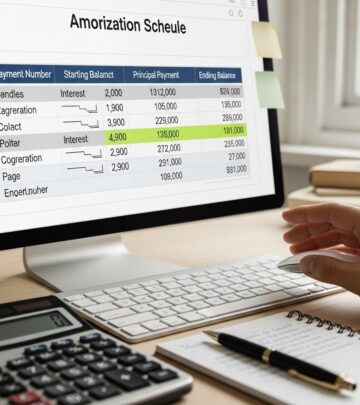
An amortization schedule is a detailed table that lists each monthly payment from the time you start repaying the loan until the loan matures or is fully paid off. This schedule provides a comprehensive breakdown of how much will go toward each component of your mortgage payment—principal or interest—at each month throughout the entire loan term.
Reading Your Amortization Schedule
When you look at an amortization schedule, you’ll typically see columns for the payment date, the total payment amount, the portion applied to interest, the portion applied to principal, and the remaining loan balance. At the beginning of the schedule, you’ll notice that the interest portion is much larger than the principal portion. As you progress through the schedule, this ratio gradually shifts. By the final payments, nearly the entire payment goes toward principal, with minimal interest charges.
The remaining balance column is particularly important because it shows exactly how much you still owe after each payment. By the final row of the schedule, after your last payment, the loan balance should be exactly $0, indicating that your loan is fully paid off.
Can You Change Your Amortization Schedule?
Yes, you can modify your amortization schedule in several ways. If you refinance your mortgage to a new loan, you’ll receive a new amortization schedule based on the new terms. You can also change your amortization schedule by recasting your mortgage, which involves paying a lump sum toward your current loan. Additionally, you can prepay your mortgage through biweekly payments, one additional payment per year, or whenever you have extra funds available. Each of these strategies will accelerate your payoff timeline and reduce the total interest you pay.
Fixed-Rate Mortgages and Amortization
With a fixed-rate mortgage, the monthly principal-and-interest payments remain consistent throughout the entire loan term. This predictability is one of the primary advantages of fixed-rate mortgages. However, while the total payment amount stays the same, the breakdown between principal and interest changes with each payment.
This characteristic means that borrowers with fixed-rate mortgages have complete certainty about their monthly obligations, making budgeting easier and protecting them from payment increases due to rising interest rates.
Adjustable-Rate Mortgages and Amortization
An adjustable-rate mortgage (ARM) operates differently from a fixed-rate mortgage in terms of how amortization works. ARMs typically come with a fixed interest rate for an initial period, usually between three and ten years. During this introductory period, your amortization follows the same pattern as a fixed-rate mortgage—more interest early on, shifting toward more principal over time.
After the introductory period expires, your interest rate changes according to the terms of your ARM, and your monthly mortgage payment adjusts accordingly. These rate changes typically occur every six or twelve months. Like fixed-rate mortgages, you’ll pay a larger portion toward interest at first, but over time, more of your payment goes toward the loan principal. However, because your rate can change, your amortization schedule becomes more complex and harder to predict beyond the initial fixed-rate period.
Calculator Compatibility Note
Most standard amortization calculators are designed specifically for fixed-rate mortgages. If you have an adjustable-rate mortgage, you’ll want to use a specialized ARM calculator that accounts for rate changes throughout your loan term. These calculators can model how your payments and amortization schedule will change when your interest rate adjusts.
Key Benefits of Understanding Amortization
Understanding how amortization works provides several important benefits:
– Financial Clarity: You gain a complete picture of your mortgage obligations and how your payments are allocated over time- Strategic Planning: You can make informed decisions about extra payments, refinancing, or other mortgage adjustments- Long-Term Savings: By understanding how extra payments reduce total interest paid, you can develop strategies to save thousands of dollars- Equity Tracking: You can monitor your growing equity in your home as principal payments accumulate- Informed Decisions: When considering refinancing or other mortgage products, you have the knowledge to compare options effectively
Frequently Asked Questions
Q: How often does my payment allocation between principal and interest change?
A: Your payment allocation changes with every single payment you make. Each month, slightly more of your payment goes toward principal and slightly less toward interest, though the total payment amount remains the same with a fixed-rate mortgage.
Q: Can I pay off my mortgage early without penalties?
A: Most modern mortgages don’t have prepayment penalties, allowing you to make extra payments whenever you want. However, you should verify this in your loan documents or contact your lender to confirm there are no penalties for early payoff.
Q: What’s the difference between an amortization calculator and a mortgage calculator?
A: A mortgage calculator estimates your monthly payment based on loan amount, rate, and term. An amortization calculator does that plus provides a detailed schedule showing how each payment is split between principal and interest throughout the entire loan term.
Q: How much could I save by making extra payments?
A: This depends on your loan amount, interest rate, and how much extra you pay. An amortization calculator can show you specific savings scenarios, allowing you to compare different prepayment strategies.
Q: Does refinancing reset my amortization schedule?
A: Yes, when you refinance your mortgage, you receive a new amortization schedule based on the new loan terms, principal balance, interest rate, and loan term.
References
- Amortization Calculator — Bankrate. 2025. https://www.bankrate.com/mortgages/amortization-calculator/
- What Is Mortgage Amortization? — Bankrate. 2025. https://www.bankrate.com/mortgages/what-is-mortgage-amortization/
- What is mortgage interest and how does it work? — Bankrate. 2025. https://www.bankrate.com/mortgages/what-is-a-mortgage-interest-rate/
- Mortgage Calculator — Bankrate. 2025. https://www.bankrate.com/mortgages/mortgage-calculator/
- Amortization Calculator — Intuit Credit Karma. 2025. https://www.creditkarma.com/calculators/mortgage/amortization
Similar Articles








Read full bio of Sneha Tete