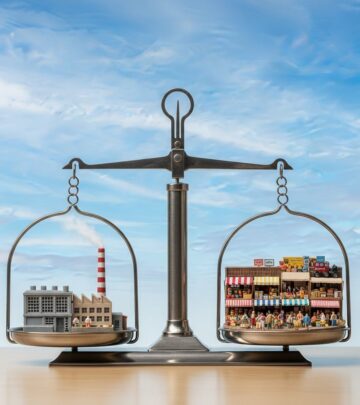
Monopolist: Definition, Characteristics, and Market Impact
Understanding monopolists: Market power, pricing strategies, and economic implications explained.

What Is a Monopolist?
A monopolist is a single seller or producer that dominates a particular market or industry, controlling the supply of a good or service with little to no competition. The term derives from Greek origins—”mono” meaning single and “polos” meaning seller—and describes a market structure where one entity holds significant economic power. Unlike in competitive markets where multiple firms vie for customers, a monopolist operates as the sole provider, giving it the ability to influence market prices and output levels substantially.
In economic terms, a monopolist is characterized by having substantial market power—the ability to set prices above marginal costs and sustain abnormal profits over extended periods. This market dominance arises when barriers to entry prevent other firms from competing effectively. Monopolists differ fundamentally from perfectly competitive firms, which are price takers operating in markets with many sellers and homogeneous products.
Key Characteristics of a Monopolist
Monopolists exhibit several defining characteristics that distinguish them from other market participants:
Price Maker Authority
A monopolist functions as a price maker rather than a price taker. While competitive firms must accept market prices determined by supply and demand dynamics, a monopolist actively determines the price at which its product or service sells. This pricing power stems from the absence of close substitutes and limited competitive alternatives. The monopolist can strategically choose between selling smaller quantities at higher prices or larger quantities at lower prices, depending on profit-maximization objectives.
Profit Maximization
Monopolists pursue profit maximization where marginal cost equals marginal revenue (MC=MR), selecting output levels that generate the highest total profits rather than maximizing per-unit profit margins. When total revenue exceeds total costs at this optimal point, monopolists earn abnormal or economic profits—returns above what competitive firms would generate. This profit maximization behavior distinguishes monopolists from other market participants and creates incentives to restrict output below competitive levels.
Price Discrimination
A monopolist can engage in price discrimination, charging different prices or selling different quantities to various customer segments based on demand elasticity. In highly elastic markets where demand is price-sensitive, monopolists sell larger quantities at lower prices. Conversely, in less elastic markets with less price-sensitive consumers, they sell smaller quantities at premium prices. This strategy allows monopolists to capture consumer surplus and maximize revenues across different market segments.
Barrier to Entry
Monopolists maintain market dominance through barriers that prevent new competitors from entering the industry. These barriers may include high capital requirements, exclusive access to essential resources, proprietary technology, government regulations, or brand loyalty. The existence of these barriers ensures the monopolist’s continued sole-supplier status and protects abnormal profits from potential competitors.
No Close Substitutes
For a true monopoly to exist, consumers must lack viable alternative products or services. Without close substitutes, customers have no choice but to purchase from the monopolist or forgo consumption entirely. This absence of alternatives grants the monopolist substantial pricing power and control over market outcomes. The availability of substitutes would fragment market demand and reduce the monopolist’s pricing flexibility.
Types of Monopolies
Natural Monopoly
Natural monopolies emerge in industries where a single firm can supply the entire market at lower average costs than multiple competing firms. Utilities such as electricity distribution, water supply, and natural gas pipelines typically represent natural monopolies. The infrastructure requirements and economies of scale make competitive provision economically inefficient, justifying single-provider arrangements.
Government-Granted Monopoly
A government-granted monopoly, also called a de jure monopoly, occurs when governments explicitly grant exclusive rights to a single provider. Patent systems, copyright protections, trademark registrations, and broadcasting licenses exemplify government-granted monopolies. These arrangements aim to incentivize innovation and investment by guaranteeing exclusive profits during specified periods, though they may also result from political favoritism or regulatory capture.
Coercive Monopoly
Coercive monopolies arise through anti-competitive practices or regulatory barriers that exclude potential competitors. Predatory pricing, exclusive dealing arrangements, and market manipulation tactics create artificial monopolistic positions that lack legitimate economic justification. Antitrust laws target coercive monopolies to promote market competition and consumer welfare.
How Monopolists Control Markets
Supply Control and Price Setting
Because monopolists control the entire industry supply, they simultaneously control industry prices, functioning as price setters. By restricting output below competitive levels, monopolists sustain prices above marginal costs. This output restriction represents a fundamental distinction between monopolistic and competitive markets—monopolists intentionally under-supply markets to maintain elevated price levels and maximize total profits.
Market Power Measurement
Economists measure monopolistic market power using the Lerner Index, which quantifies the degree to which price exceeds marginal cost. High profit margins may result from various factors including risk premiums, competitive advantages, or monopoly pricing power. The Lerner Index distinguishes between legitimate competitive advantages and exploitative monopolistic pricing.
Deadweight Loss Creation
When monopolists restrict output and raise prices above competitive levels, they create deadweight loss—economic value that benefits neither consumers nor producers. This deadweight loss represents potential gains from trade that fail to materialize because transactions don’t occur between consumers who value the product below monopoly prices and the monopolist unwilling to supply at lower prices. Deadweight loss quantifies the economic inefficiency inherent in monopolistic market structures.
Monopolist Pricing Strategies
Single-Price Monopoly
In the standard economic model, monopolists charge a uniform price to all consumers, selling lower quantities at higher prices than would prevail under perfect competition. This strategy maximizes total profits subject to market demand constraints. Single-price monopolies contrast with price-discriminating monopolists that charge varying prices across customer segments.
Price Discrimination Tactics
Sophisticated monopolists employ price discrimination to extract additional consumer surplus. First-degree price discrimination involves charging each consumer their maximum willingness to pay. Second-degree discrimination uses quantity-based pricing where bulk purchases receive discounts. Third-degree discrimination segments markets by customer characteristics and charges different prices across segments based on demand elasticity differences.
Dynamic Pricing Strategies
Modern monopolists increasingly employ dynamic pricing, adjusting prices in real-time based on demand fluctuations, inventory levels, and competitive conditions. Airlines, hotels, and e-commerce platforms utilize sophisticated algorithms to maximize revenue through continuous price adjustments. Dynamic pricing allows monopolists to capture additional value while adapting to market changes.
Economic Consequences of Monopoly
Reduced Consumer Welfare
Monopolies typically reduce consumer welfare compared to competitive markets. Higher prices and restricted output mean consumers either pay more for smaller quantities or forgo consumption entirely. Consumer surplus—the difference between willingness to pay and actual price—contracts substantially under monopoly conditions.
Productive Inefficiency
Monopolists don’t necessarily operate at minimum average cost, potentially resulting in higher production costs than competitive firms. Without competitive pressure to minimize costs, monopolists may tolerate inefficiencies. The absence of competitive discipline reduces incentives for operational excellence and cost control.
Allocative Inefficiency
The fundamental economic inefficiency of monopoly manifests through allocative inefficiency—society produces insufficient quantities of monopolized goods relative to their true marginal value. Resources are misallocated as consumers who would benefit from lower prices go unsatisfied while monopolists restrict output to maximize profits. This misallocation reduces overall economic welfare.
Innovation Effects
Monopoly effects on innovation remain ambiguous. While monopoly profits can finance research and development, entrenched monopolists may lack competitive incentives to innovate. Natural monopolies in utilities industries show limited innovation, whereas government-granted monopolies like patents encourage innovation by protecting inventor returns.
Monopolist Versus Other Market Structures
| Characteristic | Monopoly | Perfect Competition | Oligopoly | Monopolistic Competition |
|---|---|---|---|---|
| Number of Sellers | One | Many | Few | Many |
| Price Control | Price Maker | Price Taker | Limited Control | Limited Control |
| Product Type | Unique/No Substitutes | Homogeneous | Differentiated | Differentiated |
| Barriers to Entry | High | None | Moderate-High | Low |
| Economic Profit | Long-term Abnormal | Zero Long-term | Variable | Zero Long-term |
Regulatory Responses to Monopoly
Antitrust Enforcement
Governments implement antitrust laws to prevent monopolistic abuses and maintain competitive markets. These laws target anti-competitive conduct, market concentration, and mergers that substantially reduce competition. Antitrust authorities scrutinize monopolist behavior to prevent exploitation of market power for anti-competitive purposes.
Natural Monopoly Regulation
Where natural monopolies exist, regulatory agencies often set price caps and service standards rather than promoting competition. Utility regulators typically allow monopolies to recover reasonable costs plus modest returns while protecting consumers from excessive pricing. This regulatory approach acknowledges economic realities while safeguarding consumer interests.
Intellectual Property Balance
Patent and copyright systems intentionally grant temporary monopolies to incentivize innovation, but with expiration dates ensuring eventual competition. Policymakers balance innovation incentives against consumer welfare and competitive concerns by limiting monopoly duration and scope.
Real-World Monopolist Examples
Technology and Software
Microsoft historically held monopolistic power in operating systems and productivity software, giving it substantial pricing and strategic flexibility. Similarly, major technology platforms like Google in search and Amazon in e-commerce demonstrate significant market dominance though facing increasing regulatory scrutiny.
Utilities and Infrastructure
Electric utilities, water companies, and natural gas distributors operate as regulated natural monopolies in most jurisdictions. These monopolies reflect economic realities of infrastructure provision while remaining subject to price regulation and service standards.
Pharmaceutical Patents
Pharmaceutical companies obtain temporary monopolies through patent protection on new drugs, enabling premium pricing during patent periods. These government-granted monopolies aim to recover research and development investments, though they raise affordability concerns for patients.
Frequently Asked Questions
What distinguishes a monopolist from a competitive firm?
Monopolists possess market power enabling price-setting authority and abnormal profit generation, while competitive firms are price-takers earning only normal profits. Monopolists control output and pricing, whereas competitive firms adjust quantities based on market prices they cannot influence.
Can monopolies ever be economically justified?
Yes, natural monopolies exist where single provision achieves lower average costs than competition. Additionally, government-granted monopolies through patents and copyrights incentivize innovation. These monopolies can be socially beneficial despite their monopolistic structure, distinguishing them from purely coercive monopolies.
How do monopolists maximize profits differently than competitive firms?
Monopolists maximize total profits where marginal cost equals marginal revenue, potentially selling at higher prices and lower quantities than competitive markets. Competitive firms simply produce where price equals marginal cost, accepting market-determined prices and earning zero economic profits long-term.
Why do monopolists create deadweight loss?
Monopolists restrict output below competitive levels to maintain elevated prices. This creates deadweight loss by preventing mutually beneficial transactions between consumers valuing the product between competitive and monopoly prices and the monopolist unwilling to supply at lower prices, resulting in economic inefficiency.
What role do barriers to entry play in maintaining monopoly?
Barriers to entry—including high capital requirements, exclusive resources, patents, and regulations—prevent competitors from challenging monopolists. These barriers preserve monopolistic positions and protect abnormal profits. Without barriers, competitive entry would eventually eliminate monopoly pricing power.
References
- Monopoly — Wikipedia. Accessed November 2025. https://en.wikipedia.org/wiki/Monopoly
- Microeconomic Theory — MIT OpenCourseWare. https://ocw.mit.edu/courses/economics/
- Competition and Antitrust Enforcement — Federal Trade Commission. https://www.ftc.gov/
- Natural Monopoly and Regulation — Economic Policy Institute. https://www.epi.org/
Similar Articles








Read full bio of medha deb