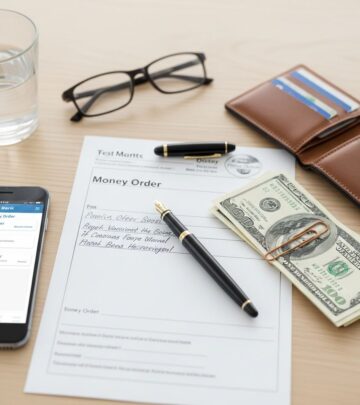
Money Orders: A Complete Guide to Secure Payments
Learn how money orders work, where to buy them, and when to use this secure payment method.

In today’s increasingly digital financial landscape, traditional payment methods like money orders remain surprisingly relevant for certain transactions. Whether you’re sending funds to someone without a bank account, making a high-stakes payment where security is paramount, or simply prefer not to share banking information, understanding money orders can provide valuable flexibility in managing your finances.
Understanding Money Orders at Their Core
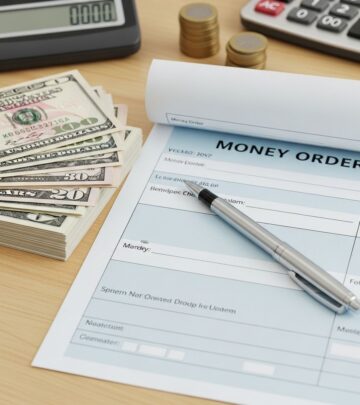
A money order represents a prepaid financial instrument that functions similarly to a check but with fundamental differences in how it operates and what guarantees it provides. Unlike personal checks that draw from an account that may or may not contain sufficient funds, a money order is purchased with cash or another form of payment upfront, making it a guaranteed form of payment. This distinction matters significantly when considering payment security.
The basic concept is straightforward: you pay for the exact amount you wish to send, plus a modest fee, and receive a document that the recipient can cash or deposit at their financial institution. Because the funds are already collected at the time of purchase, the risk of non-payment essentially disappears, which explains why many recipients view money orders as more trustworthy than personal checks.
The Mechanics Behind Money Order Transactions
Understanding how money orders function in practice helps clarify why they remain useful despite the prevalence of digital payment options. The process involves several straightforward steps that anyone can follow:
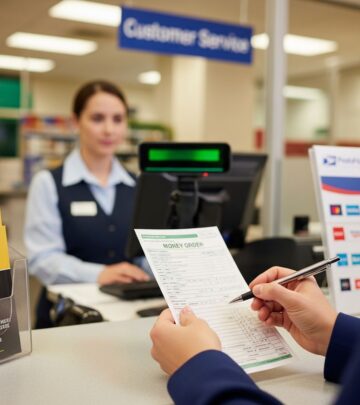
- Visit an authorized retailer such as a bank, post office, grocery store, or convenience store that offers money order services
- Provide the desired payment amount and the recipient’s name and address
- Pay the full amount plus the issuing fee in cash or another accepted payment method
- Receive both a negotiable instrument and a receipt stub for your records
- The recipient deposits or cashes the money order at their bank or financial institution
This straightforward process explains the continued relevance of money orders, particularly in situations where alternative payment methods prove inconvenient or unavailable. The recipient has no need for a bank account to use the money order, as they can cash it at numerous locations.
Where to Purchase Money Orders
Money orders are widely available through numerous retailers and financial institutions, making them accessible to most people. Your purchasing options include:
| Location Type | Typical Availability | Usual Fee Range |
|---|---|---|
| United States Postal Service (USPS) | All post office locations | $1.45 6$2.40 depending on amount |
| Banks and Credit Unions | Most branches offer this service | $5 6$10 per order |
| Convenience Stores and Grocery Stores | Many locations nationwide | $1 6$5 per order |
| Check Cashing Services | Specialized financial service retailers | $1 6$3 per order |
| Pharmacies | Select locations | $1 6$3 per order |
The availability and pricing structure means you have flexibility in where you obtain a money order. USPS locations typically offer competitive rates, while bank-issued money orders may carry higher fees but come with the prestige of a major financial institution. Convenience stores and grocery stores provide accessibility and often the lowest fees, making them practical choices for routine transactions.
Financial Limits and Restrictions
One important constraint affects money order usage: domestic money orders in the United States are typically limited to $1,000 per transaction. This maximum amount applies to most issuers, including the USPS. International money orders may have different limits and typically cost significantly more than domestic orders.
If you need to send more than $1,000, you have several options: purchase multiple money orders, use a cashier’s check from your bank, arrange a wire transfer, or employ digital payment services for larger amounts. Cashier’s checks, while more expensive, offer no maximum limit and provide similar security guarantees.
The Cost of Using Money Orders
Fees associated with purchasing money orders vary based on the issuing location and the amount of the order. Domestic money order fees typically range from approximately $1 to $5, though USPS rates may be slightly lower. International money orders carry substantially higher fees, sometimes reaching $10 or more depending on the destination country.
While these fees may seem minimal, they compound when sending multiple money orders. For regular frequent senders, these costs can accumulate. However, for occasional transactions or situations where security is paramount, the fee represents reasonable insurance against payment failure or fraud.
Why Security Sets Money Orders Apart
The security advantages of money orders over personal checks make them attractive for specific situations. Several factors contribute to this security profile:
- Funds are guaranteed because payment occurs at the time of purchase—the money order cannot bounce
- Only the named recipient can cash or deposit the money order, preventing unauthorized use
- Paper trail documentation provides proof of payment in case of future disputes
- Receipts allow replacement of lost money orders if they haven’t been cashed
- No banking information is shared, protecting your account details from the recipient
These security features explain why landlords, government agencies, and other entities frequently request money orders for payments. The guaranteed nature of the instrument eliminates the risk faced by recipients when accepting personal checks.
Money Orders Versus Alternative Payment Methods
Understanding how money orders compare to other payment options helps determine when they represent the best choice for your situation:
Personal Checks: Personal checks are free to use with most checking accounts but offer no guarantee of funds and don’t provide the same level of security. They also clear more slowly and may be rejected by some recipients.
Cashier’s Checks: Cashier’s checks provide similar security to money orders but typically cost more ($10–$15) and require a bank account. They have no maximum amount limit and are widely accepted for large transactions.
Digital Payment Services: Platforms like Venmo, PayPal, Zelle, and Cash App offer convenience and speed but require bank accounts or debit cards. They work well for informal transfers between people who know each other.
Wire Transfers: Wire transfers provide fast fund delivery for larger amounts but cost substantially more than money orders and require bank involvement.
Cash: While still accepted for many purchases, physical cash offers no paper trail, no protection against loss or theft, and security concerns when sending through mail.
Ideal Scenarios for Using Money Orders
Money orders prove particularly valuable in specific situations where their unique characteristics provide clear advantages:
Payments to Individuals Without Bank Accounts: Money orders allow unbanked individuals to receive secure payments without requiring a bank account. This proves especially valuable in rural areas or for populations with limited banking access.
Rental and Security Deposits: Landlords frequently request money orders for security deposits and initial rent payments, as they eliminate concerns about insufficient funds.
Legal and Court-Ordered Payments: Courts and legal entities often specify money orders for certain payments due to their guaranteed nature.
Mail-Based Transactions: When sending payment through the mail to unknown recipients or unfamiliar businesses, money orders provide security that personal checks or cash cannot match.
Privacy-Conscious Transactions: Situations where you prefer not to share banking information benefit from money orders, as they require no account disclosure.
Record Keeping and Loss Prevention
Responsible money order usage requires attention to documentation. Always retain your receipt stub when purchasing a money order, as it serves multiple important purposes.
Your receipt provides:
- Confirmation of payment and transaction details
- Proof for accounting or budgeting records
- Documentation needed if the money order is lost or stolen
- Ability to request replacement if the money order hasn’t been cashed
If your money order is lost before the recipient cashes it, most issuers will replace it if you present your receipt and proof of non-cashing. This protection differentiates money orders from cash, which offers no recovery option if lost.
Filling Out a Money Order Correctly
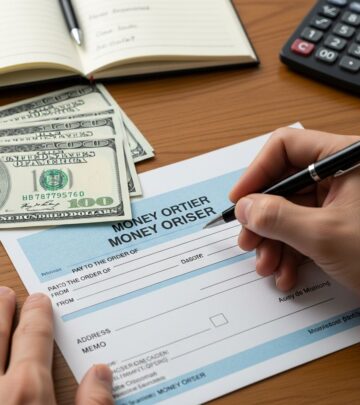
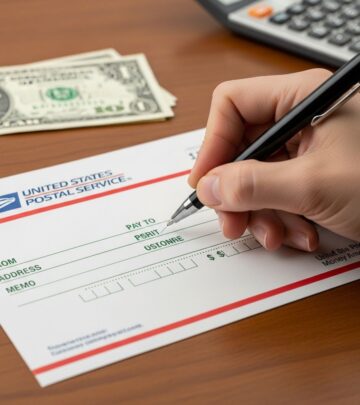
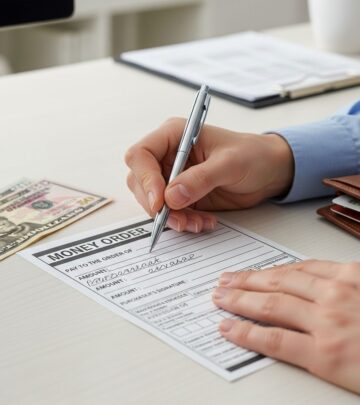
Proper completion of a money order ensures smooth processing and prevents complications. The document typically requires the following information:
The recipient’s name must be filled in clearly—this is the only person or entity authorized to cash the money order. The amount should be written both numerically and in words to prevent alteration. Your return address ensures the money order can be returned if necessary, and your account number or reference helps track the payment for your records.
Avoid common mistakes such as leaving fields blank, using pencil instead of pen, or writing illegibly. These errors can delay processing or cause the money order to be rejected.
Frequently Asked Questions About Money Orders
Can money orders be used internationally? Yes, but international money orders carry significantly higher fees and may take longer to process. The process is more complex than domestic money orders.
What happens if someone else deposits my money order? The named recipient on the money order is the only person authorized to cash or deposit it. If someone else attempts to do so, the transaction should be rejected.
Can you cancel a money order? If the money order hasn’t been cashed, you may be able to cancel it and receive a refund, though some issuers may charge a fee for this service.
How long are money orders valid? Most money orders don’t expire, but it’s best to cash or deposit them within a reasonable timeframe. USPS money orders remain valid indefinitely.
Do you need a bank account to use a money order? No—you don’t need a bank account to purchase or cash a money order, making them accessible to unbanked individuals.
Conclusion
Money orders represent a practical payment tool that remains relevant despite the digital transformation of finance. Their guaranteed nature, accessibility to unbanked populations, security features, and lack of account requirements make them valuable for specific situations. Whether sending payment to someone without a bank account, making a high-stakes rental payment, or preferring not to share banking information, money orders offer a reliable solution that has endured for good reason. Understanding when and how to use them effectively adds valuable flexibility to your personal finance toolkit.
References
- Money Order – Definition, How It Works, Types — Corporate Finance Institute. https://corporatefinanceinstitute.com/resources/valuation/money-order/
- What is a money order? How it works and when you should use one — Business Insider. https://www.businessinsider.com/personal-finance/banking/what-is-a-money-order
- Money order — Wikipedia. https://en.wikipedia.org/wiki/Money_order
- money order | Wex | US Law | LII / Legal Information Institute — Cornell Law School. https://www.law.cornell.edu/wex/money_order
- What Is a Money Order and How Does It Work? — Capital One. https://www.capitalone.com/learn-grow/money-management/what-is-a-money-order/
- What Is a Money Order? How It Works + Fill One Out — PayPal. https://www.paypal.com/us/money-hub/article/what-is-a-money-order
- What is a money order and how do you fill one out? — Citizens Bank. https://www.citizensbank.com/learning/what-is-a-money-order.aspx
- Money Orders – The Basics — USPS FAQ. https://faq.usps.com/s/article/Money-Orders-The-Basics
Similar Articles








Read full bio of Sneha Tete