Money Order: Definition, Uses, and How It Works
Complete guide to money orders: secure payment method for sending money safely and conveniently.
Money Order: A Secure Way to Send Money
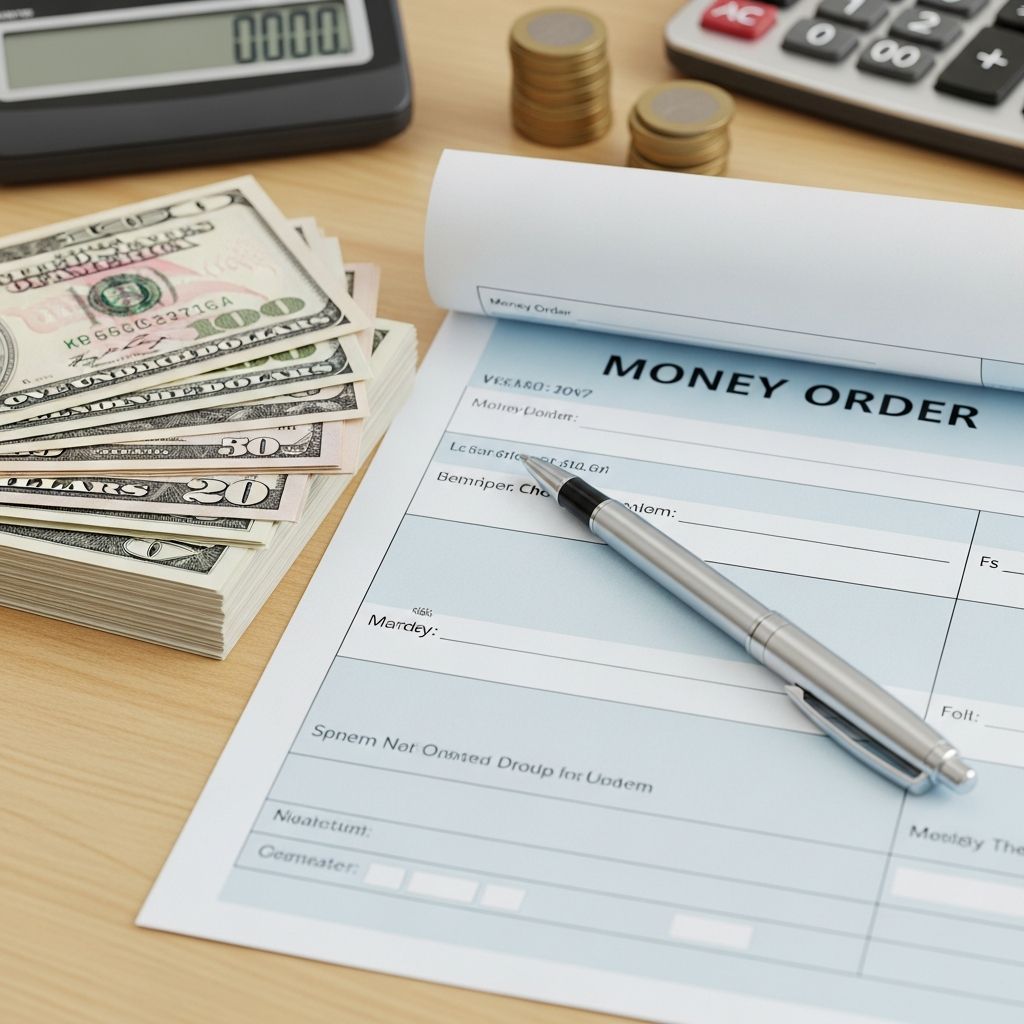
A money order is a financial instrument that allows you to send money safely without revealing your bank account information or carrying large amounts of cash. It functions as a prepaid check and serves as a secure alternative to traditional payment methods. Money orders have been a trusted method of transferring funds for over a century, offering security and convenience for both senders and recipients.
Unlike personal checks, which may bounce if insufficient funds are available, money orders are guaranteed by the issuing organization because you pay the full amount upfront plus a small fee. This makes them particularly valuable in situations where the recipient needs assurance that the payment will clear, or when you need a paper trail for record-keeping purposes.
What Is a Money Order?
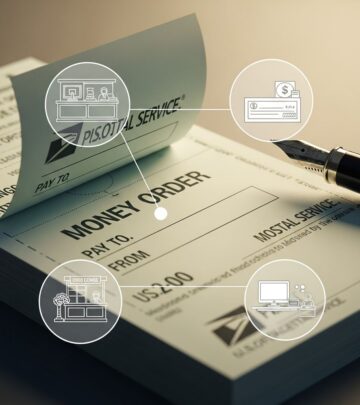
A money order is a prepaid payment instrument issued by financial institutions, postal services, and retail outlets. When you purchase a money order, you pay the desired amount plus a processing fee to the issuer, who then provides you with a receipt and a document that can be cashed or deposited by the recipient.
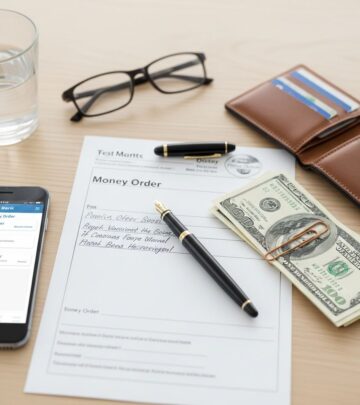
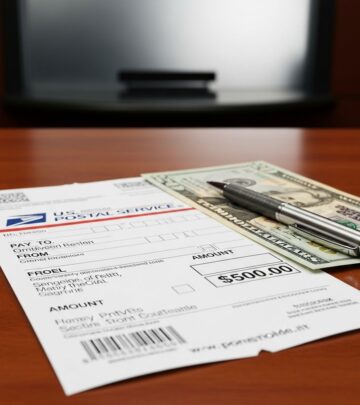
The money order contains specific information including the sender’s name and address, the recipient’s name and address, the payment amount, and a unique identification number. This structure provides accountability and traceability, making it useful for record-keeping and dispute resolution.
How Money Orders Work
The process of obtaining and using a money order is straightforward and accessible to most people. Here’s how the system operates:
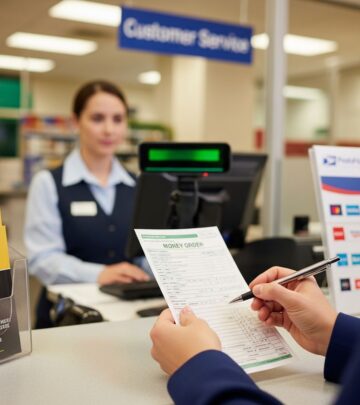
Step 1: Purchase – You visit an authorized issuer such as a bank, post office, or retail store and request a money order for a specific amount. You provide payment in cash, debit card, or sometimes credit card, along with a small fee that typically ranges from one to five dollars depending on the amount and issuer.
Step 2: Completion – The issuer fills out the money order with the recipient’s information and provides you with a copy for your records. You then fill in the recipient’s name and address on the money order itself.
Step 3: Delivery – You send or deliver the money order to the recipient through mail or in person. The recipient can then take it to a bank, post office, or retail location to cash it or deposit it into their account.
Step 4: Processing – The recipient presents the money order to their financial institution or authorized cashing location. After verification and processing, the funds are disbursed to the recipient.
Where to Purchase Money Orders
Money orders are widely available from multiple sources, making them convenient to obtain regardless of your banking situation. Common places to purchase money orders include:
- United States Postal Service (USPS) – Offers money orders at post offices nationwide with competitive fees
- Banks and Credit Unions – Most financial institutions issue money orders for their customers and non-customers
- Retail Stores – Major retailers like Walmart, Target, and grocery stores offer money order services
- Check Cashing Facilities – Specialized check cashing businesses typically sell money orders
- Money Transfer Services – Companies like Western Union and MoneyGram provide money order alternatives
Money Order Fees and Limits
Understanding the costs associated with money orders helps you determine if they’re the right payment method for your needs. Fees vary by issuer and the amount being sent:
| Issuer | Typical Fee Range | Maximum Amount |
|---|---|---|
| USPS | $1.45 – $2.20 | $1,000 |
| Banks | $3 – $10 | Varies by bank |
| Retail Stores | $0.88 – $1.25 | $500 – $1,000 |
| Check Cashing Services | $2 – $5 | $1,000 – $5,000 |
If you need to send more than the maximum amount allowed by a single money order, you can purchase multiple money orders. This approach requires additional fees but allows you to transfer larger sums securely.
Advantages of Money Orders
Money orders offer several significant benefits that make them an attractive option for certain financial situations:
Security and Safety – Since money orders are prepaid, there’s no risk of the check bouncing. This provides peace of mind for both sender and recipient and makes them ideal for high-value transactions or situations involving unknown parties.
Privacy Protection – Money orders don’t require you to disclose your bank account information to the recipient, protecting your personal financial details. This is particularly valuable when paying strangers or conducting transactions with unfamiliar businesses.
Proof of Payment – Each money order includes a unique identification number and receipt, creating a permanent record of the transaction. If a dispute arises, you have documentation proving you sent the payment.
Accessibility – Money orders are available to anyone, regardless of whether they have a bank account. They’re particularly useful for unbanked or underbanked populations who may not have access to traditional financial services.
Guaranteed Funds – Unlike personal checks, money orders represent guaranteed funds because they’re already paid for. Recipients don’t have to worry about insufficient funds in the sender’s account.
Disadvantages of Money Orders
While money orders are valuable financial tools, they do have limitations worth considering:
Limited Amount – Most money orders have maximum limits of $1,000 or less per order. For larger transfers, you’d need to purchase multiple money orders, increasing fees.
Processing Fees – Even relatively modest fees can add up, especially for frequent transactions. These costs make money orders less economical than some alternatives for regular payments.
No Immediate Confirmation – Unlike electronic transfers, money orders don’t provide immediate confirmation that the recipient received the payment. You must rely on the recipient to notify you after cashing or depositing the money order.
Time Delays – Money orders sent by mail can take several days or weeks to reach the recipient, and additional time is required for processing after receipt.
Replacement Complications – If a money order is lost or stolen, replacement can be time-consuming and may require additional fees, though most issuers provide replacement services.
Money Orders vs. Other Payment Methods
Understanding how money orders compare to alternative payment methods helps you choose the best option for your situation:
| Payment Method | Cost | Security | Speed | Best For |
|---|---|---|---|---|
| Money Order | $1-$10 | Very High | 3-7 days | Secure transactions, privacy |
| Personal Check | Free-Low | Medium | 3-7 days | Known recipients, record-keeping |
| Wire Transfer | $15-$50 | High | Same/Next day | Large amounts, urgent transfers |
| ACH Transfer | Free-Low | High | 1-3 days | Bank-to-bank transfers |
| Digital Payment App | Free-Low | Medium-High | Instant | Person-to-person transfers |
How to Verify a Money Order
Before sending or accepting a money order, verification ensures its authenticity and prevents fraud:
- Check for security features including watermarks and special inks that are difficult to counterfeit
- Verify the issuer’s name and logo are clearly printed and professionally produced
- Confirm the money order number and issuer information match before cashing
- Contact the issuing organization using the phone number on the money order to verify its validity
- Examine the paper quality and printing details for signs of tampering
When to Use Money Orders
Money orders are particularly useful in specific situations where their security and accessibility advantages outweigh their limitations:
Rent and Deposits – Landlords and property managers often accept money orders as proof of timely payment without access to tenant bank information.
Court-Ordered Payments – Legal settlements and court fines frequently require payment by money order or certified check.
Purchasing from Unknown Sellers – Online purchases or private sales where both parties seek security and documentation benefit from money order payments.
International Transactions – For sending money internationally, money orders provide a secure alternative to cash or wire transfers.
Building Credit or Establishing Trust – Money orders create documented payment history useful for credit building or establishing business relationships.
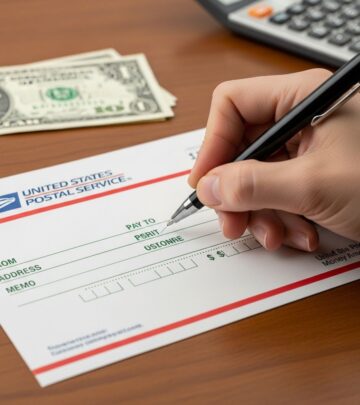
How to Fill Out a Money Order
Properly completing a money order ensures it can be processed without complications:
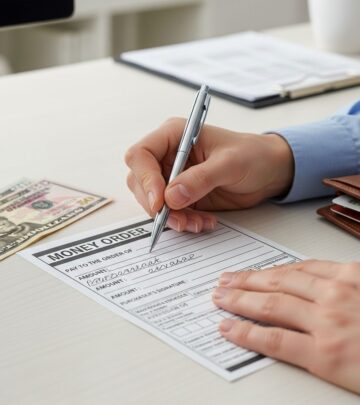
- Write the recipient’s full name clearly in the “Pay to the Order of” line
- Enter the payment amount in both numerical and written formats for clarity
- Print your name and address in the “From” or “Purchaser” field
- Include relevant information like invoice or reference numbers if applicable
- Sign the money order in the designated signature area
- Keep your receipt for record-keeping and tracking purposes
- Double-check all information for accuracy before sending
Money Order Fraud and Protection
While money orders are secure instruments, awareness of potential fraud helps protect yourself:
Common scams include counterfeit money orders that appear legitimate but lack proper security features, overpayment schemes where buyers send inflated money orders expecting change, and lost money order replacement fraud. Protect yourself by purchasing money orders only from authorized issuers, never accepting money orders from strangers for unknown purposes, verifying money order details before accepting payment, and reporting suspicious activity to the issuing organization.
Frequently Asked Questions
Q: Can you dispute a money order?
A: Yes, you can dispute a money order if it’s lost, stolen, or if there’s an error in the transaction. Contact the issuing organization with your receipt and identifying information to initiate a dispute or replacement process.
Q: How long does it take to cash a money order?
A: Most financial institutions cash money orders immediately or within one business day if deposited into an account. Processing times may vary depending on the recipient bank and the amount.
Q: Can you cancel a money order?
A: Yes, you can typically cancel an uncashed money order by contacting the issuer with your receipt. Some issuers may charge a cancellation fee or require a waiting period before processing the cancellation.
Q: Are money orders considered legal tender?
A: Money orders are financial instruments representing prepaid funds but aren’t legal tender themselves. They function as payment instruments that must be cashed or deposited to access the underlying funds.
Q: What’s the difference between a money order and a cashier’s check?
A: Cashier’s checks are issued by banks using bank funds and typically allow larger amounts with more comprehensive bank verification. Money orders are more accessible and have lower limits but are available from more sources.
References
- Money Order – Definition, How It Works and Where to Buy — Investopedia. https://www.investopedia.com/terms/m/money-order.asp
- Money Order Services and Pricing — United States Postal Service. https://www.usps.com/
- Electronic Funds Transfer Act Regulations — Federal Reserve Board. https://www.federalreserve.gov/
- Consumer Financial Protection – Payment Methods — Consumer Financial Protection Bureau. https://www.consumerfinance.gov/
- Banking and Payment Security Standards — Office of the Comptroller of the Currency. https://www.occ.treas.gov/
Similar Articles








Read full bio of medha deb