Money Market vs. Savings Accounts vs. CDs
Compare money market, savings accounts, and CDs to choose the best place to keep your cash based on goals, timelines, and access needs.

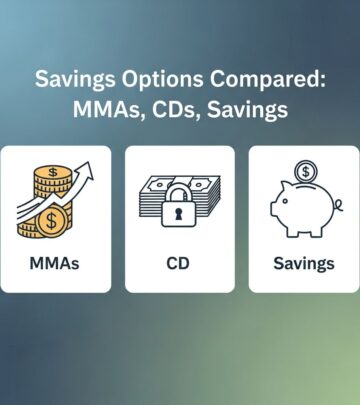
Money market accounts, savings accounts, and certificates of deposit (CDs) are three of the most common ways to save while protecting your cash. Each is considered a low-risk place to store money, but they differ in how much interest they pay, how easily you can use your funds, and which financial goals they best support.
By understanding how these accounts work, you can match the right product to your time horizon, risk tolerance, and need for flexibility.
How Money Market, Savings Accounts, and CDs Work
All three account types are typically offered by banks and credit unions and are designed to help you earn interest on your cash while keeping it relatively safe. At federally insured institutions, balances are usually protected up to $250,000 per depositor, per institution, per ownership category.
What Is a Savings Account?
A savings account is a deposit account that pays interest on balances and is generally intended for short- to medium-term savings rather than daily spending.
- Offered by banks and credit unions as a basic, easy-to-open product.
- Interest rate is usually variable, meaning it can change over time.
- Often low minimum balance requirements and few fees, especially at online banks.
- Typically no checkwriting, and transfers may be limited per statement period by institution policy.
Many people use savings accounts for emergency funds, near-term goals, or as a holding place for money they might soon move to investments.
What Is a Money Market Account?
A money market account (MMA) is a type of savings deposit account that often combines higher interest rates than standard savings with limited checkwriting and debit card access.
- Interest rate is usually variable and may be tiered, with higher rates at higher balances.
- Access to funds may include checks, ATM cards, or debit cards, though transactions can still be limited.
- Minimum opening deposits and balance requirements are often higher than for basic savings.
- Like savings accounts, bank money market deposit accounts at insured institutions are protected by federal deposit insurance.
Money market accounts can work well for savers who want both yield potential and some transactional flexibility, without fully moving money into a checking account.
What Is a Certificate of Deposit (CD)?
A certificate of deposit (CD) is a time deposit: you agree to leave your money in the account for a set term, and in exchange, the bank or credit union typically offers a higher, fixed interest rate.
- Common terms range from a few months to several years.
- Interest rate is usually fixed for the entire term, protecting you from rate cuts during that period.
- Withdrawing funds before maturity generally triggers an early withdrawal penalty, which can reduce or erase earned interest.
- Traditional bank CDs at insured institutions are covered by federal deposit insurance limits.
CDs tend to be best for money you know you will not need until a specific future date, like a tuition payment in two years or a planned home purchase down the road.
Key Differences at a Glance
The table below summarizes core differences among money market accounts, savings accounts, and CDs.
| Feature | Savings Account | Money Market Account | CD |
|---|---|---|---|
| Interest rate type | Variable | Variable | Fixed for a set term |
| Typical rate level | Moderate (higher for high-yield online accounts) | Moderate to higher than standard savings | Often higher than savings and MMAs |
| Liquidity & access | High; transfers and ATM access, but limited transactions may apply | High; may include checks/debit card; limits still possible | Low; funds locked for term, penalties for early withdrawal |
| Minimum balance | Often low or none | Often higher than savings | Often a set minimum deposit per CD |
| FDIC or NCUA insurance | Yes, at insured institutions, up to $250,000 per depositor per bank per ownership category | Yes, for deposit accounts at insured institutions | Yes, for traditional bank and credit union CDs at insured institutions |
| Best for | Emergency fund, short- to medium-term goals | Larger balances needing some check/debit access | Fixed-term goals where you will not need cash until maturity |
Interest Rates: How Much Can You Earn?
The interest you earn is one of the most important factors in choosing among these accounts. Rates change over time with the broader interest rate environment, and yields for all three products typically move in response to central bank policy and market conditions.
Savings and Money Market Rates
Both savings accounts and money market accounts have variable rates, which can rise or fall.
- Savings accounts at traditional brick-and-mortar banks often pay relatively low rates, but online banks and credit unions may offer high-yield savings options with significantly higher annual percentage yields (APYs).
- Money market accounts sometimes pay higher rates than standard savings, especially on larger balances, but they are still subject to change at any time.
- Banks and credit unions can adjust savings and money market rates quickly, which means your earnings may fluctuate from month to month.
CD Rates
CDs typically offer some of the highest interest rates among bank deposit products, especially for longer terms, because you are committing your funds for a fixed period.
- Rates are usually fixed for the entire term, so your yield is known in advance.
- If overall interest rates fall after you lock in a CD, your account can become relatively more attractive.
- If rates rise after you lock in, you may end up earning less than what newer CDs pay, unless you choose shorter terms or maintain a ladder.
Official guidance notes that CDs generally trade flexibility for rate: they tend to pay more than liquid savings accounts but require you to keep your money on deposit until maturity to avoid penalties.
Liquidity and Access to Funds
Liquidity—how easily you can access your cash—is a key distinction among these products and should align with the purpose of your money.
Access with Savings Accounts
Savings accounts are designed for saving, but they still provide relatively easy access when needed.
- You can usually transfer funds to checking or withdraw at ATMs and branches, subject to each institution’s own transaction policies.
- Because of their accessibility and low fees, savings accounts often serve as the core of an emergency fund.
Access with Money Market Accounts
Money market accounts blend savings features with limited transaction tools.
- Many MMAs allow checkwriting and debit card or ATM access, though the number of transactions may still be limited by the institution.
- Because funds remain relatively accessible while potentially earning higher rates than basic savings, money market accounts can work for larger emergency funds or cash you might need on short notice.
Access with CDs
CDs offer the least liquidity of the three.
- With traditional bank CDs, you typically commit to leaving funds for the term. Withdrawing early usually leads to a penalty that can reduce your interest or even dip into principal, depending on timing.
- Some brokered CDs can be sold before maturity, but their value can fluctuate with interest rates, so you may receive more or less than your original investment.
- Because of this limited access, CDs are better suited for funds you have intentionally set aside for a future date, not for routine expenses or emergencies.
Risk, Safety, and Insurance
For many savers, the main appeal of these accounts is their emphasis on capital preservation.
- At banks, eligible savings accounts, money market deposit accounts, and CDs are insured by the Federal Deposit Insurance Corporation (FDIC) up to $250,000 per depositor, per insured bank, per ownership category.
- At federally insured credit unions, similar coverage is provided by the National Credit Union Administration (NCUA) through the National Credit Union Share Insurance Fund.
- This federal backing protects you against the loss of insured deposits if the institution fails, provided your balances stay within the coverage limits.
From a market-risk perspective, all three products are considered low risk compared with investments like stocks or bond funds. The main trade-offs involve interest-rate risk (your rate might become less attractive as conditions change) and liquidity risk (in the case of CDs, where you must pay a penalty or potentially sell at a loss if you need funds early).
Fees, Minimum Balances, and Requirements
Institutions may set different minimums and fees for savings accounts, MMAs, and CDs, and these details can significantly affect your overall return.
Savings Account Costs
- Many online savings accounts have no monthly maintenance fee and low or no minimum balance.
- Traditional banks sometimes charge monthly fees unless you meet certain requirements, such as maintaining a minimum balance or linking other accounts.
- Because basic savings accounts are widely available with minimal requirements, they are accessible to new savers and those building small balances.
Money Market Account Requirements
- Money market accounts often require higher minimum balances than savings, especially to earn top-tier interest rates.
- Falling below the minimum may lead to monthly service fees or a lower APY.
- Before opening an MMA, review any check or debit card privileges and confirm whether transaction limits or fees could affect how you use the account.
CD Minimums and Penalties
- CDs generally have a fixed minimum opening deposit, which can vary by institution and term.
- Because funds are locked in, you should only commit money you are confident you can leave untouched until maturity.
- Early withdrawal penalties vary but often involve forfeiting several months of interest.
Choosing the Right Account for Your Goals
The best place for your money depends on your timeline, your need for access, and how much risk you are willing to take with interest rate changes.
When a Savings Account Is Best
Consider a savings account if:
- You are building or maintaining an emergency fund and may need fast access to cash.
- Your balance is relatively small and you want low (or no) minimums and fees.
- You are new to saving and want a straightforward, easy-to-manage account.
When a Money Market Account Is Best
A money market account may be appropriate if:
- You maintain a larger cash balance and want potential rate advantages over basic savings.
- You value having limited checkwriting or debit card access while still treating the account as savings.
- You are comfortable with higher minimum balance requirements in exchange for better yields.
When a CD Is Best
CDs can be a strong choice if:
- You have a defined time frame for your goal and know you will not need the money before a specific date.
- You want to lock in a fixed rate, particularly if you believe interest rates may fall in the future.
- You are willing to trade liquidity for a higher potential yield.
Combining Accounts for Flexibility
Many savers use more than one type of account:
- Keep an emergency fund in a high-yield savings account for quick access.
- Use a money market account for larger short-term reserves that might occasionally require check or debit card use.
- Place longer-term savings in CDs, potentially with a CD ladder—owning multiple CDs with staggered maturities—to balance yield and access.
Frequently Asked Questions (FAQs)
Is a money market account safer than a savings account?
At an FDIC- or NCUA-insured institution, both money market deposit accounts and savings accounts are generally equally safe from a deposit-insurance standpoint, as long as your balances stay within coverage limits. The main differences are interest rates, transaction features, and minimum balance requirements.
Do CDs always pay more than savings and money market accounts?
CDs often pay higher rates than liquid savings and money market accounts because you agree to keep your funds on deposit for a fixed term. However, this is not guaranteed in every rate environment. Sometimes a high-yield savings or promotional money market offer can rival or exceed certain CD terms, so it is important to compare current rates before deciding.
What happens if I withdraw from a CD early?
If you withdraw from a traditional bank CD before it matures, the institution usually charges an early withdrawal penalty, often in the form of forfeited interest. The penalty amount and structure vary by bank and CD term, so you should review disclosures before opening the account.
Can I lose money in a savings account, money market account, or CD?
In terms of principal safety, insured savings accounts, money market deposit accounts, and CDs at FDIC- or NCUA-insured institutions are designed so you do not lose your insured deposits if the institution fails, up to coverage limits. You can, however, lose out on potential interest if you face fees, penalties (for early CD withdrawals), or if inflation outpaces the interest you earn.
How do I decide which account to open first?
Many people start with a high-yield savings account because it offers a combination of simplicity, low fees, and easy access. Once you have a solid emergency fund, you can explore money market accounts for larger balances and CDs for longer-term goals where you are comfortable with reduced liquidity.
References
- Money Market Accounts vs. Savings Accounts vs. CDs — Bankrate. 2024-03-18. https://www.bankrate.com/banking/savings/money-market-vs-savings-accounts-vs-cds/
- High-yield savings accounts vs. CDs vs. money market funds — Vanguard. 2023-08-15. https://investor.vanguard.com/investor-resources-education/article/high-yield-savings-vs-cd-vs-money-market
- Your Insured Deposits — Federal Deposit Insurance Corporation (FDIC). 2024-01-01. https://www.fdic.gov/resources/deposit-insurance/
- Money Market vs CDs: 10 Key Differences You Need To Know — Chemung Canal Trust Company. 2023-06-20. https://www.chemungcanal.com/money-market-vs-cds-10-powerful-differences-you-need-to-know/
- Money Market vs. CD: What’s Better? — NerdWallet. 2024-02-05. https://www.nerdwallet.com/banking/learn/money-market-vs-cd
Similar Articles








Read full bio of Sneha Tete