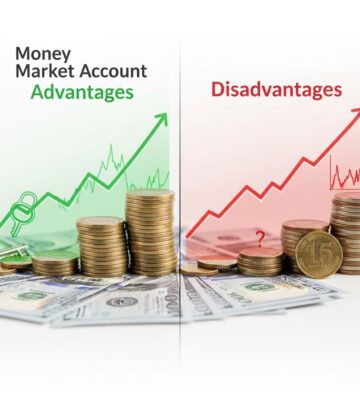
Money Market Accounts: 5 Pros And 5 Cons To Know
Discover the essentials of money market accounts: higher yields, liquidity, FDIC protection, and smart strategies for your savings goals.

Money market accounts (MMAs) are hybrid deposit accounts that blend features of savings and checking accounts, providing higher interest rates, limited transaction capabilities, and federal insurance for savers seeking yield with accessibility.
What Is a Money Market Account?
A money market account is a type of interest-bearing deposit account offered by banks and credit unions, designed for individuals who want to earn competitive returns on idle cash while maintaining some liquidity. Unlike pure savings accounts, MMAs often include check-writing privileges, debit cards, or ATM access, making them more versatile. Banks pool depositor funds into these accounts and invest in low-risk, short-term securities like Treasury notes, certificates of deposit, or government obligations, passing a portion of the generated interest to account holders.
MMAs are federally insured by the FDIC for bank accounts or NCUA for credit unions, protecting deposits up to $250,000 per depositor per insured institution, eliminating principal risk. Interest rates on MMAs are variable, typically tiered based on balance levels—higher balances earn higher annual percentage yields (APYs)—and compounded daily or monthly, with payments credited monthly or quarterly. As of recent data, top MMAs offer APYs significantly above traditional savings accounts, though rates fluctuate with market conditions.
Money Market Account Features
MMAs stand out due to their unique combination of earning potential and access tools. Key features include:
- Higher Interest Rates: MMAs generally provide superior APYs compared to standard savings accounts, often 0.5%–1% or more higher, rewarding larger deposits with tiered rates.
- Limited Transaction Privileges: Federal regulations historically limited certain withdrawals to six per month (though some banks have adjusted post-2020 changes), including checks, debit card use, or electronic transfers.
- Access Methods: Many include ATM/debit cards, check-writing (often limited to 3–6 per month), and online transfers for convenience.
- Minimum Balance Requirements: Typically $1,000–$10,000 or more to open and avoid fees; falling below triggers monthly charges or rate reductions.
- FDIC/NCUA Insurance: Full protection up to $250,000, with some institutions offering extended coverage via networks.
These features make MMAs ideal for parking larger sums where growth and occasional access are needed.
Pros and Cons of Money Market Accounts
MMAs offer compelling advantages but come with trade-offs. Here’s a balanced overview:
Pros
- Competitive Yields: Higher APYs than traditional savings promote faster growth via compounding.
- Safety: FDIC/NCUA insurance ensures no loss of principal.
- Accessibility: Check-writing, debit/ATM access surpasses basic savings restrictions.
- Liquidity: More flexible than CDs, suitable for short-term needs without penalties.
- Tiered Rates: Incentives for higher balances maximize returns on substantial savings.
Cons
- Minimum Balances: High thresholds ($2,500+) can lead to fees if not maintained.
- Transaction Limits: Excess withdrawals may incur fees or account closure.
- Variable Rates: APYs can drop with falling interest rates, unlike fixed CDs.
- Lower Yields than Investments: Safer but less return potential than stocks or bonds.
- Opportunity Cost: Ties up funds that could go into higher-risk, higher-reward options.
Money Market Accounts vs. Other Accounts
Understanding how MMAs compare helps select the right tool. The table below contrasts MMAs with common alternatives:
| Account Type | Interest Rate | Access to Funds | Minimum Balance | Best For |
|---|---|---|---|---|
| Money Market Account | Variable, higher than savings | Checks, debit/ATM (limited) | High ($1K+) | Emergency funds, short-term goals |
| High-Yield Savings | Variable, competitive | Transfers/ATM only | Low/none | Flexible savings growth |
| Certificate of Deposit (CD) | Fixed, often highest | Locked (penalties for early withdrawal) | Moderate | Long-term, untouched savings |
| Checking Account | Low/none | Unlimited transactions | Low | Daily spending |
MMAs excel in balancing yield and access, outperforming savings for rates while beating CDs on liquidity.
Who Should Get a Money Market Account?
MMAs suit those with steady cash flows and specific needs:
- Emergency Fund Holders: Keep 3–6 months’ expenses accessible yet earning interest; check-writing aids large repairs.
- Short-Term Savers: Ideal for vacations, weddings, or down payments—grow funds without lockups.
- Freelancers/Contractors: Segregate tax payments, earning yield until due.
- High Balance Savers: Leverage tiered rates on $10K+ sums.
- Risk-Averse Investors: Safe parking for cash awaiting opportunities.
Avoid if you need unlimited transactions (choose checking) or can’t meet minimums (opt for high-yield savings). Consult a financial advisor for personalized fit.
How to Choose the Best Money Market Account
Select based on:
- APY: Compare current rates; prioritize online banks for top yields.
- Fees: Scrutinize minimums, maintenance, and excess withdrawal charges.
- Access: Confirm check/debit availability and ATM networks.
- Insurance: Verify FDIC/NCUA and coverage limits.
- Tiers: Favor accounts rewarding your balance level.
Shop via bank comparison sites, read terms, and consider digital banks for superior rates with no branches.
Frequently Asked Questions (FAQs)
What is the difference between a money market account and a savings account?
MMAs offer higher rates and transaction tools like checks/debit, but with minimum balances and limits; savings have lower barriers but less access.
Are money market accounts FDIC insured?
Yes, up to $250,000 per depositor at banks (NCUA for credit unions).
Can I use a debit card with a money market account?
Many do, plus ATM access and checks, subject to monthly limits.
What are typical money market account rates?
Variable and tiered, often 4–5% APY or higher at top online providers, exceeding standard savings.
Is a money market account good for an emergency fund?
Yes—liquid, insured, and interest-earning for quick access without risk.
References
- Money Market Accounts: Definition, Benefits, and Features — Business Insider. 2024-01-15. https://www.businessinsider.com/personal-finance/banking/what-is-a-money-market-account
- What Is a Money Market Account & How Does It Work? — PNC Insights. 2024-05-20. https://www.pnc.com/insights/personal-finance/save/what-is-a-money-market-account.html
- Pros And Cons Of Money Market Accounts — Bankrate. 2024-03-10. https://www.bankrate.com/banking/mma/money-market-account-advantages-and-disadvantages/
- What is a money market account? — Citizens Bank. 2023-11-08. https://www.citizensbank.com/learning/what-is-a-money-market-account.aspx
- Money Market Account – Open Online — U.S. Bank. 2024-02-28. https://www.usbank.com/bank-accounts/savings-accounts/elite-money-market.html
Similar Articles








Read full bio of Sneha Tete