Money Market Account vs. Savings Account
Compare money market accounts and savings accounts to find the right fit for your financial goals and savings strategy.
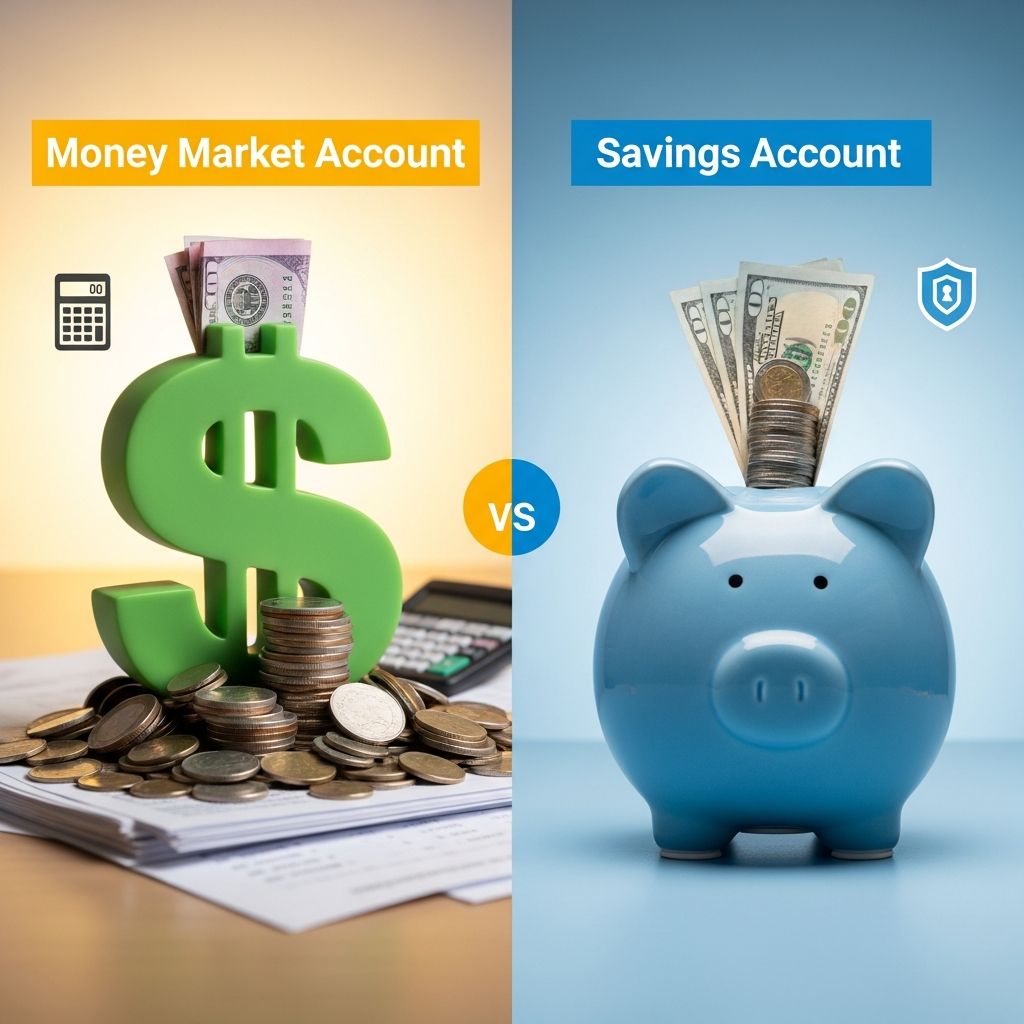
Money Market Account vs. Savings Account: Which Is Right for You?
When it comes to saving money and earning interest, two popular options emerge: money market accounts and traditional savings accounts. Both are designed to help you grow your money while keeping it safe, but they operate differently and offer distinct advantages. Understanding the differences between these account types is essential for making an informed decision that aligns with your financial goals and lifestyle.
Understanding Savings Accounts
A savings account is an interest-bearing deposit account that serves as a secure place to store your money. Whether you’re setting aside funds for an emergency fund, planning a vacation, or building a financial cushion, a savings account provides a straightforward way to grow your deposits while maintaining easy access to your cash.
Savings accounts are designed with simplicity and accessibility in mind. They typically require minimal effort to open and allow you to access your funds with relative ease through ATM withdrawals, online transfers, or in-person visits to your bank branch. This makes them an ideal choice for individuals who prioritize liquidity and straightforward account management.
Understanding Money Market Accounts
A money market account is an interest-bearing account that functions as a hybrid between a checking account and a savings account. This unique blend of features makes money market accounts particularly appealing to those who want more flexibility than a traditional savings account while still maintaining the security of a deposit account.
Money market accounts combine the earning potential of savings accounts with the accessibility features of checking accounts. They typically allow you to write checks, use a debit card, and access your funds in multiple ways, giving you greater control over how you use your money. However, this added flexibility often comes with higher opening deposits and minimum balance requirements.
Key Differences Between the Two Account Types
Interest Rates
One of the most significant differences between these account types involves interest rates. Money market accounts generally offer higher interest rates compared to traditional savings accounts. However, it’s important to note that this advantage isn’t universal—high-yield savings accounts may sometimes offer competitive rates comparable to money market accounts.
Money market accounts often feature tiered interest rates, meaning your rate increases based on your account balance. The higher your balance, the more interest you can earn. This structure rewards savers who maintain substantial deposits and can incentivize you to keep more money in the account.
Savings accounts, on the other hand, typically offer lower interest rates because they’re primarily designed as secure storage for your money. They prioritize safety and accessibility over maximum earnings potential. Additionally, both account types feature variable interest rates that can change with market conditions, so rates aren’t guaranteed to remain constant.
Access to Funds
How you access your money differs significantly between these accounts. Savings accounts provide limited withdrawal methods—you can typically withdraw funds through ATMs or by visiting your bank branch in person. While this simplicity works well for many savers, it may feel restrictive if you frequently need to spend directly from your savings.
Money market accounts offer greater accessibility through check-writing capabilities and debit cards, similar to checking accounts. This means you can pay bills or make purchases directly from your money market account without transferring funds to a checking account first. For those who frequently access their savings, this flexibility can be invaluable.
Minimum Balance Requirements
Financial institutions typically require higher minimum balances for money market accounts compared to savings accounts. If you’re opening a money market account, you may need to make a larger initial deposit and maintain a higher ongoing balance to avoid monthly fees or qualify for certain interest rate tiers.
Savings accounts often have lower or no minimum balance requirements, making them more accessible to individuals just starting to build their savings or those with limited funds to deposit. This lower barrier to entry is one reason why savings accounts remain popular for first-time savers and those building emergency funds.
Monthly Transaction Limits
Both account types may be subject to federal restrictions that limit the number of transactions you can make per month. However, the specific limits and how they’re applied can vary by financial institution and account type. It’s important to review your account agreement to understand any transaction restrictions that may apply to your specific account.
Advantages and Disadvantages
Benefits of Savings Accounts
- Interest Earnings: You can earn interest on your deposits, even small amounts, helping your money grow over time.
- Easy to Open and Access: Opening a savings account is straightforward, and accessing your funds is simple through multiple methods.
- FDIC Insurance Protection: Your deposits are protected by FDIC insurance up to the maximum allowed by law, providing peace of mind.
- Low or No Minimum Balance: Many savings accounts have minimal or no minimum balance requirements, making them accessible to everyone.
- Fee-Friendly Options: Many banks offer savings accounts with no maintenance fees, overdraft fees, or low-balance fees.
Drawbacks of Savings Accounts
- Variable Interest Rates: Interest rates may fluctuate based on market conditions, affecting your potential earnings.
- Transaction Limits: Federal regulations may restrict the number of withdrawals you can make per statement cycle.
- Monthly Fees: Some accounts charge maintenance fees, minimum balance fees, or excessive withdrawal fees, though these can often be avoided.
- Lower Earning Potential: Compared to money market accounts, savings accounts typically offer lower interest rates, meaning slower growth of your deposits.
Benefits of Money Market Accounts
- Higher Interest Rates: Money market accounts typically offer higher returns than traditional savings accounts, allowing your money to grow faster.
- Tiered Interest Structures: Many MMAs feature tiered rates, rewarding customers who maintain higher balances with better interest rates.
- Check-Writing and Debit Card Access: You can access your funds through checks and debit cards, combining the flexibility of checking with the interest-earning potential of savings.
- FDIC Insurance Protection: Like savings accounts, money market accounts are FDIC-insured up to the legal maximum, protecting your deposits.
- Additional Perks: Existing customers may receive fee waivers, account-to-account transfers, and other advantages from their financial institution.
Drawbacks of Money Market Accounts
- Higher Minimum Balance Requirements: Many banks require you to maintain a minimum balance to avoid monthly fees or qualify for better rates.
- Rate Fluctuations: Interest rates for money market accounts change with market conditions, and rates aren’t guaranteed to remain stable.
- Complex Fee Structures: Some money market accounts charge maintenance fees or fees for falling below minimum balance requirements.
- Transaction Limitations: Like savings accounts, MMAs may be subject to monthly transaction limits.
Comparing the Two Account Types
| Feature | Savings Account | Money Market Account |
|---|---|---|
| Interest Earnings | Yes, typically lower rates | Yes, typically higher rates |
| Minimum Balance Required | Sometimes or none | Often required |
| Check-Writing Capabilities | No | Yes |
| Debit Card Access | Sometimes | Yes |
| Tiered Interest Rates | Usually no | Often yes |
| FDIC Insurance | Yes, up to $250,000 | Yes, up to $250,000 |
| ATM Access | Yes | Yes |
| Monthly Transaction Limits | May apply | May apply |
Which Account Offers the Highest Interest Rates?
Generally, money market accounts offer higher interest rates compared to regular savings accounts. However, this comparison becomes more complex when high-yield savings accounts enter the picture, as they can sometimes match or exceed money market account rates.
When comparing rates between account types, it’s crucial to examine the annual percentage yield (APY), which represents the total amount of interest you can earn in a year. Different financial institutions offer varying rates, so comparing APYs across banks is essential for finding the best option for your specific situation.
Money market accounts may also offer tiered APYs, where your rate depends on your balance level. This means that if you can maintain a higher balance, you may earn significantly more interest than you would in a standard savings account.
FDIC Insurance Coverage
Both savings accounts and money market accounts are protected by FDIC insurance, providing security for your deposits. FDIC coverage extends up to $250,000 per depositor, per bank, per ownership category.
It’s important to understand that if you hold both a savings account and a money market account at the same bank, the combined coverage is $250,000, not $250,000 per account. However, if you open these accounts at different banks, each institution provides separate FDIC coverage up to $250,000. For accounts in different categories—such as individual versus joint accounts—FDIC protection applies separately to each category.
Choosing the Right Account for Your Needs
The decision between a money market account and a savings account depends on your specific financial goals, spending habits, and current savings level. Consider the following scenarios:
Choose a Savings Account if: You’re building an emergency fund with a modest starting amount, prefer low minimum balance requirements, want simplicity and easy account management, don’t need frequent spending access, or prefer potentially lower or no fees.
Choose a Money Market Account if: You have a substantial amount to save, want to maximize interest earnings, need frequent check-writing or debit card access to your savings, can maintain the required minimum balance, and benefit from tiered interest rate structures.
For example, if you’re setting aside $10,000 to supplement an emergency fund and a money market account offers 2.00% APY for balances over $10,000, the money market account makes sense since you meet the balance threshold, can earn a higher rate, and maintain accessibility for unexpected expenses.
Frequently Asked Questions
Q: What is the main difference between a money market account and a savings account?
A: The main difference is that money market accounts typically offer higher interest rates and provide check-writing and debit card access, while savings accounts offer lower interest rates but simpler access through ATMs and bank visits.
Q: Can I write checks on a savings account?
A: No, traditional savings accounts do not offer check-writing capabilities. You would need a money market account or checking account to write checks.
Q: Are both accounts FDIC insured?
A: Yes, both savings accounts and money market accounts are FDIC-insured up to $250,000 per depositor, per bank, per ownership category.
Q: Why do money market accounts require higher minimum balances?
A: Money market accounts require higher minimums because they offer additional features like check-writing and debit card access, and banks invest these funds in stable financial instruments to offer higher interest rates in return.
Q: Which account is best for an emergency fund?
A: A savings account is typically better for an emergency fund due to its lower minimum balance requirements and simpler structure. However, if you have a larger emergency fund and can meet the minimum balance, a money market account offers higher interest earnings.
Q: Are there transaction limits on these accounts?
A: Both account types may have federal transaction limits on the number of withdrawals per month. It’s best to check with your specific financial institution for their transaction policies.
References
- Money Market Account vs. Savings Account: What’s the Difference? — Ally Bank. 2025. https://www.ally.com/stories/save/money-market-account-vs-savings-account/
- Money Market Vs Savings Account — Santander Bank. 2025. https://www.santanderbank.com/personal/resources/checking-savings/money-market-vs-savings
- Money market account vs. savings account — Citizens Bank. 2025. https://www.citizensbank.com/learning/money-market-vs-savings-account.aspx
- Money Market vs. Savings Account: What’s the Difference? — Bank of Dudley. 2025. https://www.bankofdudley.com/money-market-vs-savings-account-whats-the-difference/
- Money Market Account vs. Savings Account: Key Differences — CCU (Community Credit Union). 2025. https://www.ccu.com/learn/banking-basics/money-market-account-vs-savings-account/
Similar Articles








Read full bio of Sneha Tete