Money Market Account: Definition, Benefits & How They Work
Understand money market accounts: Safe, liquid savings with competitive interest rates for financial goals.

What Is a Money Market Account?
A money market account (MMA) is a type of savings account offered by banks and credit unions that combines features of traditional checking and savings accounts. It typically offers higher interest rates than standard savings accounts while providing limited check-writing and debit card capabilities. Money market accounts are ideal for individuals looking to earn competitive returns on their cash while maintaining easy access to their funds.
These accounts are named after the money market, which is where banks and financial institutions lend money to each other for short periods. By offering money market accounts, banks pass along some of the interest they earn from these transactions to account holders, resulting in rates that are generally higher than those found in regular savings accounts.
Key Characteristics of Money Market Accounts
Money market accounts possess several distinctive features that set them apart from other banking products:
- Tiered Interest Rates: Many money market accounts offer variable interest rates that increase as your balance grows. Higher balances often qualify for better interest rates.
- Check-Writing Privileges: Unlike traditional savings accounts, money market accounts typically allow you to write checks against your account balance, though usually with restrictions on the number of checks allowed per month.
- Debit Card Access: Most MMAs come with a debit card for ATM withdrawals and some allow point-of-sale purchases.
- Minimum Balance Requirements: Many money market accounts require a minimum initial deposit and maintain a minimum balance to earn the advertised interest rate or avoid monthly fees.
- Limited Transactions: Regulatory limits typically restrict the number of withdrawals or transfers you can make per month.
- FDIC Insurance: Money market accounts at banks are protected by Federal Deposit Insurance Corporation (FDIC) coverage up to $250,000 per depositor per institution.
How Money Market Accounts Work
Money market accounts function by allowing banks to invest your deposits in short-term, low-risk securities and money market instruments. The bank then shares a portion of the interest earned with account holders. The interest rate you receive is typically variable, meaning it can fluctuate based on prevailing market conditions and the Federal Reserve’s monetary policy decisions.
When you deposit money into a money market account, you’re essentially lending that money to the bank. The bank uses these funds to make loans and investments. In return, the bank pays you interest. The amount of interest depends on several factors, including current market conditions, the amount you have deposited, and your bank’s specific policies.
Interest Rate Structure
Most money market accounts use a tiered interest rate structure. This means that different interest rates apply to different balance levels. For example, a bank might offer 4.00% APY on balances up to $10,000, 4.25% on balances between $10,001 and $50,000, and 4.50% on balances over $50,000. This incentivizes customers to maintain higher balances to earn better returns.
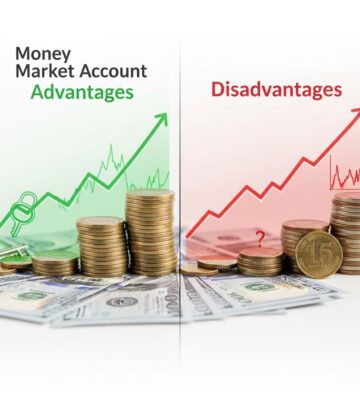
Advantages of Money Market Accounts
Money market accounts offer several compelling benefits for savers and investors:
- Higher Interest Rates: Money market accounts typically offer higher yields than traditional savings accounts, allowing your money to grow faster through compound interest.
- Liquidity: Your funds remain accessible without penalty, though there may be limits on the number of withdrawals per month. This makes them suitable for emergency funds or short-term savings goals.
- Safety: FDIC insurance protects your deposits up to $250,000, making money market accounts a secure place to store money compared to stocks or bonds.
- Check-Writing Capability: Unlike regular savings accounts, money market accounts often allow you to write checks, providing flexibility in accessing your funds.
- Debit Card Access: Many money market accounts come with debit cards for convenient ATM withdrawals and purchases.
- Low Risk: Money market accounts are considered very safe investments, making them appropriate for conservative investors or those saving for short-term goals.
- Flexibility: You can typically deposit additional funds whenever you want, and there’s no fixed term or maturity date.
Disadvantages of Money Market Accounts
Despite their advantages, money market accounts do have some limitations worth considering:
- Minimum Balance Requirements: Many accounts require substantial minimum deposits or balances to qualify for higher interest rates, which may not be feasible for all savers.
- Variable Interest Rates: Unlike certificates of deposit (CDs), the interest rate on money market accounts can change at any time, which means your earnings may fluctuate.
- Transaction Limitations: Federal regulations typically limit the number of withdrawals to six per month, which can be restrictive if you need frequent access.
- Fees: Some money market accounts charge monthly maintenance fees, ATM fees, or fees for falling below the minimum balance requirement.
- Lower Rates Than Money Market Funds: Money market accounts typically offer lower yields than money market mutual funds, though they provide more safety through FDIC insurance.
- Inflation Risk: If interest rates don’t keep pace with inflation, the purchasing power of your savings can decrease over time.
Money Market Accounts vs. Other Savings Options
| Account Type | Interest Rate | Liquidity | Safety | Check Writing | Minimum Balance |
|---|---|---|---|---|---|
| Money Market Account | Higher (variable) | High | FDIC Insured | Yes (limited) | Often Required |
| Regular Savings Account | Lower (variable) | High | FDIC Insured | No | Often None |
| Certificate of Deposit | Fixed (Higher) | Low (penalty for early withdrawal) | FDIC Insured | No | Often Required |
| Money Market Fund | Variable (Competitive) | High | No FDIC Insurance | Limited | Often Required |
| Checking Account | Very Low/None | Highest | FDIC Insured | Yes (Unlimited) | Varies |
Who Should Consider a Money Market Account?
Money market accounts are particularly well-suited for specific types of savers and investors. They work best for individuals who:
- Have accumulated savings they want to earn returns on without taking significant risk
- Are saving for a goal within the next two to five years
- Want to maintain emergency funds with easy access while earning competitive interest
- Have sufficient funds to meet minimum balance requirements
- Prefer FDIC insurance protection over potentially higher returns from riskier investments
- Need occasional access to funds but don’t require constant check-writing capabilities
- Are conservative investors seeking stability and safety
Money Market Account Interest Rates and Market Conditions
The interest rates offered on money market accounts are closely tied to broader economic conditions and Federal Reserve policy. When the Fed raises its benchmark interest rate, banks typically increase the rates they offer on money market accounts. Conversely, when the Fed cuts rates, money market account rates generally decline.
It’s important to note that money market account rates are variable, meaning your rate can change without notice. Banks have the flexibility to adjust rates based on market conditions, competitive pressures, and their funding needs. This contrasts with certificates of deposit, where your rate is locked in for the entire term of the account.
Regulatory Considerations and Withdrawal Limits
Money market accounts are subject to Regulation D, which was established by the Federal Reserve to manage the nation’s money supply. Historically, this regulation limited certain types of withdrawals to six per month. However, these restrictions were relaxed in 2020 and have been subject to ongoing regulatory changes. It’s important to check with your specific financial institution regarding their current withdrawal policies and any associated fees.
How to Choose a Money Market Account
When selecting a money market account, consider the following factors:
- Interest Rate: Compare APY rates across multiple institutions. Even small differences can significantly impact your earnings over time.
- Minimum Balance: Ensure you can comfortably meet the minimum balance requirement without difficulty.
- Fees: Look for accounts with minimal fees or no monthly maintenance charges. Watch for ATM fees, excess withdrawal fees, and balance requirement fees.
- Access and Convenience: Consider whether the institution offers online banking, mobile apps, and ATM access that meet your needs.
- FDIC Insurance: Verify that your deposits are FDIC insured, especially if considering multiple accounts at the same institution.
- Customer Service: Evaluate the quality and availability of customer support.
- Account Features: Compare features such as check-writing capabilities, debit card access, and transaction limits.
Frequently Asked Questions
What is the difference between a money market account and a money market fund?
A money market account is a bank deposit product with FDIC insurance protection, while a money market fund is an investment product with no FDIC insurance. Money market accounts offer check-writing privileges and stable value, whereas money market funds may offer higher yields but carry market risk.
Can I lose money in a money market account?
No, you cannot lose the principal amount in a money market account because it is FDIC insured up to $250,000. However, you may earn less interest if rates decline or if inflation rises faster than your interest rate.
How often do money market account rates change?
Money market account rates can change at any time. Banks typically adjust rates based on Federal Reserve decisions, market conditions, and competitive pressures. Some banks change rates weekly or monthly, while others change them less frequently.
Is there a limit to how much I can deposit in a money market account?
There is no regulatory limit on how much you can deposit in a money market account. However, FDIC insurance only covers up to $250,000 per depositor per institution, so excess amounts would not be insured.
Can I write unlimited checks on a money market account?
No, most money market accounts have restrictions on the number of checks you can write per month, typically ranging from three to ten checks per statement period. You can usually make unlimited ATM withdrawals.
Are money market accounts good for emergency funds?
Yes, money market accounts are excellent for emergency funds because they offer easy access to your money, FDIC insurance protection, and competitive interest rates while keeping your funds safe and liquid.
References
- Money Market Account Basics — Federal Deposit Insurance Corporation (FDIC). 2024. https://www.fdic.gov/resources/deposit-insurance/
- Regulation D – Reserve Requirements of Depository Institutions — Board of Governors of the Federal Reserve System. 2024. https://www.federalreserve.gov/monetarypolicy/reservereq.htm
- Understanding Bank Deposit Products — Consumer Financial Protection Bureau (CFPB). 2024. https://www.consumerfinance.gov/
- Interest Rate Environment and Banking Products — Office of the Comptroller of the Currency (OCC). 2024. https://www.occ.treas.gov/
- Comparing Savings and Investment Products — Securities and Exchange Commission (SEC). 2024. https://www.sec.gov/investor/
Similar Articles








Read full bio of medha deb