Money: Definition, 3 Functions, And 4 Main Types
Understanding money: Its definition, essential functions, and diverse types in modern economics.

Money is one of the most fundamental concepts in economics and finance, yet many people take its existence and utility for granted. At its core, money is anything that is widely accepted as payment for goods and services and can be used to settle debts. Money serves as the lifeblood of modern economies, facilitating transactions between individuals, businesses, and governments. Without money, commerce would rely entirely on bartering—directly exchanging goods or services for other goods or services—which is highly inefficient and limiting. Understanding what money is, how it functions, and the various forms it takes is essential for anyone seeking to comprehend economics, finance, and personal wealth management.
What Is Money?
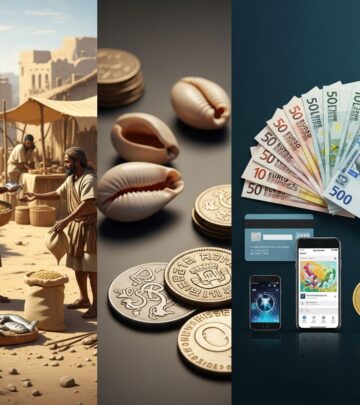
Money is a medium of exchange that has been universally accepted within an economy as payment for goods, services, and the settlement of debts. More formally, economists define money as any asset that serves three primary functions simultaneously: it acts as a medium of exchange, a store of value, and a unit of account. The evolution of money is a fascinating aspect of human civilization, as it has taken many forms throughout history, from shells and beads to metals, paper, and now digital currencies.
The key characteristic that makes something qualify as money is that it must be widely accepted and recognized by the members of society as a legitimate payment method. This acceptance is crucial because it creates the confidence and trust necessary for commerce to occur smoothly. When a shopkeeper accepts your payment, they do so with the confidence that they, in turn, can use that money to purchase items they need or desire.
The Three Essential Functions of Money
Money performs several critical functions within an economy, and understanding these functions helps explain why money is so vital to modern society.
1. Medium of Exchange
The primary function of money is to serve as a medium of exchange. This means money is universally accepted as payment for goods and services. Without money, individuals would need to engage in direct barter, where one person trades goods or services directly with another person who has exactly what they want and wants what they have. This creates what economists call the “double coincidence of wants” problem. For example, a farmer with chickens who wants shoes would need to find a shoemaker who not only needs chickens but also has shoes to trade. Money eliminates this inefficiency by allowing the farmer to sell chickens for money and then use that money to purchase shoes from anyone.
2. Store of Value
Money also functions as a store of value, meaning it can be saved and used at a later time without losing its purchasing power significantly. This function is particularly important because it allows individuals to defer consumption. Instead of immediately spending all their earnings, people can save money for future needs, retirement, or investments. However, the store-of-value function of money is not perfect, as inflation can erode purchasing power over time. When inflation rises, the money you save today may be worth less in the future, which is why savers often seek investments that provide returns above the inflation rate to preserve their wealth.
3. Unit of Account
The third function of money is serving as a unit of account. Money provides a common measure of value that allows prices to be expressed and compared consistently. Instead of stating prices in terms of different goods (e.g., “this shirt costs 5 chickens or 10 eggs”), money allows us to express all prices in the same metric (e.g., “this shirt costs $25”). This standardization makes it much easier for consumers to compare prices and for businesses to calculate costs and profits.
Types of Money
Throughout history and in modern economies, money has taken various forms. Understanding the different types of money is essential for comprehending how financial systems operate.
Commodity Money
Commodity money is money whose value comes from the material from which it is made. Historically, precious metals like gold and silver served as commodity money because they had intrinsic value—people valued them for their beauty, rarity, and usefulness in making jewelry and other items. The value of commodity money equals or is based on the value of the commodity itself. For instance, a gold coin’s value was originally tied to its weight in gold. Other forms of commodity money have included shells, beads, and even livestock in various cultures throughout history. The advantage of commodity money is that it has real value independent of government decree or public confidence, which provides a degree of stability.
Fiat Money
Fiat money, by contrast, is money that has been established as legal tender by a government but is not backed by any physical commodity. The word “fiat” comes from Latin, meaning “let it be done.” Fiat money has value primarily because the government declares it legal tender and people accept it based on their confidence in the government and the financial system. Most modern currencies, including the U.S. dollar, the euro, and the British pound, are fiat currencies. The value of fiat money is derived from the relationship between supply and demand, as well as public confidence in the currency. If confidence in a government erodes or if excessive amounts of fiat money are printed, its value can decline significantly, leading to inflation.
Representative Money
Representative money is a middle ground between commodity money and fiat money. It is a claim on a commodity that can be exchanged for that commodity. Historically, paper currency was often representative money because it could be exchanged for a specific amount of gold or silver held by the government. For example, under the gold standard, a $20 bill represented 20 gold dollars and could be exchanged for that amount of gold at any time. The advantage of representative money is that it maintains the stability associated with commodity money while providing the convenience of paper currency. However, most representative money systems have been abandoned in modern times, with countries moving to fiat currency systems.
Cryptocurrency and Digital Money
In recent years, new forms of money have emerged, particularly cryptocurrencies like Bitcoin and Ethereum, and various digital payment systems. Cryptocurrencies use cryptographic technology to secure transactions and control the creation of new units. While some cryptocurrencies are decentralized and not backed by any government, others are exploring digital versions of national currencies, known as Central Bank Digital Currencies (CBDCs). Digital money and cryptocurrencies represent an evolution in how money functions in the digital age, offering potential advantages such as faster transactions and reduced fraud, though they also present regulatory and stability challenges.
Characteristics of Effective Money
Not everything that has value can serve as money. Effective money must possess several key characteristics:
- Acceptability: Money must be widely accepted as payment within an economy. Without widespread acceptance, it cannot effectively function as a medium of exchange.
- Divisibility: Money should be easily divisible into smaller units to facilitate transactions of varying sizes. You cannot effectively use an indivisible item like a house as everyday money.
- Portability: Money should be relatively easy to carry and transport. This is why paper currency and digital money are more practical than rocks or other heavy items.
- Durability: Money must be able to withstand repeated use without deteriorating significantly. This is why metal coins and modern paper currency are preferable to perishable items.
- Scarcity: Money must be relatively scarce or limited in supply. If something is too abundant, its value diminishes. This is why sand or dirt cannot serve as money effectively.
- Standardization: Units of money should be standardized so that all coins or notes of the same denomination have identical value and appearance.
- Stability: The value of money should remain relatively stable over time. Extreme price volatility makes money unsuitable for storing value or calculating prices.
The Evolution of Money in Modern Economies
The history of money demonstrates how different societies have adapted the concept to meet their economic needs. From precious metals to government-issued fiat currency to today’s digital and cryptocurrency systems, money has continuously evolved. In modern economies, central banks like the Federal Reserve in the United States control the money supply and monetary policy to manage inflation, employment, and economic growth. Money in contemporary financial systems is not just physical currency but also includes bank deposits, credit, and other financial instruments that function like money in facilitating transactions.
Money Supply and Monetary Aggregates
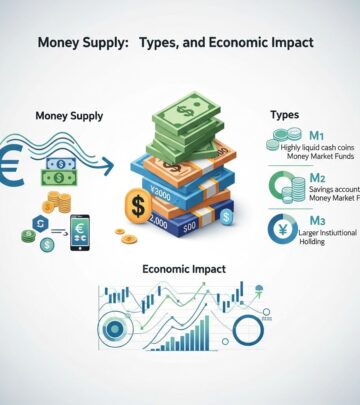
Economists and policymakers track different measures of the money supply, known as monetary aggregates. In the United States, the Federal Reserve tracks M1 (physical currency and immediately accessible bank deposits), M2 (M1 plus savings accounts and money market funds), and M3 (M2 plus other less liquid assets). Understanding these different measures helps policymakers implement appropriate monetary policy to achieve economic objectives such as price stability and full employment.
Frequently Asked Questions
Q: What is the difference between money and currency?
A: While often used interchangeably, money is a broader concept that refers to anything accepted as a medium of exchange, store of value, and unit of account. Currency specifically refers to money issued by a government or central bank, such as dollar bills or coins. All currency is money, but not all money is currency—for example, a check or digital payment can function as money without being currency.
Q: Why does fiat money have value if it is not backed by gold?
A: Fiat money has value because governments declare it legal tender, and people accept it based on confidence in the government and financial system. Its value is maintained by the limited supply and demand for it. As long as people believe they can exchange fiat money for goods and services, it maintains its value.
Q: Can cryptocurrency replace traditional money?
A: While cryptocurrencies have some advantages, complete replacement seems unlikely in the near term. Most cryptocurrencies lack the stability, widespread acceptance, and government backing of traditional fiat currencies. However, digital forms of national currencies and blockchain technology may play an increasing role in future financial systems.
Q: How does inflation affect the value of money?
A: Inflation reduces the purchasing power of money, meaning each unit of money buys fewer goods and services over time. If inflation rises to 5%, money saved today will have approximately 5% less purchasing power in a year, which is why savers seek returns above the inflation rate.
Q: What is the role of central banks in managing money?
A: Central banks like the Federal Reserve control the money supply, set interest rates, and implement monetary policy to manage inflation, promote employment, and maintain financial system stability. They also regulate commercial banks and provide banking services to the government.
References
- The Federal Reserve – Money Stock and Monetary Aggregates — Board of Governors of the Federal Reserve System. 2025. https://www.federalreserve.gov/datadownload/Choose.aspx?rel=H.6
- What is Money? Definition and Types — U.S. Mint. 2024. https://www.usmint.gov/about/production-sales-figures/circulating-coins-production
- Principles of Economics — National Bureau of Economic Research (NBER). 2023. https://www.nber.org
- Central Bank Digital Currencies: An Overview — Bank for International Settlements (BIS). 2024. https://www.bis.org/cpmi/publ/d174.pdf
- Understanding Monetary Policy — European Central Bank. 2024. https://www.ecb.europa.eu/explainers/tell-me-more/html/monetary_policy.en.html
Similar Articles








Read full bio of medha deb