Monetary Policy vs. Fiscal Policy: Key Differences
Understand how central banks and governments use monetary and fiscal policy to shape economic outcomes.
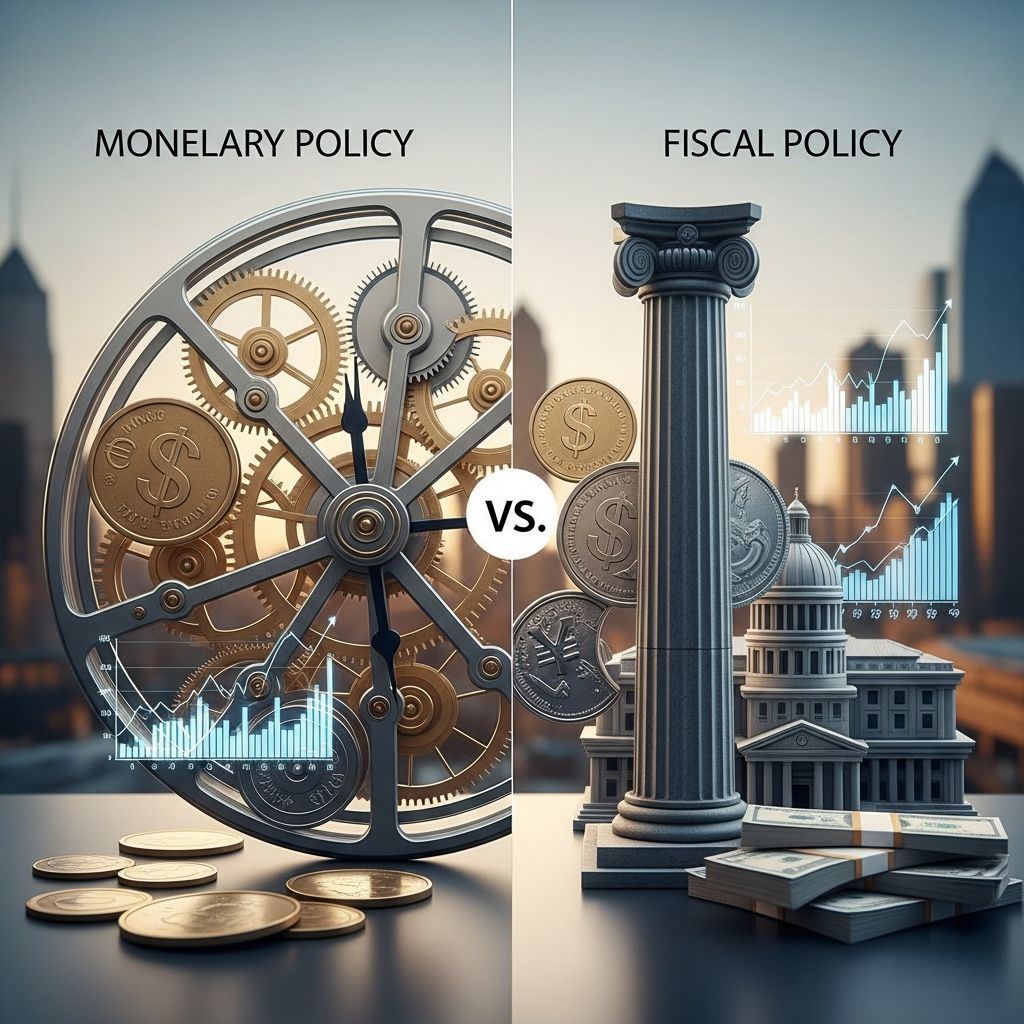
Monetary Policy vs. Fiscal Policy: Understanding the Differences
When policymakers seek to influence economic conditions, they have two primary tools at their disposal: monetary policy and fiscal policy. While both aim to achieve similar macroeconomic objectives such as stable prices, full employment, and sustainable economic growth, they operate through fundamentally different mechanisms and are controlled by different governmental institutions. Understanding the distinctions between these two policy approaches is essential for investors, business leaders, and anyone interested in how economies function and respond to external shocks.
Monetary policy refers to the actions of central banks, including the Federal Reserve in the United States, to achieve macroeconomic policy objectives through the management of the money supply and interest rates. In contrast, fiscal policy represents the tax and spending decisions made by national governments—in the U.S., determined by Congress and the Administration. Though these policies operate independently in many respects, they are most effective when coordinated to address economic challenges comprehensively.
What is Monetary Policy?
Definition and Core Mechanisms
Monetary policy is designed to influence the economy through deliberate adjustments to the money supply and interest rates. The central bank, such as the Federal Reserve, serves as the primary authority responsible for implementing monetary policy decisions. These decisions directly affect the cost of borrowing, the availability of credit, and ultimately, the level of economic activity throughout the nation.
The Federal Reserve’s primary tool is setting the target range for the federal funds rate, which is the interest rate at which commercial banks lend reserve balances to each other overnight. When the Federal Open Market Committee (FOMC) increases the fed funds rate, it places upward pressure on broader interest rates throughout the economy. Conversely, when this rate decreases, it creates downward pressure on interest rates generally. In addition to rate adjustments, the FOMC can influence interest rates by buying or selling securities through open market operations, with purchases placing downward pressure on rates and sales achieving the opposite effect.
Types of Monetary Policy
Monetary policy can be classified into two primary categories based on its intended economic effect:
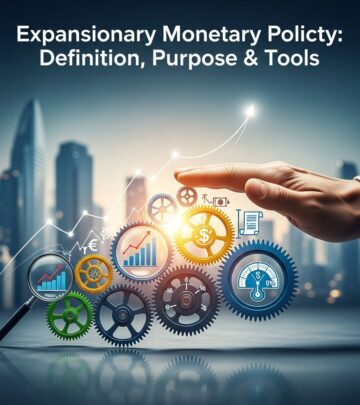
Expansionary Monetary Policy: This approach involves lowering interest rates and increasing the money supply to stimulate economic growth. By making borrowing cheaper and more accessible, expansionary monetary policy encourages both consumers and businesses to spend and invest, thereby boosting aggregate demand and economic activity. This type of policy is typically employed during economic downturns or recessions.
Contractionary Monetary Policy: Also known as tight or restrictive monetary policy, this approach involves raising interest rates and reducing the money supply to combat inflation. By increasing borrowing costs, contractionary policy discourages spending and investment, thereby reducing aggregate demand and cooling inflationary pressures. Central banks implement this strategy when inflation threatens economic stability.
What is Fiscal Policy?
Definition and Objectives
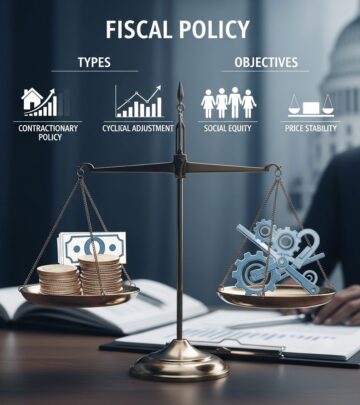
Fiscal policy represents the government’s approach to using budgetary tools—specifically spending and taxation—to influence the economic landscape. Unlike monetary policy, which is controlled by the central bank, fiscal policy is determined by Congress and the president, who work together to enact legislation. This allows fiscal policy to have a much more targeted effect on specific sectors and populations within the economy compared to the broader monetary policy approach.
The tools of fiscal policy include government spending levels, taxation rates, public debt management, subsidies and grants to specific industries, and automatic stabilizers that respond to economic conditions. Government spending can be directed toward infrastructure projects, education, defense, healthcare, and numerous other areas. Similarly, taxation can be structured progressively or regressively, targeting different income levels and economic activities.
Types of Fiscal Policy
Fiscal policy operates through two main approaches:
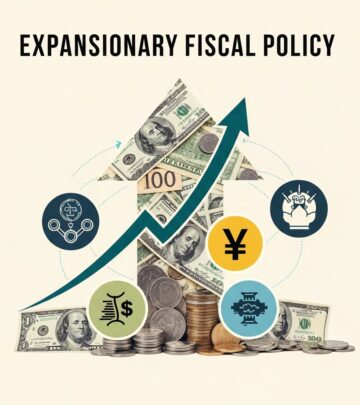
Expansionary Fiscal Policy: This involves increased government spending and lower taxes to boost aggregate demand in the economy. By putting money directly into people’s pockets through tax cuts or increasing government expenditure on projects and services, expansionary fiscal policy stimulates consumer spending and business investment during periods of economic weakness or recession.
Contractionary Fiscal Policy: When economic growth appears unsustainable and inflation threatens, governments may raise taxes and reduce spending to slow economic activity. This approach reduces the after-tax income available to consumers and businesses, thereby dampening spending and investment. Contractionary fiscal policy can also help governments reduce budget deficits that have accumulated during periods of high spending.
Key Differences Between Monetary and Fiscal Policy
Authority and Implementation
The most fundamental distinction between monetary and fiscal policy lies in who controls them. Monetary and fiscal policy are controlled by different sets of government officials. People who work for the Federal Reserve are responsible for monetary policy, while lawmakers—specifically Congress and the president—are in charge of fiscal policy. The Fed operates with considerable independence from the political process, allowing it to make decisions based primarily on economic data and long-term objectives rather than short-term political considerations.
This institutional separation reflects the principle that monetary policy should be insulated from political pressures that might lead to short-term economic stimulus at the expense of long-term stability. In contrast, fiscal policy is inherently political, as lawmakers must balance economic considerations with broader social objectives, constituent interests, and ideological preferences.
Mechanisms and Tools
The primary difference between fiscal and monetary policy is found in the meaning of the names themselves. Monetary refers to the supply of money, or the amount of purchasing power available in the economy. Fiscal implies the budget, or how money will be spent and collected. Monetary policy operates through indirect channels—adjusting interest rates and the money supply to influence borrowing costs and credit availability. Fiscal policy operates through direct channels—immediately injecting or withdrawing money from the economy through government spending and taxation.
Speed of Implementation and Impact
The lag between implementation and results represents the Achilles’ heel of both types of policy. Monetary policy typically produces results more quickly than fiscal policy. When the Federal Reserve adjusts interest rates, financial markets respond almost immediately, and the effects on borrowing and spending cascade through the economy relatively rapidly. However, monetary policy’s effects can take several quarters to fully manifest in employment and inflation data.
Fiscal policy typically experiences longer implementation lags because legislative processes require time—Congress must debate, propose, and vote on legislation before changes take effect. Once implemented, however, fiscal policy can have more direct and targeted effects on specific sectors or populations. For example, a government spending increase on infrastructure projects creates jobs immediately, whereas interest rate cuts affect employment more indirectly through reduced borrowing costs.
How Monetary and Fiscal Policies Work Together
Complementary Roles
Monetary and fiscal policy are most effective when used together. Their complementary nature becomes evident when examining how they address economic challenges. During economic downturns, expansionary policies work in tandem: monetary policy can boost the money supply and cut interest rates, making it easier for individuals and companies to borrow money. Simultaneously, fiscal policy can put money directly into people’s pockets either by cutting taxes or increasing government expenditure. This combined approach provides more robust stimulus than either policy could achieve independently.
Similarly, when the government seeks to bring inflation under control, monetary policy can help shrink the money supply and increase interest rates, making borrowing more costly, while fiscal policy can reduce the after-tax income of individuals and businesses to lower spending. This coordinated approach creates a powerful deflationary effect that neither policy alone could achieve as effectively.
Challenges in Coordination
Despite their potential for coordination, monetary and fiscal policy frequently operate without formal coordination. The Federal Reserve makes its own decisions regarding monetary policy by considering various indicators of expected inflation, the state of the business cycle, and employment conditions, while taking into account the government’s fiscal stance. However, with rare exceptions, there has never been systematic coordination between the two policies. The Fed’s independence means it may pursue tight monetary policy while the government pursues expansionary fiscal policy, or vice versa, potentially creating conflicting signals in the economy.
Impact on Economic Growth and Inflation
Influence on Inflation
Both monetary and fiscal policy significantly influence inflation dynamics. Expansionary monetary and fiscal policy can place upward pressure on prices by increasing the money supply and providing both individuals and businesses with higher after-tax income. When more money chases the same amount of goods and services, prices tend to rise. This inflation risk explains why policymakers must carefully balance growth objectives against price stability.
Conversely, contractionary monetary and fiscal policy can help dampen increases in the price level by reducing the money supply and cutting after-tax income of consumers and corporations. By restraining aggregate demand, these policies cool inflationary pressures but may also slow economic growth and potentially increase unemployment.
Long-term Effectiveness
The relative effectiveness of monetary versus fiscal policy depends significantly on the time horizon. In the short term, monetary policy is more effective at stimulating the economy because interest rate changes are implemented quickly and affect borrowing decisions almost immediately. In contrast, fiscal policy is better at creating long-term, structural changes in the economy because government spending on infrastructure, education, and research can build productive capacity that generates benefits for years or decades.
This distinction suggests that policymakers should use monetary policy for short-term stabilization and fiscal policy for long-term structural improvements. A stimulative monetary policy is expected to improve the economy’s rate of growth of output in the quarters ahead, while stimulative fiscal policies through tax cuts and spending increases are normally expected to stimulate economic growth, particularly in the short run.
Real-World Applications and Examples
Responding to Economic Downturns
When economies face slowdowns, central banks and governments employ both policies together. In 2001, for example, when the U.S. economy was slowing, the Federal Reserve made 11 reductions in the overnight interbank interest rate (federal funds rate) to stimulate growth in the face of the weakening economy. Simultaneously, the government could implement fiscal stimulus through tax cuts or increased spending to reinforce the monetary expansion.
During economic downturns, the government might implement expansionary fiscal policy by increasing spending and cutting taxes to stimulate demand, while the central bank simultaneously lowers interest rates to encourage borrowing and investment. This combined approach provides more robust stimulus than either policy alone.
Managing Overheating Economies
Conversely, when economies risk overheating, both policies tighten. In 1999 and 2000, when the U.S. economy experienced rapid growth and potentially unsustainable expansion without inflation acceleration, the Federal Reserve raised federal funds rates in an effort to slow the overheated economy. Had inflation concerns been more acute, fiscal policy could have complemented these efforts through spending cuts or tax increases.
Frequently Asked Questions
Q: What is the main difference between monetary policy and fiscal policy?
A: Monetary policy is designed to influence the economy through the money supply and interest rates, while fiscal policy involves taxation and government expenditure. Monetary policy is controlled by central banks like the Federal Reserve, whereas fiscal policy is controlled by Congress and the president.
Q: Which is more effective: monetary policy or fiscal policy?
A: It depends on the time frame. In the short term, monetary policy is more effective, whereas fiscal policy is better at creating long-term, structural changes in the economy. For immediate stimulus, monetary tools like interest rate cuts work quickly; for lasting economic improvements, fiscal investments in infrastructure and education prove more valuable.
Q: How do monetary and fiscal policies work together?
A: Monetary and fiscal policy are most effective when coordinated. During downturns, expansionary monetary policy (lower rates) combined with expansionary fiscal policy (spending increases or tax cuts) provides stronger stimulus than either alone. Similarly, during inflation, contractionary versions of both policies work together to cool the economy.
Q: Who implements monetary policy?
A: The Federal Reserve, specifically the Federal Open Market Committee (FOMC), implements monetary policy in the United States. They adjust interest rates and manage the money supply to achieve price stability, full employment, and stable economic growth.
Q: Who implements fiscal policy?
A: Fiscal policy is implemented by Congress and the President of the United States through legislation that establishes tax rates, government spending levels, and budgetary priorities. The Federal Reserve plays no role in determining fiscal policy.
Q: What are the lag times for monetary and fiscal policy?
A: Monetary policy typically has shorter implementation lags because the Federal Reserve can adjust interest rates relatively quickly, though effects take time to propagate. Fiscal policy has longer implementation lags due to the legislative process, but once implemented, can have more direct and immediate effects on spending and employment.
References
- Monetary Policy vs. Fiscal Policy: Understanding the Differences — Business Insider. https://www.businessinsider.com/personal-finance/investing/monetary-policy-vs-fiscal-policy
- What is the difference between fiscal and monetary policy? — Federal Reserve Bank of San Francisco. 2002-03. https://www.frbsf.org/research-and-insights/publications/doctor-econ/2002/03/fiscal-monetary-policy/
- Monetary Policy vs. Fiscal Policy — Financial Edge. 2025-03-04. https://www.fe.training/free-resources/economics/monetary-policy-vs-fiscal-policy/
- What is the difference between monetary policy and fiscal policy, and how are they related? — Federal Reserve. https://www.federalreserve.gov/faqs/money_12855.htm
- The Difference between Fiscal and Monetary Policy — Federal Reserve Bank of St. Louis. 2018-10. https://www.stlouisfed.org/open-vault/2018/october/difference-between-fiscal-monetary-policy
Similar Articles








Read full bio of Sneha Tete