Monetary Policy Tools: 7 Key Instruments And How They Work
Explore how central banks use monetary policy tools to manage the economy and control inflation.

Understanding Monetary Policy Tools and Their Impact on the Economy
Monetary policy represents one of the most powerful mechanisms available to central banks for influencing economic activity, managing inflation, and promoting financial stability. The Federal Reserve and other central banks employ a variety of sophisticated tools to control the money supply, adjust interest rates, and guide the economy toward their policy objectives. These instruments allow policymakers to respond to changing economic conditions, whether stimulating growth during recessions or cooling an overheating economy to combat inflation.
The effectiveness of monetary policy depends on how well central banks coordinate their tools and communicate their intentions to financial markets and the public. Understanding these mechanisms is essential for investors, business leaders, and anyone seeking to comprehend how monetary decisions ripple through the financial system and affect everyday economic life.
What Is Monetary Policy?
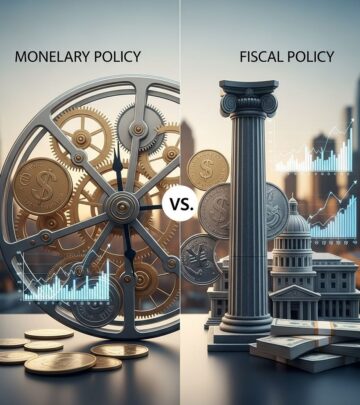
Monetary policy is the process by which a central bank manages the supply of money and credit in an economy to achieve specific economic objectives. These objectives typically include maintaining price stability, promoting maximum employment, and fostering sustainable economic growth. Unlike fiscal policy, which involves government spending and taxation decisions, monetary policy operates through the central bank’s control of the money supply and interest rates.
The Federal Reserve, as the United States’ central bank, has established a dual mandate that guides its policy decisions: achieving stable prices and promoting maximum employment. To accomplish these goals, the Fed employs a comprehensive toolkit of monetary policy instruments that allow it to influence financial conditions throughout the economy. The effectiveness of these tools depends on their proper implementation and coordination with broader economic trends.
The Primary Goals of Monetary Policy
Central banks pursue several interconnected objectives through their monetary policy framework. The primary goals include:
Price Stability: Maintaining inflation at a low and stable level protects purchasing power and reduces economic uncertainty. Most central banks target inflation rates around 2 percent annually.
Full Employment: While central banks cannot directly create jobs, they can influence employment through policies that encourage economic growth and business investment.
Economic Growth: By managing credit availability and interest rates, central banks support sustainable economic expansion.
Financial System Stability: Central banks monitor banking system health and take action to prevent financial crises.
Key Monetary Policy Tools
Open Market Operations (OMOs)
Open market operations represent the most frequently used tool of monetary policy. Through OMOs, the Federal Reserve buys and sells government securities, including Treasury bonds and notes, in the open market. These transactions directly influence the money supply and interest rates throughout the financial system.
When the Fed purchases government securities, it injects money into the banking system, increasing the money supply and lowering interest rates. This expansionary action encourages banks to lend more freely to consumers and businesses, stimulating borrowing and spending. Conversely, when the Fed sells government securities, it removes money from the banking system, decreasing the money supply and pushing interest rates higher. This contractionary action discourages borrowing and spending, helping to combat inflation.
Open market operations work through the Federal Reserve’s interactions with primary dealers—large financial institutions authorized to trade directly with the Fed. These operations can be executed relatively quickly and with precision, making OMOs the preferred instrument for implementing day-to-day monetary policy adjustments.
The Discount Rate and Discount Window
The discount rate is the interest rate the Federal Reserve charges commercial banks when they borrow directly from the Fed’s “discount window.” This tool serves as a backstop mechanism for the banking system, providing emergency liquidity to institutions facing temporary funding difficulties.
When the Fed lowers the discount rate, it becomes cheaper for banks to borrow from the Fed, encouraging them to extend more credit to their customers. Raising the discount rate increases the cost of borrowing from the Fed, discouraging excessive lending and helping to control inflation. The discount rate typically sits above the federal funds rate target, creating an incentive for banks to first seek funds in the interbank lending market before turning to the discount window.
The discount window operates as a safety valve for the banking system, ensuring that liquidity crises don’t spiral into broader financial instability. During financial emergencies, the Fed can adjust the discount rate and relax lending terms to provide essential support to the banking sector.
Reserve Requirements
Reserve requirements mandate the percentage of deposits that commercial banks must hold in reserve rather than lend out. By adjusting these requirements, the Federal Reserve can influence the amount of money available for lending in the economy.
Lowering reserve requirements allows banks to lend a greater portion of their deposits, increasing the money supply and lowering interest rates. Raising reserve requirements forces banks to hold more funds in reserve, reducing their lending capacity and contracting the money supply. This tool directly impacts bank lending behavior and the availability of credit throughout the economy.
Reserve requirements serve both monetary policy and prudential purposes, helping ensure that banks maintain adequate capital buffers to weather unexpected losses or deposit withdrawals. However, the Fed rarely uses changes to reserve requirements as a primary monetary policy tool due to the dramatic effects such changes can have on the financial system.
Interest on Reserve Balances (IORB)
The Federal Reserve pays interest on the reserves that commercial banks hold at the Fed. By adjusting this interest rate, the central bank influences how much banks are willing to lend versus hold in reserves.
Increasing the interest paid on reserve balances makes it more attractive for banks to hold reserves at the Fed rather than lend those funds out, reducing the money supply and raising interest rates. Decreasing the interest on reserves makes lending more attractive relative to holding reserves, encouraging banks to increase lending and lower interest rates. This tool has become increasingly important in modern monetary policy, particularly since the 2008 financial crisis when the Fed maintained very low rates to encourage lending.
The Federal Funds Rate
The federal funds rate represents the interest rate at which commercial banks lend reserve balances to each other overnight. While the Fed cannot directly control this rate, it can influence it through its policy tools by establishing a target range and using open market operations to steer market rates toward the target.
The federal funds rate serves as a benchmark for many other short-term interest rates in the economy, including rates on credit cards, home equity lines of credit, and adjustable-rate mortgages. By influencing the federal funds rate, the Fed effectively influences borrowing costs throughout the financial system. Changes to the federal funds rate are typically the most visible and widely-reported aspect of Federal Reserve policy.
Quantitative Easing (QE)
Quantitative easing involves large-scale purchases of longer-term financial assets, such as government bonds and mortgage-backed securities, by the central bank. This tool becomes particularly important when conventional monetary policy tools have become ineffective because interest rates are already near zero.
Through quantitative easing, central banks inject liquidity directly into financial markets and reduce the yields on longer-term securities, encouraging investors and businesses to take on more risk and spend capital. QE programs expand the central bank’s balance sheet significantly and aim to support credit markets when traditional lending mechanisms aren’t functioning properly. The Fed employed extensive quantitative easing programs following the 2008 financial crisis and again during the COVID-19 pandemic.
Forward Guidance and Communications
Modern monetary policy increasingly relies on forward guidance—explicit or implicit statements about the Fed’s future policy intentions. By communicating expected future policy paths, the Fed can influence market expectations and financial conditions even before implementing actual policy changes.
When the Fed signals that interest rates will remain low for an extended period, for example, investors adjust their expectations and borrowing costs decline immediately, even before rates actually fall. Conversely, signals about future rate increases can prompt borrowers to accelerate borrowing before rates rise. Effective communication amplifies the impact of monetary policy tools and helps the Fed shape economic expectations.
How Monetary Policy Tools Differ: Expansionary vs. Contractionary
Expansionary Monetary Policy
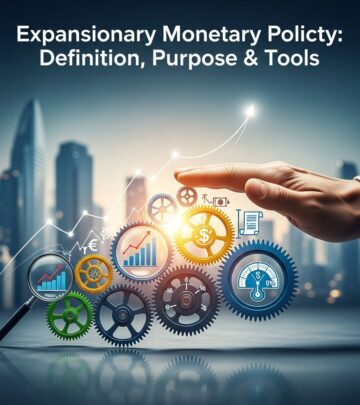
Expansionary monetary policy aims to stimulate economic growth and combat recession by increasing the money supply and lowering interest rates. Central banks deploy expansionary policies when the economy is underperforming, unemployment is high, and growth is sluggish.
Tools used in expansionary policy include:
– Lowering the federal funds rate target to reduce borrowing costs
– Purchasing government securities through open market operations to inject money into the system
– Reducing reserve requirements to enable greater bank lending
– Decreasing the discount rate to encourage borrowing from the Fed
– Initiating quantitative easing programs to provide additional stimulus when conventional tools are exhausted
Contractionary Monetary Policy
Contractionary monetary policy aims to slow economic growth and combat inflation by decreasing the money supply and raising interest rates. Central banks employ contractionary policies when inflation is rising, the economy is overheating, and prices are increasing too rapidly.
Tools used in contractionary policy include:
– Raising the federal funds rate target to increase borrowing costs
– Selling government securities through open market operations to remove money from the system
– Increasing reserve requirements to reduce bank lending capacity
– Raising the discount rate to make Fed borrowing more expensive
– Reducing or halting asset purchases to shrink the central bank’s balance sheet
The Transmission Mechanism: How Monetary Policy Affects the Real Economy
Monetary policy doesn’t directly affect production, employment, or prices. Instead, it works through a transmission mechanism—the channels through which monetary policy changes influence economic activity. Understanding this process is crucial for grasping why monetary policy works with significant lags and variable effectiveness.
The transmission mechanism operates through several key channels. First, interest rate changes affect borrowing costs for consumers and businesses. Lower rates make borrowing cheaper, encouraging households to purchase homes and cars while businesses invest in equipment and facilities. Higher rates have the opposite effect, discouraging borrowing and spending.
Second, monetary policy affects asset prices through wealth effects. Lower interest rates increase the present value of future corporate earnings, boosting stock prices and increasing household wealth. Wealthier households spend more, stimulating economic growth. Rising rates compress asset valuations, reducing wealth and spending.
Third, monetary policy influences expectations about future inflation and economic conditions. If the central bank credibly commits to maintaining price stability, inflation expectations remain anchored even as temporary price pressures emerge. This reduces the actual inflation that occurs.
These transmission channels work with long and variable lags, typically taking six months to two years for the full effects of monetary policy changes to work through the economy. This lag structure creates significant challenges for policymakers attempting to fine-tune economic activity.
Challenges and Limitations of Monetary Policy
Despite their sophisticated toolkit, central banks face numerous constraints when implementing monetary policy. The zero lower bound problem occurs when interest rates reach zero—the lowest practical level—and cannot go lower. At this point, further monetary stimulus requires unconventional tools like quantitative easing.
Monetary policy also faces effectiveness constraints when the financial system is severely damaged. During financial crises, even very low interest rates may fail to stimulate lending if banks are reluctant to extend credit due to concerns about borrower quality or their own capital positions.
Additionally, monetary policy cannot address structural economic problems like technological disruption, demographic shifts, or supply chain constraints. These issues often require fiscal policy solutions or structural reforms. Central banks must coordinate with governments to address complex economic challenges effectively.
Historical Examples of Monetary Policy Implementation
The 2008 financial crisis demonstrated the importance of aggressive monetary policy intervention. As credit markets froze and the economy contracted sharply, the Federal Reserve quickly lowered the federal funds rate to near zero and deployed quantitative easing on an unprecedented scale, purchasing over $1 trillion in assets. These actions stabilized financial markets and provided essential liquidity to the banking system.
More recently, the COVID-19 pandemic prompted emergency monetary policy responses as economic activity ground to a halt. The Fed slashed rates to zero, expanded quantitative easing significantly, and deployed numerous lending facilities to support credit markets and the real economy. These rapid interventions helped prevent financial system collapse and supported economic recovery.
Frequently Asked Questions
Q: Why does the Federal Reserve adjust monetary policy?
A: The Fed adjusts monetary policy to achieve its dual mandate of promoting maximum employment and stable prices. By managing interest rates and the money supply, the Fed influences economic growth, employment levels, and inflation.
Q: How does open market operations work exactly?
A: In open market operations, the Fed buys or sells government securities with primary dealers. When buying securities, the Fed injects money into the banking system, increasing money supply and lowering rates. When selling, the Fed removes money, decreasing supply and raising rates.
Q: What is quantitative easing and when is it used?
A: Quantitative easing involves large-scale purchases of longer-term assets by the central bank. It’s used when conventional tools like interest rate cuts become ineffective because rates are already near zero, typically during severe recessions or financial crises.
Q: How does monetary policy affect my mortgage rate?
A: The Fed’s policy rate influences short-term rates, which eventually affect long-term mortgage rates. When the Fed lowers rates, mortgage rates typically decline, making borrowing cheaper. When rates rise, mortgage costs increase.
Q: Can monetary policy eliminate recessions?
A: Monetary policy can reduce recession severity and duration, but it cannot eliminate all recessions. Some economic downturns result from structural factors or external shocks that monetary policy alone cannot address. Coordination with fiscal policy is often necessary.
Q: What is the difference between monetary and fiscal policy?
A: Monetary policy involves central bank control of money supply and interest rates. Fiscal policy involves government spending and taxation decisions. Both tools influence the economy but through different mechanisms.
References
- Policy Tools — Federal Reserve Board. 2024-05-20. https://www.federalreserve.gov/monetarypolicy/policytools.htm
- How the Fed Implements Monetary Policy with Its Tools — Federal Reserve Bank of St. Louis. https://www.stlouisfed.org/in-plain-english/the-fed-implements-monetary-policy
- What Is Monetary Policy And Its Tools? — Hantec Markets. https://hmarkets.com/learn-to-trade/macroeconomics/monetary-policy/
- How Monetary Policy Works: Main Types of Monetary Policy — MasterClass. 2025. https://www.masterclass.com/articles/monetary-policy-explained
- Monetary Policy: Stabilizing Prices and Output — International Monetary Fund. https://www.imf.org/en/publications/fandd/issues/series/back-to-basics/monetary-policy
- Introduction to U.S. Economy: Monetary Policy — U.S. Congress. https://www.congress.gov/crs-product/IF11751
Similar Articles








Read full bio of medha deb