Monarch Money vs YNAB: Top Budget Apps Compared
Discover which budgeting app suits your needs: Monarch Money's holistic tracking or YNAB's strict zero-based method for financial control.
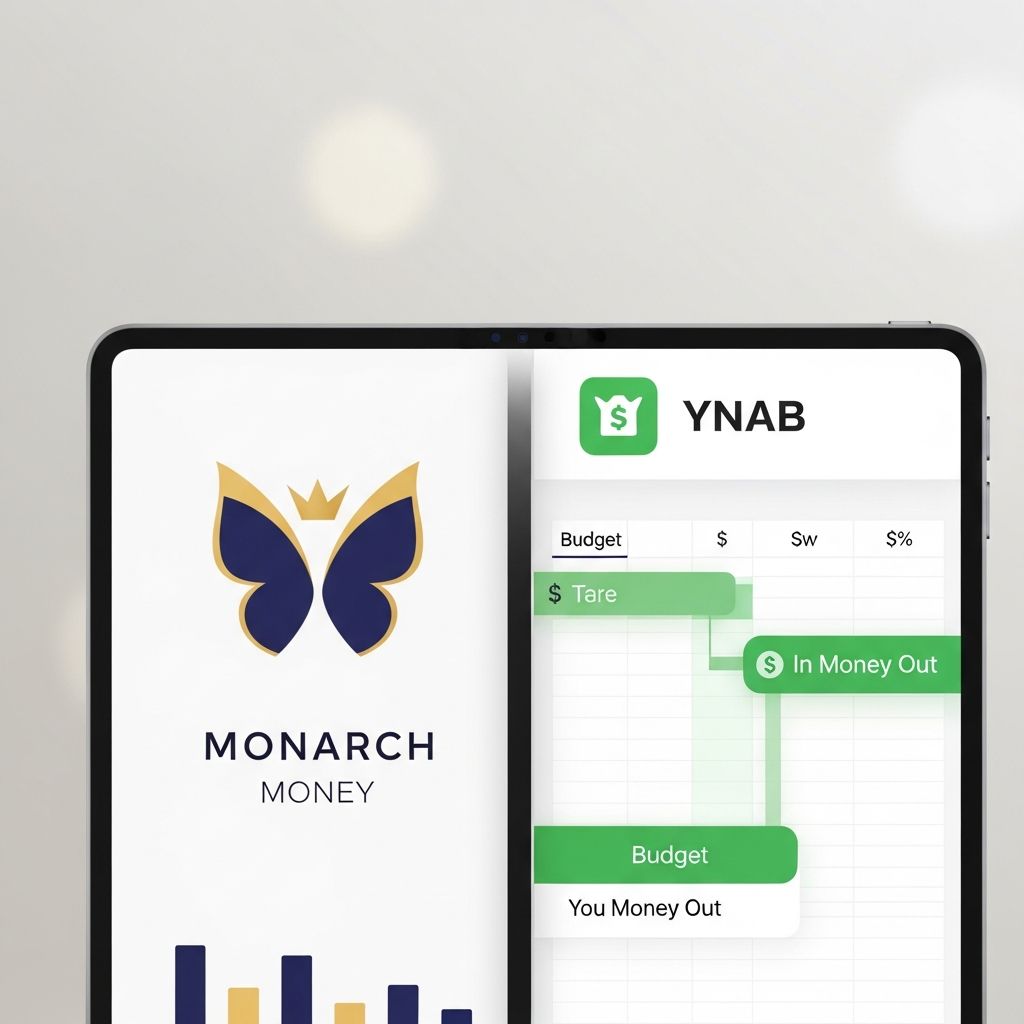
Monarch Money and YNAB stand out as leading budgeting tools in 2026, each offering distinct paths to financial clarity. Monarch emphasizes comprehensive visibility across accounts, investments, and net worth, while YNAB enforces disciplined zero-based budgeting to transform spending habits. This in-depth analysis breaks down their strengths, weaknesses, and best use cases to help you select the ideal app for your financial journey.
Core Budgeting Philosophies: Flexibility vs Discipline
At their heart, these apps diverge in approach. Monarch Money adopts a cash flow tracking model, allowing users to set custom spending limits and monitor progress flexibly. It supports simple frameworks like dividing expenses into needs, wants, and savings, making it accessible for those seeking oversight without rigidity.
YNAB, conversely, champions zero-based budgeting, where every incoming dollar must be assigned to a specific category before spending. Overspending in one area requires reallocating from another, promoting proactive decision-making and accountability. This method excels at breaking cycles of living paycheck-to-paycheck and accelerating debt reduction.
For users prioritizing behavioral change and precise control, YNAB’s structure delivers proven results in fostering mindful habits. Monarch suits those desiring a broader financial snapshot with minimal daily input.
Comprehensive Feature Breakdown
Both apps sync with banks and categorize transactions automatically, but their feature sets cater to different priorities.
- Account Syncing and Categorization: Monarch connects to over 11,200 institutions via multiple aggregators (Plaid, Finicity, MX), achieving about 85% reliability and allowing fallback options if one fails. YNAB relies on Plaid, MX, and TrueLayer, though users note occasional issues with regional banks.
- Investment and Net Worth Tracking: Monarch shines here, providing performance analytics, asset allocation charts, and historical net worth trends. YNAB omits this, focusing solely on liquid cash to avoid tempting users to dip into long-term savings.
- Goals and Planning: Monarch’s goals feature enables visual tracking of long-term objectives alongside budgets. YNAB integrates goals within its assignment system but emphasizes short-term category funding.
- Reporting and Dashboards: Monarch offers modern, intuitive dashboards for spending trends and net worth overviews. YNAB’s reports are detailed for budget performance but lack investment insights.
| Feature | Monarch Money | YNAB |
|---|---|---|
| Bank Sync Reliability | High (multiple aggregators) | Moderate (occasional disconnects) |
| Investment Tracking | Full analytics & charts | Not available |
| Custom Categories | Flexible limits | Zero-based assignments |
| Net Worth View | Comprehensive | Budget-focused only |
| Debt Tools | Basic tracking | Advanced payoff planning |
User Experience and Learning Curve
Monarch Money’s interface feels premium and user-friendly, with automatic categorization reducing setup time. Users can gain immediate value, ideal for couples or investors monitoring holistic finances. Its lower learning curve appeals to those wanting quick insights without steep onboarding.
YNAB demands more commitment, often taking 2-4 months to master. The methodology requires a mindset shift, especially around credit card handling and real-time adjustments. However, its educational resources, workshops, and community support build lasting skills, making it transformative for beginners in budgeting.
For daily maintenance, Monarch requires less intervention post-setup, while YNAB’s hands-on nature ensures active engagement with your money.
Pricing and Value in 2026
Both operate on subscription models with free trials. Monarch costs $14.99 monthly or $99.99 annually (7-day trial). YNAB matches at $14.99 monthly or $109 yearly (34-day trial, free for college students). Monarch edges out on annual savings, but YNAB’s longer trial and student perk add appeal.
Value hinges on needs: Monarch justifies its price through all-in-one visibility; YNAB through discipline-building tools and support.
Ideal Users and Real-World Scenarios
Choose Monarch Money if:
- You track investments, net worth, or multiple accounts.
- Couples need shared dashboards for joint planning.
- You prefer flexible tracking over strict rules.
- Big-picture clarity is your goal.
Choose YNAB if:
- You’re tackling debt or irregular income.
- You seek structured spending control.
- Behavioral change and education matter most.
- Every-dollar accountability drives you.
In tests spanning years, users praise Monarch for its ‘financial hub’ feel and YNAB for unmatched budgeting rigor.
Potential Drawbacks and Workarounds
No app is flawless. Both face sync glitches, requiring initial transaction reviews. Monarch lacks YNAB’s debt-specific coaching; YNAB misses investment depth. Workarounds include manual entries or complementary tools for gaps.
Migrating Between Apps
Switching? Export CSV data from one and import to the other. Expect a week’s cleanup for categorizations. YNAB users moving to Monarch appreciate reduced micromanagement; Monarch switchers to YNAB value the discipline.
Advanced Considerations for High Earners
For those with $1M+ net worth, neither fully addresses tax optimization or estate planning—consider specialized platforms alongside. Both handle high-income cash flow well, but pair with advisors for complexity.
Frequently Asked Questions (FAQs)
Which app is better for couples?
Monarch excels with collaborative features and shared net worth views.
Does YNAB track investments?
No, it focuses on spendable cash only.
Is Monarch Money cheaper?
Slightly on annual plans ($99.99 vs $109).
Can I try both free?
Yes, Monarch (7 days), YNAB (34 days).
Best for debt payoff?
YNAB’s method prioritizes it effectively.
Final Thoughts on Choosing Your Budgeting Partner
Monarch Money offers a sleek, all-encompassing view for modern finances, while YNAB builds unshakeable habits through rigor. Assess your goals—holistic tracking or strict control—and trial both to decide. In 2026, either can elevate your money management when matched right.
References
- Consumer Financial Protection Bureau: Personal Financial Management Tools — U.S. Government (CFPB). 2025-06-15. https://www.consumerfinance.gov/data-research/research-reports/personal-financial-management-tools/
- Federal Reserve Report on Digital Budgeting Apps — Board of Governors of the Federal Reserve System. 2024-11-20. https://www.federalreserve.gov/publications/files/2024-digital-budgeting-tools-report.pdf
- Journal of Consumer Research: Zero-Based Budgeting Efficacy — Oxford University Press. 2023-09-01. https://doi.org/10.1093/jcr/ucad045
- FINRA Investor Education on Budget Tracking — Financial Industry Regulatory Authority. 2025-03-10. https://www.finra.org/investors/personal-finance/budgeting-apps
- FTC Guidelines for Financial Aggregators — Federal Trade Commission. 2024-12-05. https://www.ftc.gov/business-guidance/privacy-security/data-security/financial-aggregators
Similar Articles








Read full bio of medha deb