Mode in Statistics: Definition, Formula & Examples
Master the mode: Learn how to find the most frequently occurring value in any dataset.

What Is Mode?
Mode is a fundamental statistical measure that identifies the value appearing most frequently in a dataset. Unlike the mean, which calculates the average of all values, or the median, which finds the middle point of ordered data, the mode simply represents what appears most often. This straightforward approach makes mode particularly valuable when analyzing categorical data, preference patterns, and real-world distributions where the most common occurrence matters more than mathematical averages.
In statistics, mode serves as one of the three primary measures of central tendency, alongside mean and median. While the mean provides an overall average and the median identifies the middle value, the mode reveals the most typical or popular item in any given dataset. This distinction becomes critical when dealing with data that doesn’t follow normal distributions or when analyzing non-numerical categories.
Understanding Mode: Key Characteristics
Definition and Basic Calculation
The mode represents the value that occurs most frequently within a dataset. To find the mode, you simply count how many times each value appears and identify which value has the highest frequency. For instance, in the dataset [1, 2, 2, 3, 4], the number 2 appears twice while all other numbers appear only once, making 2 the mode. This simplicity makes mode accessible to anyone, regardless of mathematical background.
Calculating the mode requires no complex formulas or computational steps. You need only to organize your data and count frequencies. This accessibility distinguishes mode from other measures that may require more sophisticated mathematical operations or calculations.
Types of Datasets Based on Mode Distribution
Datasets display different modal characteristics depending on their frequency patterns. Understanding these distinctions helps analysts interpret data more accurately and select appropriate analytical approaches.
| Dataset Type | Definition | Example |
|---|---|---|
| Unimodal | A dataset with exactly one mode | [1, 2, 2, 3, 4] — mode is 2 |
| Bimodal | A dataset with two modes occurring with equal frequency | [1, 2, 2, 3, 3, 4] — modes are 2 and 3 |
| Multimodal | A dataset with more than two modes | [1, 2, 2, 3, 3, 4, 4] — modes are 2, 3, and 4 |
| No Mode | A dataset where no value repeats | [1, 2, 3, 4, 5] — no mode exists |
Mode vs. Mean vs. Median: Understanding the Differences
The three measures of central tendency serve different purposes and work best under different circumstances. Understanding when to use each measure is crucial for accurate data analysis.
Mean (Average)
The mean calculates the average of all values by summing them and dividing by the count. While mean provides a mathematical representation of central tendency, it becomes unreliable when datasets contain extreme values or outliers. For example, in a dataset of household incomes [30000, 35000, 40000, 1000000], the mean of $276,250 doesn’t represent typical household income because one extreme value distorts the average.
Median (Middle Value)
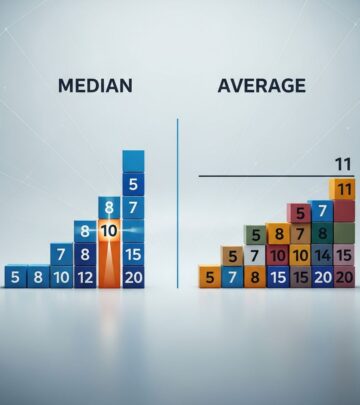
The median identifies the middle value when data is arranged in order. For datasets with an odd number of values, the median is the middle point; for even-numbered datasets, it’s typically the average of the two middle values. The median works well with ordinal data and resists the influence of extreme outliers, making it more representative than the mean in skewed distributions.
Mode (Most Frequent Value)
The mode identifies what appears most often, making it the only appropriate measure for categorical data. When analyzing preferences, product choices, or any nominal data, only mode applies. Mode also becomes valuable when you need to understand the most common occurrence rather than a mathematical average or middle point.
Practical Applications of Mode
Mode has numerous real-world applications across various industries and fields where understanding the most common value drives business and research decisions.
Retail and E-Commerce
Retailers use mode analysis to identify their best-selling products, most popular sizes, or preferred colors. By understanding which items customers purchase most frequently, retailers can optimize inventory management, ensuring adequate stock of popular items while reducing overstock of slow-moving products. This application directly impacts profitability and customer satisfaction.
Education and Assessment
Educational administrators analyze test scores using mode to identify which answers students most commonly selected or which performance levels appear most frequently. Teachers use this information to understand which concepts students grasp well and which require additional instruction. Mode helps identify whether student performance clusters around particular score ranges.
Healthcare and Medical Research
Hospitals and healthcare providers use mode to track the most common diagnoses, treatments, or patient demographics served during specific periods. This information guides resource allocation, staffing decisions, and helps identify emerging health trends. For instance, tracking the mode of patient age ranges helps hospitals prepare for demographic shifts in their service population.
Market Research and Consumer Behavior
Market researchers rely on mode to understand consumer preferences, identifying the most commonly chosen product features, price points, or brand preferences. This information directly influences product development, marketing strategies, and pricing decisions.
Advantages of Using Mode
Simplicity and Accessibility
Mode requires no complex mathematical operations. Anyone can identify the mode by simply counting frequencies, making it accessible to individuals without advanced statistical training. This simplicity extends to communication—explaining mode to non-technical stakeholders requires minimal effort.
Applicability to Categorical Data
Mode is the only measure of central tendency applicable to nominal or categorical data. When analyzing colors, preferences, brands, or any non-numerical categories, mode provides the only valid central tendency measure. This unique characteristic makes mode indispensable for certain analytical tasks.
Real-World Relevance
Unlike mean or median, which are mathematical abstractions, the mode represents an actual value that exists in your dataset. This tangibility makes mode immediately relatable and understandable to business decision-makers and stakeholders.
Unaffected by Extreme Values
Mode remains unchanged by extreme outliers or unusual values, provided they don’t appear most frequently. This resistance to outlier distortion makes mode particularly valuable for datasets with potential anomalies or extreme cases.
Disadvantages and Limitations of Mode
Ambiguity in Multimodal Datasets
When datasets contain multiple modes occurring with equal frequency, mode becomes less informative. Reporting multiple modes doesn’t provide a single clear answer to “what is most typical?” This ambiguity can complicate decision-making and analysis interpretation.
Sensitivity to Data Changes
Adding or removing even a single data point can alter the mode or create multimodal distributions. This sensitivity means that small changes in data collection or slight data variations can significantly affect mode calculations. This instability becomes problematic when working with small sample sizes.
Limited Use for Continuous Data
For continuous data with many unique values, mode becomes impractical. When each value appears only once or twice, mode provides little useful information. In such cases, researchers must group data into intervals (creating a frequency distribution), introducing subjective decisions about interval width and boundaries.
Incompatibility with Advanced Analysis
Many advanced statistical techniques and tests rely on mean or median rather than mode. This limitation restricts mode’s utility when conducting sophisticated analyses or when mode needs to work alongside other statistical measures.
When to Use Mode Over Other Measures
Selecting appropriate central tendency measures depends on your data type and analytical objectives. Mode becomes the preferred choice when:
Working with Categorical Data
Mode is mandatory when analyzing nominal data—colors, brands, preferences, or any categories without numerical meaning. Mean and median cannot apply to non-numerical categories, making mode the only available option.
Emphasizing the Most Common Value
When your analysis objective centers on identifying the most popular or frequently occurring item, mode directly answers this question. If stakeholders need to know what customers buy most often or which size sells best, mode provides the direct answer.
Dealing with Skewed Distributions
In highly skewed datasets with significant outliers, mode may represent typical values more accurately than mean. When extreme values could mislead decision-makers, mode offers a more representative picture of common occurrences.
Analyzing Small Datasets
For small datasets, mode calculations remain meaningful and stable. Unlike mean calculations on tiny samples (which may be heavily influenced by individual values), mode reliably identifies the most common occurrence regardless of sample size.
Calculating Mode: Step-by-Step Process
Finding the mode involves straightforward steps that anyone can follow:
Step 1: Organize Your Data
Arrange all data points in a list or table. While not strictly necessary for mode calculation, organizing data makes frequency counting easier and reduces errors.
Step 2: Count Frequencies
Count how many times each unique value appears in your dataset. Create a frequency table showing each value and its count. This systematic approach prevents missing values and ensures accuracy.
Step 3: Identify the Highest Frequency
Determine which value appears most often. The value with the highest frequency count is your mode. If multiple values share the highest frequency, your dataset is bimodal or multimodal.
Step 4: Interpret Results
Understand what your mode tells you about your data. Consider whether the mode meaningfully represents your dataset or whether additional analysis is needed.
Frequently Asked Questions About Mode
Q: Can a dataset have no mode?
A: Yes. When no value repeats or all values appear with equal frequency, the dataset has no mode. This situation often occurs with continuous data or small datasets where each value appears only once.
Q: How does mode differ from median?
A: The mode identifies the most frequently occurring value, while the median represents the middle value when data is arranged in order. They can be identical or completely different depending on data distribution. Mode works with any data type, while median works best with ordered numerical data.
Q: Why is mode important in statistics?
A: Mode provides the only valid measure of central tendency for categorical data. It also offers real-world relevance by identifying the most typical or popular item in a dataset, which directly informs business decisions and research conclusions.
Q: Can you use mode with decimal numbers?
A: Yes, mode applies to any data type, including decimals. You count how many times each decimal value appears and identify the one appearing most frequently. However, with continuous decimal data, modes become less common unless values are grouped into intervals.
Q: How do you handle bimodal or multimodal distributions?
A: Report all modes that share the highest frequency. Acknowledge the multimodal nature in your analysis, and consider whether additional analysis is needed to understand why multiple values appear with equal frequency.
References
- What is Moda? — Gauth. Gauth Mathematics Learning Platform. 2025. https://www.gauthmath.com/knowledge/What-is-moda–7389725826287058957
- Definition, Measures of Central Tendency — Corporate Finance Institute. 2025. https://corporatefinanceinstitute.com/resources/data-science/central-tendency/
- A Step-by-Step Guide to Calculating the Mode in Statistics for Better Data Analysis — DHGate Smart Shopping Guide. 2025. https://smart.dhgate.com/a-step-by-step-guide-to-calculating-the-mode-in-statistics-for-better-data-analysis/
Similar Articles








Read full bio of Sneha Tete