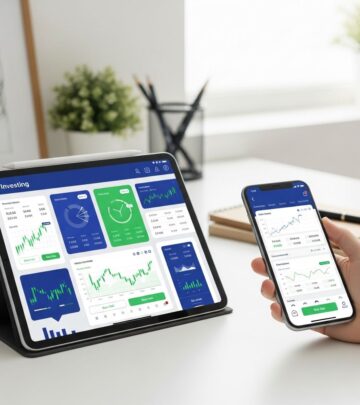
Mobile Investment Platforms: Weighing Benefits Against Drawbacks
Discover how digital investing tools reshape portfolio management for modern investors

The financial landscape has undergone a dramatic transformation over the past decade, with mobile investment platforms emerging as a cornerstone of modern wealth management. These digital tools have democratized investing by removing traditional barriers and making financial markets accessible to millions of individuals worldwide. However, like any financial instrument, investment apps present a complex mix of advantages and limitations that require careful consideration.
The Rise of Digital Investing
Investment applications have fundamentally altered how people approach building and managing their wealth. These platforms leverage technology to deliver sophisticated financial services directly to users’ smartphones, enabling real-time decision-making and portfolio oversight. The proliferation of these tools reflects broader shifts in consumer preferences toward convenience, transparency, and self-directed financial management. Understanding both the strengths and weaknesses of these platforms is essential for making informed decisions about whether they align with your investment objectives.
Key Advantages of Investment Applications
Accessibility for Varied Financial Situations
One of the most transformative aspects of mobile investment platforms is their capacity to welcome participants with diverse financial situations. Traditional investment vehicles often required substantial upfront capital, creating barriers for individuals with modest savings or those just beginning their investment journey. Mobile platforms have dismantled these obstacles by enabling users to commence investing with minimal amounts, sometimes as little as a few dollars. This democratization has opened wealth-building opportunities to broader segments of the population, fundamentally changing who can participate in market-based investing.
Instantaneous Portfolio Monitoring and Adjustment
Mobile investment applications provide unprecedented access to portfolio information and management capabilities. Users can monitor their holdings, review performance metrics, and execute trades from virtually anywhere and at any moment. Real-time notifications alert investors to market movements, price fluctuations, and portfolio milestones, enabling swift responses to changing market conditions. This continuous accessibility transforms how investors interact with their assets, moving from periodic check-ins to ongoing engagement with their financial positions.
Integrated Educational Resources
Many investment platforms integrate comprehensive educational components within their ecosystems. These resources include market analysis tutorials, investment strategy guides, portfolio management principles, and interactive learning modules. For individuals new to investing or those seeking to expand their financial knowledge, these embedded educational tools provide valuable learning opportunities that can develop stronger decision-making capabilities. The combination of practical investing experience and educational content creates a holistic learning environment that supports investor development.
Passive Income Generation Through Automation
Numerous investment applications incorporate automated investment features, allowing users to establish systematic investment patterns without ongoing manual intervention. These systems can automatically invest portions of income, reinvest dividends, round up purchases to specified amounts, or implement dollar-cost averaging strategies. This automation appeals to individuals seeking to build wealth through consistent, hands-off approaches, reducing the friction associated with regular investment activities and leveraging the power of compounding returns through systematic reinvestment.
Cost Efficiency Compared to Traditional Advisors
Investment platforms typically charge substantially lower fees than traditional financial advisory services. Many offer commission-free trading on stocks and exchange-traded funds, eliminating transaction costs that historically reduced investment returns. For budget-conscious investors, particularly those with smaller portfolio sizes, these reduced costs represent significant savings over extended investment horizons. The fee structure of mobile platforms makes wealth-building substantially more attainable for individuals with limited capital.
Significant Disadvantages to Consider
Absence of Personalized Advisory Support
While some investment applications incorporate robo-advisor functionality, many lack the personalized guidance available through traditional financial advisors. Complex financial circumstances—retirement planning across multiple income sources, tax optimization, estate planning coordination, or managing inherited assets—often benefit from professional counsel. Investors navigating intricate financial situations may find that algorithmic guidance and generic educational content cannot substitute for customized advice addressing their unique circumstances. This limitation particularly affects individuals with complicated financial positions who require specialized expertise.
Vulnerability to Impulsive Trading Behaviors
The convenience and immediacy of mobile investment platforms can paradoxically encourage counterproductive trading patterns. The frictionless execution of trades removes psychological barriers that traditionally slowed investment decisions, sometimes leading investors to respond to short-term market volatility with reactive trading. Research consistently demonstrates that frequent trading typically diminishes long-term returns, particularly for inexperienced investors who may lack disciplined strategies. The accessibility that constitutes a platform strength can simultaneously enable behavioral mistakes that undermine investment performance.
Constrained Selection of Investment Categories
While certain platforms offer diverse asset classes, many investment applications concentrate primarily on stocks and exchange-traded funds. This limitation restricts portfolio diversification opportunities for investors seeking exposure to alternative investments such as real estate investment trusts, bonds, commodities, or fixed-income instruments. Comprehensive portfolio construction typically benefits from access to multiple asset categories, yet many platforms constrain users to narrower selections, potentially limiting investment flexibility.
Accumulating Fee Structures
Although individual fees associated with investment applications frequently appear modest—sometimes presented as monthly charges, percentage-based management fees, or premium membership costs—these expenses can substantially impact returns, particularly on smaller portfolio sizes. A monthly fee that seems negligible in isolation can represent a significant percentage drag on returns for investors with limited capital. The cumulative effect of multiple fees across account management, premium features, and service charges requires careful analysis to ensure fee arrangements don’t substantially erode investment returns.
Security and Regulatory Concerns
While established investment platforms maintain rigorous security protocols and regulatory compliance, the proliferation of investment applications creates a landscape of varying security standards and regulatory oversight levels. Users must carefully evaluate whether their chosen platform operates under recognized financial authority supervision and implements adequate data protection measures. The rapid evolution of financial technology sometimes outpaces regulatory frameworks, potentially creating gaps in consumer protections.
Comparative Analysis: When Mobile Platforms Serve Different Investor Types
| Investor Profile | Platform Advantages | Platform Limitations |
|---|---|---|
| Beginner Investors | Low entry costs, educational resources, simplified interfaces | Limited complex strategy tools, minimal advisory support |
| Active Traders | Real-time execution, commission-free trades, instant notifications | Risk of overtrading, potential performance drag |
| Long-Term Wealth Builders | Automated investing, low fees, passive income features | Limited alternative asset classes, restricted customization |
| Complex Financial Situations | Cost advantages, accessibility | Insufficient personalization, lack of expert guidance |
Critical Evaluation Criteria for Platform Selection
Selecting an appropriate investment platform requires evaluating multiple dimensions beyond promotional features. Security infrastructure should incorporate multi-factor authentication, encryption protocols, and regulatory oversight by established financial authorities. Fee structures warrant detailed analysis, calculating total annual costs across all service categories as a percentage of expected portfolio value. User interface design significantly impacts actual usage patterns—platforms should facilitate your intended investment approach rather than encouraging behaviors contradicting your strategy. Educational resources should align with your knowledge level and investment timeline, supporting your development as an investor.
The Evolution of Investment Platform Technology
Mobile investment platforms continue advancing through technological innovation. Artificial intelligence and machine learning enable increasingly sophisticated portfolio recommendations and risk analysis. Expanded asset class offerings gradually address historical limitations in investment selection. Enhanced security measures continuously strengthen data protection. These developments progressively narrow the gap between platform capabilities and traditional advisory services, though fundamental distinctions in personalization and complex strategy implementation persist.
Strategic Implementation Recommendations
Rather than viewing investment platforms through binary “good” or “bad” frameworks, investors benefit from recognizing their appropriate roles within broader financial strategies. For foundational investing—establishing diversified portfolios with consistent contributions—mobile platforms offer exceptional value and functionality. Supplementing platform usage with periodic consultation from qualified financial advisors addresses complex planning needs without requiring comprehensive advisory relationships. Using platform educational resources alongside external learning strengthens financial literacy. Implementing disciplined investment policies guards against impulsive trading temptations, leveraging platform convenience while avoiding its behavioral pitfalls.
Frequently Asked Questions
Are investment apps suitable for complete beginners?
Yes, investment apps specifically target beginning investors through simplified interfaces, low minimum investments, and integrated educational resources. However, beginners should prioritize learning fundamentals and establishing clear investment objectives before initiating trading activities on any platform.
How do investment app fees compare to traditional advisors?
Investment applications typically charge substantially lower fees than traditional financial advisors. While robo-advisor fees often range from 0.25% to 0.50% annually, traditional advisor fees frequently reach 1% or higher. Commission-free trading on many platforms eliminates transaction costs entirely, further reducing total expenses.
Can investment apps replace professional financial advice?
Investment apps excel at execution and passive portfolio management but cannot replicate personalized financial planning for complex situations. Investors with complicated circumstances benefit from combining app-based investing with periodic professional guidance addressing their specific needs.
What security measures should I verify before selecting a platform?
Evaluate whether platforms maintain regulatory oversight from established authorities, implement multi-factor authentication, employ encryption for data transmission, and provide insurance protection for account balances. Reading user reviews and security ratings provides additional insight into platform reliability.
How can I prevent overtrading through mobile platforms?
Establish predetermined investment policies specifying asset allocation targets, rebalancing schedules, and buy/sell triggers. Implementing these rules before emotional market movements occur protects against reactive trading decisions undermining long-term strategy.
Conclusion: Maximizing Platform Value While Managing Limitations
Investment applications represent a genuine democratization of wealth-building tools, offering unprecedented accessibility, low costs, and convenient management capabilities. Their limitations—constrained asset selections, minimal personalization, behavioral temptations, and insufficient guidance for complex situations—reflect trade-offs inherent in automated, scaled solutions rather than fundamental flaws. Investors who recognize both strengths and weaknesses, implement disciplined policies resisting behavioral pitfalls, and maintain realistic expectations about platform capabilities position themselves to effectively leverage these tools. The optimal approach typically involves integrating investment app capabilities with professional guidance when circumstances warrant, leveraging each resource within its appropriate scope. As technology continues advancing and platforms expand their offerings, the value proposition of mobile investment applications continues strengthening for the expanding population of individuals committed to building wealth through systematic, disciplined investing.
References
- Best Investment Apps: A Comprehensive Guide for 2026 — Mintos. March 2026. https://www.mintos.com/blog/investment-apps/
- 7 Best Investment Apps for Beginners — NerdWallet. March 2026. https://www.nerdwallet.com/investing/best/investment-apps
- The Pros and Cons of Investment Apps — SFG Wealth Management. https://www.sfgwm.com/blog-01/pros-and-cons-investment-apps
- TOP 14 Online Investment Apps for Beginners (2026) — Change. March 2026. https://www.changeinvest.com/blog/top-online-investment-apps-for-beginners
- Best Investment Apps In March 2026: A Complete Guide — Bankrate. March 2026. https://www.bankrate.com/investing/best-investment-apps/
- Best Investing Apps In 2026: Free Stock Trading & Long-Term Investment — The College Investor. March 2026. https://thecollegeinvestor.com/19598/investing-apps-invest-for-free/
Similar Articles








Read full bio of Sneha Tete