Missing a Payment Due Date: Why You Shouldn’t Panic
Understanding the real consequences of a missed payment and how to recover.

Missing a payment due date happens more often than you’d think, and while it’s certainly not ideal, it doesn’t have to be a financial catastrophe. Whether you missed a credit card payment, a loan payment, or another obligation by accident, understanding what actually happens—and what doesn’t—can help you take the right steps to minimize damage and recover quickly.
Many people who miss a payment live in fear, assuming their financial life is over. The reality is far more nuanced. Yes, there are consequences, but they’re often less severe than many people imagine, especially if you act promptly. Let’s break down the facts about missed payments, the actual timeline of consequences, and how to move forward.
Understanding the Difference: Late vs. Missed
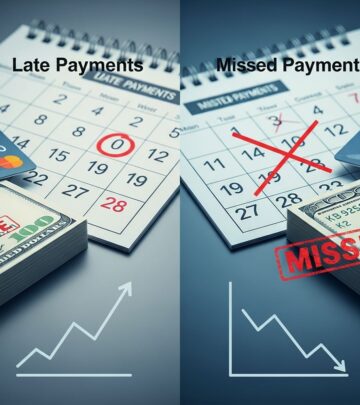
Before diving into consequences, it’s important to understand a key distinction that many people overlook: the difference between a late payment and a missed payment.
- Late Payment: A payment made after the due date but still within your billing cycle (typically within 30 days of the due date). Late payments may incur a late fee but often won’t be reported to credit bureaus if made within this window.
- Missed Payment: A payment not made during an entire billing cycle, typically 30 days or longer. This is what creditors report to the credit bureaus and what can significantly impact your credit score.
This distinction matters because a payment that’s a few days late may have minimal consequences, while one that goes 30 days or longer triggers more serious repercussions.
What Happens Immediately: The First 30 Days
If you miss or are late on a payment, several things happen relatively quickly, though not all are created equal in terms of severity.
Late Fees
The most immediate consequence is typically a late fee. For credit cards, this fee can be as much as $30 for your first late payment. If you continue to miss payments, the fee can increase, though regulations currently cap late fees at up to 100% of your minimum required payment.
The key point: this fee is applied quickly, often immediately after the due date or after any grace period ends.
Loss of Grace Period
Many financial products come with a grace period—a window of time between the end of your billing cycle and your payment due date during which you can avoid interest charges. When you miss a payment, you lose this grace period. This means interest will begin accruing on your balance immediately for future purchases, increasing your overall costs.
Note: Credit card companies typically don’t offer grace periods on all balances, but mortgage and education loan lenders often do.
Credit Report: The 30-Day Threshold
Here’s where the timeline becomes crucial. Most lenders do not report missed payments to the three major credit bureaus (Equifax, Experian, and TransUnion) immediately. Instead, they wait until the payment is at least 30 days past due.
This is your window of opportunity. If you can make your payment within 30 days of missing it, you might still avoid a negative mark on your credit report. While there’s no guarantee—lenders vary in reporting dates—making an effort to pay within this period is worth the urgency.
The Penalty Interest Rate: After 60 Days
If you miss a credit card payment for 60 or more days, you may become subject to a penalty APR (annual percentage rate). This rate is significantly higher than your regular APR and can be as high as 29.99%.
The penalty APR applies to all new purchases made on your card, and once applied, it may remain on your card indefinitely until you demonstrate reliable payment behavior. To return to your original APR, you typically need to make six consecutive on-time payments.
Credit Score Impact: What You Need to Know
Credit score damage is perhaps the most concerning consequence for many people. Understanding how and when this happens can help you contextualize the real risk.
When It Gets Reported
As mentioned, missed payments typically aren’t reported to credit bureaus until they’re at least 30 days past due. This 30-day grace period is not a free pass—interest and fees will accrue—but it does give you time to prevent the worst damage.
How Much Will Your Score Drop?
The impact depends on several factors:
- Your overall credit history: If you have strong credit with no prior missed payments, a single late payment could cause a significant drop in your score.
- How late the payment is: A payment that’s 30 days late will have less impact than one that’s 60, 90, or 120 days late.
- Whether it’s an isolated incident: If you already have a history of missed payments, the additional damage may be less severe because your score has already suffered.
- Multiple past-due accounts: If you have multiple accounts past due, the damage is compounded.
How Long It Stays on Your Report
Once reported, a late or missed payment can affect your credit score for seven years before falling off your credit history. However, the impact diminishes over time, especially if you maintain good credit habits moving forward.
Serious Consequences: The 180-Day Mark
If you continue to miss payments and reach 180 consecutive days (six months) of nonpayment, your lender can close your account and charge it off—meaning they write off the debt as a loss. However, you still legally owe the debt.
At this point, the lender may also report the outstanding balance to a collection agency. If the creditor pursues legal action and prevails, your wages may be garnished until the balance is repaid.
How to Recover: Action Steps
If you’ve missed a payment, here’s how to minimize the damage:
- Act within 30 days: Make your payment as soon as possible, ideally within 30 days of missing it, to avoid credit bureau reporting.
- Contact your lender: Explain your situation and ask about options. Some lenders may work with you on payment plans or temporary relief programs.
- Check your credit report: Once the 30-day mark passes, request your free annual credit report from AnnualCreditReport.com to verify what’s been reported.
- Build positive payment history: Make all future payments on time. Six consecutive on-time payments can restore your original APR on credit cards and demonstrate to future lenders that you’ve recovered.
- Monitor for collection activity: If your account is charged off, watch for collection agency communications and respond appropriately.
The Bottom Line: Context Matters
A single missed payment is not ideal, but it’s recoverable. The key is understanding the timeline and taking swift action. You have a 30-day window before credit bureau reporting, and you can begin rebuilding your credit immediately by making on-time payments going forward.
The worst thing you can do after missing one payment is to miss more. If you’re facing financial hardship, contact your lender to discuss options. Many creditors have hardship programs designed to help people through temporary difficulties.
Frequently Asked Questions (FAQs)
Q: How many days late before it affects my credit score?
A: Payments that are less than 30 days late typically won’t be reported to credit bureaus and won’t affect your credit score. However, once a payment is 30 days or more past due, it will likely be reported, and your credit score can be negatively impacted.
Q: Will I be charged a late fee immediately?
A: Late fees are typically applied quickly, often right after the payment due date or after any grace period ends. For credit cards, the first late fee can be up to $30.
Q: Can I get the late fee removed?
A: It’s worth calling your lender and asking, especially if this is your first missed payment. Many creditors will remove or reduce a late fee as a courtesy, particularly if you have a history of on-time payments.
Q: How long will a missed payment affect my credit score?
A: Missed payments can stay on your credit report for seven years. However, the negative impact diminishes over time, especially if you maintain good payment habits afterward.
Q: What’s a penalty APR, and when do I get charged one?
A: A penalty APR is a higher interest rate applied to your credit card if you miss a payment for 60 or more days. This rate can be as high as 29.99% and applies to all new purchases. To return to your original APR, you typically need to make six consecutive on-time payments.
Q: What happens if I ignore the missed payment?
A: If you continue to ignore missed payments, after 180 days (six months) your account may be charged off and reported to a collection agency. Your wages could potentially be garnished, and you may face legal action.
Q: Can I recover from a missed payment?
A: Yes. The impact of a missed payment diminishes over time, and you can begin rebuilding your credit immediately by making all future payments on time. Making six consecutive on-time payments can restore your original credit card APR.
References
- What Happens When You Miss a Credit Card or Loan Payment — Navy Mutual. Accessed January 2026. https://www.navymutual.org/mutually-speaking/general/what-happens-when-you-miss-a-credit-card-or-loan-payment/
- What Happens If You Miss a Credit Card Payment? — Citi.com. Accessed January 2026. https://www.citi.com/credit-cards/understanding-credit-cards/what-happens-if-you-miss-a-credit-card-payment
- Late Payment vs. Missed Payment: What’s the Difference? — Experian. Accessed January 2026. https://www.experian.com/blogs/ask-experian/what-is-difference-between-late-payment-missed-payment/
- Late Credit Card Payments: What to Know — Capital One. Accessed January 2026. https://www.capitalone.com/learn-grow/money-management/late-credit-card-payments/
- When Does a Late Credit Card Payment Show Up on Credit Reports? — Equifax. Accessed January 2026. https://www.equifax.com/personal/education/credit-cards/articles/-/learn/when-late-credit-card-payments-post/
- How do late payments affect credit scores? — Intuit Credit Karma. Accessed January 2026. https://www.creditkarma.com/credit/i/late-payments-affect-credit-score
Similar Articles








Read full bio of medha deb