Minimum Emergency Fund: How Much You Need In 2025
Discover the ideal size for your emergency fund: Is 3-6 months enough, or do you need more in today's economy?

Financial emergencies strike without warning—a car repair, medical bill, or sudden job loss can derail your budget in an instant. Conventional wisdom from financial advisors recommends maintaining a
minimum emergency fund
covering three to six months of living expenses. But a compelling new report is challenging this longstanding rule, urging savers to reconsider their safety nets in light of modern economic realities.This article dives deep into the debate, exploring traditional guidelines, emerging recommendations, real-world statistics on American savings habits, and practical steps to build your fund—no matter your starting point. Whether you’re living paycheck to paycheck or aiming for a year’s worth of security, we’ll help you determine the right amount for your situation.
What Is an Emergency Fund?
An
emergency fund
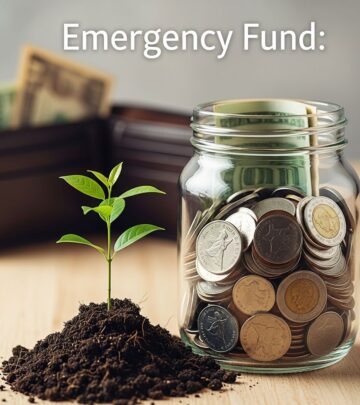
is a dedicated pool of cash set aside to cover unexpected expenses or income disruptions without resorting to high-interest debt. Think of it as your financial first-aid kit: accessible, liquid, and reserved strictly for true crises like home repairs, medical emergencies, or unemployment.Without one, 55% of Americans who faced significant unexpected expenses last year had to dip into credit cards or skip bills, according to a recent survey of 1,250 working adults. Only 37% maintain a dedicated emergency fund, and 42% lack even $1,000 in savings—highlighting a widespread vulnerability.
The Traditional Rule: 3-6 Months of Expenses
For decades, personal finance experts have preached the
3-6 months rule
. This targets your essential living costs—housing, utilities, groceries, transportation, insurance, and minimum debt payments—multiplied by 3 to 6.- 3 months: Suitable for those with stable dual incomes, low debt, and easily replaceable jobs.
- 6 months: Ideal for single-income households, freelancers, or high-cost-of-living areas.
To calculate: Review your bank statements or budget for bare-bones monthly expenses (exclude dining out, entertainment). If essentials total $3,000/month, aim for $9,000-$18,000.
Proponents like Dave Ramsey suggest starting small—a $1,000 ‘baby’ fund—before scaling up after debt payoff. However, Accredited Financial Counselor Kumiko Love notes $1,000 often falls short for real crises, especially for single parents.
A New Report Challenges the Status Quo
Recent economic shocks—the pandemic, inflation, layoffs—have prompted fresh scrutiny. A groundbreaking report argues the 3-6 months guideline underestimates prolonged risks in today’s job market, where re-employment can take 6-12 months.
High-profile experts agree:
- Suze Orman recommends
12 months
for those with stable jobs, citing pandemic lessons where millions exhausted savings. - Tina Hay of Napkin Finance advocates a full year’s expenses as a ‘second income’ equivalent, especially for single-income families or volatile industries.
When surveyed, most Americans intuitively peg the ideal at around
$5,000
, yet few achieve it—underscoring the gap between aspiration and reality.Who Needs More Than 6 Months?
Your ideal fund size depends on personal factors. Use this table to assess:
| Risk Factor | Recommended Coverage | Why? |
|---|---|---|
| Sole breadwinner | 6-12 months | No secondary income buffer. |
| Freelancer/Commission-based | 9-12 months | Income volatility common. |
| High-deductible health plan | 6-9 months | Medical bills can exceed $10K. |
| Stable dual-income job | 3-6 months | Quick recovery likely. |
| Recent grads/Entry-level | 3-6 months + job search fund | Frequent career shifts. |
If job hunting averages 8.8 months (per Federal Reserve data), a 12-month fund provides true peace of mind.
How to Calculate Your Minimum Emergency Fund
Step-by-step:
- List essentials: Rent/mortgage ($1,200), utilities ($250), groceries ($400), gas ($150), insurance ($200), min debt ($300) = $2,500/month.
- Choose multiplier: Stable job? x3 ($7,500). Risky field? x12 ($30,000).
- Subtract current savings: Have $2,000? Target remaining $5,500-$28,000.
- Factor inflation: With 3-5% annual rises, adjust yearly.
Tools like high-yield savings calculators show: $500/month at 4% APY builds $6,200 in year 1, accelerating via compound interest.
Real Americans’ Savings Reality
A Penny Hoarder survey paints a stark picture:
- 42% have <$1,000 emergency savings.
- 37% have a dedicated fund.
- 55% faced major unexpected costs last year; 33% lost income.
Paycheck-to-paycheck living (78% of Americans) leaves scant room for building funds, amplifying debt cycles during crises.
Where to Keep Your Emergency Fund
Prioritize liquidity and growth:
- High-yield savings: 4-5% APY (e.g., SoFi, Vio) beats 0.01% traditional banks.
- Money market accounts: Check-writing access.
- HYSA ladder: Split across 2-3 for FDIC coverage up to $250K/account.
- Avoid: Stocks (volatile), checking (low interest).
Strategies to Build Your Fund Fast
Even on tight budgets:
- Automate: Direct deposit 10% paycheck to savings.
- Cut ruthlessly: Cancel subs ($50/mo), cash envelope for groceries, negotiate bills.
- Boost income: Side hustles (Uber, surveys) add $200-500/mo.
- Windfalls: Tax refunds, bonuses straight to fund.
- 50/30/20 rule: 20% income to savings/debt.
Start with $500 goal, then $1,000. Momentum builds.
Common Pitfalls to Avoid
- ‘It’s not an emergency’: Reserve for true crises; vacations don’t count.
- Mingling funds: Separate account prevents ‘borrowing’.
- Ignoring growth: Low-interest accounts erode value.
- One-and-done: Replenish after use; aim to rebuild in 3-6 months.
Frequently Asked Questions (FAQs)
What is the absolute minimum emergency fund?
$500-$1,000 covers minor crises like car repairs, buying time to build more.
Is 3 months enough in 2026?
For stable situations yes, but economic uncertainty favors 6-12 months.
Should I prioritize debt or savings?
Build $500-$1,000 first, then attack debt aggressively.
What counts as an ’emergency’?
Job loss, health issues, home/car repairs. Not holidays or gadgets.
How long to save 6 months’ expenses?
$3,000/mo expenses, $300/mo savings: ~10 months. Automate and hustle to accelerate.
Take Control Today
Your minimum emergency fund isn’t one-size-fits-all. Assess risks, calculate needs, and start small. In an era of uncertainty, a robust safety net isn’t optional—it’s essential for sleep-at-night security.
References
- What Is An Emergency Fund And How To Start One — The Penny Hoarder. 2025. https://www.thepennyhoarder.com/save-money/how-to-start-emergency-fund/
- How to Save a 12-Month Emergency Fund From Scratch — The Penny Hoarder. 2025. https://www.thepennyhoarder.com/save-money/12-month-emergency-fund/
- The State of Savings in America — The Penny Hoarder. 2025. https://www.thepennyhoarder.com/save-money/state-of-savings/
- New Report Challenges Rules for Your Minimum Emergency Fund — The Penny Hoarder. 2025. https://www.thepennyhoarder.com/save-money/minimum-emergency-fund/
- Consumer Credit – G.19 — Board of Governors of the Federal Reserve System (.gov). 2025-01-10. https://www.federalreserve.gov/releases/g19/current/
Similar Articles








Read full bio of Sneha Tete