Minimum Car Insurance: Accident Risks Exposed
Discover the hidden dangers of driving with just the bare minimum car insurance and why higher limits could save you from financial disaster after a crash.

Driving with only the state-mandated minimum car insurance might seem like a cost-saving measure, but it often leaves drivers vulnerable to massive financial losses following a collision. These basic policies cover just a fraction of potential damages and injuries, forcing policyholders to pay the rest from their own pockets.
Why Minimum Coverage Falls Short in Real Crashes
State minimums are designed to meet legal requirements rather than provide adequate protection. For instance, a typical policy might offer $25,000 per person for bodily injuries, but medical bills alone can exceed this quickly in serious accidents involving hospitalization or long-term care. Property damage limits, often around $25,000, rarely cover modern vehicle repair costs, which average over $30,000 for severe impacts.
When at-fault drivers carry minimum limits, victims face gaps where insurance payouts end and personal funds begin. This exposure is particularly acute in high-cost living areas where healthcare and auto repairs are expensive.
Breaking Down Core Components of Minimum Policies
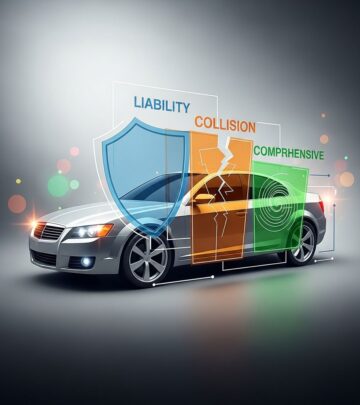
Most states mandate liability insurance, split into bodily injury and property damage categories. Bodily injury per person covers medical costs for others injured in accidents you cause, while per-accident limits cap total payouts. Property damage handles repairs to other vehicles or structures.
- Bodily Injury Liability: Pays for injuries to others; e.g., $25,000/$50,000 means $25k max per person, $50k total per crash.
- Property Damage Liability: Covers fixes to others’ property; typically $15,000-$25,000 per incident.
- Uninsured/Underinsured Motorist (UM/UIM): Protects you if hit by drivers with insufficient or no coverage; required in nearly half of states.
Additional required coverages in some states include personal injury protection (PIP) for medical bills regardless of fault, or medical payments for passenger injuries.
State-by-State Minimum Coverage Overview
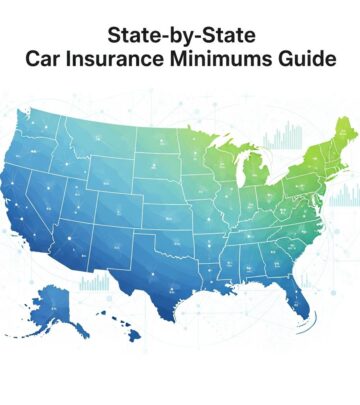
Requirements vary widely, reflecting local accident costs and legislative priorities. Below is a table summarizing key examples from recent data.
| State | Bodily Injury (Per Person/Per Accident) | Property Damage | Other Requirements |
|---|---|---|---|
| Virginia (2025+) | $50,000/$100,000 | $25,000 | UM/UIM matching liability |
| Maryland | $30,000/$60,000 | $15,000 | Full coverage mandatory |
| Florida | No BI required | $10,000 | $10,000 PIP |
| Maine | $50,000/$100,000 | $25,000 | UM/UIM + MedPay |
| Michigan | $50,000/$100,000 | $10,000 (out-state) | PIP up to $250,000 |
Virginia recently raised limits effective 2025 to address rising claims, jumping bodily injury from $30k/$60k to $50k/$100k. New Hampshire and Vermont include UM property damage, a rarity.
The Aftermath: What Happens When You’re At Fault
If you’re responsible for a crash with minimum coverage, your policy pays up to its limits, then stops. Consider a scenario: You rear-end a family SUV, causing $40,000 in medical bills for three people and $35,000 in vehicle repairs. A $25k/$50k/$25k policy exhausts bodily injury on the first two victims, pays full property, leaving $15,000+ unpaid. Victims can sue you personally for the balance, targeting savings, wages, or assets.
Lawsuits often result in wage garnishment, bank levies, or liens on property. Even if you win, legal fees add thousands.
Victim Perspectives: Hit by a Minimum-Coverage Driver
When others cause accidents with skimpy policies, you’re left chasing remnants. Insurance pays the minimum, say $25,000 property damage for a totaled $50,000 car—balance due from the at-fault party. If they’re judgment-proof (low assets), you absorb the loss.
UM/UIM helps here, but only if your policy includes it and matches or exceeds the at-fault driver’s. Without it, or with low limits, you’re out-of-pocket for your injuries and repairs.
Your Own Vehicle and Injuries: The Gaps Exposed
Minimum liability doesn’t touch your car or medical bills. Collision and comprehensive are optional everywhere, leaving your vehicle unprotected against theft, weather, or crash damage. No-fault states like Michigan mandate PIP, but most rely on health insurance or medpay add-ons.
Post-accident expenses skyrocket: rentals ($50-100/day), deductibles, lost income. Minimum drivers often skip these, amplifying personal risk.
Real-World Cost Projections
Average bodily injury claim: $20,000+ per person; property: $4,500, but severe crashes hit $100k easily. Minimums cover mild fender-benders but fail in multi-vehicle pileups or injury-heavy incidents. Upgrading to 100/300/100 (bodily/property) costs ~$100-200/year extra but shields against 90% of claims.
Strategies to Bolster Protection Beyond Minimums
Opt for higher liability: 100/300/100 or umbrella policies for million-dollar shields. Add UM/UIM matching your liability, collision/comprehensive for your assets, and gap insurance for financed cars.
- Shop quotes annually; good credit/driving saves 20-40%.
- Bundle auto/home for discounts.
- Consider usage-based programs tracking safe habits.
Assess net worth: Coverage should exceed assets to prevent lawsuits stripping wealth.
Frequently Asked Questions (FAQs)
What is the cheapest legal car insurance?
State minimums, but they risk financial ruin—aim higher for peace of mind.
Does minimum insurance cover my car repairs?
No, only others’ damages; add collision for yours.
Can I be sued with minimum coverage?
Yes, for amounts exceeding limits; victims pursue personal assets.
Which states have no bodily injury minimum?
Florida, New Hampshire (financial responsibility post-crash).
How much UM/UIM should I carry?
Match or exceed liability; many experts recommend full coverage.
Navigating Claims with Minimum Policies
Report accidents immediately; document everything. Insurers pay undisputed minimums quickly, but disputes over fault or damages drag on. Hire public adjusters or attorneys if underpaid—fees often contingency-based.
Post-claim, premiums spike 40-60% for at-fault drivers, compounding minimum policy regrets.
Policy Shopping: Minimum vs. Recommended
| Coverage Type | Minimum (Typical) | Recommended | Annual Cost Diff. |
|---|---|---|---|
| Bodily Injury | 25/50 | 100/300 | +$150 |
| Property Damage | $25k | $100k | +$50 |
| UM/UIM | State min. | 100/300 | +$100 |
| Collision/Comp | None | $500 deduct. | +$400 |
Full recommended suite costs $1,200-2,000/year vs. $600 minimum, but prevents bankruptcy-level losses.
Legal and Regulatory Shifts Impacting Minimums
States like Virginia hiked limits in 2025 amid inflation and claim surges, signaling a trend. DMV verifies proof at registration; lapses suspend licenses. Rideshare drivers face elevated minimums, e.g., $1M for app-on periods.
Federal pushes for standardized minimums stalled, leaving patchwork protections.
Long-Term Financial Planning with Insurance
Treat auto insurance as asset defense, not just compliance. Calculate exposure: (Assets – Coverage) = Risk. Young drivers or high-mileage users face higher premiums but greater need for robust policies.
Review annually; life changes like marriage or homeownership warrant upgrades. Discounts for safety courses, anti-theft devices cut costs 10-25%.
References
- The Minimum Required Car Insurance by State — NerdWallet. 2023. https://www.nerdwallet.com/insurance/auto/learn/minimum-car-insurance-requirements
- Virginia Car Insurance Requirements for 2025 — Chaikin & Sherman. 2025. https://www.chaikinandsherman.com/car-accidents/virginia/insurance-requirements/
- Car Insurance Requirements by State — Progressive. 2025. https://www.progressive.com/auto/state/
- Virginia Auto Insurance Requirements for 2025 — Virginia Trial Firm. 2025. https://virginiatrialfirm.com/car-accident-lawyers/virginia-car-insurance-requirements/
- New Car Insurance Mandatory Minimums in Virginia — Whitlock Law LLC. 2025-03-31. https://www.whitlocklawllc.com/blog/new-car-insurance-mandatory-minimums-in-virginia
- Virginia Car Insurance Coverage — Nationwide. 2025. https://www.nationwide.com/personal/insurance/auto/state/virginia/coverage/
- Insurance Coverage Requirements — Virginia DMV. 2025. https://www.dmv.virginia.gov/sites/default/files/forms/dmv278.pdf
- Insurance Requirements for Maryland Vehicles — Maryland MVA. 2025. https://mva.maryland.gov/vehicles/Pages/insurance-requirements.aspx
- Insurance Requirements — Virginia DMV. 2025. https://www.dmv.virginia.gov/vehicles/insurance-requirements
Similar Articles








Read full bio of Sneha Tete