Michigan State University: Premier Public Research Institution
Discover Michigan State University: A top global public research institution with 170 years of excellence.
Michigan State University: A Legacy of Excellence and Global Impact
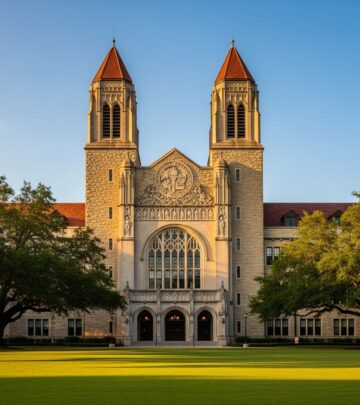
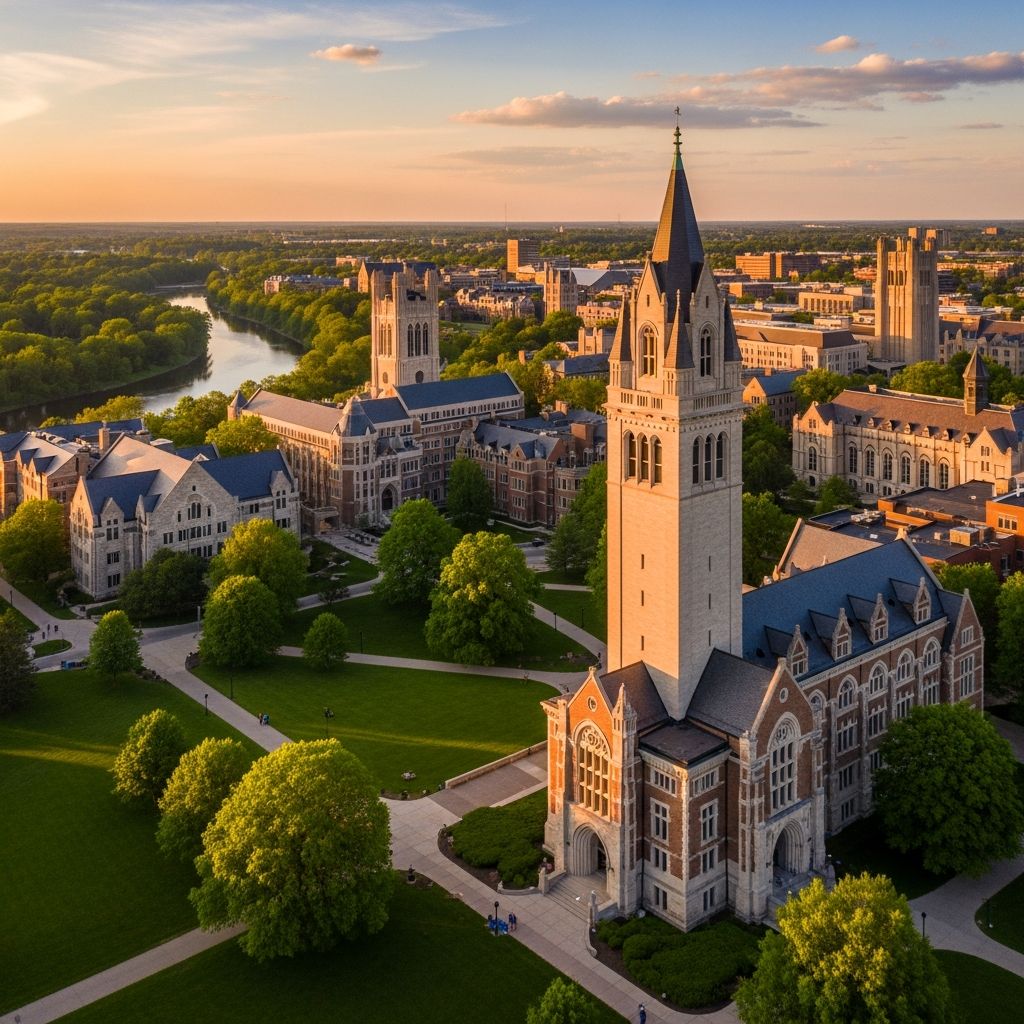
Michigan State University stands as one of the nation’s premier land-grant research institutions, serving as a beacon of academic excellence and innovation for over 170 years. Located in East Lansing, Michigan, MSU has established itself as a top global public research university that combines cutting-edge research with transformative educational experiences. The university’s commitment to solving pressing global challenges while providing life-changing opportunities to a diverse student body has made it a leader in higher education and scientific advancement.
Founded in 1855 as the Agricultural College of the State of Michigan, MSU became the first land-grant college in the United States following the Morrill Act of 1862. This historic designation set the foundation for MSU’s distinctive mission: to advance knowledge, serve society, and prepare students to make meaningful contributions to their communities and the world. Today, the university’s 5,300-acre campus accommodates over 50,000 students pursuing degrees across more than 400 areas of study.
Academic Prestige and Rankings
Michigan State University consistently ranks among the top public research universities in the world, reflecting its commitment to academic excellence and research innovation. In the 2025-2026 U.S. News & World Report rankings, MSU is recognized as a top national university with particularly strong standings among public institutions. The university maintains its position as No. 64 overall and No. 29 among public institutions in the National Universities category, marking the third consecutive year of achieving a top 30 public university ranking.
MSU’s subject-specific rankings demonstrate particular strength in specialized fields. The university ranks No. 11 globally and No. 5 in the United States for agriculture and forestry, and No. 16 globally with No. 9 national ranking for communication and media. The QS World University Rankings placed MSU at 161st internationally for 2025, underscoring its reputation as a globally recognized institution. Additionally, Washington Monthly’s 2025 rankings positioned MSU at No. 45 overall and No. 26 among public institutions for research excellence.
Undergraduate Programs and Academic Distinction
Michigan State University offers exceptional undergraduate education across six programs ranked in the nation’s top 25, an increase from previous years. These elite programs represent the caliber of instruction and research opportunities available to undergraduate students at MSU.
Top-Ranked Undergraduate Programs:
MSU’s Eli and Edythe Broad College of Business maintains national prominence, with its undergraduate supply chain management program holding the No. 1 ranking for 15 consecutive years. This sustained excellence demonstrates the college’s commitment to staying at the forefront of business education and preparing graduates for leadership roles in corporate and entrepreneurial environments.
The university consistently excels in student engagement rankings, with top 10 placements in three categories, including two ranked first among public institutions. Notably, MSU has been recognized as the top public university for education abroad for the seventh consecutive year, reflecting its dedication to global learning experiences and international perspectives.
Campus Infrastructure and Facilities
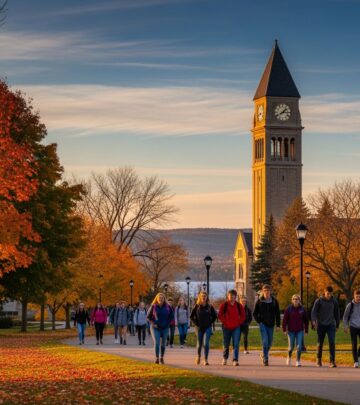
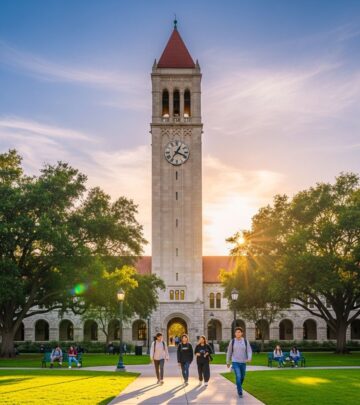
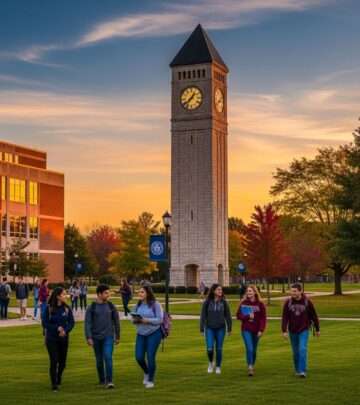
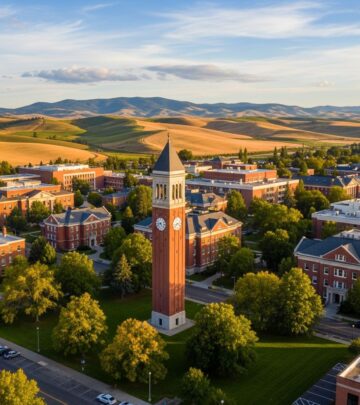
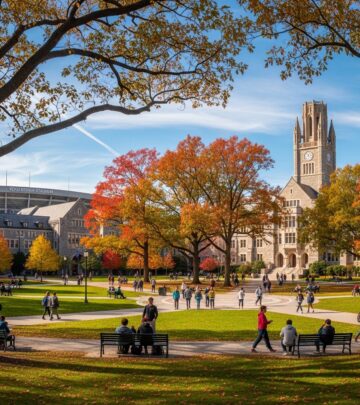
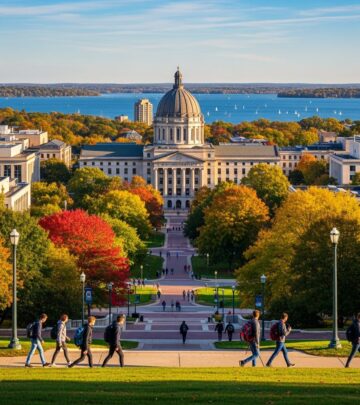
Michigan State University’s sprawling campus represents one of the largest and greenest university environments in the nation. Located three miles east of Michigan’s capital in Lansing, the main campus encompasses 5,300 acres with 2,000 acres developed with state-of-the-art facilities. The physical infrastructure includes 563 buildings: 107 dedicated to academics, 131 to agriculture, 166 to housing and food service, and 42 to athletics. These facilities provide 22.7 million square feet of indoor space connected by 26 miles of roads and 100 miles of sidewalks.
Beyond the main campus, MSU maintains 44 non-campus properties totaling 22,000 acres across 28 different counties, supporting agricultural research, outdoor education, and community engagement initiatives. The university’s campus also houses the largest residence hall system in the country, ensuring students have access to comfortable, well-maintained housing throughout their academic careers.
Specialized Research and Cultural Facilities:
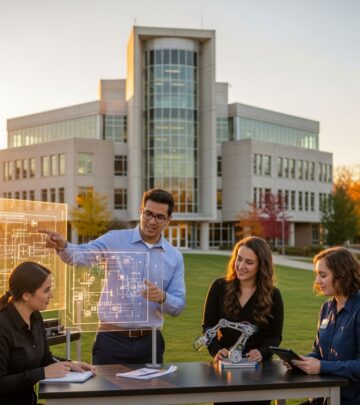
MSU’s campus features several world-class facilities that support research and enrich student life. The Facility for Rare Isotope Beams represents cutting-edge physics research infrastructure, while the W. J. Beal Botanical Garden provides botanical research and educational opportunities. The Abrams Planetarium offers astronomy education and public outreach, the Wharton Center for Performing Arts presents world-class entertainment, and the Eli and Edythe Broad Art Museum showcases contemporary and historical artwork. These facilities collectively enhance the intellectual and cultural environment for the entire MSU community.
Residential College System
Michigan State University pioneered the residential college system at the university level, offering students intimate learning communities within the larger institutional framework. James Madison College, established in 1967, serves approximately 1,150 students through multidisciplinary programs in the social sciences based on liberal education principles. The college maintains small class sizes with an average of 25 students, predominantly taught by tenure-track faculty who are committed to undergraduate instruction.
The Residential College in the Arts and Humanities (RCAH), founded in 2005, provides around 600 undergraduates with individualized curricula in liberal, visual, and performing arts. While all RCAH graduates receive the same degree, the university encourages students to pursue second degrees or specialized concentrations, fostering interdisciplinary learning and creative exploration.
Professional Schools and Advanced Education
Michigan State University operates six distinguished professional schools that prepare graduates for leadership careers across multiple sectors. The College of Law, originally founded in Detroit in 1891 as the Detroit College of Law, relocated to East Lansing in 1995. The law school attracts students from 42 states and 13 countries, fostering a diverse and globally informed legal education. The college publishes multiple academic journals including the Michigan State Law Review, Michigan State Journal of International Law, Journal of Medicine Law, and Journal of Business Law.
Additional professional schools include the Eli Broad College of Business, College of Nursing, College of Osteopathic Medicine (the world’s first state-funded osteopathic college), College of Human Medicine, and College of Veterinary Medicine. These schools combine rigorous academic training with practical experience, preparing graduates for successful careers in their respective fields.
Research Excellence and Innovation
As a Public Ivy institution and member of the Association of American Universities, MSU is classified as an “R1: Doctoral University with Very High Research Activity,” reflecting its commitment to advancing human knowledge through research. The university has pioneered studies in music therapy, packaging, hospitality business, supply chain management, and communication sciences, establishing new academic disciplines and methodologies.
MSU’s research enterprise continues to expand, with institutional goals to increase National Institutes of Health research funding and expand collaborative partnerships. The university’s refreshed strategic plan, “MSU 2030: Excellence for Global Impact,” introduced in August 2025, emphasizes collaborative innovation and solving global challenges. This framework guides the university’s efforts to maintain research leadership while ensuring discoveries translate into real-world applications that improve quality of life.
Detroit Campus Expansion
Michigan State University has significantly expanded its presence in downtown Detroit with initiatives designed to foster entrepreneurship and community engagement. In 2022, MSU began a partnership with Apple to create the Apple Developer Academy, offering students access to cutting-edge technology education and entrepreneurial training. The university purchased a majority stake in Detroit’s iconic Fisher Building on June 13, 2023, establishing the MSU Research Foundation startup incubator within the building. Additionally, MSU has begun collaboration with Henry Ford Health on a new research center in Detroit, strengthening ties between the university and the medical community.
The Detroit campus includes programs through the College of Education, Detroit Outreach Admissions, MSU Community Music School of Detroit, and the Study of Active Neighborhoods in Detroit (StAND), collectively advancing educational equity and community development.
Affordability and Access
Michigan State University demonstrates commitment to accessibility and affordability in higher education. Washington Monthly’s 2025 rankings position MSU at No. 16 for “Best Bang for the Buck” among all 367 four-year colleges and universities in the Midwest, based on access, affordability, and student outcome metrics. The university ranks No. 11 in the access category for all Midwest institutions, with access metrics accounting for an institution’s share of Pell Grant students, demonstrating MSU’s commitment to serving students from diverse socioeconomic backgrounds.
Diversity of Academic Offerings
With more than 400 areas of study distributed across 17 colleges and schools, Michigan State University provides unparalleled breadth in academic offerings. This comprehensive range allows students to pursue specialized degrees, interdisciplinary combinations, and emerging fields of study. The university emphasizes undergraduate research opportunities, providing students with hands-on experience in advancing human knowledge across all disciplines.
Student Life and Engagement
Michigan State University cultivates a vibrant campus community characterized by the Spartan tradition of collaborative spirit and uncommon will to make a difference. The university’s commitment to student success extends beyond the classroom through extensive support services, mentorship programs, and community engagement initiatives. The residential college system fosters close relationships between students and faculty, while campus traditions and Spartan athletic pride create lasting memories and meaningful connections.
Frequently Asked Questions
Q: What makes Michigan State University unique as a land-grant institution?
A: As the first land-grant college in the United States, MSU maintains a distinctive mission focused on advancing knowledge, serving society, and providing accessible education. This heritage shapes MSU’s emphasis on research with real-world impact, agricultural innovation, and community engagement alongside rigorous academic training.
Q: How many students attend Michigan State University?
A: MSU serves over 50,000 students pursuing degrees across more than 400 areas of study distributed among 17 colleges and schools, making it one of the largest universities in the nation.
Q: What are MSU’s strongest academic programs?
A: MSU excels particularly in supply chain management (ranked No. 1 nationally for 15 consecutive years), agriculture and forestry, communication and media, business education, and engineering. The university maintains six undergraduate programs ranked in the nation’s top 25.
Q: Does Michigan State offer residential college options?
A: Yes, MSU pioneered the residential college system, offering intimate learning communities including James Madison College (social sciences) and the Residential College in the Arts and Humanities (RCAH), providing personalized educational experiences within the larger university.
Q: What research opportunities are available to undergraduates?
A: MSU emphasizes undergraduate research across all disciplines, providing students with hands-on experience in advancing human knowledge. The university ranked first among public institutions for education abroad for seven consecutive years, offering extensive international research and study opportunities.
Q: Is Michigan State University affordable?
A: MSU ranked No. 16 for “Best Bang for the Buck” among Midwest institutions and No. 11 in access among Midwest colleges, reflecting strong commitment to affordability and accessibility with significant support for Pell Grant students.
References
- Michigan State University — Wikipedia. Retrieved from https://en.wikipedia.org/wiki/Michigan_State_University
- MSU Facts — Michigan State University. https://msu.edu/about/facts
- Strategic Plan: MSU 2030: Excellence for Global Impact — Michigan State University. August 2025. https://strategicplan.msu.edu
- MSU Ranked Highly for Research, Affordability by Washington Monthly — MSU Today. September 2025. https://msutoday.msu.edu/news/2025/09/msu-ranked-highly-research-washington-monthly
- MSU Boasts 6 Undergraduate Programs Among Best in Nation — MSU Today. September 2025. https://msutoday.msu.edu/news/2025/09/six-undergraduate-programs-among-best-nation
- About Michigan State University — Michigan State University. https://msu.edu/about
Similar Articles








Read full bio of medha deb