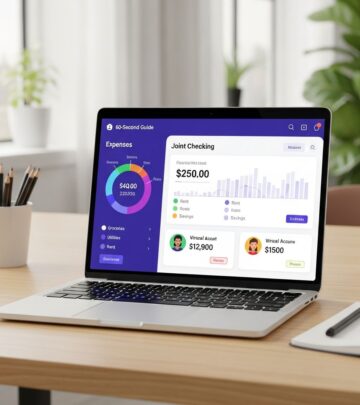
Merging Bank Accounts: 6 Steps To Open A Joint Account
Learn how to consolidate finances with joint accounts and best practices

When two people decide to share their financial lives, one of the most practical questions that arises is how to manage money together. Combining bank accounts can streamline shared expenses and promote financial transparency, but the process requires careful planning and clear communication between both parties. Whether you’re newlyweds, long-term partners, or family members seeking to consolidate finances, understanding the mechanics and implications of merged accounts is essential for making the right decision for your situation.
Understanding What a Joint Bank Account Is
A joint bank account is a financial account that two or more people can access and manage together. Each account holder has equal rights to the funds, meaning any person on the account can deposit money, withdraw funds, transfer money, and make financial decisions regarding the account without needing permission from the other account holders. This equal access applies whether the account is a checking account, savings account, or money market account.
When someone opens a joint account, they’re creating a legally binding financial arrangement. The ownership structure typically means that if one account holder passes away, the remaining balance goes to the surviving account holder(s) automatically, unless the account documents specify otherwise. This automatic transfer of funds is known as the “right of survivorship” and is a key feature of joint account ownership.
Evaluating Whether Joint Accounts Make Sense for Your Situation
Before taking the step to merge your finances, it’s important to assess whether a joint account aligns with your financial goals and relationship dynamics. The decision to combine accounts isn’t one-size-fits-all; what works for one couple may not work for another.
Research indicates that financial alignment is crucial for relationship satisfaction. Studies show that couples who establish joint bank accounts experience stronger agreement on financial goals and demonstrate greater adherence to shared financial values. However, this benefit only materializes when both partners are committed to the arrangement and maintain open communication about financial matters.
Consider these factors before deciding to merge accounts:
- Whether you have shared financial obligations like mortgage payments, utilities, or household expenses
- Your comfort level with complete financial transparency with your partner
- Your spending habits and whether they align with your partner’s
- Whether you have pre-existing debt or financial obligations from previous relationships
- Your timeline for major financial goals like home purchases or retirement planning
The Process of Opening a Joint Bank Account
Opening a joint account typically involves several straightforward steps, though the exact process may vary depending on your financial institution.
Step 1: Select Your Financial Institution
Begin by choosing where you want to open your joint account. You have several options including traditional banks, credit unions, and online banking platforms. When evaluating institutions, consider factors such as monthly account fees, interest rates offered on savings accounts, the availability of physical branch locations, ATM networks, customer service quality, and online banking features. Some banks may waive monthly fees if you maintain a minimum balance or set up direct deposit.
Step 2: Gather Required Documentation
Both account holders will need to provide specific documents to satisfy the bank’s verification requirements. Standard documentation includes:
- Government-issued photo identification such as a driver’s license, passport, or state ID
- Social Security numbers for both parties (required for identification and tax reporting purposes)
- Proof of current address, which can include recent utility bills, rental agreements, or official mail from government agencies
- Initial deposit funds, as many banks require a minimum opening deposit
Step 3: Visit the Bank or Apply Online
You have the option to visit a physical branch location or complete the application online. Visiting together in person can provide advantages including personal assistance from bank staff, the ability to ask questions directly, and increased comfort with the security procedures. However, if you choose the online route, both parties will typically need to provide information and verification, whether simultaneously or sequentially depending on the bank’s procedures.
Step 4: Complete the Application and Review Terms
During the application process, you’ll need to provide personal information for all account holders. It’s critical that both parties thoroughly review and understand the account agreement before signing any documents. These agreements outline important details about account policies, fees, account holder rights, and responsibilities. Take time to understand what happens if one account holder wants to close the account, how disputes will be resolved, and what protections exist if unauthorized transactions occur.
Step 5: Make Your Initial Deposit
Once you’ve completed the application and signed all necessary documents, you’ll make your initial deposit. Some banks require a specific minimum amount to open the account, while others may waive monthly service fees if you maintain a certain balance. Make sure you understand these requirements before choosing your institution.
Step 6: Receive Your Account Details and Materials
After your account is established, you’ll receive account details through multiple channels. Some information may arrive immediately via email or through the bank’s online portal, while debit cards, checkbooks, and online banking credentials are typically mailed separately. Make sure both account holders register for online banking and set up their access so you can monitor the account together.
Combining Existing Accounts at the Same Bank
If you and your partner already have accounts at the same financial institution, the consolidation process is significantly simpler. Both parties should visit the bank together with valid government-issued identification. The bank can then close one spouse’s account entirely, transfer all funds to the other spouse’s account, and add the second person’s name to create a joint account. This process is much faster than opening a new joint account from scratch.
Advantages of Merging Your Finances
Joint accounts offer several meaningful benefits that make them attractive to couples and families looking to streamline their financial management.
Operational efficiency is perhaps the most obvious advantage. Rather than splitting bills and reimbursing each other constantly, a joint account allows you to pay shared expenses directly from one source, eliminating confusion about who owes whom and reducing transaction friction.
Enhanced financial transparency helps prevent misunderstandings about spending and financial commitments. When both partners can see all transactions in real time, it reduces the likelihood of surprise expenses or hidden financial decisions.
Emergency access to funds is another critical advantage. If one account holder faces an unexpected situation requiring immediate funds, the other person can access the money without delays, permissions, or explanations.
Shared responsibility for managing household finances becomes more balanced. Rather than one person handling all financial decisions, both account holders can participate in managing bills, savings, and financial planning.
Research suggests that couples with joint accounts experience stronger emotional alignment on financial matters, which correlates with greater overall relationship satisfaction.
Potential Challenges and How to Address Them
Despite the benefits, joint accounts can create complications if not managed thoughtfully. Understanding potential pitfalls helps you establish safeguards.
Communication breakdowns about spending represent one of the most common problems. If partners haven’t explicitly discussed which expenses should be paid from the joint account, unexpected purchases can create conflict. One person might believe the account should only fund household bills, while the other thinks it should also cover entertainment or dining out.
Differing financial values and priorities can become apparent once accounts are merged. Partners may have different comfort levels with spending, saving, and debt management. These differences aren’t necessarily deal-breakers, but they require active dialogue to address.
Complex ownership disputes can arise if the relationship ends or if account holders disagree about how funds should be allocated. In serious disputes, couples may need to pursue mediation or legal intervention to resolve disagreements.
To mitigate these challenges, establish clear guidelines before opening the joint account. Discuss and document how money will flow in and out of the account, which specific expenses will be paid from joint funds, how much each person will contribute, and how you’ll handle discretionary spending.
Hybrid Account Structures: The “Best of Both Worlds” Approach
Many financial advisors recommend a compromise solution that addresses concerns about both complete financial merger and complete financial separation. This hybrid approach involves maintaining one joint account for shared expenses while keeping individual accounts for personal discretionary spending.
In this model, you might designate the joint account solely for paying mortgage or rent, utilities, groceries, insurance, and other household necessities. Each person maintains a separate account for personal spending on hobbies, gifts, dining out, or other discretionary categories. This structure provides operational efficiency for shared expenses while preserving individual financial autonomy and reducing potential conflicts about personal spending choices.
Establishing Funding Strategies for Your Joint Account
How money flows into your joint account significantly impacts its effectiveness. You have multiple options depending on your financial situations and preferences.
Full deposit model: Both spouses have all paychecks deposited into the joint account. This provides complete financial transparency and simplifies account management, as all income flows through one channel.
Proportional contribution model: Each person contributes a fixed amount monthly to cover shared expenses based on their income or negotiated amounts. If one person earns significantly more than the other, contributions might be proportional to income rather than equal.
Designated allocation model: Both people contribute a set dollar amount each month to the joint account specifically for budgeted shared expenses, with remaining income kept in individual accounts.
Whichever approach you choose, establish automatic transfers and bill payments whenever possible. This removes the need for ongoing negotiations about who should pay specific bills and ensures your shared obligations are always met on time.
Creating a Joint Budget for Shared Expenses
Once your joint account is open, the next critical step is developing a comprehensive budget. Both account holders should participate in creating this budget, as it will guide all spending decisions from that account.
Your budget should allocate funds to specific categories such as:
- Housing costs (mortgage, rent, property taxes, insurance)
- Utilities (electricity, water, gas, internet, phone)
- Groceries and household supplies
- Insurance premiums (health, auto, life)
- Transportation costs (fuel, maintenance, public transit)
- Entertainment and dining out
- Short-term savings goals
- Long-term savings and retirement contributions
Ensure both parties understand the budgeted amounts for each category and agree on how much flexibility exists for spending variations. Regular check-ins to review actual spending versus budgeted amounts help keep both partners accountable and prevent surprises.
Timing Considerations for Merging Your Finances
There’s no universally “right” time to merge accounts, but certain milestones make the decision easier. Financial experts suggest that combining finances makes the most sense when your shared expenses exceed your separate expenses.
For married couples, the timing question often centers on whether to merge before or after the wedding. Some couples benefit from waiting until they’ve settled into married life together, allowing time to adjust to their new partnership before adding financial complexity. Others prefer to merge accounts immediately as a symbolic commitment to their partnership.
The key is aligning your account merger timeline with when you anticipate major shared expenses like home purchases, child-rearing, or large household investments. If you know such expenses are years away, there may be no urgency to merge immediately.
Managing Your Joint Account Effectively
Simply opening a joint account isn’t enough; ongoing management requires commitment and communication. Successful joint account management involves:
- Regular reviews of account activity—at minimum monthly
- Transparent discussion about significant purchases before they occur
- Agreed-upon spending limits that either party can spend without consultation
- Honest conversations about financial concerns or changes in circumstances
- Documentation of any agreements about how assets will be treated if the relationship changes
Many couples find that scheduling monthly financial check-ins—similar to business meetings—helps maintain alignment and prevents resentment from building. These conversations provide opportunities to discuss upcoming expenses, review whether the current budget is working, and address any concerns about spending or saving.
Special Considerations: Prenuptial Agreements and Asset Protection
If you have significant assets from before the relationship, inheritance, or other sources that you want to protect, consider how these interact with joint account decisions. Some couples choose to keep substantial assets in separate accounts even while maintaining a joint account for household expenses.
Prenuptial agreements can document how separate assets will be treated if the relationship ends, providing clarity and reducing potential conflict. While discussing such agreements may feel uncomfortable, doing so demonstrates financial honesty and protects both parties’ interests.
Frequently Asked Questions About Combined Bank Accounts
What happens to a joint account if one person dies?
Typically, the surviving account holder automatically inherits all remaining funds in the account. This occurs because joint accounts are structured with “right of survivorship,” meaning the account assets pass directly to the surviving account holder without going through probate. However, you can specify different arrangements in your account documentation if desired.
Can I remove someone from a joint account without their permission?
This depends on your bank’s policies and local laws. Generally, either account holder can close a joint account, but removing someone without their knowledge or consent may create legal complications. It’s best to discuss any changes to account structure openly with your co-account holder.
What if one person overspends from the joint account?
This is why clear communication and agreed-upon spending limits are critical. If disputes arise about joint account spending, mediation or legal assistance may be necessary.
Should we maintain joint and separate accounts simultaneously?
Many couples find this hybrid approach works well. A joint account for shared expenses combined with individual accounts for personal discretionary spending provides both efficiency and autonomy.
References
- Should Married Couples Combine Finances — Webster Bank. https://www.websterbank.com/personal-banking/plan-learn/marriage/
- Pros And Cons Of Joint Bank Accounts | Chase — Chase Bank. https://www.chase.com/personal/banking/education/basics/what-is-a-joint-bank-account
- How to Combine Finances After Marriage — U.S. Bank. https://www.usbank.com/wealth-management/financial-perspectives/financial-planning/combining-finances-after-marriage.html
- One Key to a Happy Marriage? A Joint Bank Account — Kellogg Insight, Northwestern University. https://insight.kellogg.northwestern.edu/article/key-to-happy-marriage-joint-bank-account
Similar Articles








Read full bio of medha deb